
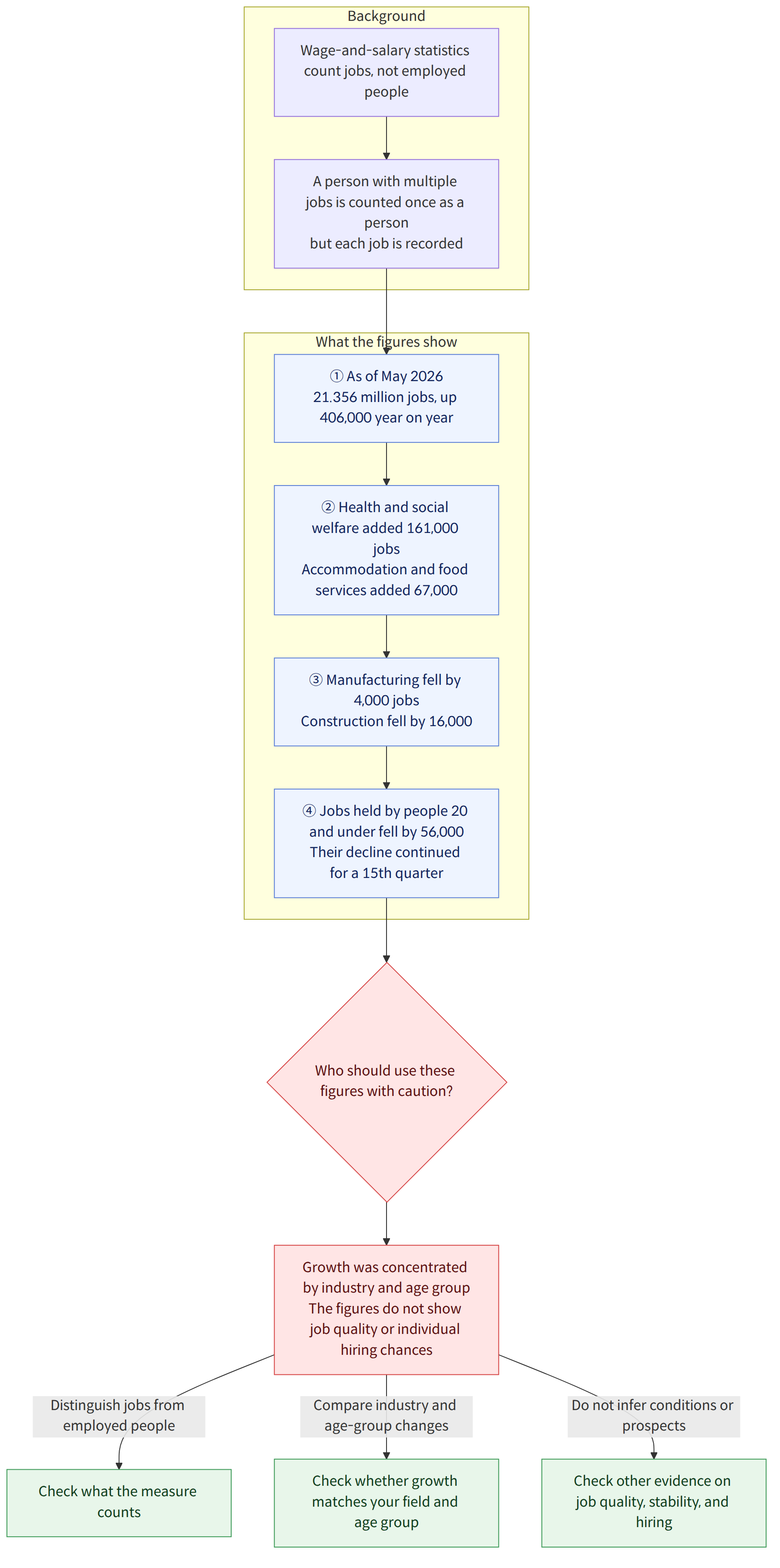
In the second quarter of 2026, the number of wage-and-salary jobs rose by 406,000 from a year earlier, reaching 21.356 million as of May. The increase was the largest for a second quarter since 2022. Growth was especially pronounced in health and social welfare and accommodation and food services, but jobs did not increase in every industry or age group.
Background and context
The figures were included in data released Tuesday by the Data and Statistics Ministry (데이터통계부). Wage-and-salary jobs statistics count the number of jobs held by employees, using a different basis from monthly employment statistics, which count the number of people working. If one person works in several places, that person is counted once, but each job is recorded separately.
For example, someone who works for a company on weekdays and part-time at a private academy on weekends is counted as one employed person, but as holding two wage-and-salary jobs. So an increase in the number of jobs should not be read as meaning that the number of employed people rose by the same amount.
By industry, jobs in health and social welfare increased by 161,000. This was the largest increase for a second quarter since 2021. Accommodation and food services added 67,000 jobs, the largest increase since this statistical series began in 2017. Professional, scientific and technical activities added 43,000 jobs.
By contrast, construction jobs fell by 16,000 and manufacturing jobs by 4,000. This means that, despite strong overall growth, trends varied across industries. These figures alone cannot show whether the increase led to better job conditions in each industry or improved job quality.
What this news means
The fact that health and social welfare and accommodation and food services led the growth shows that the increase in jobs was concentrated in particular fields. People looking for work or preparing to enter the job market may want to consider changes in the industries they are interested in, as well as the overall increase. However, the statistics show the number of jobs, not their working conditions or how long they last.
Differences by age group are also not apparent from the overall figure alone. Jobs held by people aged 60 and over increased by 277,000, leading the growth; jobs held by people in their 30s rose by 123,000, and those held by people in their 50s increased by 59,000. Jobs held by people in their 40s rose by 4,000. By contrast, jobs held by people aged 20 and under fell by 56,000, marking a decline for the 15th consecutive quarter since the fourth quarter of 2022.
For example, someone looking for a job in health and social welfare can consider both the increase in jobs in that field and the differences in changes by age group, rather than looking only at the overall increase in wage-and-salary jobs. However, these figures alone cannot establish an individual’s chances of finding work or the hiring situation in a particular occupation.
Differences in how reports described the figures
Reports used different benchmarks to describe the increase. One called it “the fastest increase in four years,” while another described it as “the largest in 13 quarters,” explaining that it was the biggest increase since the first quarter of 2023. The benchmark wording differed, but both reports said that second-quarter wage-and-salary jobs increased by 406,000 from a year earlier.
What is confirmed and what remains unknown
Confirmed facts
- As of May, there were 21.356 million wage-and-salary jobs, up 406,000 from a year earlier.
- Jobs in health and social welfare increased by 161,000, and jobs in accommodation and food services rose by 67,000.
- Manufacturing jobs fell by 4,000, and construction jobs fell by 16,000.
- Jobs held by people aged 20 and under fell by 56,000, marking a decline for 15 consecutive quarters, while jobs held by people aged 60 and over increased by 277,000.
What remains unknown
- The figures presented in the reports do not show what changes, if any, the increase in jobs brought to working conditions or employment stability.
- Changes by industry and age group alone cannot establish an individual job seeker’s chances of finding work or what will happen next.
References
- Other coverage consulted: hani.co.kr
- Other coverage consulted: en.yna.co.kr