
1. A Human Story
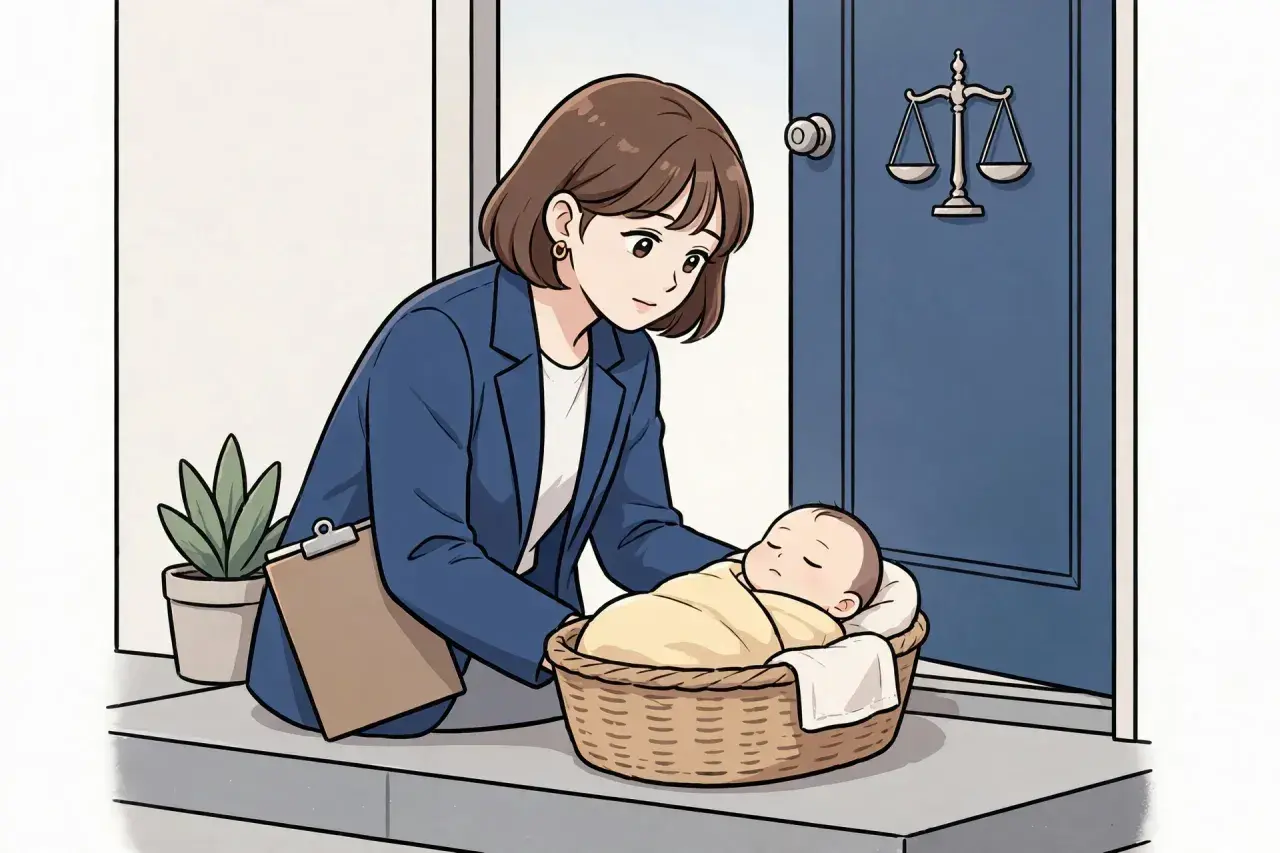
On a cold evening in Seoul, Daniel Park heard a faint cry near the entrance to his apartment building. Wrapped in a thin blanket beside the door was a newborn. Daniel and his wife, Sophie, brought the baby inside to keep her warm and called for help. They had no idea who the child’s parents were or how long she had been alone.
Over the next few days, the Parks found it increasingly hard to imagine the baby leaving. They began to talk about adoption. They could give her a safe home, they thought, and perhaps the discovery outside their door could become the beginning of a family. But affection, however sincere, did not answer the legal questions: who could consent on the child’s behalf, how could the baby be registered, and could the couple simply make her their daughter?
2. The Legal Question
When a person finds an abandoned infant whose parents are unknown and wishes to adopt the child, what must happen before the adoption can lawfully take effect? In particular, who handles the child’s registration and protection, and who has authority to consent to adoption for a baby too young to act on her own behalf?
3. What Korean Law Says
Korean law does not treat finding an abandoned infant as creating a right to keep or adopt that child. The first priority is to report the discovery and ensure the child’s safety through the statutory child-protection process.
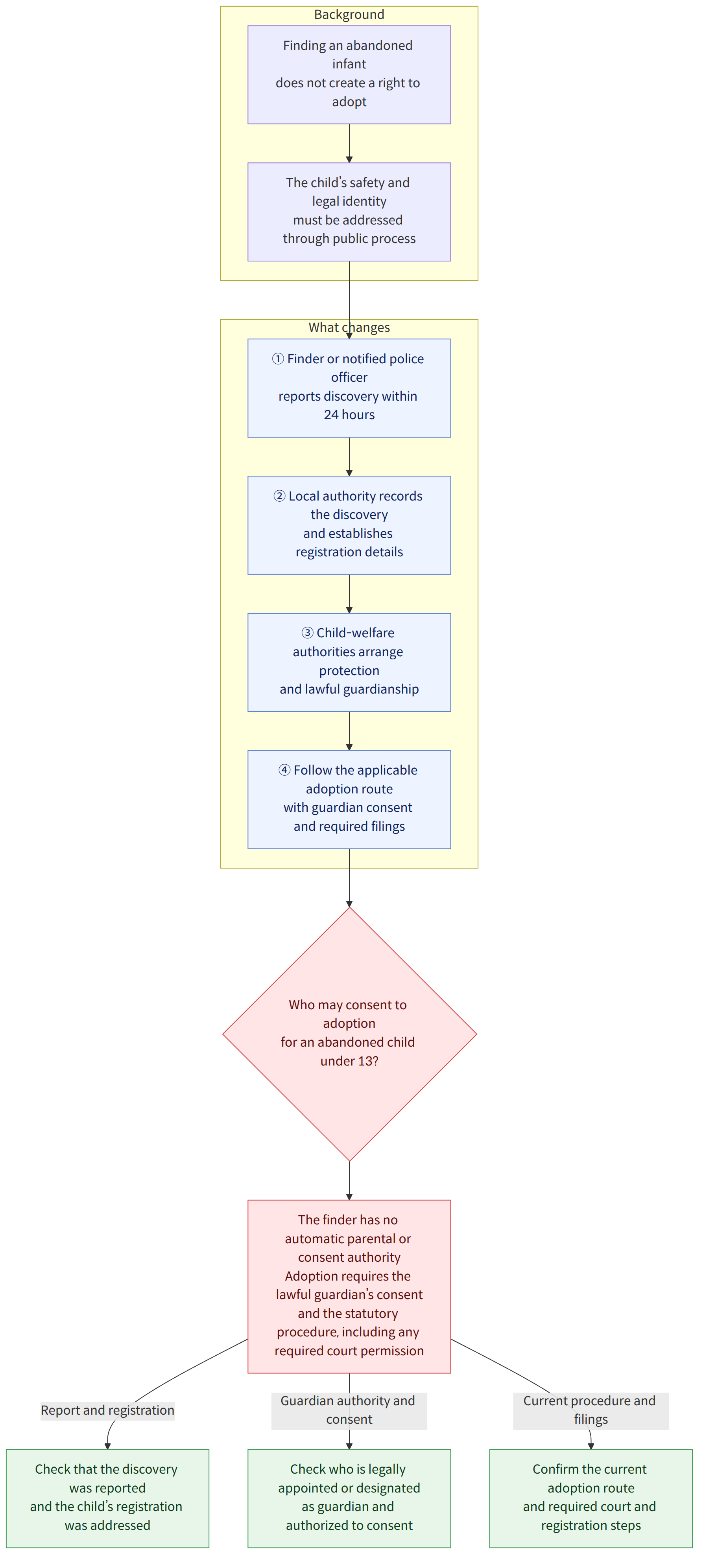
Under Article 52 of the Act on Registration of Family Relations, a person who finds an abandoned child—or a police officer notified of the discovery—must report it to the relevant local government office within 24 hours.
The local authority records the circumstances of the discovery, including where and when the child was found and any identifying details. Because the child’s parents are unknown, the authority can establish the child’s family-register details under the applicable rules, including a surname and family origin, name, and place of registration. This provides the child with a legal identity; it does not make the finder the child’s parent.
The child is also treated as a child in need of protection. Child-welfare authorities must arrange appropriate protective measures. Where a child has no parent or guardian, the authorities may seek a guardian’s appointment through the court or, where the child is placed in a qualifying protective facility, a guardian may be appointed under the rules governing minors in such facilities.
For a child under 13, adoption requires the consent of the child’s legal representative. In the case of an abandoned child, that authority does not automatically belong to the person who found the child; it rests with the person lawfully appointed or designated as guardian under the child-protection arrangements.
Adoption itself must also follow the statutory procedure. Under Article 878 of the Civil Act, an adoption takes effect through the required adoption report. The Family Relations Registration Act sets additional requirements for that report, including information relating to the child’s registration and, for a child under 13, the legal representative’s consent. Filing paperwork without the required authority or consent does not turn an informal arrangement into a lawful adoption.
There may be a route for a prospective parent who wishes the child to share the adopter’s surname and family origin and to have legal effects equivalent to full adoption. The relevant adoption legislation provides for a process involving the guardian’s consent and permission from the Family Court. The precise statutory route and administrative steps can depend on the law in force when an application is made, so prospective adopters should confirm the current process with the responsible child-welfare authority and the court.
4. How Korean Courts Approach This
Korean courts approach adoption as a legal status with lasting consequences, not as a private promise between adults. A child’s welfare is central, but good intentions alone cannot supply the consent of a legally authorized representative or replace the required court or registration procedures.
The practical principle is straightforward: a child’s protection, legal identity, and representation must be settled through the proper public process before an adoption can be completed.
Courts and authorities therefore look beyond the emotional reality of a household. They consider whether the child’s circumstances have been formally addressed, whether the person consenting has legal authority, and whether the adoption procedure required by law has been followed. A person who reports an abandoned child and later seeks adoption may be considered through the proper process; that person does not acquire priority or parental status merely by taking the child home first.
Nor is it a lawful shortcut to register the child as one’s biological child when that is not true. A birth registration and an adoption are legally different acts. An inaccurate registration cannot replace a valid adoption, and it may lead to correction of the family record or further legal consequences.
5. Applying the Law to the Case
The Parks’ decision can be assessed in five steps.
- Report the discovery. Because Daniel found the infant, he should promptly notify the police or the relevant local authority so the discovery is formally recorded within the statutory period. If he has already taken the baby indoors, he should still contact them immediately and explain what happened.
- Allow the child’s identity to be established. The local authority must document the discovery and arrange the child’s family-registration record under the rules for an abandoned child. The Parks cannot choose to skip this step by giving the baby their surname or entering themselves as her birth parents.
- Let the child-protection authorities arrange care and guardianship. The infant needs safe care while her status is addressed. The responsible authorities must determine the protective arrangements and ensure that someone with lawful authority represents her. The Parks may express their wish to adopt, but they cannot consent on the baby’s behalf simply because they found her or have cared for her for several days.
- Apply through the adoption procedure. If the Parks remain committed, they should work with the responsible authority and follow the adoption route applicable to their circumstances. Because the child is a newborn, consent must come from her legally authorized representative. If they seek the particular legal effects associated with full adoption and a shared surname and family origin, they must follow the relevant statutory process, including any required Family Court permission.
- Complete the required report and registration. The adoption becomes legally effective only through the proper statutory steps, including the required adoption report. An informal agreement, a period of care, or a family-register entry that misstates the child’s biological parentage is not a substitute.
If you are dealing with a similar issue, attorney Ji-sun Ahn of Ijun Law Firm can review the birth and family registration records, any adoption order or consent, and the child’s current living arrangements with you. These details can help clarify which options apply to your situation.
6. Conclusion: What Happened, and What Should You Do?
The Parks did not simply declare the baby their daughter. Daniel contacted the authorities, and the infant entered the formal protection process while her identity and legal representation were addressed. The couple then made clear that they wished to adopt and were told that any adoption would have to proceed through the legally authorized guardian and the applicable adoption process. Their willingness to help mattered—but the child’s legal protection had to come first.
For anyone who finds an abandoned child:
- Contact the police or local child-welfare authority immediately. Do not keep the child privately or delay reporting while deciding what to do.
- Do not register the child as your biological child. Ask the authorities how the child’s identity, care, and guardianship will be handled.
- If you wish to adopt, say so through the official process. Confirm the current requirements, including who may consent and whether Family Court permission is needed, before taking any step to formalize the relationship.

















