
1. A Human Story
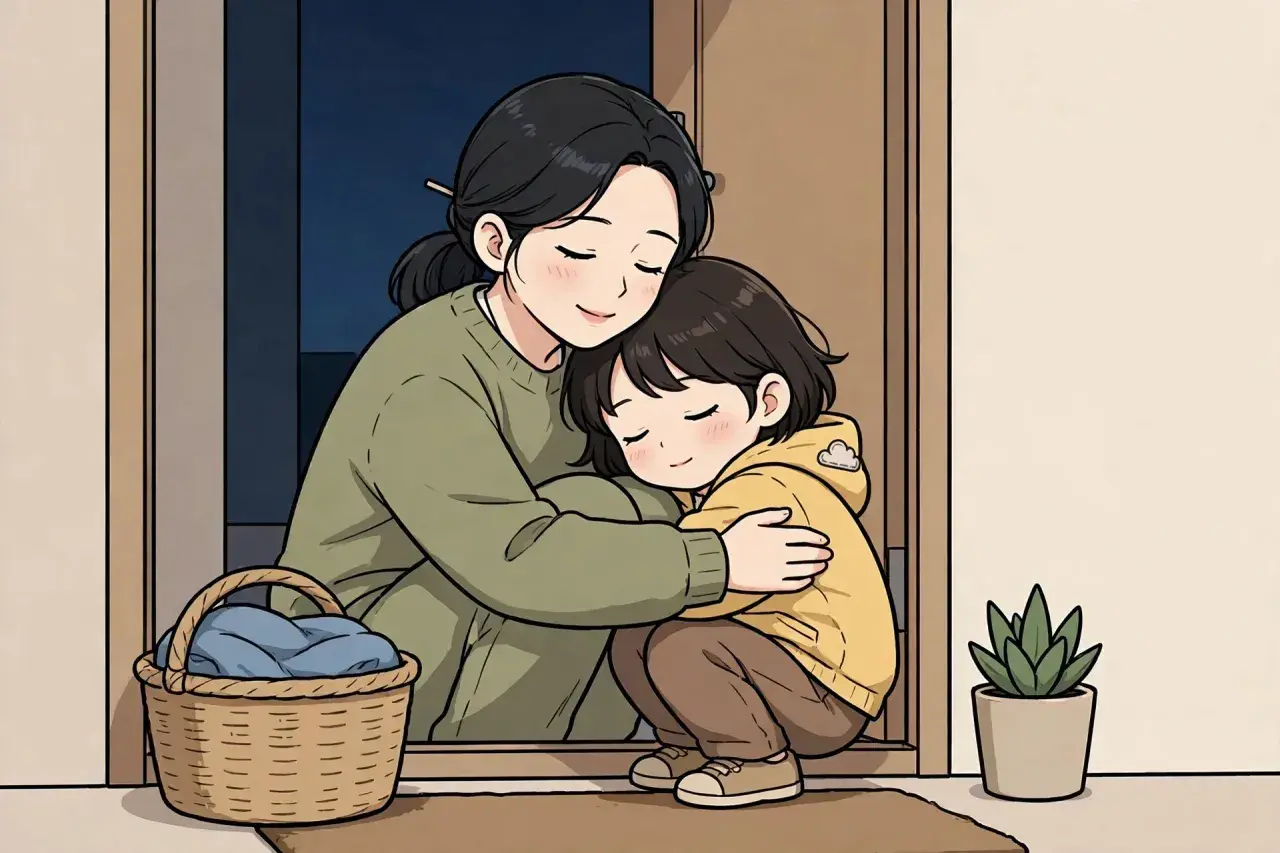
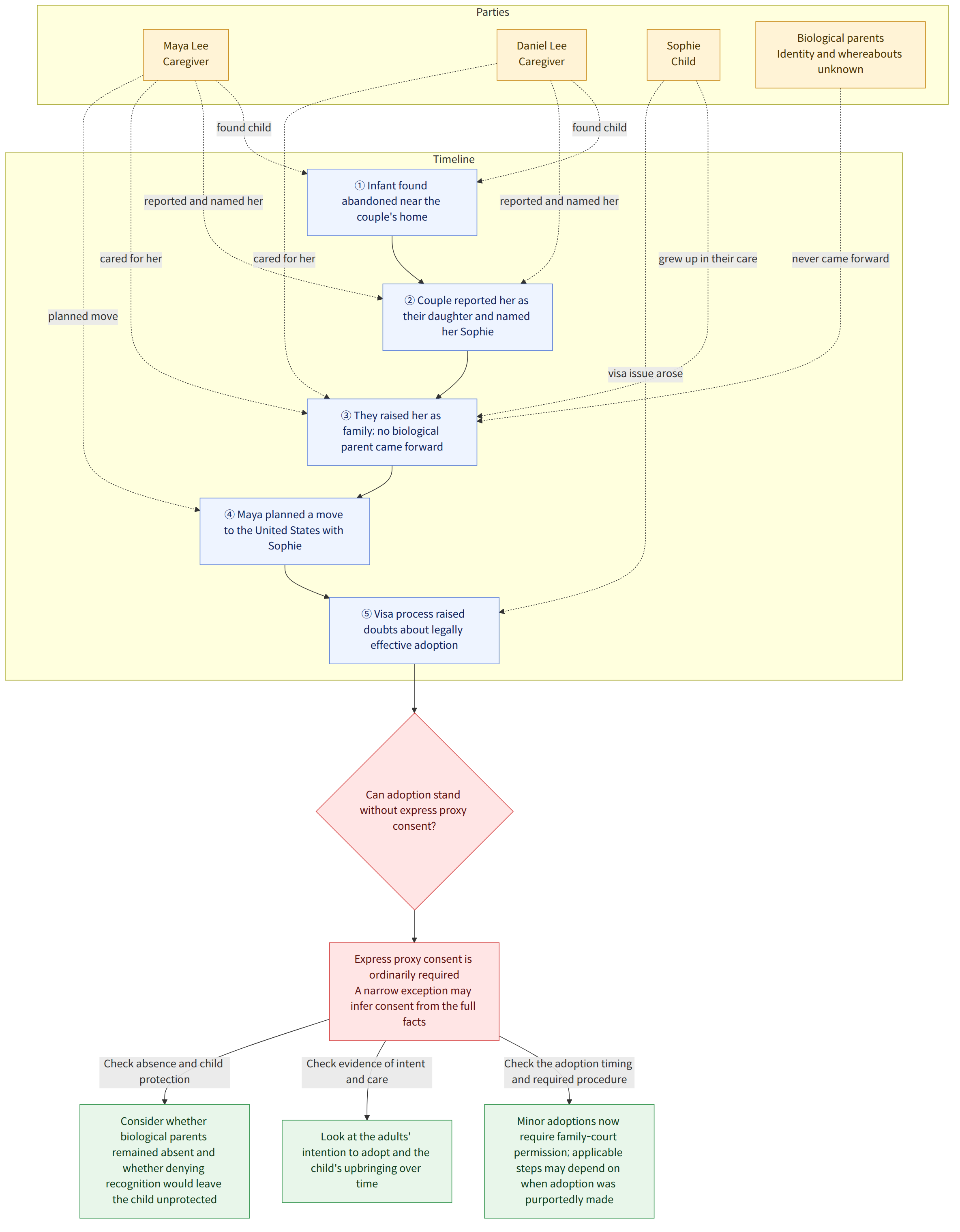
When Maya Lee and her husband Daniel found a one-year-old girl abandoned near their home, they did not know who had left her there or where her biological parents might be. Maya had been unable to give birth for health reasons. The couple reported the child as their own daughter, named her Sophie, and brought her up as part of their family. No biological parent ever came forward.
Years later, Maya prepared to move to the United States with Sophie. The visa process exposed a problem the family had never had reason to confront: Sophie was not Maya and Daniel’s biological child, and the authorities questioned whether a legally effective adoption had ever taken place. What the couple had understood as a settled family relationship now seemed to depend on the consent of people whose identities and whereabouts were unknown.
2. The Legal Question
Can an adoption be legally recognized when the child was too young to consent, no parent or guardian gave express consent on the child’s behalf, and the caregivers instead registered the child as their own at birth? Or does the absence of that formal consent make the adoption invalid, despite years of genuine parental care?
3. What Korean Law Says
Korean law distinguishes between the child’s own consent and the consent given for a child who is too young to make that decision. Under Civil Act Article 869, a child under 13 cannot personally express the legally required adoption consent. A parent with parental authority or a minor’s guardian must consent on the child’s behalf. This is often called consent by proxy.
For a child under 13, the law ordinarily requires the child’s legal representative to consent to the adoption on the child’s behalf. That consent is a substantive requirement, not merely a registration formality.
The ordinary rule is strict. Civil Act Articles 881 and 883 provide that an adoption registration made without the required legal-representative consent cannot be accepted; if it is accepted, the adoption is generally invalid. In other words, a caregiver’s affection and good intentions do not automatically cure a missing legal requirement.
But the ordinary rule does not end every case. The Supreme Court has recognized the general rule that the required consent matters, while a family-court decision has applied a narrow, fact-specific approach where the biological parents had disappeared and the caregivers’ conduct showed a clear intention to create a parent-child relationship.
In an exceptional case, a court may infer that the person entitled to consent would have agreed, considering the circumstances of the child’s registration, the adults’ evident intention to adopt, the child’s subsequent upbringing, and the child’s need for stable care.
That is not a general rule that abandonment equals consent. It is a way of assessing the evidence and the child’s welfare in an unusual case. The court must have a sound factual basis for concluding that the adults meant to adopt and that treating the child as legally unrelated to them would leave the child without appropriate protection.
There is also an important present-day qualification. Korean law now requires family-court permission for the adoption of a minor. The rules and required procedures can depend on when the adoption was purportedly made and what legal steps were taken. A false or inaccurate birth registration, by itself, should not be treated as a substitute for the adoption process or as proof that every statutory requirement was met.
4. How Korean Courts Approach This
Korean courts begin with the statutory requirements, rather than simply asking whether the adults have behaved like parents. A missing proxy consent is ordinarily a serious defect. The exception is narrow because adoption changes a child’s legal identity and family relationships; courts cannot assume consent merely because a child was found alone or because the biological parents have not been located.
At the same time, courts examine the reality behind the paperwork. Relevant considerations may include:
- Whether the adults clearly intended to establish a permanent parent-child relationship when they registered and took in the child.
- How the child was cared for over time, including whether the adults consistently acted as parents and provided a stable home.
- Whether the biological parents have remained absent and whether there is any evidence that they opposed the placement.
- Whether denying recognition would leave the child without the legal protection that matches the family relationship in which the child has grown up.
The judicial balance is therefore between respecting the formal consent requirement and avoiding a result that would harm a child who has long depended on the caregivers. The absence of biological parents can support an inference in the right circumstances, but it does not create an automatic presumption in every abandoned-child case.
5. Applying the Law to the Case
First, Sophie was too young to consent for herself. At one year old, she could not make the adoption decision required by law. Ordinarily, a legal representative would have had to consent on her behalf.
Second, no express consent was obtained. The fact that Sophie’s biological parents never contacted the family does not, standing alone, amount to their consent. If the case were judged only by the ordinary rule, the missing consent would be a substantial obstacle to recognizing the adoption.
Third, the couple’s intention matters. Maya and Daniel did not merely provide temporary care. They registered Sophie as their child and raised her as a daughter. If the evidence supports that they intended from the outset to create a permanent parent-child relationship, that history may support the exceptional inference recognized by Korean courts.
Fourth, the years of care and the biological parents’ continued absence matter too. Sophie’s need for stable legal protection, together with the fact that no biological parent has appeared, strengthens the argument that the person entitled to consent would not have wanted her left outside legal protection. But the court would still need to assess the evidence; absence alone is not enough.
Finally, the visa problem is a separate practical hurdle. Even if a court recognizes the parent-child relationship, that does not itself guarantee a visa. Maya would need to establish the relationship through the legally appropriate Korean process and provide the resulting records to the relevant immigration authorities. Because current law includes court-approval requirements for minor adoptions, the family should not assume that a decades-old birth registration resolves every legal issue.
On these facts, the couple has a strong basis to ask a Korean court to recognize the relationship, particularly if it can document the circumstances of Sophie’s discovery, the original registration, the continuous parental care, and the absence of any claim by her biological parents. The outcome would turn on the applicable law at the relevant time and the evidence—not simply on the fact that the birth record names Maya and Daniel as parents.
If you are dealing with a similar issue, attorney Ji-sun Ahn of Ijun Law Firm can review the birth and family registration records, any adoption order or consent, and the child’s current living arrangements with you. These details can help clarify which options apply to your situation.
6. Conclusion: What Happened, and What Should You Do?
In Maya and Daniel’s case, the years of care and the clear intention to make Sophie part of their family give them a substantial argument for recognition. Korean courts have, in exceptional circumstances, inferred the missing proxy consent where the caregivers’ intention was unmistakable, the biological parents remained absent, and refusing recognition would expose the child to legal insecurity. The family should therefore pursue formal judicial recognition rather than assume that the birth registration alone settles the matter. If recognition is granted, they can use the court’s decision and supporting records in the visa process, although the immigration authority will make its own determination.
For readers facing a similar situation:
- Gather the history: preserve records of the child’s discovery, reporting, registration, schooling, medical care, and daily life with the caregivers.
- Get advice before filing or traveling: consult a Korean family-law lawyer about the correct court procedure, the law in force when the adoption was attempted, and any current approval requirements.
- Treat immigration as a separate step: once the family relationship is legally clarified, submit the court and civil-registration documents to the relevant visa authority and respond to any additional requirements.

















