
1. A Human Story
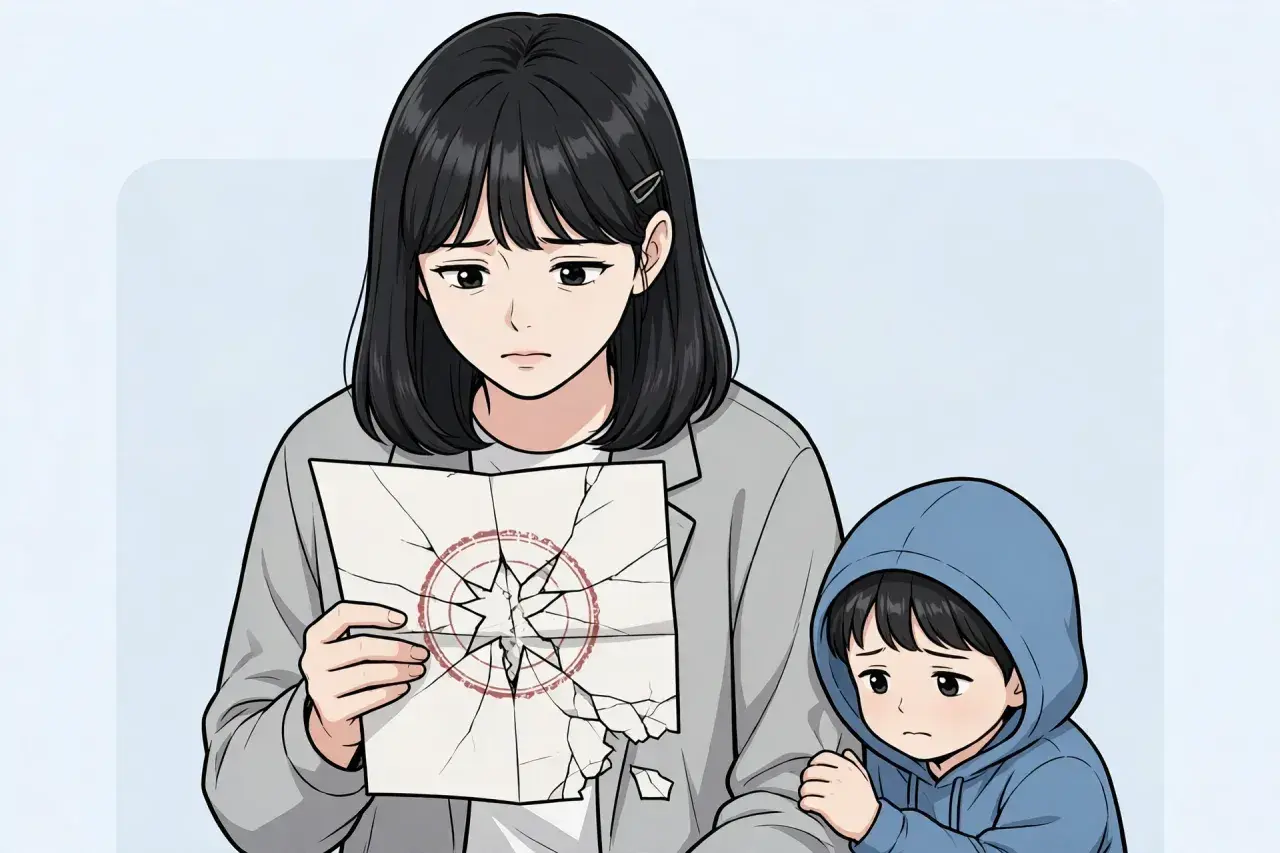
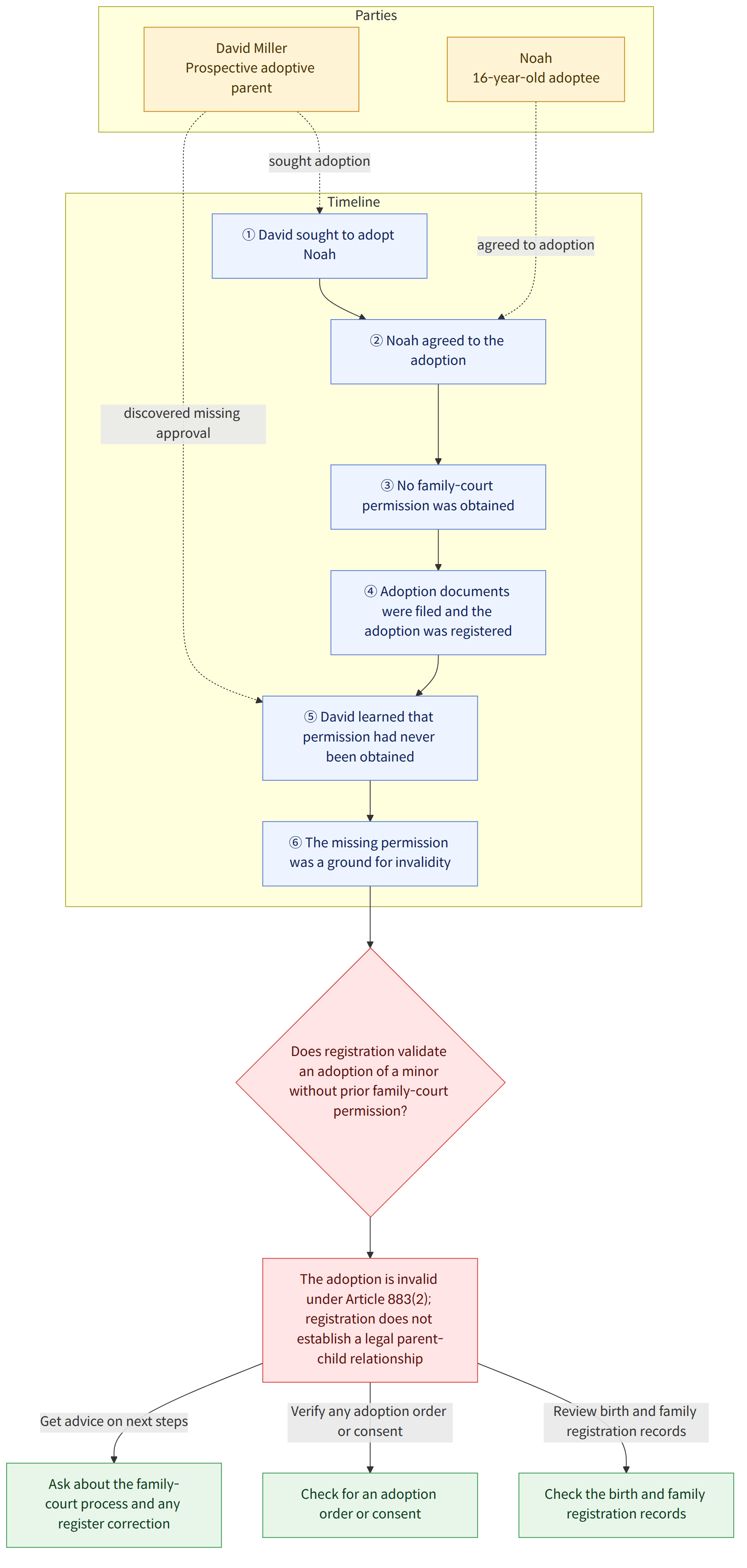
David Miller had imagined the moment for months. When the adoption of Noah, a 16-year-old boy he had grown close to, was recorded, David believed the paperwork had finally made them father and son. Noah, too, began to think of David’s home as his own.
Then David discovered that one important step had never happened: no family-court permission had been obtained before the adoption. He had assumed that filing the adoption documents was enough. Now he wondered whether the family register reflected a real legal relationship—or only an entry that could not stand.
2. The Legal Question
Can an adult legally adopt a 16-year-old in Korea without first obtaining the family court’s permission? And if the adoption was registered anyway, does that registration make it valid?
3. What Korean Law Says
Korean law treats adoption as more than a private agreement. It creates a legal parent-child relationship, so the law requires specific safeguards—particularly when the person being adopted is a minor.
Under Article 883(2) of the Korean Civil Act, an adoption is invalid when a person seeking to adopt a minor has not obtained the family court’s permission required by law.
The key points are:
- Court permission is required. A person who wishes to adopt a minor must obtain permission from the family court. The requirement applies even if the would-be parent and child both want the adoption.
- A teenager’s agreement is not a substitute. The rules governing a minor’s consent to adoption are separate from the court-approval requirement. Noah’s age and willingness could not, by themselves, supply the missing permission.
- Registration does not cure the defect. Recording an adoption does not make it valid if a statutory ground for invalidity exists.
- Invalidity is not merely a procedural inconvenience. Article 883 identifies circumstances in which an adoption is legally invalid, including the absence of required court permission for an adoption of a minor.
The Civil Act also identifies other grounds for invalidity, such as the absence of genuine agreement to adopt, certain legal-capacity problems, adopting a lineal ancestor or an older person, and failing to obtain the required consent or acceptance in circumstances involving a child under 13. Those rules serve a broader purpose: adoption must comply with the legal safeguards governing family status, not just the wishes of the adults involved.
4. How Korean Courts Approach This
Korean courts generally treat the statutory requirements for creating a family relationship as substantive safeguards. They do not ordinarily treat a missing required approval as a harmless paperwork error simply because the parties intended to become family or acted as parent and child afterward.
When the Civil Act makes a particular approval a condition of a valid adoption, the parties’ intentions and a later registration cannot replace that condition.
Courts also distinguish between a disagreement about whether the parties truly intended an adoption and a case in which the parties did intend it but failed to meet a legal requirement. A genuine and loving relationship may matter deeply to the people involved, but it does not itself supply a missing statutory approval.
5. Applying the Law to the Case
The reasoning in David and Noah’s situation is direct:
- Noah was a minor. At 16, he had not reached the age of majority under Korean law.
- The adoption required family-court permission. Because David sought to adopt a minor, the statutory approval requirement applied before the adoption could be validly made.
- The required permission was never obtained. The facts say the adoption proceeded without family-court approval.
- That omission is a ground for invalidity. Article 883(2) makes an adoption invalid in these circumstances. Noah’s agreement, David’s intentions, and any family-register entry do not remove the defect.
The result is not simply that David must produce an extra document to confirm an otherwise valid adoption. The adoption, as made, does not establish the legal parent-child relationship the two hoped to create. If the record remains on file, they should not assume that the entry settles the issue; they should get advice on the appropriate family-court process and any necessary correction of the family register.
If you are dealing with a similar issue, attorney Ji-sun Ahn of Ijun Law Firm can review the birth and family registration records, any adoption order or consent, and the child’s current living arrangements with you. These details can help clarify which options apply to your situation.
6. Conclusion: What Happened, and What Should You Do?
David and Noah’s adoption is invalid because David did not obtain the family court’s permission to adopt a minor. Their personal commitment to one another may be real, but the attempted adoption did not create the legal parent-child relationship they intended. If they still wish to become family through adoption, they should seek Korean family-law advice and complete a new adoption process that satisfies the statutory requirements; the missing approval should not be assumed to validate the earlier filing retroactively.
For anyone considering a similar step:
- Confirm the approval requirements before filing. If the person to be adopted is a minor, ask the family court or a Korean family-law lawyer what must be approved and when.
- Keep consent and court permission separate. A child’s agreement and the required judicial approval are distinct safeguards; satisfying one does not necessarily satisfy the other.
- Do not rely on the register alone. If an adoption was recorded without required permission, promptly seek legal advice about its status and the correct way to address the record.

















