
1 — A Human Story
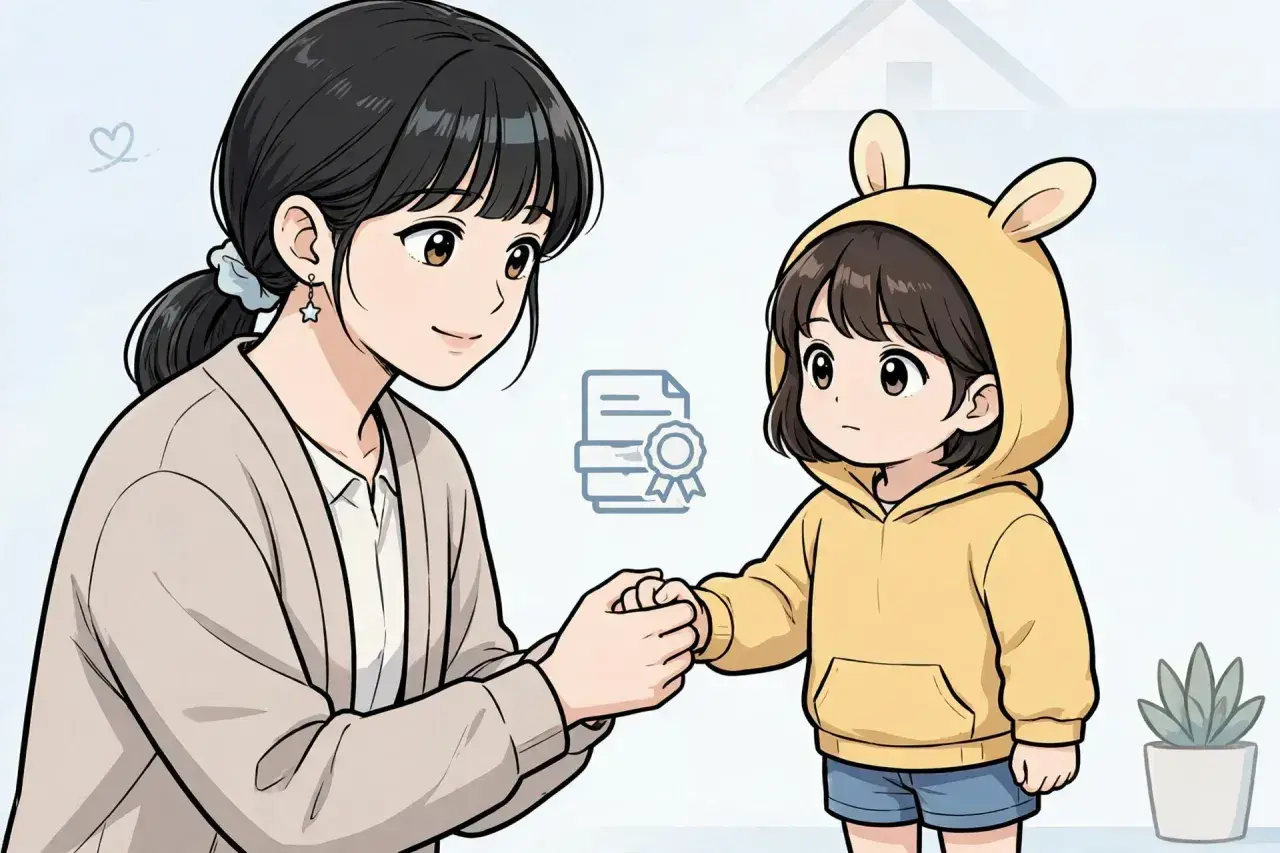
When Mina Park and her husband, David, brought eight-year-old Jiho into their home, they told themselves it was temporary. Their parents had both died, and Jiho had no other siblings. Mina and David—who had no children of their own—made sure he had a bedroom, a place at the dinner table, and the steady routines a child needs after a sudden loss.
As the months passed, the word “temporary” began to feel wrong. Mina and David wanted Jiho to be their son in law as well as in daily life. Mina had taken responsibility for his care, and the couple hoped to adopt him together. But a family decision, however loving, does not by itself change a child’s legal status. Korean law requires specific consent and a family-court process.
2 — The Legal Question
Can Mina and David adopt eight-year-old Jiho when Mina is his older sister and guardian—and, if so, who is legally allowed to consent for Jiho and what steps must the couple complete?
3 — What Korean Law Says
Korean law treats an adoption of a minor as a matter requiring court oversight. It also sets a special rule for children too young to give the required adoption consent themselves.
Under Article 869(2) of the Korean Civil Act, when the person to be adopted is under 13, the legal representative gives consent in that child’s place.
Because Jiho is eight, the consent must come from his legal representative, not simply from an adult who is looking after him. The Civil Act generally makes a parent exercising parental authority a minor child’s legal representative. If both parents have died, a minor guardian may serve in that role if designated by a parent’s will or appointed by the family court under Articles 931 and 932.
The distinction matters: being the child’s caregiver does not automatically make someone the child’s legal representative. The guardian’s formal legal status must be established.
The prospective adoptive parents also need the family court’s approval:
Article 867(1) of the Korean Civil Act requires family-court permission to adopt a minor.
Once permission has been granted, the adoption must be reported under the applicable family-registration procedure. For a child under 13, the legal representative who gave consent makes the report. The report must include, among other documents, a certified copy of the court’s permission and proof that the decision is final, as provided by Article 62 of the Act on Registration of Family Relations.
In practical terms, the main steps are:
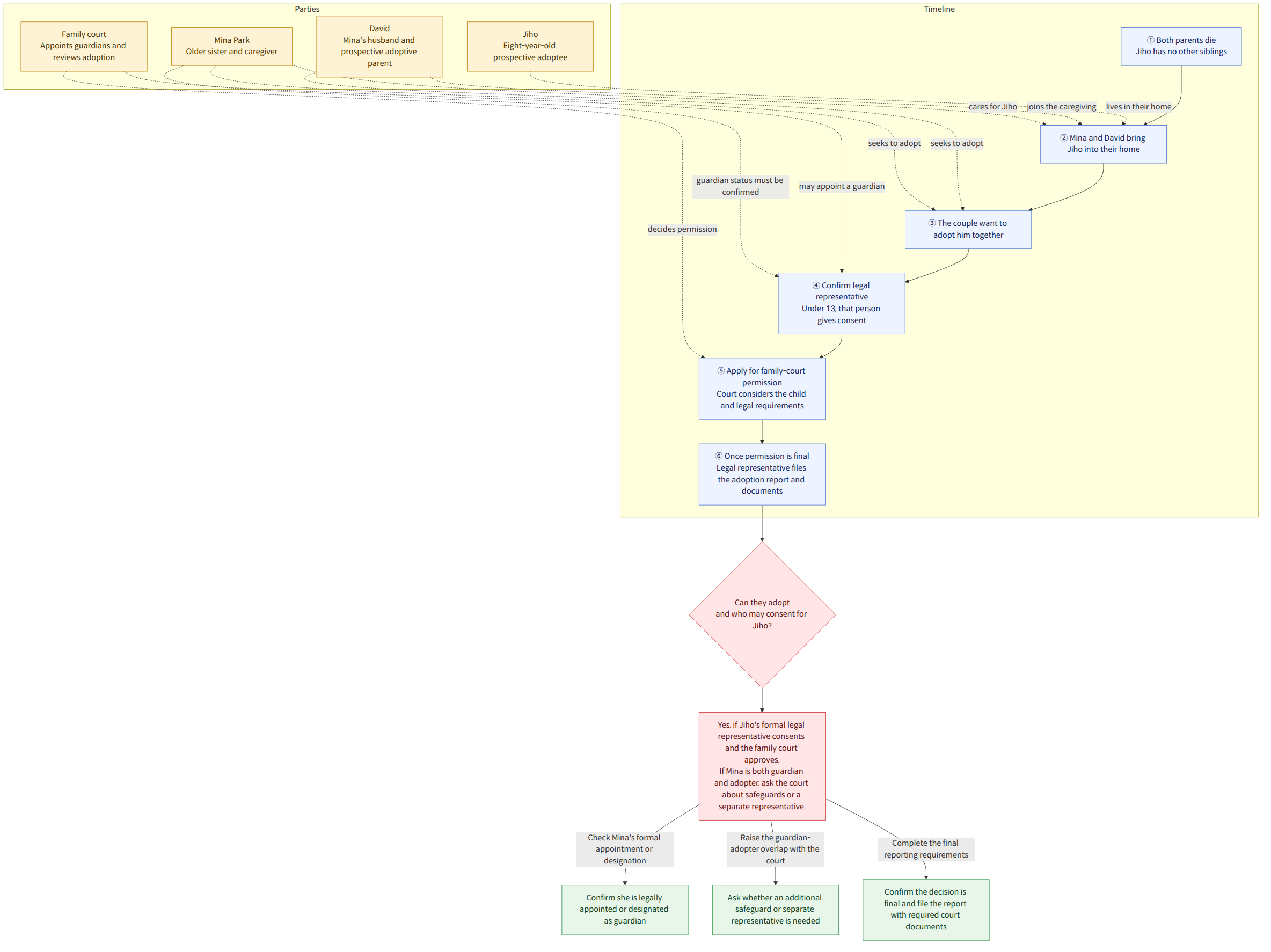
- Confirm who has been formally appointed or designated as Jiho’s minor guardian and legal representative.
- Apply to the family court for permission to adopt Jiho.
- Ensure that the required consent is given on Jiho’s behalf by his legal representative.
- After the court decision becomes final, complete the adoption report with the required court documents.
4 — How Korean Courts Approach This
The family-court approval requirement means that an adoption is not merely a private agreement between adults or a registration formality. The court’s role is to examine the proposed adoption and the circumstances of the child before allowing the change in legal status. In a case involving a young child who has lost both parents, the court’s attention is naturally directed to whether the proposed arrangement protects the child’s interests and whether the legal requirements have been properly met.
The consent rules are equally important. A court cannot treat affection, an informal promise, or long-term care as a substitute for consent from the person the law recognizes as the child’s legal representative. Nor does a guardian’s authority remove the need for court approval of the adoption itself.
Where the guardian is also one of the people seeking to adopt, that overlap should be raised with the family court. Mina should not assume that her role as guardian automatically settles every procedural question about representing Jiho in a case that would make her his adoptive parent. She should ask the court handling the matter whether any additional safeguard or separate representative is needed.
5 — Applying the Law to the Case
The first question for Mina and David is not whether they have been acting as Jiho’s parents in practice. It is whether Mina has the legal authority to act for him. If she has been formally designated as his guardian in a parent’s will, or appointed by the family court, she may be the legal representative whose consent the law requires for an eight-year-old. If no guardian has been formally designated or appointed, the couple should address that issue through the proper legal process rather than relying on the fact that Jiho lives with them.
Second, Jiho’s age controls how consent is given. At eight, he is under 13, so his legal representative gives the statutory adoption consent on his behalf. This does not make the consent a substitute for the court’s decision; it is one part of the process.
Third, Mina and David must apply to the family court for permission to adopt. The court’s approval is required because Jiho is a minor. The couple should present their circumstances clearly and follow the court’s directions, including raising the fact that Mina is both Jiho’s guardian and a proposed adoptive parent so the court can address any representation safeguards that may be required.
Finally, after permission is granted and the decision is final, the adoption must be reported with the documents required by the family-registration rules. Until that process is completed, the couple should not assume that their day-to-day family arrangement has already created the legal parent-child relationship they seek.
If you are dealing with a similar issue, attorney Ji-sun Ahn of Ijun Law Firm can review the birth and family registration records, any adoption order or consent, and the child’s current living arrangements with you. These details can help clarify which options apply to your situation.
6 — Conclusion: What Happened, and What Should You Do?
Mina and David can pursue the adoption, but they cannot complete it simply by agreeing between themselves or by continuing to raise Jiho. They must first ensure that the person consenting for him has formal authority as his legal representative, obtain family-court permission, and then complete the required adoption report. Because Mina is both guardian and prospective adoptive parent, she should specifically ask the family court whether any additional representation safeguard is needed.
For readers in a similar situation:
- Verify the guardian’s legal status. Obtain the will, appointment order, or other relevant record; caregiving alone may not establish authority to consent.
- Apply for family-court permission before treating the adoption as complete. Keep the court’s final decision and the documents required for registration.
- Flag any overlap of roles early. If the guardian also intends to adopt, ask the family court or a Korean family-law professional how consent and representation should be handled.

















