
1. A Human Story
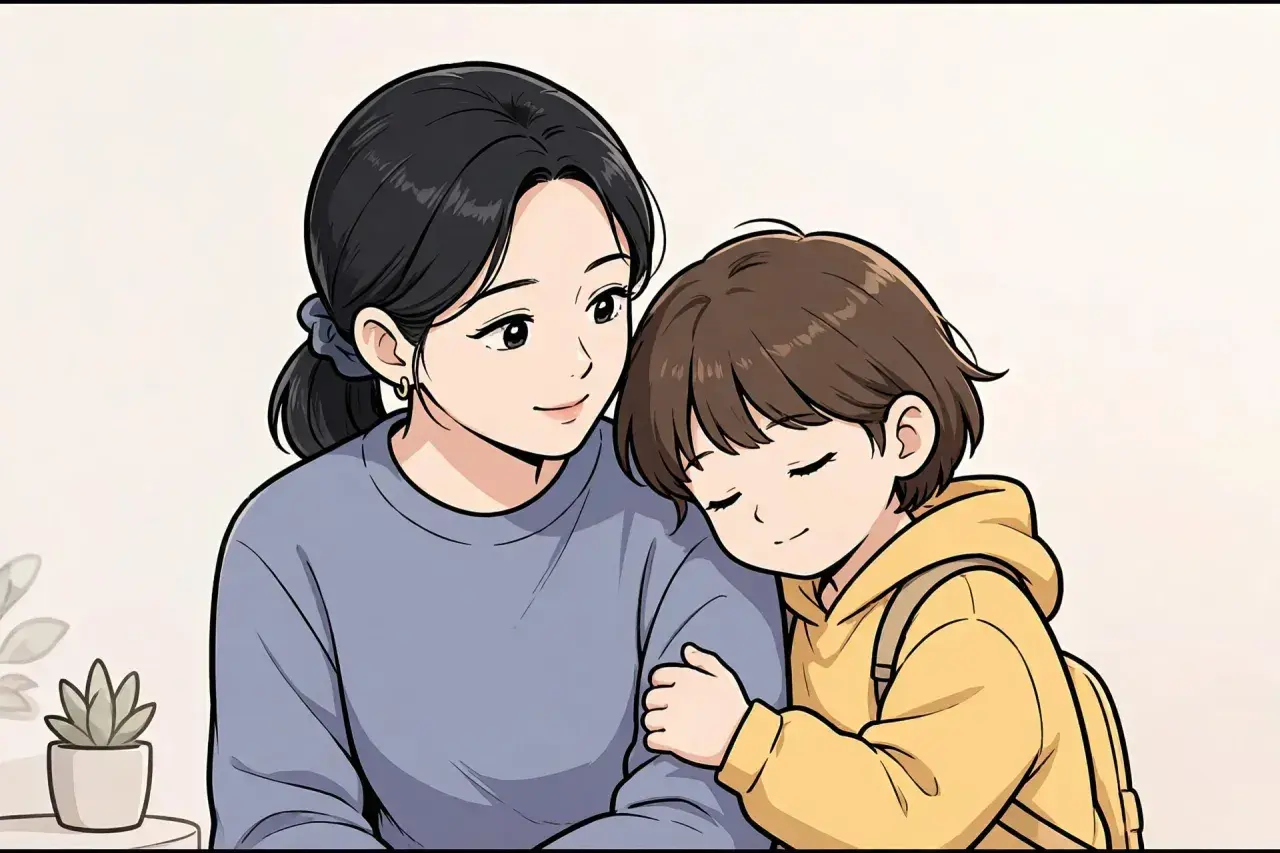
When Daniel and Grace adopted Ethan, they signed the papers together and promised to raise him as their son. For years, the three of them built an ordinary family life: school mornings, weekend dinners, and photographs that showed no difference between Ethan and the children of his classmates.
Then Daniel and Grace’s marriage broke down. During the divorce, Grace moved out of the family home. Ethan began to worry that, because she had left Daniel’s household, she might no longer be his mother in the eyes of the law. The question was not merely where he would live or how often he would see her. It was whether the legal bond created when they adopted him would survive their divorce.
2. The Legal Question
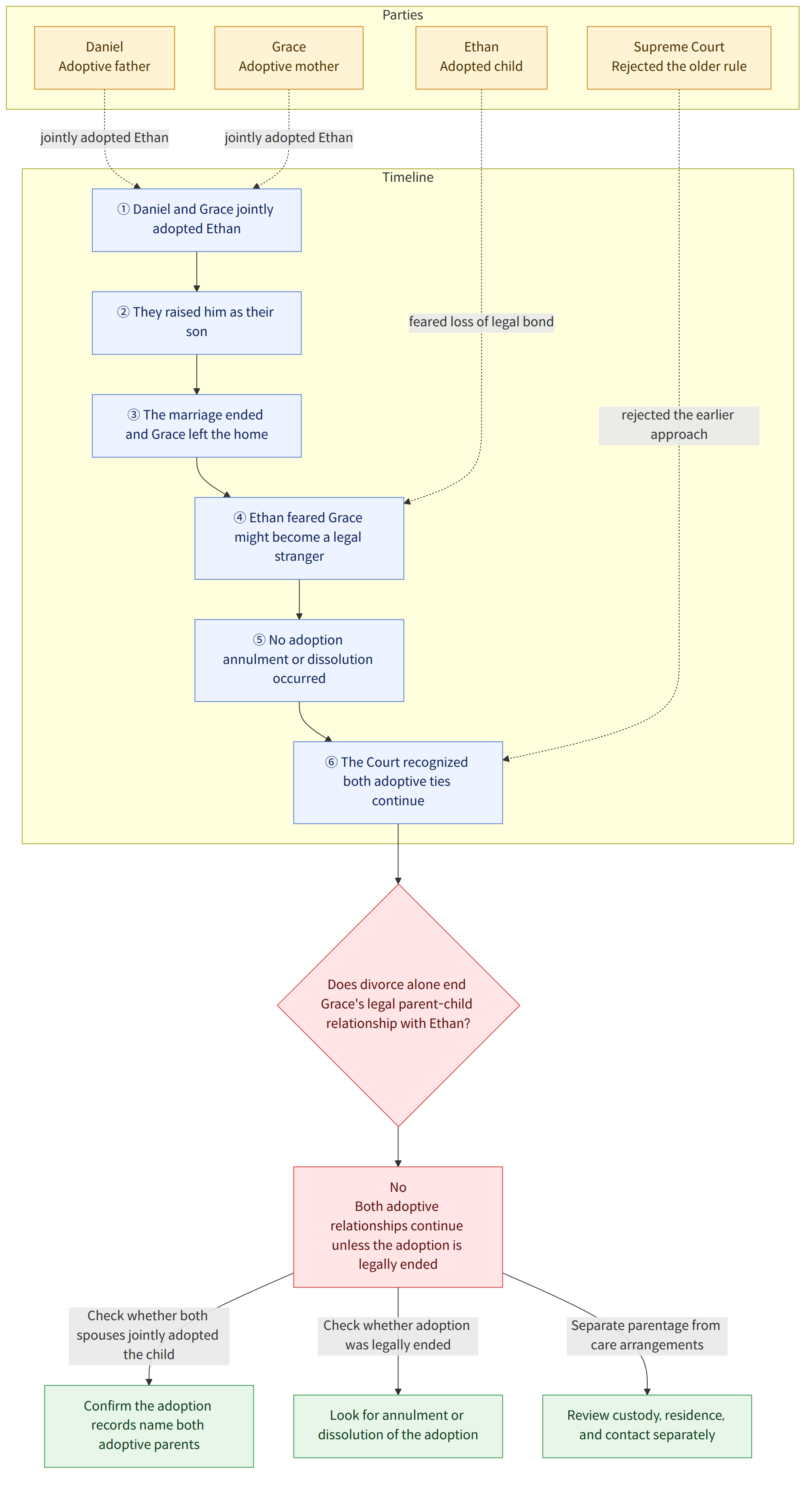
If spouses jointly adopt a child and later divorce, does the child’s legal relationship with the adoptive mother end when she leaves the adoptive father’s household—or do both adoptive parent-child relationships continue unless the adoption itself is legally ended?
3. What Korean Law Says
Korean law treats the adoption itself, not the later marriage between the adoptive parents, as the source of the legal parent-child relationship.
Article 776 of the Korean Civil Act provides that kinship arising from adoption ends through annulment or dissolution of the adoption. Divorce between the adoptive parents is not listed as an event that ends that relationship.
The rules on adoption also reflect the principle that spouses adopt together. Under Article 874, a person who has a spouse must adopt jointly with that spouse. In other words, the adoptive mother is not simply an extension of the adoptive father’s family status: she is herself a party to the adoption.
The practical points are:
- Divorce ends the spouses’ marriage, but does not automatically cancel or dissolve an adoption.
- The child’s legal relationship with each adoptive parent ordinarily continues after the parents divorce.
- A change in household, surname, custody, or contact arrangements does not, by itself, terminate parentage.
- To end the adoption relationship, a legally recognized procedure—such as annulment or dissolution of the adoption—must apply. Divorce alone is not enough.
The central distinction is between ending the adults’ marriage and ending the child’s legal relationship with a parent. Korean law does not treat those as the same event.
4. How Korean Courts Approach This
Korean courts focus on the legal structure of adoption and on the specific events the Civil Act recognizes as ending adoption-based kinship. Because the statute identifies annulment or dissolution, courts do not ordinarily add divorce to that list by implication.
The Supreme Court has also rejected an older approach under which an adoptive mother’s relationship with the child could end when she divorced the adoptive father and left his family. That earlier view arose from a different historical understanding of adoption, when the wife was not treated as an adoption party in the same way as the husband. Modern Korean law instead requires spouses to adopt jointly, making both spouses parties to the adoption.
The Court’s reasoning is straightforward: if both spouses jointly became the child’s adoptive parents, the end of their marriage does not make one parent’s legal bond disappear while leaving the other’s intact. The Supreme Court’s en banc ruling therefore discarded the earlier rule and recognized that both relationships remain unless the adoption is separately brought to an end through the proper legal process.
5. Applying the Law to the Case
Applying these principles to Ethan, the analysis proceeds in several steps:
- Daniel and Grace jointly adopted him. Because they adopted as spouses, each became an adoptive parent in their own right.
- Their divorce ended their marriage, not the adoption. Nothing about Grace moving out of the home changes the legal fact that she jointly adopted Ethan.
- No separate adoption-ending procedure occurred. If the adoption has not been annulled or dissolved, the statutory condition for ending the adoption-based relationship has not been met.
- Both parent-child relationships therefore continue. Ethan remains legally related to Daniel and to Grace as their adopted child, even though Daniel and Grace are no longer married.
That conclusion addresses legal parentage only. It does not decide which parent Ethan will live with, how parental responsibilities will be arranged, or what contact schedule is appropriate. Those questions may need to be resolved separately in the divorce or family-court process. But Grace’s departure from the household, standing alone, does not make her a legal stranger to Ethan.
If you are dealing with a similar issue, attorney Ji-sun Ahn of Ijun Law Firm can review the birth and family registration records, any adoption order or consent, and the child’s current living arrangements with you. These details can help clarify which options apply to your situation.
6. Conclusion: What Happened, and What Should You Do?
Ethan’s legal relationship with Grace survived the divorce. Because Daniel and Grace jointly adopted him, the divorce did not end either adoptive parent’s relationship with him. Unless the adoption is legally annulled or dissolved, both remain his legal parents.
For anyone facing a similar situation:
- Check the adoption records to confirm who adopted the child and whether the adoption was joint.
- Keep parentage separate from custody and contact issues. A parent moving out or losing a particular custody arrangement does not automatically end the legal parent-child relationship.
- Get legal advice before assuming the relationship has ended. If someone seeks to end an adoption, the applicable legal grounds and formal procedures matter; divorce alone does not do it.

















