
1. A Human Story
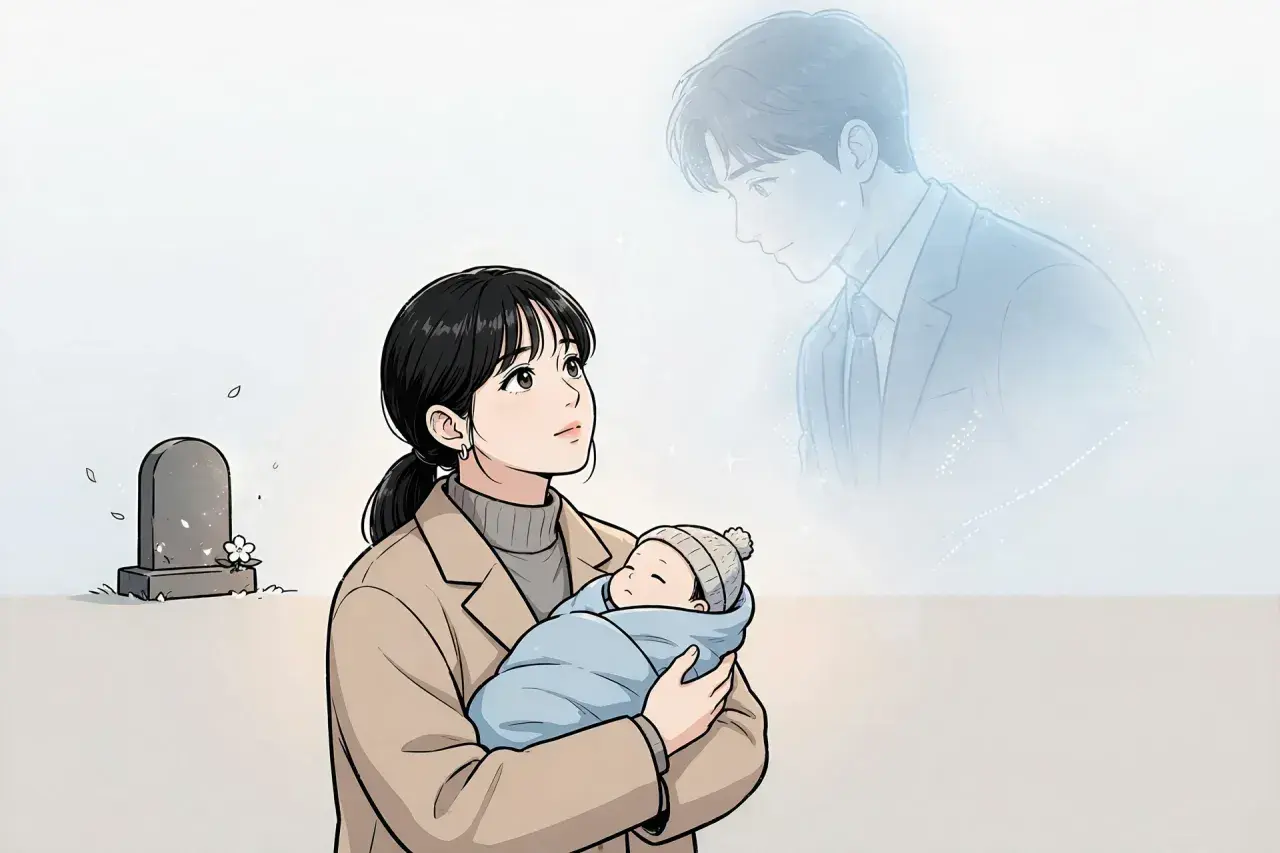
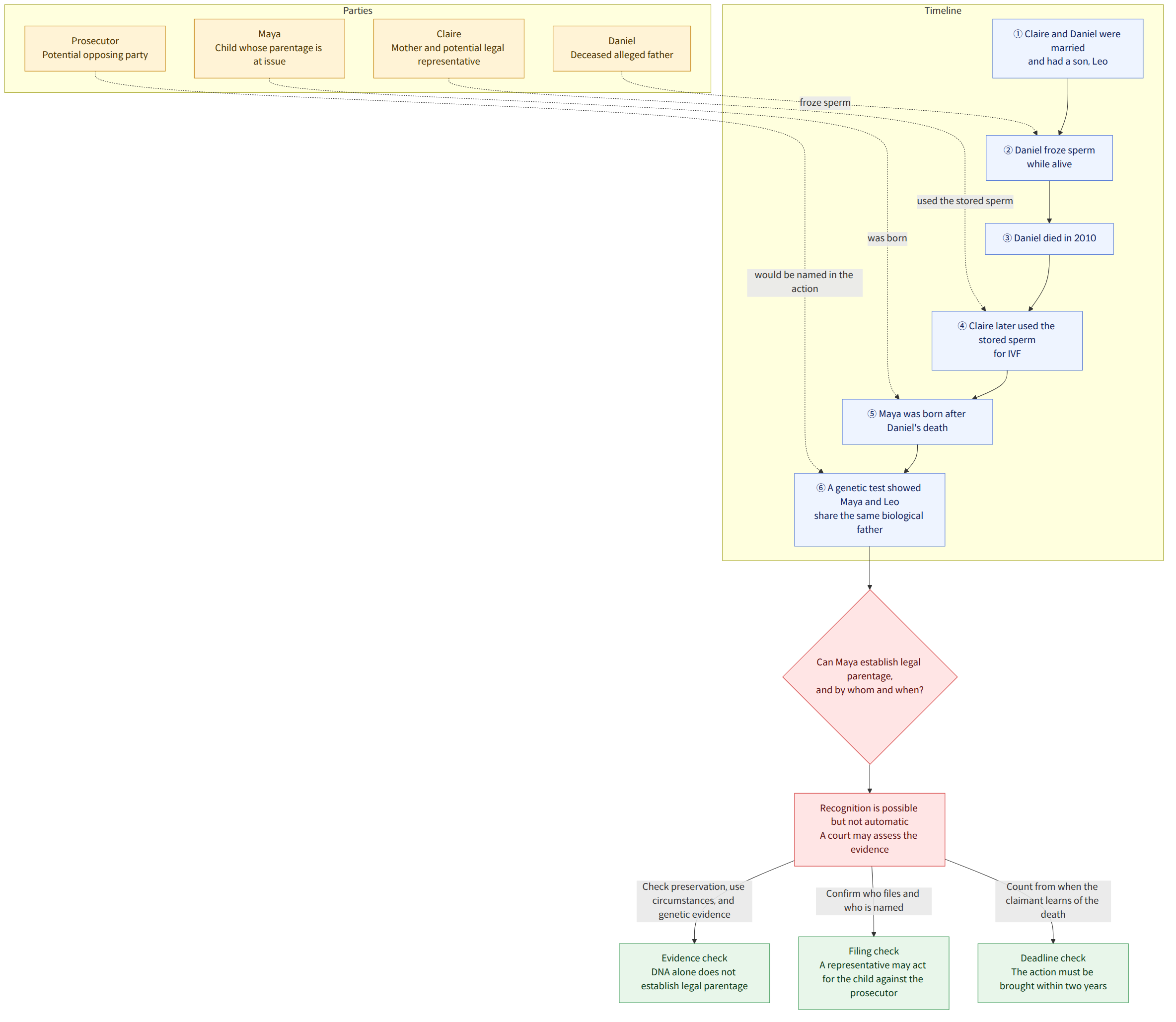
Claire and Daniel had built their family around a plan they hoped would work. They were married and already had a young son, Leo, when they began fertility treatment. Before treatment could be completed, Daniel arranged for sperm to be frozen for future use. Then, in 2010, he died.
Claire eventually decided to use the stored sperm. Through IVF, she gave birth to a daughter, Maya, after Daniel’s death. A genetic test later confirmed that Maya and Leo shared the same biological father. Yet the test did not, by itself, answer the question that mattered for Maya’s legal status: was Daniel legally her father?
2. The Legal Question
Can a child conceived and born after a man’s death using sperm he had frozen during his lifetime establish a legal parent-child relationship with him—and, if so, who must bring the case and how quickly?
3. What Korean Law Says
Korean law distinguishes between a child whose legal parentage is presumed because the child was born into a marriage and a child whose relationship with a father must be established through recognition.
Civil Act Article 844: A child conceived during marriage is presumed to be the husband’s child. The marital presumption is a rule for determining legal parentage; it does not mean that every child genetically related to a married man automatically acquires legal status as his child in every circumstance.
A child conceived using sperm after the man has died may not fit neatly within the ordinary marital presumption. Where that presumption does not establish paternity, the legal relationship may instead be created through recognition—a formal legal acknowledgment that the man is the child’s father.
If the alleged father is alive, the child, certain descendants, or the child’s legal representative may seek recognition through court proceedings when the father has not acknowledged the child voluntarily. If he has died, the law provides a route to bring the matter before a court against the prosecutor.
Civil Act Articles 863 and 864: A child or the child’s legal representative may seek judicial recognition of parentage. If the alleged father has died, the action may be brought against the prosecutor within two years after the claimant learns of the father’s death.
For a child who is too young to act independently, the mother or another lawful representative can bring the case on the child’s behalf. The claim is the child’s claim: the representative acts to establish the child’s legal relationship with the deceased parent.
In practical terms, the key points are:
- A genetic connection is important evidence, but a DNA result and legal parentage are not the same thing.
- The child’s legal representative may file the recognition action when the alleged father has died.
- The prosecutor is named as the opposing party in that situation, rather than the deceased man.
- The two-year period matters. The statute measures it from when the claimant learns of the alleged father’s death, so families should not assume they can wait until the child is older.
4. How Korean Courts Approach This
Korean courts look beyond labels and examine the evidence bearing on whether the deceased man should legally be treated as the child’s father. In a posthumous-conception case, relevant facts can include whether the sperm was preserved during the man’s lifetime, the surrounding circumstances of its preservation and later use, and genetic evidence connecting the child to the deceased man.
A family court has accepted a recognition claim in a case involving a child born after her father’s death using sperm he had frozen while alive. That outcome shows that conception after death does not, by itself, make legal recognition impossible. The court can consider the particular facts and grant recognition through the statutory procedure.
The central practical lesson: Posthumous conception does not automatically settle legal parentage either way. The child may need a court judgment, and the evidence and filing deadline can be decisive.
5. Applying the Law to the Case
Claire’s circumstances point toward a recognition action for Maya, rather than relying solely on Daniel’s former status as her husband.
First, Maya was conceived after Daniel’s death. The ordinary rule presuming a husband to be the father of a child conceived during marriage may not resolve her position, because the IVF conception occurred after the marriage ended with Daniel’s death. Claire therefore has reason to seek a formal determination of parentage.
Second, the evidence supports a biological relationship. Daniel’s sperm had been frozen while he was alive for fertility treatment. A genetic test also showed that Maya and Leo shared the same biological father. Those facts provide substantial evidence for the claim, although the court must decide the legal question rather than treating the test as a substitute for a judgment.
Third, Claire can act for Maya. Because Maya is a minor, Claire may bring the recognition action as her legal representative. The claim would be brought on Maya’s behalf against the prosecutor, following Daniel’s death.
Fourth, Claire must pay close attention to time. The statutory period is two years from when the claimant learns of the alleged father’s death. On these facts, Daniel’s death was known to Claire when it happened, so she should not assume that the period begins only when she decides to use the frozen sperm, when Maya is born, or when a DNA test is obtained. She should have a Korean family-law lawyer assess the deadline immediately and identify any relevant procedural issue.
If you are dealing with a similar issue, attorney Ji-sun Ahn of Ijun Law Firm can review the family registration, the marriage, separation and birth dates relevant to the parentage dispute, and any prior court records with you. These details can help clarify which options apply to your situation.
6. Conclusion: What Happened, and What Should You Do?
Claire has a strong basis to seek recognition of Daniel as Maya’s legal father. The preserved sperm and genetic evidence support the claim, and Korean courts have recognized parentage in a comparable posthumous-conception situation. But the decisive next step is a timely court action: Claire should bring it as Maya’s legal representative against the prosecutor, rather than relying on the DNA result alone.
For readers facing a similar situation:
- Get legal advice promptly. The two-year deadline may run from learning of the alleged father’s death, not from the child’s birth or a later DNA test.
- Preserve the evidence. Keep records of the marriage, sperm storage, fertility treatment, birth, and any genetic testing.
- Ask counsel to confirm the correct procedure and parties. A lawyer experienced in Korean family law can assess the deadline and file the recognition claim on the child’s behalf.

















