
1. A Human Story
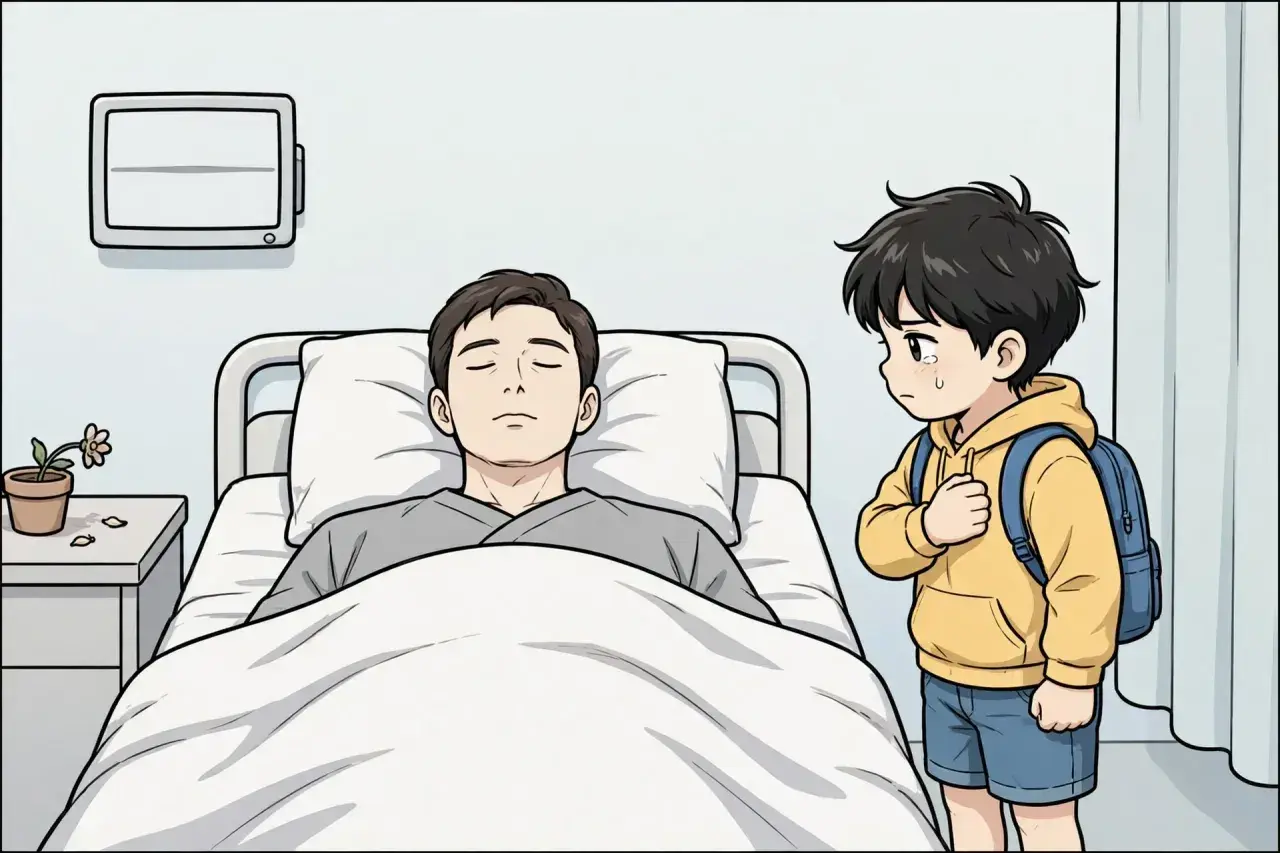
Mira Kim and Daniel Lee had built a home together without registering a marriage. Their son, Noah, was only four months old when Daniel died in a traffic accident. In the shock that followed, Mira faced a practical question that suddenly felt enormous: Noah had not yet been registered at birth, and the official records did not show Daniel as his father.
Mira knew Daniel was Noah’s biological father, and Daniel’s relatives did too. But affection, shared photographs, and a life together do not by themselves place a father’s name in a Korean family relationship register. Mira needed to establish what the law would recognize—and to do so before time ran out.
2. The Legal Question
How can a child born to unmarried parents be registered when the biological father dies before formally recognizing the child? In particular, what surname may the child use, how can paternity be entered in the official record, and what deadline applies to a court action after the father’s death?
3. What Korean Law Says
Korean law distinguishes a child’s biological relationship from the formal legal process that records the father-child relationship. For a child born outside marriage, the mother’s surname and family origin are the default. If the father’s surname and family origin are known, the child may be registered using them, but that choice alone does not establish legal paternity.
Until the child is recognized by the father, the father’s name cannot be entered in the father field of the family relationship register.
When the father is alive, he may recognize the child by filing a recognition report. Recognition is the formal acknowledgment that the child is his. If he does not do so—and especially if he dies first—the law provides a court route:
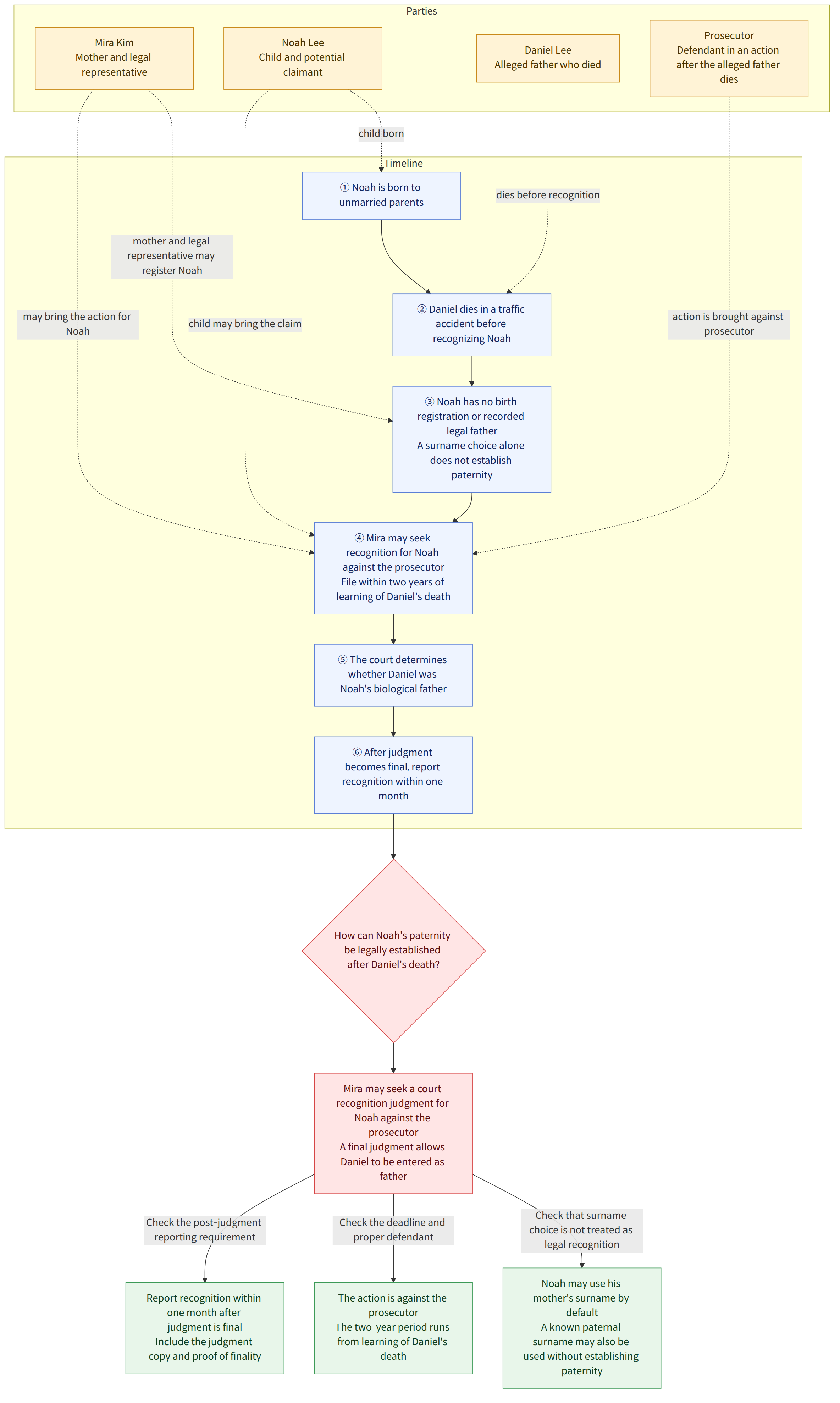
- The child, the child’s lineal descendant, or the child’s legal representative may bring an action to establish recognition.
- If the alleged father has died, the action is brought against the prosecutor, not against the deceased person.
- The action must be filed within two years from the date the claimant learned of the father’s death.
- The case is heard by the court with jurisdiction over the deceased father’s last address.
- Once the judgment becomes final, the recognition must be reported to the head of the relevant city, district, town, or township office within one month. The report must include a copy of the judgment and proof that it is final.
A final recognition judgment allows the father’s name to be entered in the father field, with the reason for recognition recorded in the register’s general remarks.
Surname questions are related but separate. Even after recognition, the child may continue using the surname and family origin used before recognition if the parents agree. If they cannot agree, the child may seek the court’s permission to keep them. More generally, where the child’s welfare makes a change necessary, the father, mother, or child may ask the court for permission to change the child’s surname and family origin.
4. How Korean Courts Approach This
Courts treat formal recognition as a legal status that must be established through the procedure prescribed by law. A child’s surname, a family’s understanding, or evidence that the parents lived together does not by itself substitute for recognition or authorize an entry in the father field.
In a recognition action, the court considers whether the deceased man was in fact the child’s biological father. Evidence may include genetic testing where available, as well as records and other relevant circumstances. The court’s task is to determine paternity; the family relationship register is then updated through the required reporting process after the judgment becomes final.
The deadline matters independently of the strength of the evidence. A claimant who believes the biological relationship is clear should still act promptly, because the statute measures the two-year period from learning of the father’s death. The law also directs the claim to the prosecutor when the father has died, rather than allowing the child’s representative simply to name the deceased as a defendant.
5. Applying the Law to the Case
Mira’s first step need not be to prove paternity before Noah can have a registration. As Noah’s mother, she can pursue his birth registration under the applicable rules. The default is her surname and family origin. If Daniel’s surname and family origin are known, Noah may be registered using them, but that will not, on its own, put Daniel’s name in the father field.
The next step is to establish paternity formally. Because Daniel died before filing a recognition report, he cannot now make one. Mira, acting as Noah’s legal representative, may bring an action for recognition against the prosecutor. The proper court is the court with jurisdiction over Daniel’s last address.
Mira learned of Daniel’s death when the accident occurred. On those facts, she should treat the two-year period as running from that point and avoid delay while gathering evidence. The court will consider the evidence of paternity. If it grants the claim and the judgment becomes final, Mira must submit the judgment and proof of finality to the local registration office within one month.
Only after that process will Daniel’s name be entered in the father field. Noah’s surname does not automatically have to change as a result. If Mira and Daniel’s family cannot reach the agreement required for Noah to keep the surname he already uses, Mira may ask the court for permission. A request to change his surname or family origin must likewise be considered through the separate legal process, with Noah’s welfare at its center.
If you are dealing with a similar issue, attorney Ji-sun Ahn of Ijun Law Firm can review family registration records, dates of marriage and birth, and any earlier acknowledgment of paternity, test result, or ruling with you. These details can help clarify which options apply to your situation.
6. Conclusion: What Happened, and What Should You Do?
Mira registered Noah using the surname available under the rules, then brought a recognition action against the prosecutor before the two-year deadline expired. The court established Daniel’s paternity. After the judgment became final, Mira reported it within one month, and Daniel’s name was added to Noah’s family relationship register. Noah kept his existing surname while Mira addressed that question separately, focusing on what would best serve him.
For anyone in a similar situation:
- Start the recognition process promptly. If the father has died, the two-year period runs from when you learned of the death.
- Keep evidence organized. Preserve relevant communications, photographs, records, and any available information that may help establish paternity; ask a lawyer about genetic evidence and court procedure.
- Track both reporting deadlines and name issues. After a final judgment, report recognition within one month, and treat any decision about the child’s surname or family origin as a separate question governed by agreement or court permission.

















