
1. A Human Story
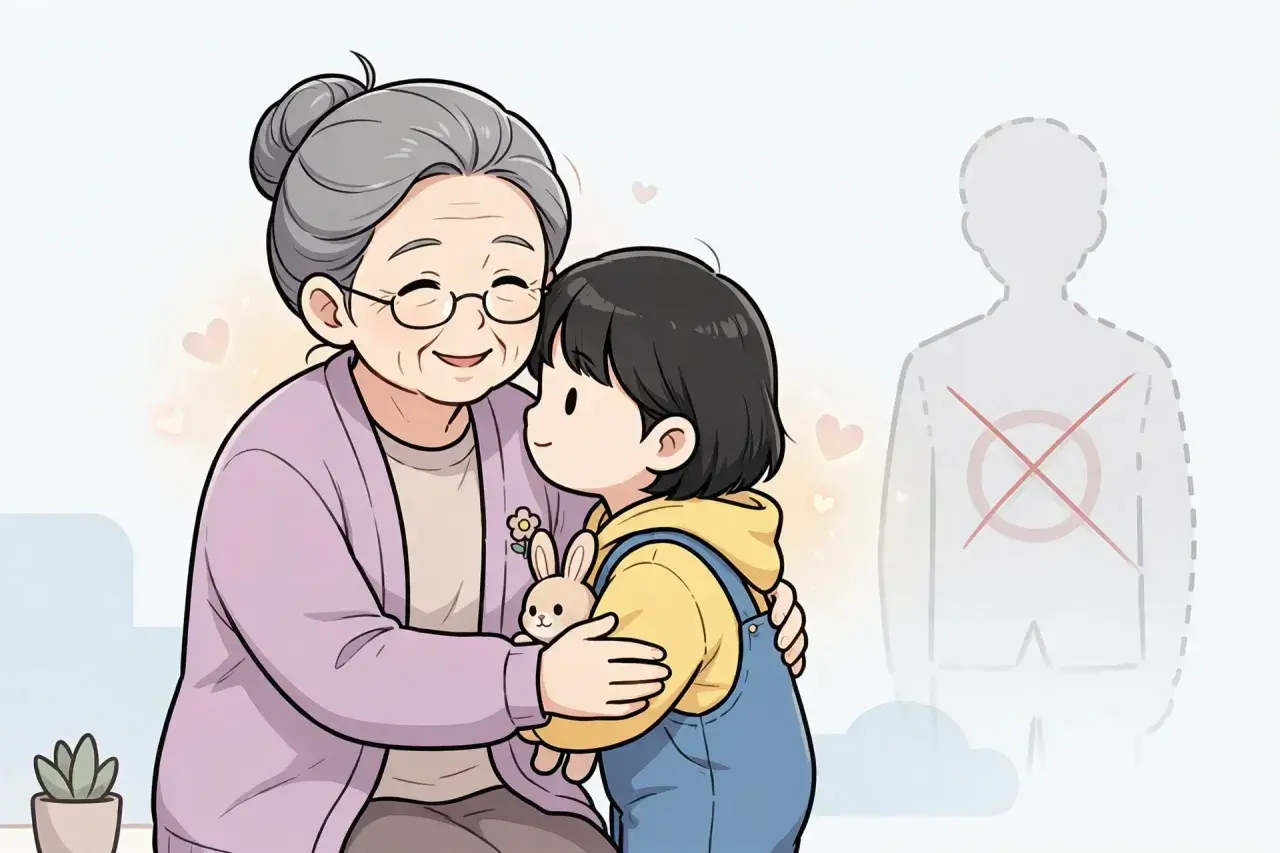
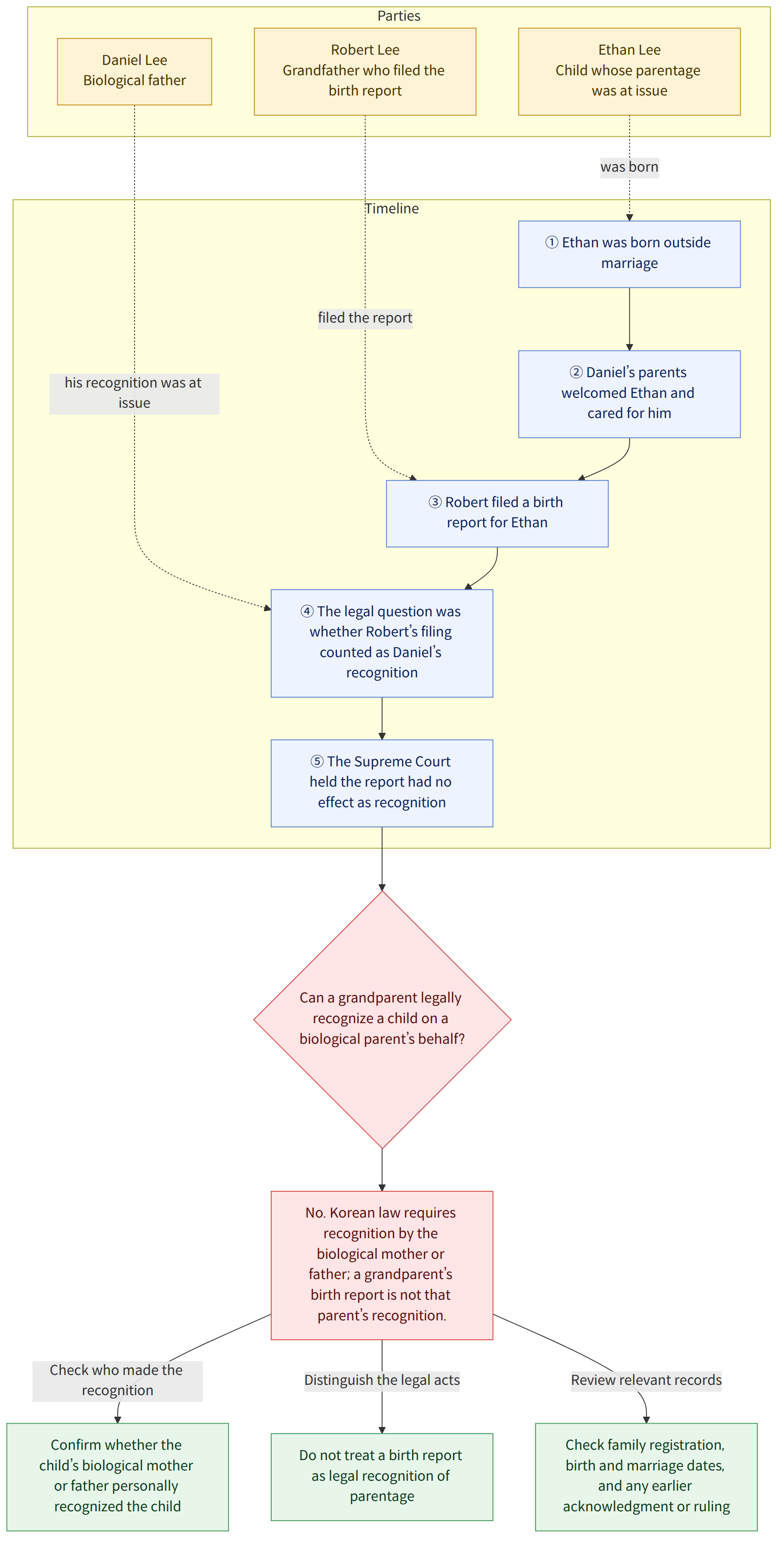
When Ethan Lee was born, his father, Daniel, was not married to his mother. Daniel’s parents, Margaret and Robert, welcomed the baby into their home and began caring for him while Daniel struggled to decide how to handle his new responsibilities.
The grandparents wanted Ethan’s family ties to be formally acknowledged. Believing that their own connection to Daniel gave them authority to act, Robert filed a birth report for the baby. To him, the paperwork reflected an obvious truth: Ethan was his grandson. But the family soon faced a crucial distinction between recording a child’s birth and legally establishing who the child’s parents are.
2. The Legal Question
Can a child’s grandparents legally recognize the child as the offspring of their own son or daughter, or does Korean law require the recognition to come from the child’s biological mother or father?
3. What Korean Law Says
Korean Civil Act Article 855(1) provides for recognition of a child born outside marriage by the child’s biological parents.
“A child born out of wedlock may be recognized by the child’s biological father or mother.”
Recognition is not simply an expression of family affection or a statement that a child belongs to a wider family. It is a legal act that establishes the parent-child relationship between the child and the person who recognizes the child. The law therefore identifies who may make that act: the biological father or mother—not a grandparent or another relative acting in that person’s place.
The distinction matters in practice:
- Recognition establishes a legal relationship between the child and the recognizing biological parent.
- A birth report records information about a child’s birth. A grandparent’s filing does not, by itself, substitute for recognition by the biological parent.
- A relative’s intention or belief cannot replace the personal act of recognition required by law.
A grandparent cannot create the legal parent-child relationship by recognizing the child on the biological parent’s behalf. A grandparent’s birth report does not have the legal effect of that parent’s recognition.
4. How Korean Courts Approach This
Korean courts treat recognition as an act that establishes legal parentage and must reflect the intention of the person who is to become the child’s legal parent. The central question is not whether the person filing paperwork is a close relative, cares for the child, or believes the biological relationship to be true. It is whether the legally authorized parent has made the recognition.
The Supreme Court has applied this principle directly to a grandfather who filed a birth report for his child’s child born outside marriage. The Court held that the report did not amount to recognition by the grandfather’s son and had no effect as recognition. A grandparent cannot fill the legal role reserved for the child’s biological mother or father, however sincere the motive.
Courts look to who made the legally required act, not merely to who submitted a form or what the family intended the form to accomplish.
5. Applying the Law to the Case
Robert’s actions may have helped record Ethan’s birth, but they did not answer the legal question of whether Daniel had recognized Ethan as his child.
- Identify the person whose legal parentage is at issue. Ethan’s paternal relationship with Daniel is the relationship the family hoped to establish.
- Ask who is authorized to recognize the child. Under Article 855(1), that authority belongs to Ethan’s biological father or mother. Robert is Ethan’s grandfather, not the parent whose recognition is needed.
- Separate the birth report from recognition. Robert’s filing cannot be treated as Daniel’s personal act merely because it concerns Daniel’s biological child or was made with the family’s best interests in mind.
- Consider the legal effect. The report does not create recognition by Daniel. Under the Supreme Court’s approach, a grandparent’s filing has no effect as recognition and cannot make the grandparent a legal substitute for the parent.
The result would not change simply because Margaret and Robert provide Ethan with a stable home or because everyone in the family knows who his biological father is. Those facts may matter greatly to the family, but they do not change who the law authorizes to recognize him.
If you are dealing with a similar issue, attorney Ji-sun Ahn of Ijun Law Firm can review family registration records, dates of marriage and birth, and any earlier acknowledgment of paternity, test result, or ruling with you. These details can help clarify which options apply to your situation.
6. Conclusion: What Happened, and What Should You Do?
Robert’s birth report did not legally recognize Ethan as Daniel’s child. It could not stand in for Daniel’s own act. If Daniel is to establish the legal parent-child relationship through recognition, the act must come from him as Ethan’s biological father; Ethan’s mother is also a person whom the statute authorizes to recognize him.
For families in a similar position:
- Do not assume a birth report is recognition. Ask the relevant registration office or a Korean family-law professional what the document does—and does not—establish.
- Have the biological parent address recognition directly. A grandparent’s consent, paperwork, or good intentions cannot replace the parent’s legally required act.
- Keep copies of all filings and seek advice promptly if parentage remains unrecorded or a form was submitted by someone other than the parent. Clear legal guidance can help prevent an administrative record from being mistaken for a completed recognition.

















