
1. A Human Story
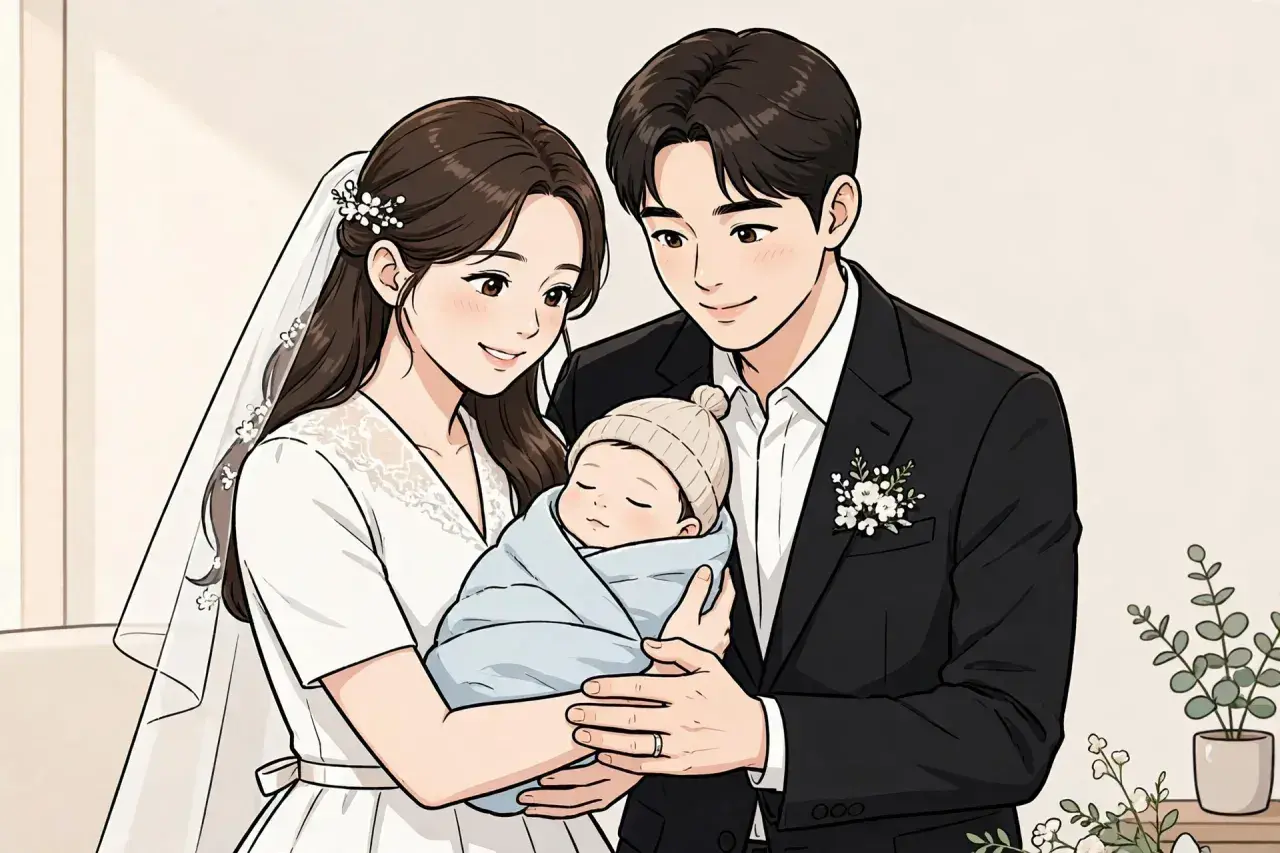
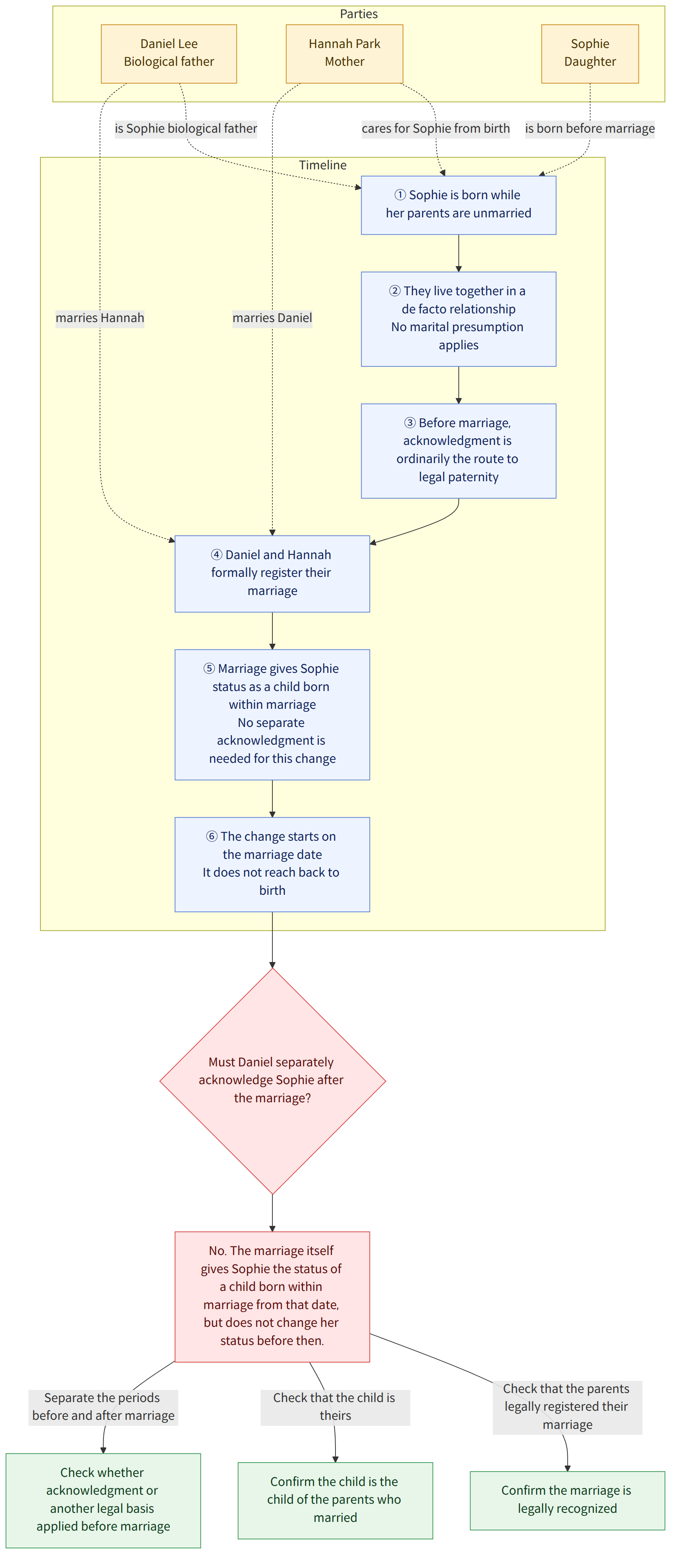
Daniel Lee and Hannah Park had built a family long before they had a marriage certificate. They lived together, shared bills, and welcomed their daughter, Sophie, while they were in a de facto relationship. Hannah was unmarried and cared for Sophie from birth. Daniel was Sophie’s biological father, but because the couple had not registered a marriage, their family life and their legal status did not yet line up neatly.
A few years later, Daniel and Hannah decided to marry and completed the formal marriage registration. Hannah wondered whether Daniel still had to take a separate legal step to be recognized as Sophie’s father. The answer turns on a distinction Korean law makes between a child born to unmarried parents and a child whose parents later marry—and on exactly when the law treats the parent-child relationship as established.
2. The Legal Question
When a child is born to a couple who are living together but have not legally registered their marriage, must the biological father formally acknowledge the child after the parents marry, or does the marriage itself give the child the legal status of a child born within marriage?
3. What Korean Law Says
Korean law distinguishes between a de facto relationship and a legally registered marriage. Living together as a couple—even for years—does not, by itself, trigger the legal presumption that a husband is the father of a child born during marriage. That presumption applies to children born during a legally recognized marriage under Article 844 of the Korean Civil Act.
For a child born outside marriage, the biological father ordinarily establishes the legal parent-child relationship through acknowledgment, as provided for in Article 855. But the law also provides a different route when the child’s biological parents later marry.
Article 855(2) of the Korean Civil Act provides that a child born outside marriage is regarded as a child born within marriage when the child’s parents marry.
This legal effect is commonly called legitimation by marriage. Its key features are:
- The child must be the child of the parents who marry.
- The parents must enter into a legally recognized marriage; simply continuing or formalizing a de facto relationship socially is not enough.
- Once they marry, the child is treated as a child born within marriage without a separate acknowledgment by the father.
- The effect begins when the parents marry. It does not reach back to the child’s date of birth.
The last point matters. The law changes the child’s legal status from the date of the parents’ marriage; it does not rewrite the child’s legal status for the period before that marriage.
4. How Korean Courts Approach This
The governing approach is statutory and status-based. The central questions are whether the parents were legally married and, if not, whether they later married each other. A couple’s shared home, commitment, or public presentation as spouses does not substitute for the formal legal marriage required for this rule.
The legal effect of marriage-based legitimation starts when the parents marry, not when the child is born. Before that date, the ordinary rules for a child born outside marriage apply.
That means the analysis separates two periods. Before the marriage, the father’s legal relationship with the child generally requires acknowledgment or another legally effective basis. From the date of the parents’ marriage, Article 855(2) treats the child as born within marriage, so a separate acknowledgment is not required for that change in status.
5. Applying the Law to the Case
The facts of Daniel and Hannah’s situation fit the rule step by step:
- Sophie was born before her parents’ legal marriage. At that time, Daniel and Hannah were in a de facto relationship, not a registered marriage. The marital presumption in Article 844 therefore did not apply merely because they lived together as a couple.
- Before the marriage, acknowledgment would ordinarily be the route to establishing Daniel’s legal paternity. Being Sophie’s biological father and being legally recognized as her father are not necessarily the same thing under the rules for children born outside marriage.
- Daniel and Hannah later married each other. Their formal marriage—not simply their prior cohabitation—triggered Article 855(2).
- The marriage gave Sophie the status of a child born within marriage from that date. As a result, Daniel does not need to make a separate acknowledgment solely to produce that status after the marriage.
- The effect is not retroactive. The legal change begins on the date Daniel and Hannah married. It does not mean that the law treats Sophie as having had the same marital-child status from the day she was born.
The practical distinction is therefore not whether Daniel loves or supports Sophie, nor whether the couple considered themselves a family before marrying. It is whether they completed a legally recognized marriage, and when.
If you are dealing with a similar issue, attorney Ji-sun Ahn of Ijun Law Firm can review the family registration, the marriage, separation and birth dates relevant to the parentage dispute, and any prior court records with you. These details can help clarify which options apply to your situation.
6. Conclusion: What Happened, and What Should You Do?
After Daniel and Hannah registered their marriage, Sophie became legally regarded as a child born within marriage under the rule on legitimation by marriage. Daniel did not need to acknowledge Sophie separately for that status to arise. But the status took effect from the marriage date, not from Sophie’s birth.
For families in a similar position:
- Confirm the marriage is legally registered. A ceremony or long-term cohabitation alone does not activate this rule.
- Check the family relationship records after the marriage. If the records do not appear to reflect the new status, ask the relevant registration office what documents or correction procedure are needed.
- Get individual legal advice if the biological relationship, parentage records, or timing is disputed. The marriage-based rule depends on the parents being the child’s parents, and the date of marriage can be legally significant.

















