1. A Human Story
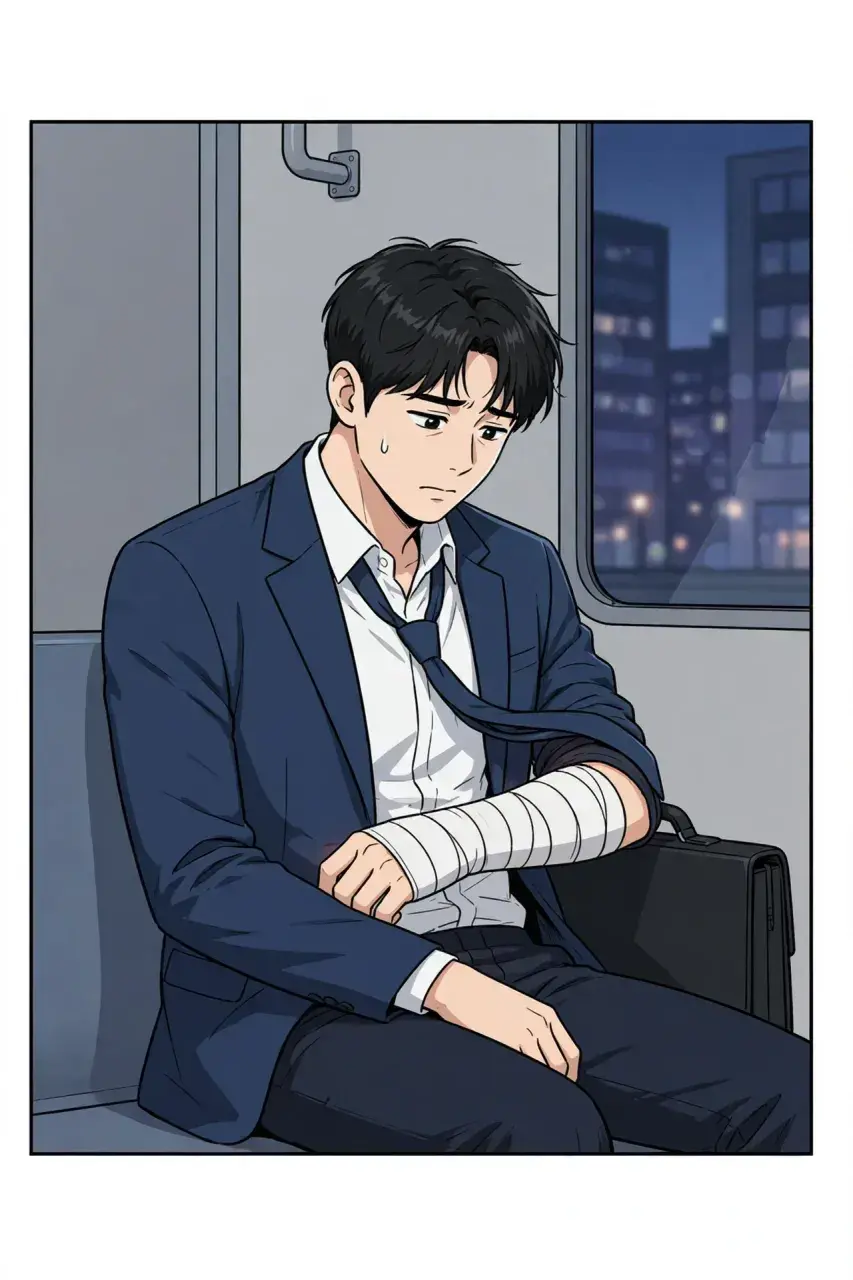
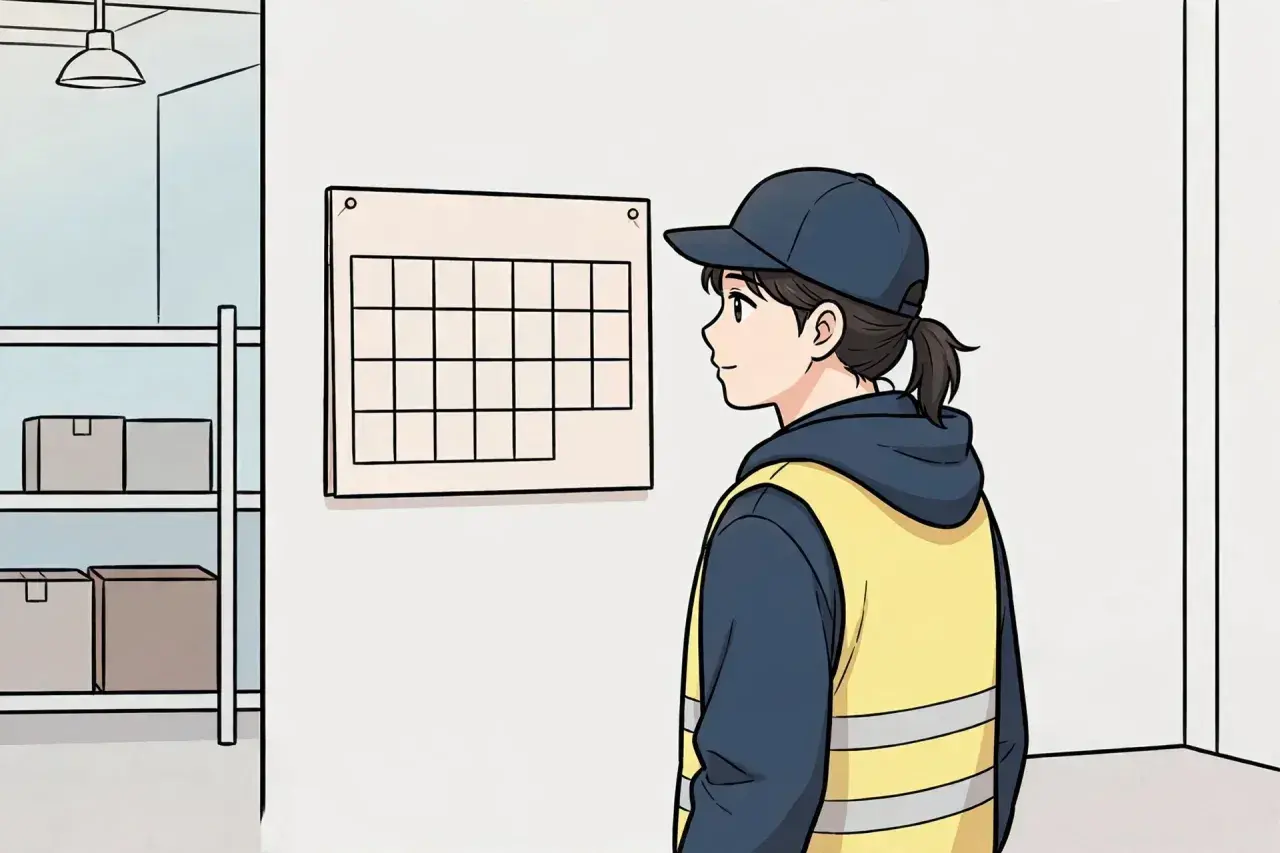
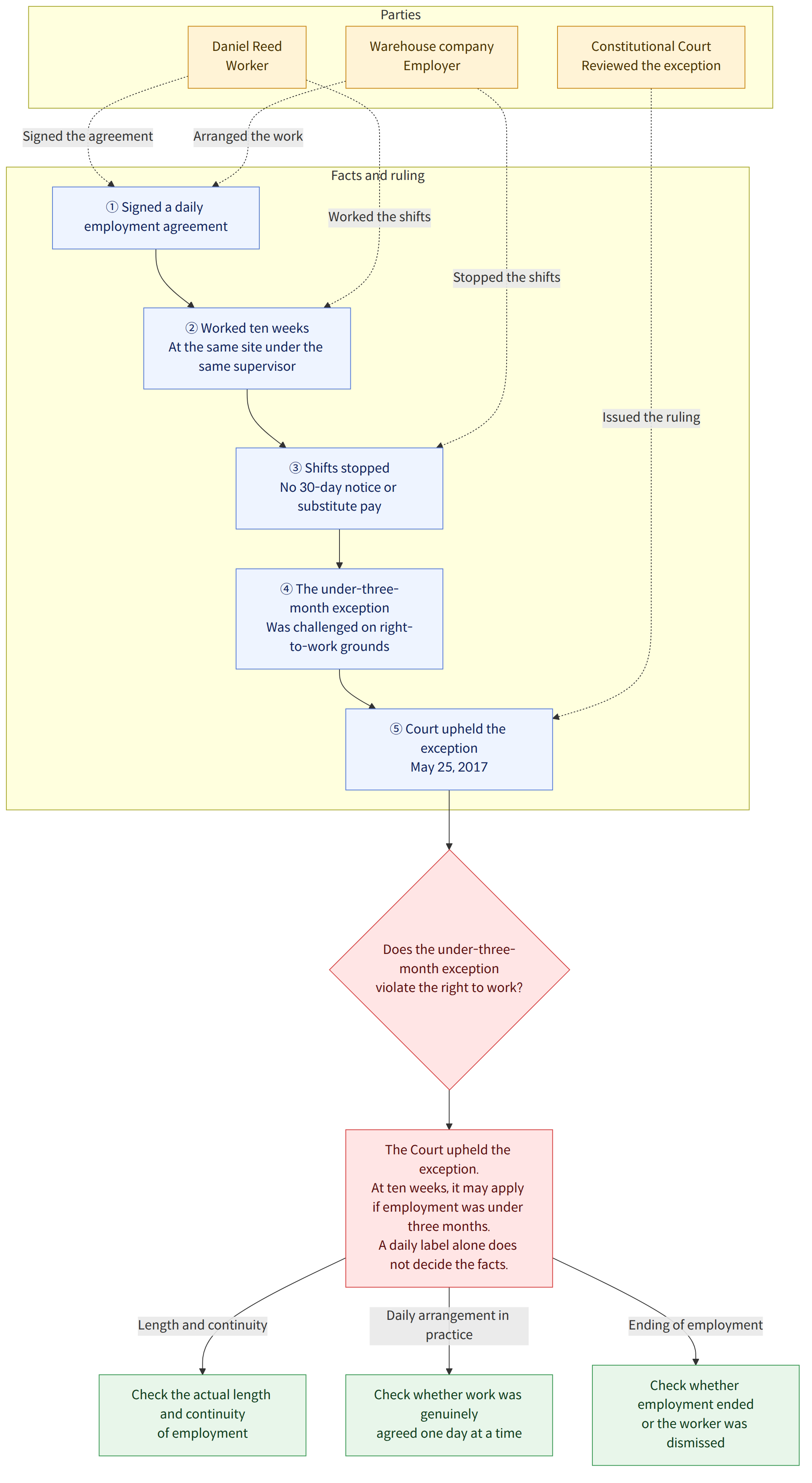
Daniel Reed had taken a warehouse job in Incheon because it offered something he needed: steady shifts, even if each day’s work was arranged separately. He signed what the manager called a daily employment agreement, reported to the same site, and worked under the same supervisor. For ten weeks, he expected another shift to follow the last.
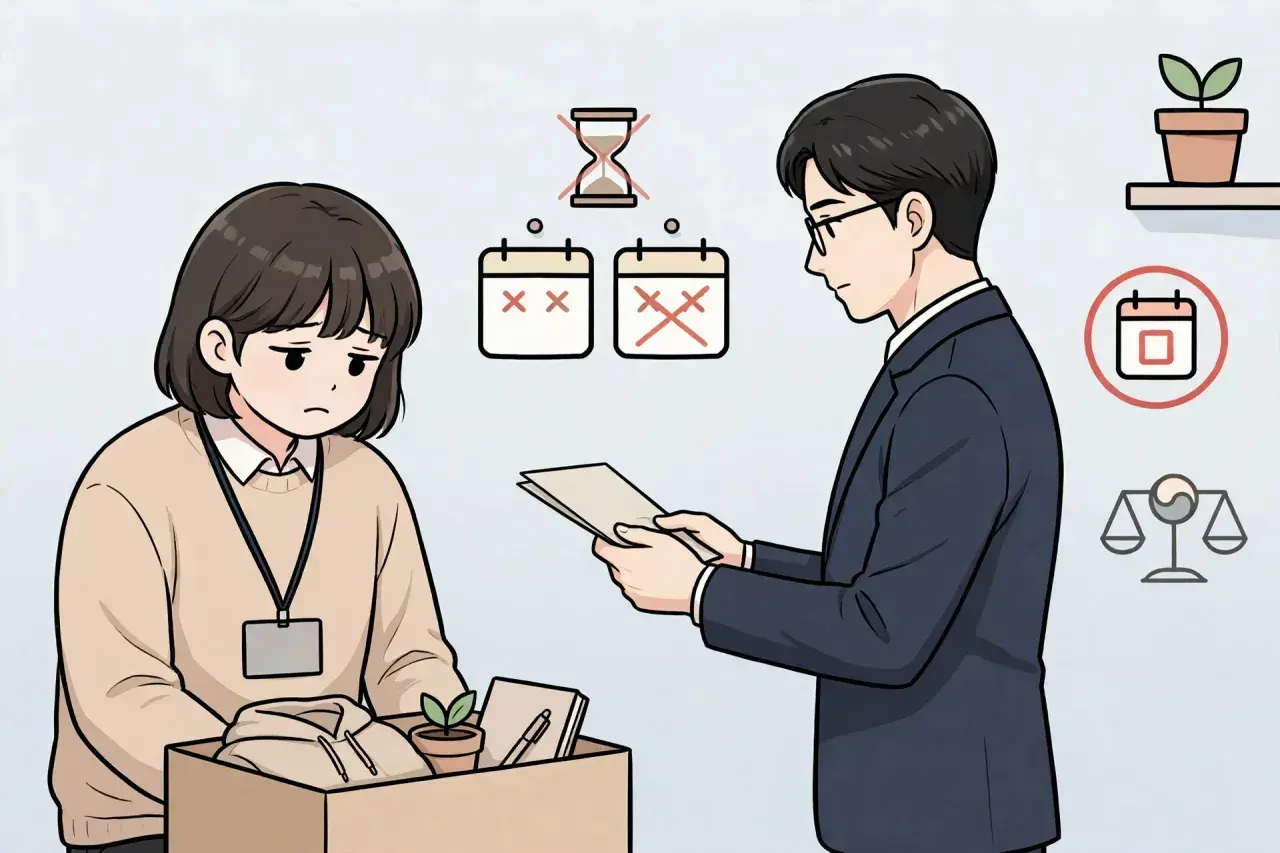
Then a message arrived: there would be no more work for him. Daniel was not given 30 days’ warning, and the company did not pay him 30 days’ wages in lieu of notice. He felt that the daily paperwork had been used to make a sudden dismissal easier. His question was not only whether the decision was fair, but whether the rule allowing an exemption for short-term daily workers violated the constitutional right to work.
2. The Legal Question
May Korean law exempt a daily worker who has not been employed continuously for three months from the usual requirement of 30 days’ dismissal notice or substitute pay—and does that exemption unlawfully infringe the worker’s right to work?
3. What Korean Law Says
Korea’s Labor Standards Act generally requires an employer to give at least 30 days’ notice before dismissing a worker. If the employer does not give that notice, it must generally pay the worker ordinary wages for 30 days instead. The Act, however, provides an exception for a worker who has been employed for less than three months.
The general rule: An employer must give at least 30 days’ advance notice of dismissal or pay at least 30 days’ ordinary wages in lieu of notice.
The relevant exception: The advance-notice requirement does not apply to a worker employed for less than three months.
The important point is the length of employment, not simply the heading on a contract. A person described as a “daily worker” is not necessarily excluded indefinitely. If the person has been employed continuously for at least three months, the short-service exception does not apply merely because the paperwork continues to describe the job as daily.
The rule should also be distinguished from the separate question of whether a particular work arrangement has actually ended or whether the employer has dismissed the worker. A genuine agreement for one day’s work will ordinarily end when that agreed day ends. But where work continues over time, the facts and employment relationship—not only the contract label—are relevant.
4. How Korean Courts Approach This
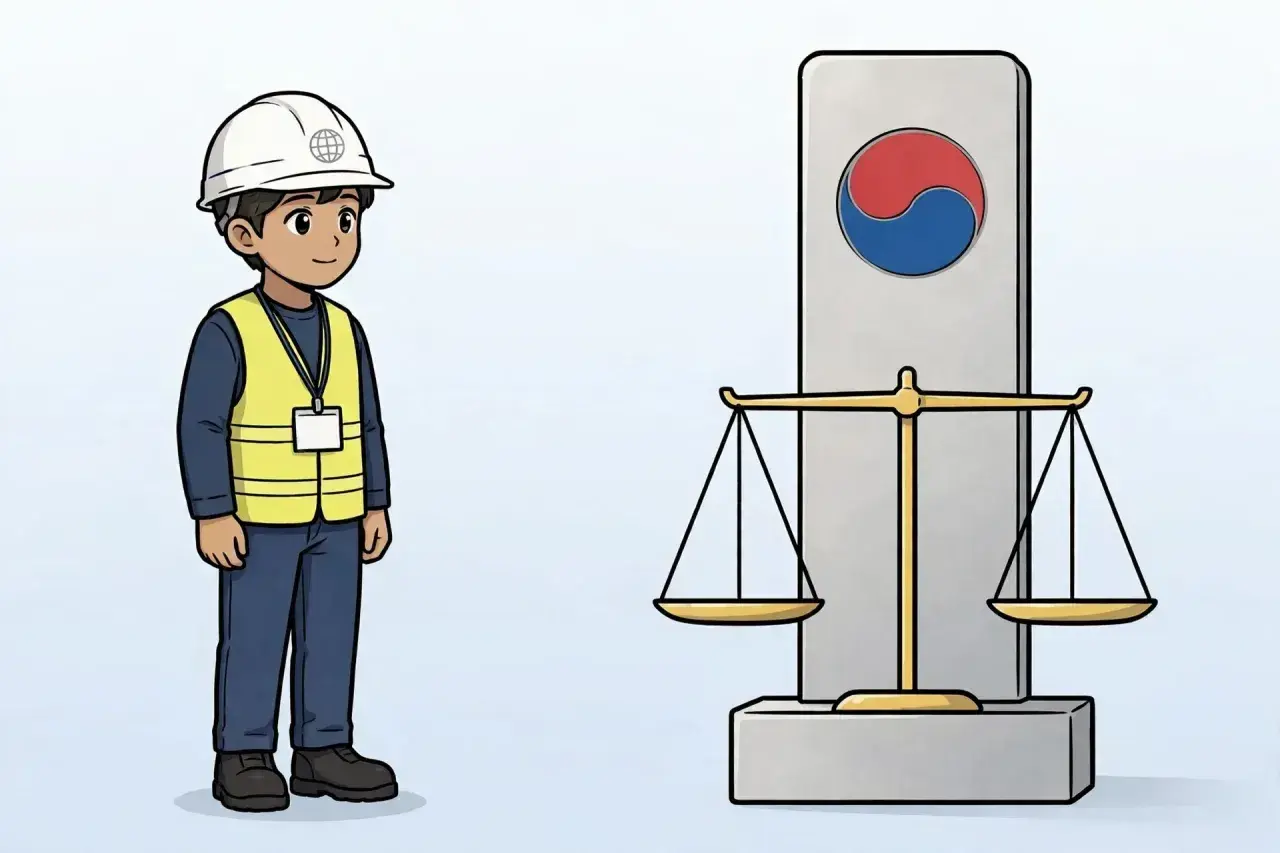
The Constitutional Court considered the three-month exception in its decision of May 25, 2017. It recognized that advance notice is an important part of working conditions and therefore relates to the constitutional right to work. But it also held that the legislature has room to decide the details of employment protections, including who qualifies and how long the notice period should be.
The Court reasoned that advance notice presupposes an employment relationship expected to continue for some period. For genuinely short or temporary work, a worker may have less basis to expect continuing employment; in a true one-day arrangement, the relationship ordinarily ends when the agreed day is over.
The Court also considered the burden on employers. Requiring 30 days’ notice or 30 days’ pay even for a worker engaged on a daily basis for less than three months could, in its view, impose a substantial burden. It concluded that using three months as the minimum period for treating such workers like longer-serving employees for this purpose did not exceed the legislature’s discretion.
The constitutional challenge therefore failed: the Court held that the exception did not violate the petitioner’s right to work. That ruling does not mean every worker called “daily” loses the protection, or that other legal questions about a dismissal are automatically resolved. It addresses the constitutionality of this particular short-service exception.
5. Applying the Law to the Case
Daniel had worked for ten weeks, which is less than three months. If the company’s account is accurate—that he was engaged for separate days and his employment had not continued for three months—the statutory exception would ordinarily mean that the company was not required to give him 30 days’ notice or pay 30 days’ ordinary wages in lieu of notice.
The Constitutional Court’s reasoning makes Daniel’s constitutional argument difficult. The Court upheld the three-month line, accepting that the legislature could distinguish between short-term work and longer employment for the purpose of advance notice. Daniel could not defeat that rule simply by arguing that all workers, including short-term daily workers, should receive the same notice protection.
But the word “daily” would not settle every factual issue. Daniel’s work at the same warehouse, under the same supervisor, may be relevant to understanding how the arrangement operated. He would need to establish the actual period and continuity of his employment. If the records showed that he had in fact been employed continuously for at least three months, the employer could not rely on the less-than-three-month exception merely by pointing to daily contracts. That would remove this particular exception; it would not, by itself, determine every other issue surrounding the termination.
Daniel should therefore compare the written agreements with the practical record: dates worked, shift schedules, wage records, messages about upcoming shifts, and any notice that the work was ending. Those details could help clarify whether the employment was genuinely limited to separate days or had continued as an employment relationship over time.
6. Conclusion: What Happened, and What Should You Do?
On the facts as initially described—ten weeks of genuinely day-by-day employment—Daniel would likely fall within the less-than-three-month exception and would not be entitled to 30 days’ notice or substitute pay under the advance-notice rule. The Constitutional Court has upheld that exception against a constitutional challenge. If, however, his work had actually continued for at least three months, the daily label alone would not preserve the exemption.
For readers facing a similar situation:
- Keep contracts, schedules, wage statements, attendance records, and messages showing when work began and whether shifts continued.
- Check the actual length and continuity of employment before assuming that a “daily” contract automatically removes notice protections.
- If the employer’s stated end date or the work records are disputed, seek advice based on the documents and the facts of the arrangement.
If your employer says you were employed for less than three months, you could ask attorney Ji-sun Ahn of Ijun Law Firm to review your contracts, shift schedules, wage records, and messages about continuing work to help assess what those documents show about the length and continuity of the employment.