Lewis Hooper, a British Korea.net honorary reporter, visited Hwaseong Vocational Training Prison (화성직업훈련교도소) in Hwaseong, Gyeonggi Province, with other honorary reporters on September 17. The group looked at vocational training and rehabilitation programs for inmates. The article does not state the year of the visit.
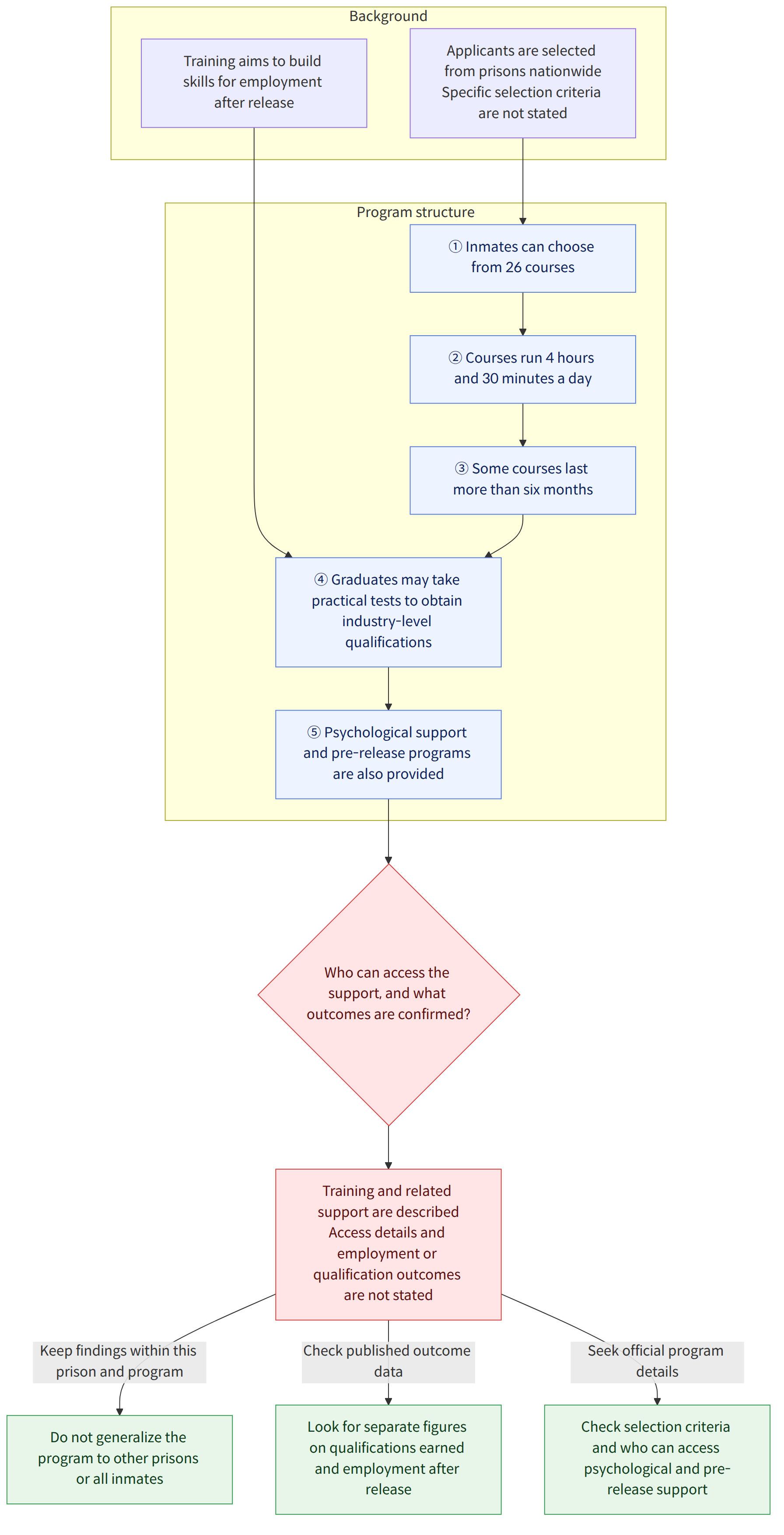
The prison offers training in a range of fields, including ceramics, 3D design and machine design. Inmates can choose from 26 courses, each of which runs for 4 hours and 30 minutes a day. The length of training varies by course, with some lasting more than six months.
Background and context
The article says that Hwaseong Vocational Training Prison selects applicants from prisons across the country and uses a systematic selection process. However, it does not explain in detail the conditions or criteria used to select applicants.
The aim of the training is to help inmates gain practical knowledge and industry-related skills needed for employment after release. Graduates of the courses can obtain industry-level qualifications in fields such as auto maintenance, welding, baking, pastry-making, Korean cuisine and Chinese cuisine by taking practical tests. This means there is an opportunity to obtain a qualification; it does not mean that every graduate has earned one.
The article says that psychological support and pre-release programs are also provided in addition to vocational training. It describes individual cells for inmates who require special conditions, while most cells house about five to six people.
What this news means
Returning to society and preparing for employment after release cannot be explained simply as learning a single skill. This case describes psychological support and pre-release programs alongside vocational training. However, the article does not make clear how the different forms of support are connected or what help is provided to whom.
The article says that training takes place for 4 hours and 30 minutes a day and that some courses last more than six months. This suggests that the program aims to develop skills over time rather than offer a short-term experience. The opportunity to obtain qualifications through practical tests can also be seen as a way to connect the training with real-world industry skills. However, separate outcome data would be needed to determine whether the training leads to actual employment.
For example, an inmate who chooses a welding course may have the opportunity to obtain a relevant qualification by taking a practical test after completing the training. Even so, this example alone does not establish that the person will earn a qualification or find work after release.
What is confirmed and what remains unknown
Confirmed facts
- Lewis Hooper and other honorary reporters visited Hwaseong Vocational Training Prison on September 17. The article does not state the year of the visit.
- The prison was described as selecting applicants from prisons across the country through a systematic process.
- Inmates can choose from 26 courses that run for 4 hours and 30 minutes a day, and some courses last more than six months.
- The article says that psychological support and pre-release programs are also provided in addition to vocational training.
What remains unknown
- The article does not state the year of the September 17 visit or the specific criteria for nationwide selection.
- It does not give the proportion of training graduates who actually found work or obtained qualifications through practical tests.
- The specific content of the psychological support and pre-release programs, who can access them, and how people participate are not known.
What readers should check
- This case should not be generalized to programs at other prisons or to the support available to all inmates; the scope of the institution and its program should be kept in view.
- When assessing the impact of vocational training, readers should look beyond the number and length of courses and check whether qualification and employment outcomes have been published separately.
- The article does not give the applicant selection criteria or the specific procedures for psychological and pre-release support. Readers who need this information should seek further details in official guidance from the relevant institutions.