
1. A Human Story
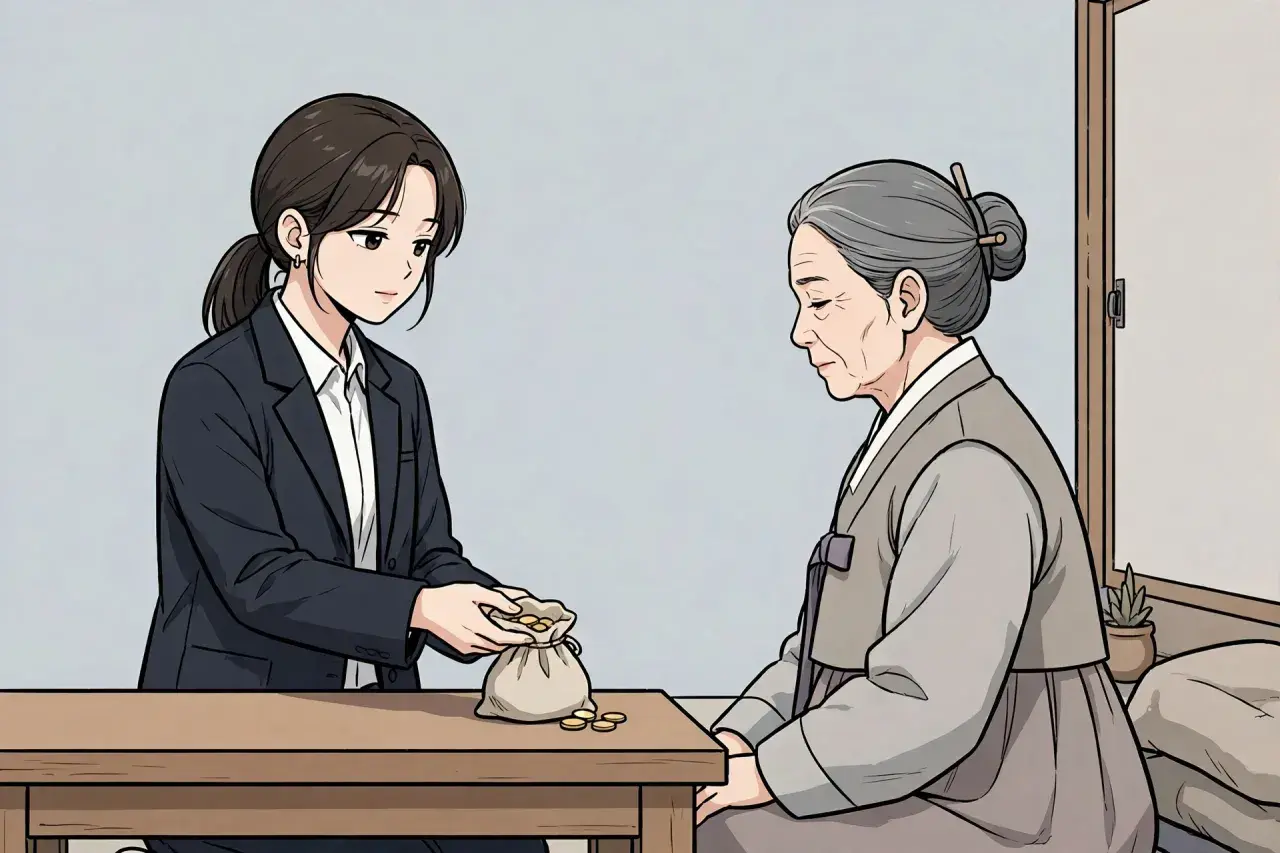
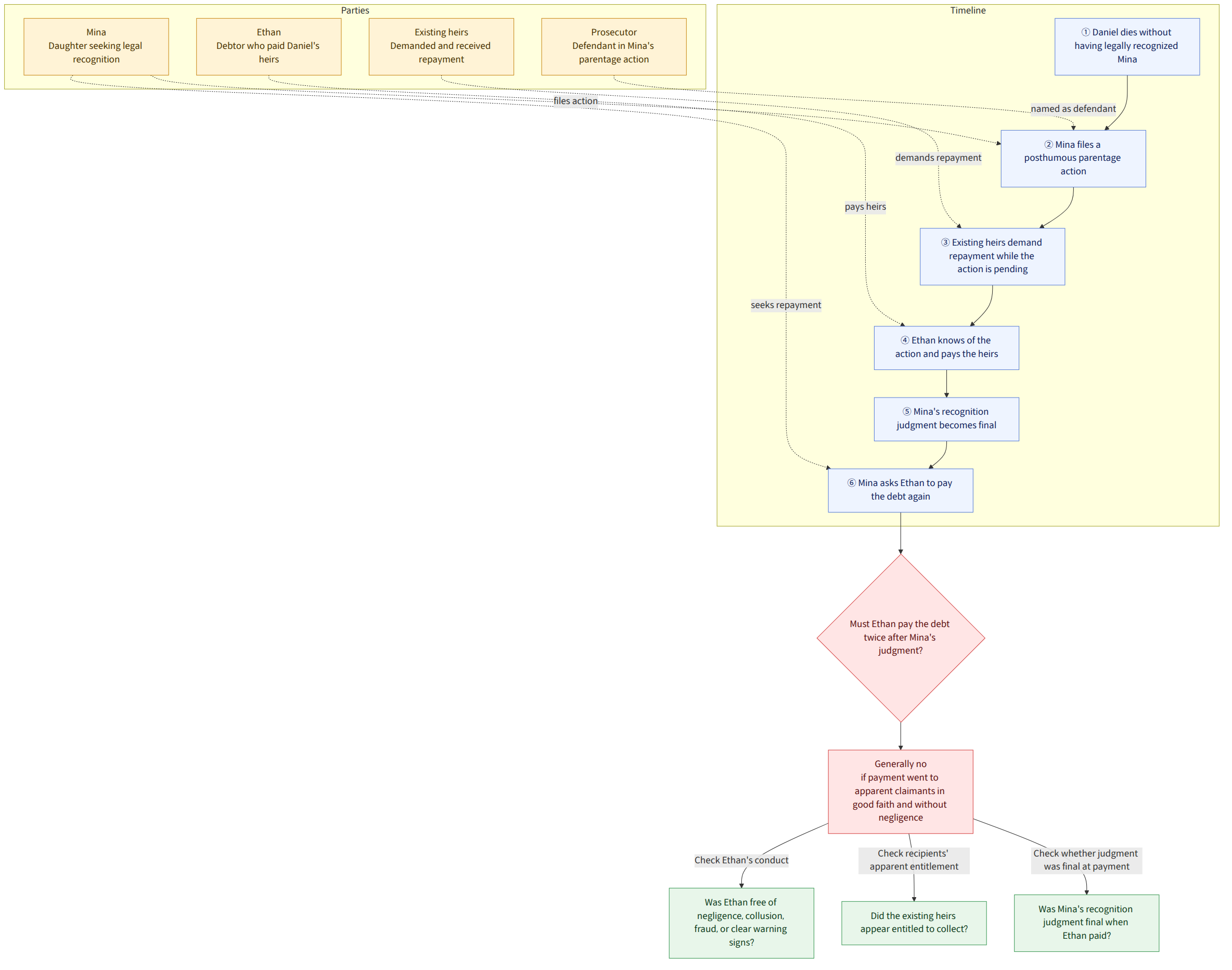
When Daniel Han died, he left behind a small apartment, a bank account, and a number of people who believed they were entitled to inherit from him. Among them was Mina, Daniel’s daughter, born outside marriage. She had never been legally recognized as his child, so she filed an action after his death to establish their parent-child relationship, bringing the case against the prosecutor as Korean law permits in this situation.
Daniel had also been owed money by Ethan, a former business partner. While Mina’s case was moving through court, Daniel’s existing heirs demanded repayment. Ethan knew that Mina had filed her action. Still, with a debt coming due and the claimants appearing to be Daniel’s recognized heirs, he paid them.
Months later, Mina’s judgment became final. Her legal relationship to Daniel was established, with consequences for inheritance. She then asked Ethan to pay the debt again. Ethan’s dilemma was not whether Mina was Daniel’s child, but whether he had already discharged his obligation by paying the people who appeared entitled to collect at the time.
2. The Legal Question
If a person who owes money to a deceased father pays his existing heirs while a child’s posthumous parentage action is pending, must the debtor pay that debt again after the child’s recognition judgment becomes final?
The answer is generally no, provided the payment was made to people who appeared entitled to receive it and the debtor acted in good faith without negligence.
3. What Korean Law Says
Korean law recognizes that a child’s parentage may be established through a court action, including after the alleged father has died. Once recognition is established, its legal effect generally reaches back to the child’s birth. But that does not mean the child can exercise inheritance rights as though the judgment were already final while the case is still pending.
Two principles matter here:
Recognition has retroactive effect, but it does not automatically undo every transaction completed before the judgment became final. Korean Civil Act Article 860 provides for recognition’s retroactive effect while protecting rights acquired by third parties.
Payment to a quasi-possessor of a claim can be effective. Under Article 470 of the Korean Civil Act, payment made in good faith, without negligence, to someone who appears to be entitled to collect may discharge the debtor’s obligation.
In practical terms, the analysis turns on these points:
- Was the recognition judgment final when payment was made? Before final judgment, the child generally cannot exercise inheritance rights on the basis of the pending action alone.
- Did the recipients appear entitled to collect? Existing heirs who are entitled to assert the deceased’s rights may demand payment while the parentage case remains unresolved.
- Did the debtor act in good faith and without negligence? The debtor must have had a reasonable basis to believe the recipients could receive the payment. The mere fact that a parentage action has been filed does not, by itself, make payment to the existing heirs improper.
Article 470 is the provision governing payment to a quasi-possessor of a claim. The relevant protection is not automatic: unusual facts—such as collusion, fraud, or clear warning signs that the recipients were not entitled to collect—could affect whether the debtor acted in good faith and without negligence.
4. How Korean Courts Approach This
Korean courts distinguish between a right that may eventually be established and a right that can be exercised at the time payment is demanded. A child’s action to establish parentage may later succeed, but while it remains pending, the child cannot generally insist on exercising inheritance rights as if the outcome were already settled.
Courts also consider the position of a debtor who faces a demand from the deceased’s existing heirs. The debtor is not ordinarily required to refuse payment merely because a later judgment could change who counts as an heir. If the recipients appeared to be the proper claimants and the debtor had no reason to doubt their entitlement, the payment may qualify as effective payment to a quasi-possessor of the claim.
The central question is therefore practical as well as legal: was it reasonable for the debtor to pay those recipients at that time? A pending case is relevant, but it does not automatically make the existing heirs’ demand invalid or expose the debtor to double payment.
5. Applying the Law to the Case
First, Mina’s action was still pending when Ethan paid. She had begun the legal process to establish her relationship with Daniel, but the judgment had not yet become final. Filing the action did not, by itself, allow her to exercise inheritance rights against Ethan as though her status had already been judicially established.
Second, Daniel’s existing heirs demanded payment. On the facts described, they were the people then recognized as entitled to assert the claim Daniel had held against Ethan. They were not simply strangers presenting an unsupported demand.
Third, Ethan knew about Mina’s case, but that fact alone does not make his payment invalid. The law does not require a debtor to treat a possible future change in inheritance status as though it had already occurred. Nor is the debtor generally required to refuse a demand by existing heirs solely because a recognition action has been filed.
Fourth, the payment may be protected if Ethan acted reasonably. If he paid the apparent heirs in good faith and without negligence, the payment can be effective under the rule on payment to a quasi-possessor of a claim. Mina’s later success does not, by itself, require Ethan to pay the same debt a second time.
The result could differ if Ethan had participated in a scheme to defeat Mina’s rights, knew the recipients had no valid claim, or ignored compelling evidence that they were not entitled to collect. Those would be special circumstances requiring closer examination. But on the stated facts—payment to the existing heirs while Mina’s case was unresolved—the law generally protects the debtor from a second demand.
If you are dealing with a similar issue, attorney Ji-sun Ahn of Ijun Law Firm can review the paternity ruling, the estate inventory and division records, and records of any payments or transfers predating the ruling with you. These details can help clarify which options apply to your situation.
6. Conclusion: What Happened, and What Should You Do?
Mina’s final judgment established her relationship to Daniel, but it did not automatically make Ethan’s earlier payment ineffective. Because he paid the people who appeared entitled to collect before her judgment became final, and assuming he acted in good faith without negligence, Ethan does not ordinarily have to pay Mina again.
Anyone facing a similar demand should take these practical steps:
- Check the legal status of the claimants. Ask for documents showing who the existing heirs are and who is authorized to collect the debt.
- Keep a careful record. Preserve the payment receipt, correspondence, and any documents showing what you knew about the pending parentage or inheritance dispute.
- Get advice before paying when the dispute is concrete. If there are competing demands, signs of fraud, or uncertainty about who may receive payment, obtain Korean legal advice before transferring the money.

















