
1. A Human Story
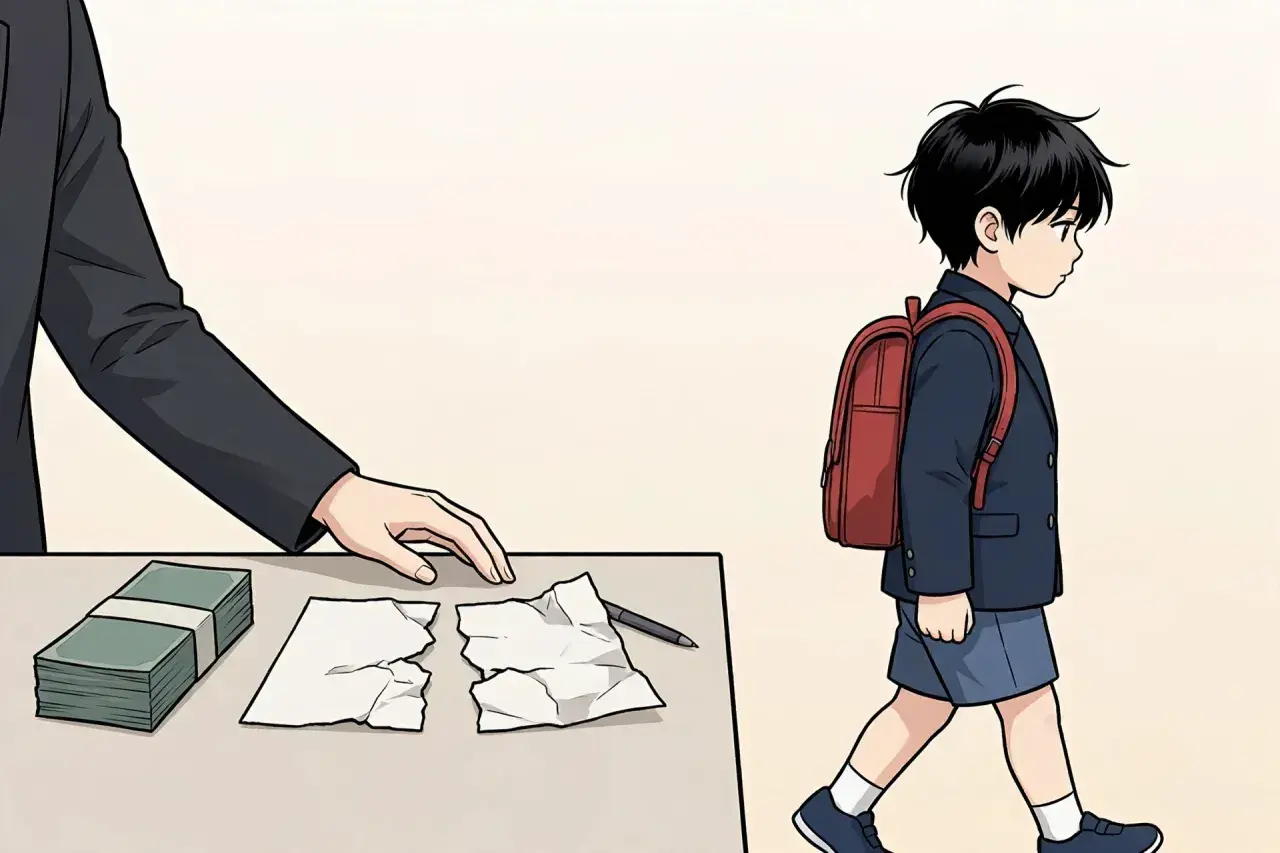
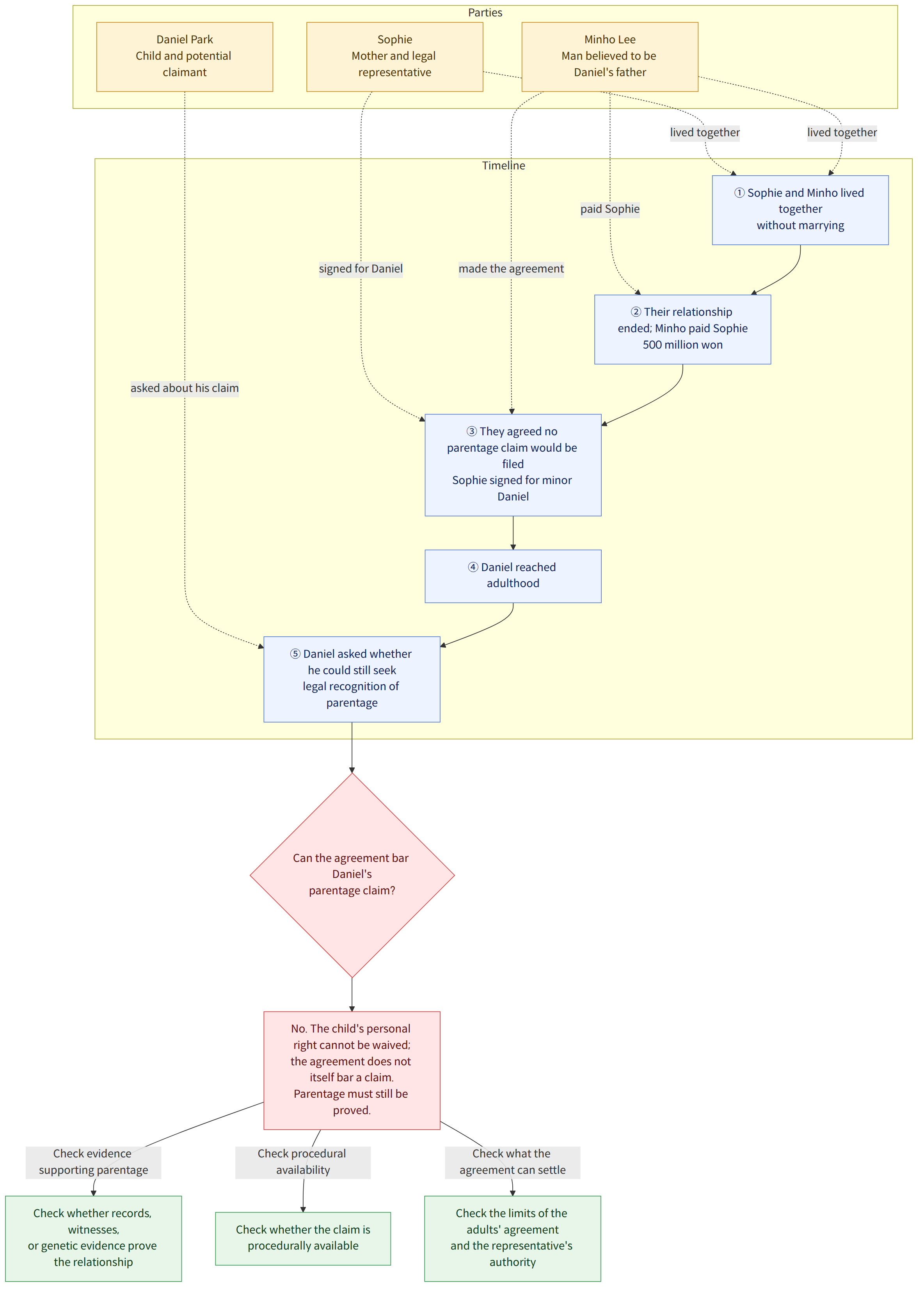
For years, Daniel Park knew that Minho Lee had been part of his life before he was old enough to remember it. Minho and Daniel’s mother, Sophie, had lived together without marrying, and Minho was believed to be Daniel’s father. After the relationship ended, Minho paid Sophie 500 million won. In return, they agreed that Daniel would not bring a claim to have Minho legally recognized as his father. Daniel was still a child, and Sophie signed for him as his legal representative.
The agreement seemed to close a difficult chapter. But it had been made by two adults about a right that belonged to someone else. When Daniel reached adulthood, he began asking questions about his family history—and about why a private agreement had determined whether the law would recognize his relationship with Minho. He wanted to know whether he could still ask a court to establish that relationship.
2. The Legal Question
Can a child, upon reaching adulthood, bring a claim to establish legal parentage when the child’s mother previously agreed, on the child’s behalf, that no such claim would be filed in exchange for money?
Under Korean law, the central issue is whether the child’s right to seek recognition can be waived by a parent or representative. The answer is no: this is a personal status right that cannot be surrendered in that way.
3. What Korean Law Says
When a child is born to parents who are not married, the legal relationship between the child and the father may not be established automatically. If the father has not legally acknowledged the child, a court claim can be used to seek recognition of that relationship.
The Korean Civil Act allows a child to bring a claim for recognition of parentage. A legal representative may act for a child who is a minor, but that does not mean the representative owns the underlying right or can permanently give it up.
The right to seek recognition is a personal right concerning the child’s legal status. It cannot be waived, and an attempted waiver has no legal effect.
The key points are:
- The right belongs to the child. It concerns the child’s legal identity and family status, not merely a financial interest held by a parent.
- A representative’s authority has limits. A parent may represent a minor in legal matters, but cannot validly waive this personal right on the child’s behalf.
- A private agreement cannot block the claim. An agreement between the adults not to pursue recognition does not extinguish the child’s right.
- The claim still requires proof. The agreement’s ineffectiveness does not itself establish that the person named as the father is the biological parent. The claimant must prove the facts supporting recognition, often with relevant records, witness testimony, or genetic evidence.
4. How Korean Courts Approach This
Korean courts treat claims about parentage as matters of personal status. Such claims can affect a person’s identity and legal family relationships, so they are not treated like ordinary property claims that parties may freely trade or settle away.
The Supreme Court has applied that principle to recognition claims: because the right is personal to the child and cannot be waived, an attempted waiver does not become effective merely because the child’s representative signed it. Nor does the passage of time, by itself, turn an invalid waiver into a valid one through a general theory that the right has been lost by delay.
A parent’s agreement may settle matters between the adults, but it cannot erase a child’s non-waivable right to ask a court to determine parentage.
That principle does not guarantee success in every case. The court must still consider whether the claim is procedurally available and whether the evidence proves the alleged parent-child relationship. The point is narrower but decisive: the old promise not to sue is not, by itself, a bar to the child’s claim.
5. Applying the Law to the Case
Daniel’s situation follows the rule step by step.
- The right at issue was Daniel’s. The claim would establish his legal relationship to Minho. It was not a right that Sophie could own or surrender simply because she was his mother.
- Sophie signed while acting as Daniel’s representative. Her role allowed her to act for him while he was a minor, but it did not give her authority to waive a personal status right that the law does not permit anyone to waive.
- The payment does not make the waiver effective. Minho’s payment of 500 million won may explain why the adults reached their agreement, but the amount paid cannot transform an invalid waiver of Daniel’s right into a valid one. The agreement therefore cannot, on its own, prevent Daniel from bringing a recognition claim.
- Daniel must still establish parentage. A court would consider the evidence relevant to whether Minho is his father. The earlier agreement may form part of the factual background, but it is not a substitute for proof and does not decide the parentage question.
- The claim does not automatically resolve every financial issue. A ruling that Daniel may pursue recognition would not, by itself, determine whether either adult has a separate claim concerning the payment or other terms of their agreement. Those questions would require their own legal analysis.
If you are dealing with a similar issue, attorney Ji-sun Ahn of Ijun Law Firm can review family registration records, dates of marriage and birth, and any earlier acknowledgment of paternity, test result, or ruling with you. These details can help clarify which options apply to your situation.
6. Conclusion: What Happened, and What Should You Do?
Daniel can bring a claim against Minho seeking judicial recognition of parentage. The agreement Sophie signed when Daniel was a minor cannot take that option away from him: under Korean law, the right belongs personally to the child and is not capable of waiver by a parent or legal representative.
That does not mean Daniel will win automatically. He must still present evidence supporting the claimed relationship, and any procedural questions should be assessed in light of the details of his case. But the adults’ agreement not to pursue recognition is not a valid reason, by itself, to shut the courthouse door.
If you face a similar situation:
- Keep relevant records: preserve communications, birth and family records, photographs, and other material that may help establish the relationship.
- Get case-specific legal advice early: ask a Korean family-law attorney about the proper claim, evidence, and any procedural deadlines that may apply to your circumstances.
- Do not assume a childhood agreement ends the matter: a parent’s signature or a payment between adults does not necessarily extinguish the child’s own legal rights.

















