
Shin Jeong-ok, a team leader at a McDonald’s restaurant in Seongbuk-gu, Seoul, is 63 and still works five days a week at the Jongam SK location in northern Seoul. She also said that when she tells her neighbors or friends she works at McDonald’s, she can see envy in their eyes.
Background and context
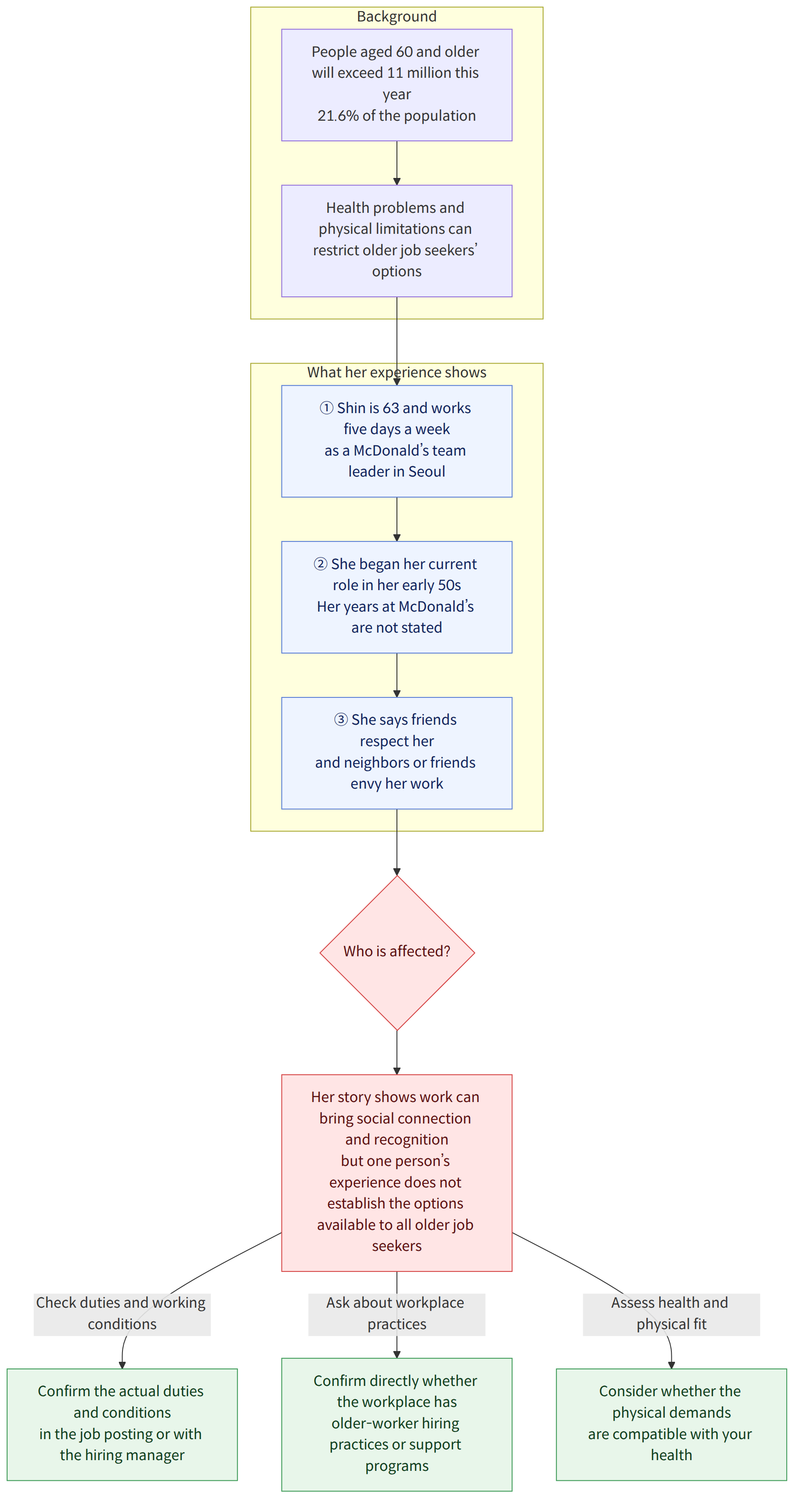
South Korea is aging rapidly, and as older people outnumber younger job seekers, competition for jobs is becoming fiercer. According to the article, the number of people aged 60 and older will exceed 11 million this year, accounting for 21.6% of the total population.
The baby boom generation, born between 1955 and 1963, is larger than the generations before it. As its members reach retirement age, they are looking for jobs, but the article reports that age-related health problems and physical limitations restrict their employment options.
Ms. Shin began her current role in her early 50s. However, the article does not say how long she has worked at McDonald’s.
What this news means
For older people, work may be about more than income. In Ms. Shin’s case, the article says that her friends and acquaintances respect her, and that her neighbors and friends envy her work. Her experience illustrates how a job can provide social connections and recognition.
At the same time, one person’s experience does not represent the employment circumstances of all older job seekers. The health problems and physical limitations highlighted in the article can affect the kinds of jobs someone can choose. So the fact that Ms. Shin is working now does not mean that other older job seekers can obtain the same kind of job.
For example, an older job seeker considering a similar position could look at whether their health and the physical demands of the work are a good fit. This is a general consideration based on the limitations described in the article; it does not mean that specific hiring conditions or support programs have been confirmed.
Confirmed facts and what remains unknown
Confirmed facts
- Shin Jeong-ok is described as a team leader at a McDonald’s restaurant in Seongbuk-gu, Seoul.
- Ms. Shin, who is 63, works five days a week at McDonald’s’ Jongam SK location in northern Seoul.
- She began her current role in her early 50s.
- Ms. Shin said she enjoys that her friends and acquaintances respect her, and that when she tells her neighbors or friends about her job, she can see envy in their eyes.
- According to the article, the number of people aged 60 and older will exceed 11 million this year, accounting for 21.6% of the total population.
What remains unknown
- The article does not say how many years Ms. Shin has worked at McDonald’s.
- McDonald’s hiring practices for older employees and any support programs for them are also unconfirmed.
- The article does not provide details about Ms. Shin’s specific duties or working conditions.
What readers can check
- Anyone looking for a similar job can check the actual duties and working conditions in the job posting or with the hiring manager. The article does not describe the specific duties at the Jongam SK location.
- Whether a workplace has hiring practices or support programs for older employees should be confirmed directly with that workplace or its hiring manager. The article alone does not establish whether such programs exist.
- When considering applying, job seekers can assess whether the physical demands of the work are compatible with their health. The article reports that health problems and physical limitations can restrict older job seekers’ employment options.