
1. A Human Story
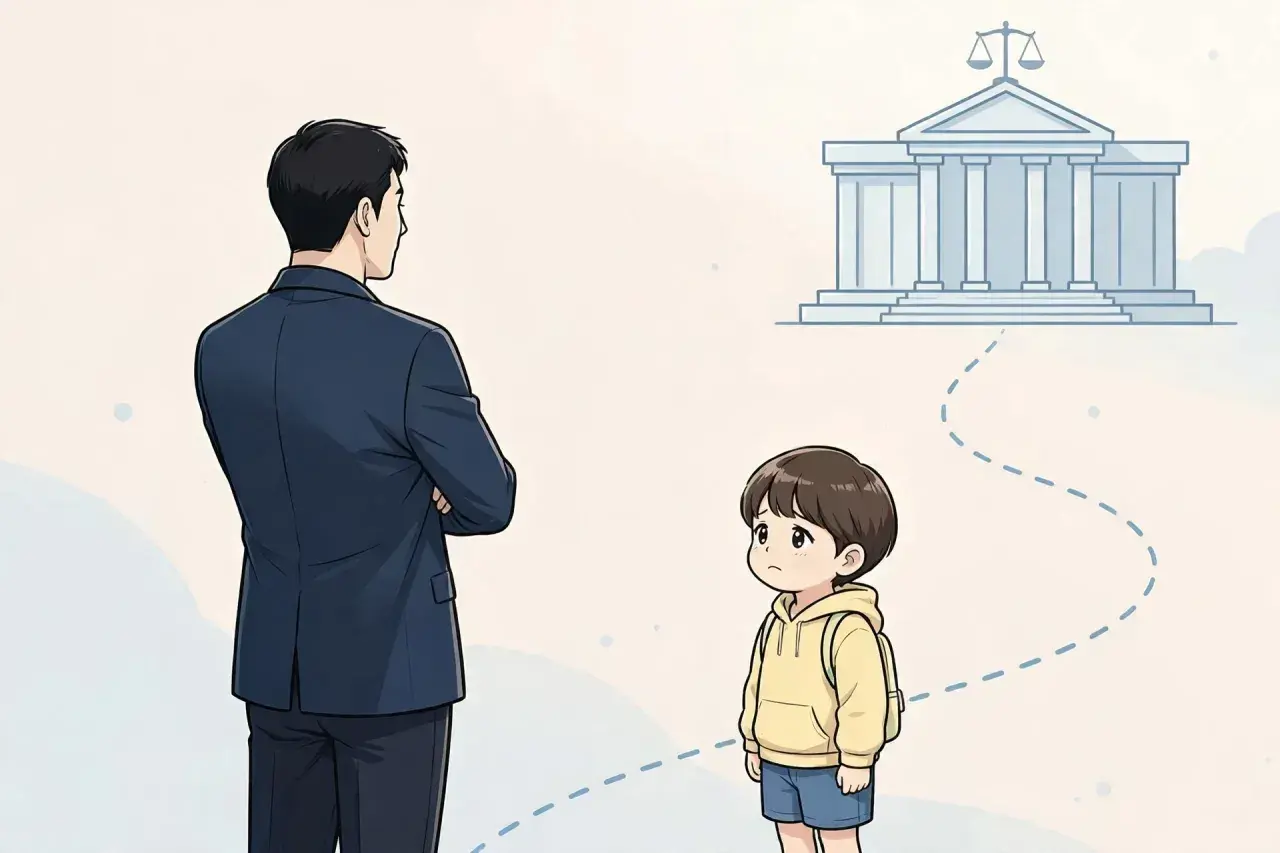
Laura Bennett had built her life around her daughter, Maya: school drop-offs, late-night fevers, and the steady work of raising a child on one income. Laura and Maya’s biological father, Daniel Reed, had never been married. Daniel had kept his distance, and he had not formally acknowledged Maya as his child.
As Maya grew older, she began asking questions Laura could not answer with a certificate or a name in an official record. She wanted to know whether Daniel was legally her father, not only biologically. Laura wondered whether she could act for her underage daughter—or whether Daniel’s refusal left them with no way forward.
2. The Legal Question
When a child is born to parents who are not married, how can the child establish a legal father-child relationship if the biological father has not voluntarily acknowledged the child?
3. What Korean Law Says
Korean law distinguishes between the legal relationship with the mother and the legal relationship with the father in this situation. Except in unusual cases, such as where a baby’s birth mother cannot be identified, the fact of giving birth establishes the mother-child relationship from the child’s birth. The mother does not need to complete a separate acknowledgment to create that relationship.
For the father, however, a biological connection does not by itself necessarily create the legal relationship. The law provides two main routes:
- Voluntary acknowledgment. The father may acknowledge the child. Under the Civil Act, acknowledgment of a child born outside marriage creates a legal parent-child relationship. The acknowledgment must be reported in the manner required by the family relations registration law for it to take legal effect.
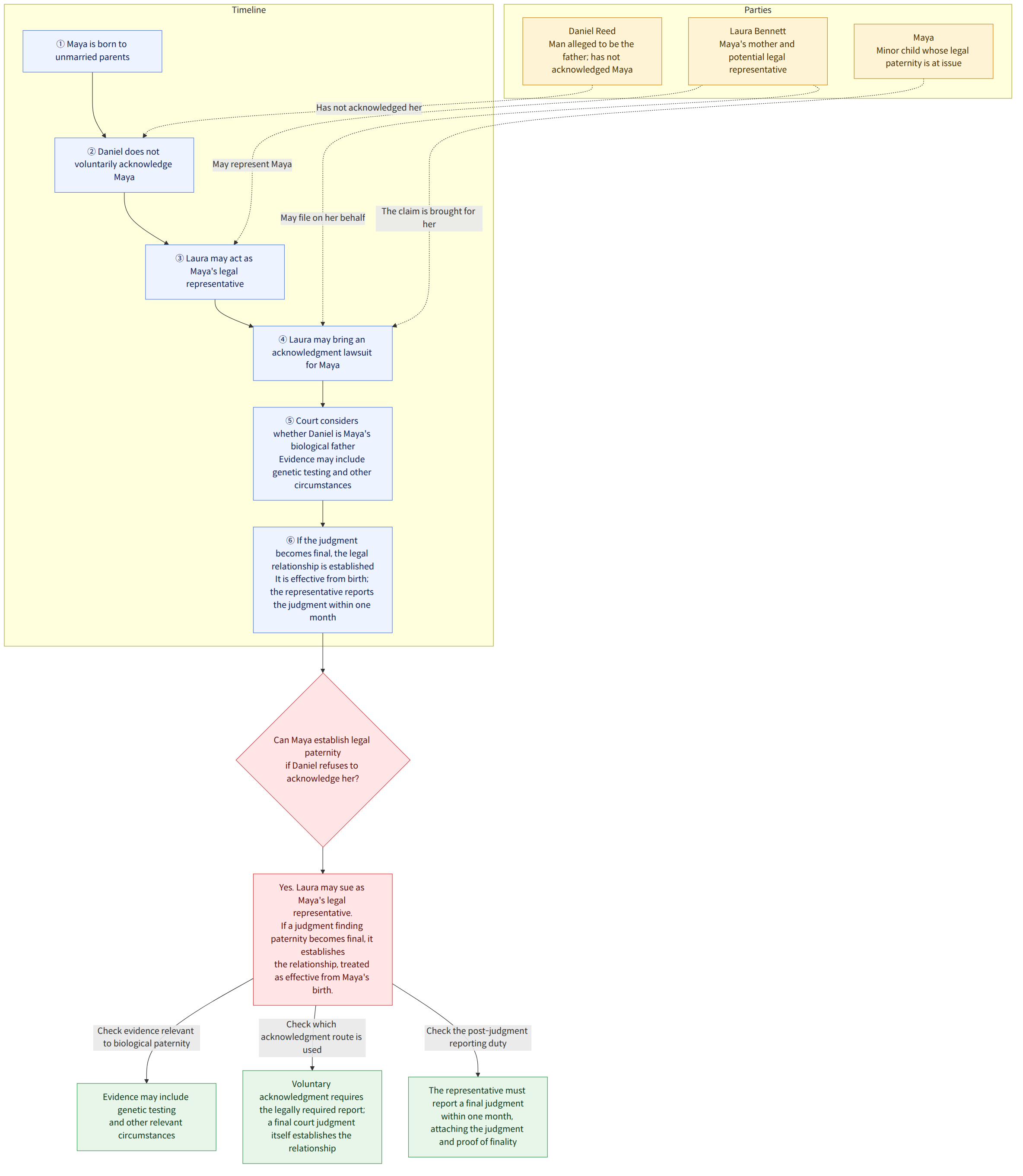
- Court-ordered acknowledgment. If the father does not acknowledge the child, the child, the child’s descendants, or the child’s legal representative may bring an acknowledgment lawsuit against the father. A parent or guardian acting as the minor’s legal representative can therefore bring the claim on the child’s behalf.
Civil Act, Article 863: A child, the child’s descendants, or the child’s legal representative may bring an action for acknowledgment against the father or mother.
Civil Act, Article 860: Acknowledgment takes effect retroactively from the time of the child’s birth.
The registration steps differ depending on how acknowledgment occurs. If the father acknowledges the child voluntarily, the required report is what gives that acknowledgment legal effect. If a court judgment becomes final, the legal parent-child relationship is established when the judgment becomes final. The child’s representative must then report the judgment within one month, attaching a copy of the judgment and proof that it is final.
Practical distinction: The report after a final court judgment records the result; it is not the event that creates the relationship. The judgment itself establishes the relationship once final.
4. How Korean Courts Approach This
In an acknowledgment lawsuit, the central issue is whether the person named as the father is in fact the child’s biological father. Courts examine the evidence presented, which may include genetic testing and other relevant circumstances. A refusal to acknowledge a child does not, by itself, prevent the court from deciding the question.
The legal framework also protects the child’s ability to seek an answer through a representative while still underage. Where the court orders acknowledgment and the judgment becomes final, the law treats the parent-child relationship as having existed from birth. That rule can matter beyond the record itself, because it establishes the child’s legal status as the father’s child.
5. Applying the Law to the Case
Maya’s relationship with Laura is already legally established through Laura’s giving birth to her. Laura does not need to sue to become Maya’s legal mother.
Daniel’s position is different. If he voluntarily acknowledges Maya, he must complete the legally required registration process for that acknowledgment to take effect. Simply telling Maya that he is her father—or admitting it privately to Laura—would not substitute for the required legal step.
If Daniel refuses to acknowledge her, Laura may act as Maya’s legal representative and file an acknowledgment lawsuit against him on Maya’s behalf. The case would ask the court to determine whether Daniel is Maya’s biological father. Evidence relevant to that question could include genetic testing and other supporting material.
Suppose the court finds that Daniel is Maya’s father and its judgment becomes final. From that point, Daniel and Maya have a legal parent-child relationship. Under the Civil Act, the relationship is treated as effective from Maya’s birth. Laura must report the final judgment within one month, submitting a copy of the judgment and proof that it is final.
If you are dealing with a similar issue, attorney Ji-sun Ahn of Ijun Law Firm can review family registration records, dates of marriage and birth, and any earlier acknowledgment of paternity, test result, or ruling with you. These details can help clarify which options apply to your situation.
6. Conclusion: What Happened, and What Should You Do?
In this fictional case, Daniel declined to acknowledge Maya voluntarily. Laura therefore brought the action as Maya’s legal representative. The court considered the evidence, including a genetic test, and entered a judgment establishing Daniel’s paternity. Once that judgment became final, Maya was legally recognized as Daniel’s child, with the relationship effective from her birth. Laura then reported the judgment within the required one-month period.
If you are in a similar situation, keep three points in mind:
- Ask whether voluntary acknowledgment is possible. If the father agrees, confirm that the legally required report is completed; a private agreement alone is not enough.
- If he refuses, consider an acknowledgment lawsuit. A minor’s legal representative may bring the claim on the child’s behalf. Gather relevant records and evidence, including information about genetic testing.
- Track the deadline after judgment. Once the judgment is final, make the required report within one month and submit the judgment copy and proof of finality.

















