
1. A Human Story
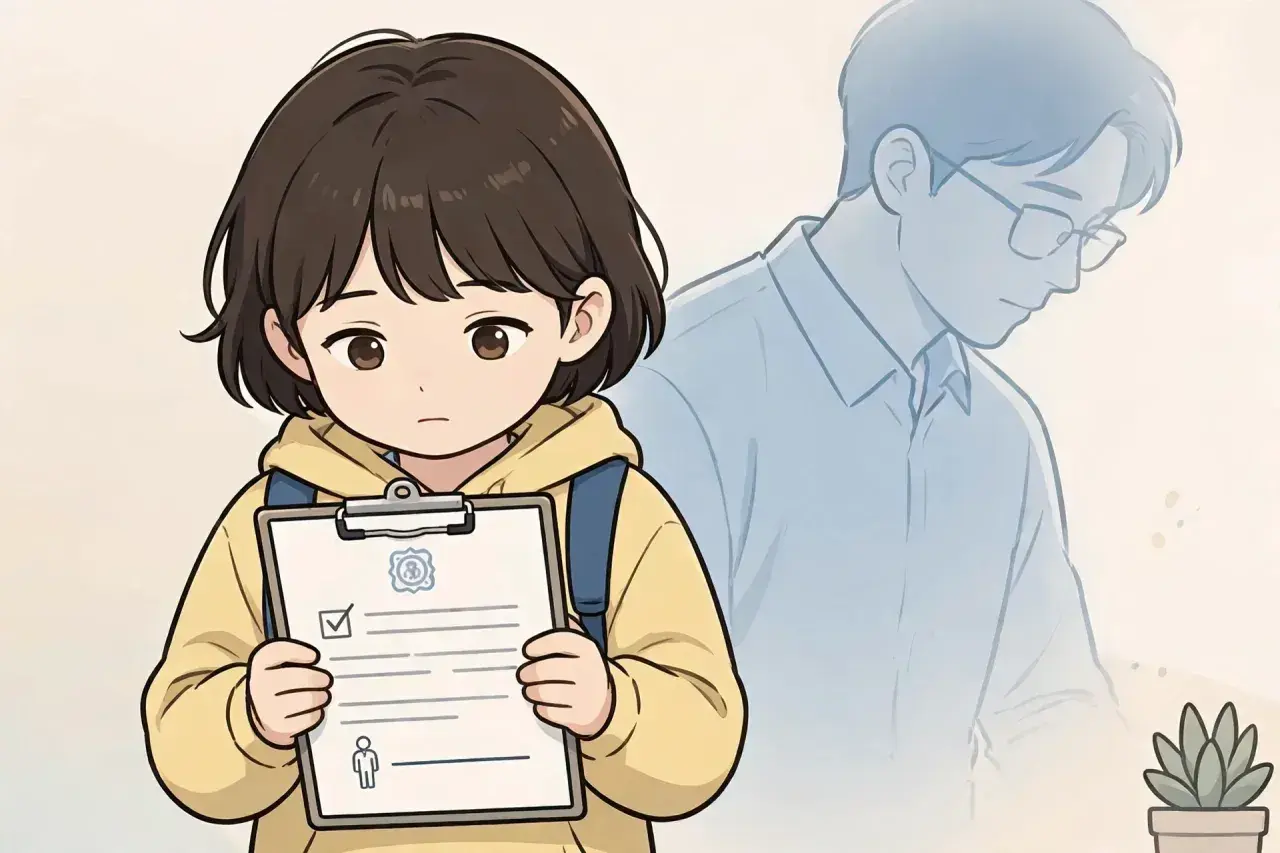
When Daniel Park first held his late friend’s infant daughter, he knew he was not her biological father. But he had promised his friend that the child would never grow up without a parent. He and the child’s mother, Sophie Lee, decided that Daniel would raise the baby as his own.
At the time, overwhelmed by grief and practical paperwork, they filed a birth-registration document naming Daniel as the child’s father. They understood this as a way to secure a stable family life, and Daniel took on the day-to-day responsibilities of parenting. Years later, as the family began planning for a move abroad, a relative questioned whether the entry in the official record was legally sound. Daniel and Sophie were left with a difficult question: could a document that stated a biological relationship that did not exist still make Daniel the child’s legal parent in some other way?
2. The Legal Question
If a person who is not a child’s biological parent files an acknowledgment of paternity in Korea, is that acknowledgment legally effective? And if it is not, can the filing still count as an adoption when the parties clearly intended to form an adoptive family and satisfied adoption’s legal requirements at the time?
3. What Korean Law Says
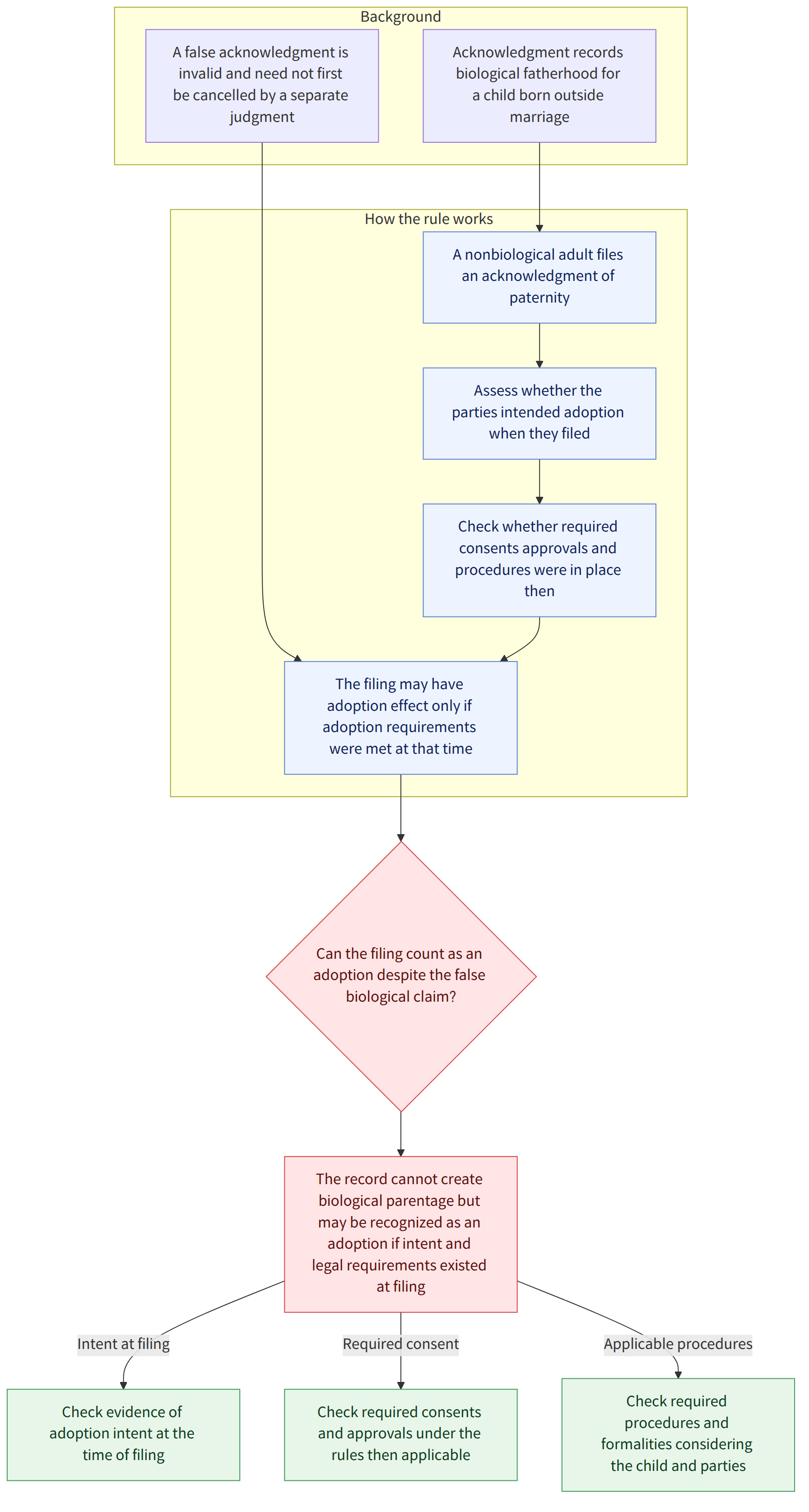
An acknowledgment is a legal act used to establish the relationship between a father and a child born outside marriage. It is not a substitute for adoption. If the person making the acknowledgment is not in fact the child’s biological parent, the acknowledgment itself does not create a valid biological parent-child relationship.
The Supreme Court has also explained that an invalid acknowledgment does not need to be set aside first through a separate judgment or other formal procedure before its invalidity can be asserted. The court has described that invalidity as something that may be claimed by anyone—not only through a prior lawsuit brought for the purpose of cancelling the entry.
Key distinction: A false acknowledgment does not become valid simply because it was entered in an official record or because the adults intended to raise the child as their own.
There is, however, a separate possibility. Korean courts may treat an acknowledgment as having the effect of an adoption if, when it was made, the parties clearly intended to adopt and the requirements for adoption were all satisfied. In other words, the acknowledgment remains ineffective as a statement of biological parentage, but the underlying act may be recognized as an adoption.
The timing matters: The question is whether the intention to adopt and the legal requirements existed when the acknowledgment was filed—not merely whether the adults later came to think of themselves as a family.
Depending on the child’s age, the parties, and the applicable rules at the time, adoption requirements can include matters such as:
- A clear intention by the relevant parties to create a parent-child relationship through adoption.
- Any consent or approval required for the particular adoption, including requirements relating to the child or the child’s existing parent or guardian.
- Compliance with the applicable legal procedures and formalities.
The details can depend on the circumstances and the law in force when the filing was made. A court does not automatically transform every invalid acknowledgment into an adoption merely because the adult acted as a parent afterward.
4. How Korean Courts Approach This
Korean courts distinguish between two different questions: whether the person is the child’s biological parent, and whether the parties formed a valid adoptive relationship. A record cannot make the first answer “yes” when the biological relationship does not exist. But the invalidity of that acknowledgment does not necessarily end the inquiry.
The court looks at the parties’ intention and the legal conditions surrounding the filing. Was there a clear intention to adopt at that point? Were the required consents, approvals, and procedures in place? Or did the parties intend only to record the adult as a biological father, without satisfying adoption requirements?
A court examines the substance as well as the label: A filing described as an acknowledgment may, in the right circumstances, have adoption effect. But that conclusion depends on proof that the adoption requirements were met when it was made.
This approach keeps the two legal relationships separate. It prevents a false statement of biological parentage from becoming true by registration, while also allowing a genuine adoption to be recognized where the parties’ intention and the law’s requirements support it.
5. Applying the Law to the Case
Daniel’s situation calls for a step-by-step analysis.
- Was Daniel the biological father? No. On the facts, Daniel knew he was not. The acknowledgment therefore cannot establish biological parentage merely because his name appeared on the record.
- Did Daniel and Sophie intend an adoption at the time? Their promise that Daniel would raise the child as his own is relevant, but the court would need to decide whether it showed a clear intention to create a legal adoptive relationship—not simply an intention to provide care. Messages, conversations with relatives, documents, and evidence about what the parties understood the filing to accomplish could all matter.
- Were all adoption requirements satisfied then? This is decisive. The court would examine the child’s age and circumstances, any required consents or approvals, and whether the necessary legal procedures were followed. The fact that Daniel performed the role of a parent for years would support the reality of their family life, but it would not by itself prove that every legal condition for adoption had been met when the acknowledgment was filed.
- What is the likely legal result? The acknowledgment is not effective as proof that Daniel was the biological father. If the evidence establishes a clear adoption intention at the time and shows that all adoption requirements were satisfied, however, a court may recognize the filing as having the effect of an adoption. If those requirements were missing, the family’s loving and longstanding relationship would not, by itself, cure the legal defect.
If you are dealing with a similar issue, attorney Ji-sun Ahn of Ijun Law Firm can review family registration records, dates of marriage and birth, and any earlier acknowledgment of paternity, test result, or ruling with you. These details can help clarify which options apply to your situation.
6. Conclusion: What Happened, and What Should You Do?
Daniel’s name on the record did not make him the child’s biological father. But his family’s legal position does not necessarily end there. If Daniel and Sophie clearly intended adoption when they filed the acknowledgment, and the required consents, approvals, and procedures were all in place, the filing may be recognized as an adoption. If not, they should not assume that the acknowledgment alone created a legally valid parent-child relationship.
For families facing a similar situation:
- Gather evidence from the time of filing: Keep messages, agreements, registration documents, and records showing what the parties intended and understood.
- Check the adoption rules that applied at that date: Requirements can depend on the child’s age, the parties’ circumstances, and the procedures in force when the filing was made.
- Get advice before relying on the record: A Korean family-law professional can assess whether the filing may qualify as an adoption and explain what steps are available to clarify the child’s legal status.

















