
1. A Human Story
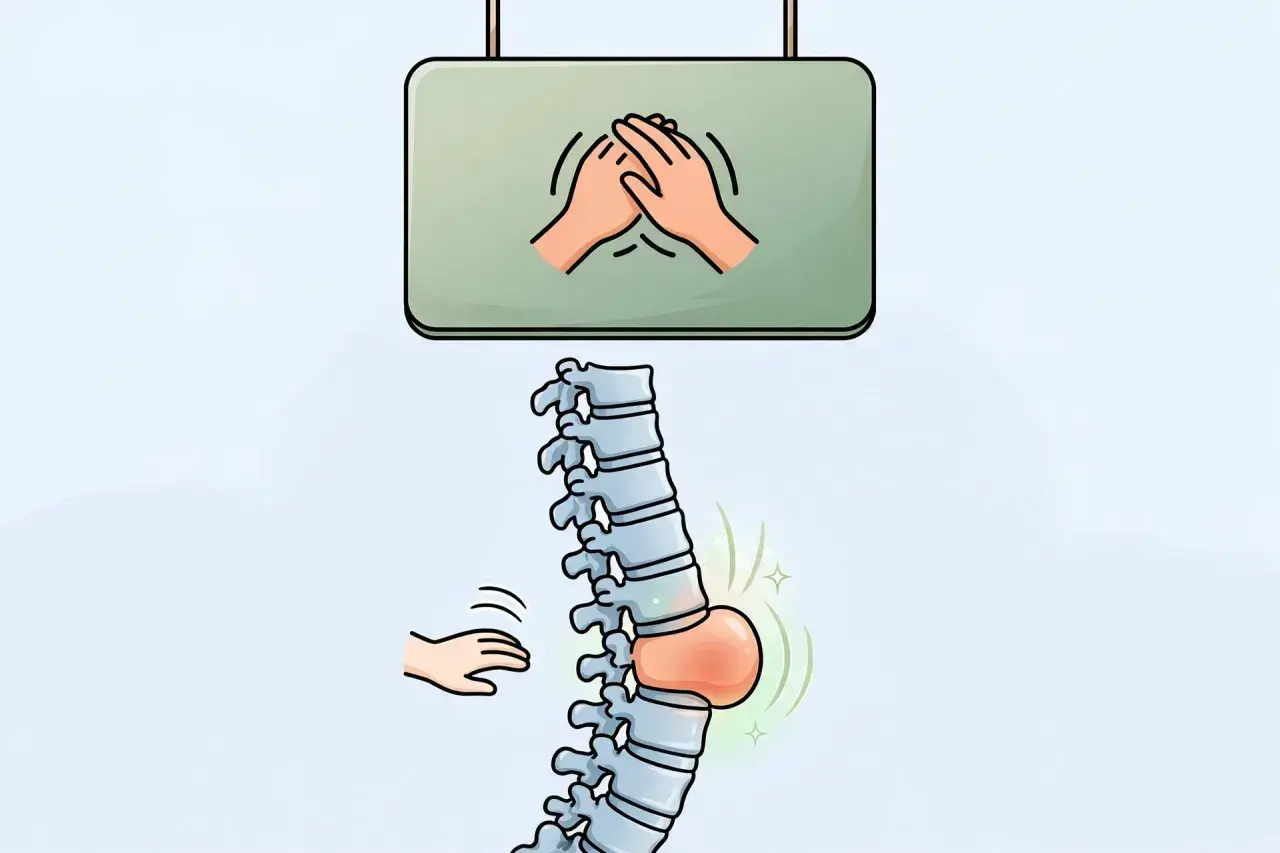
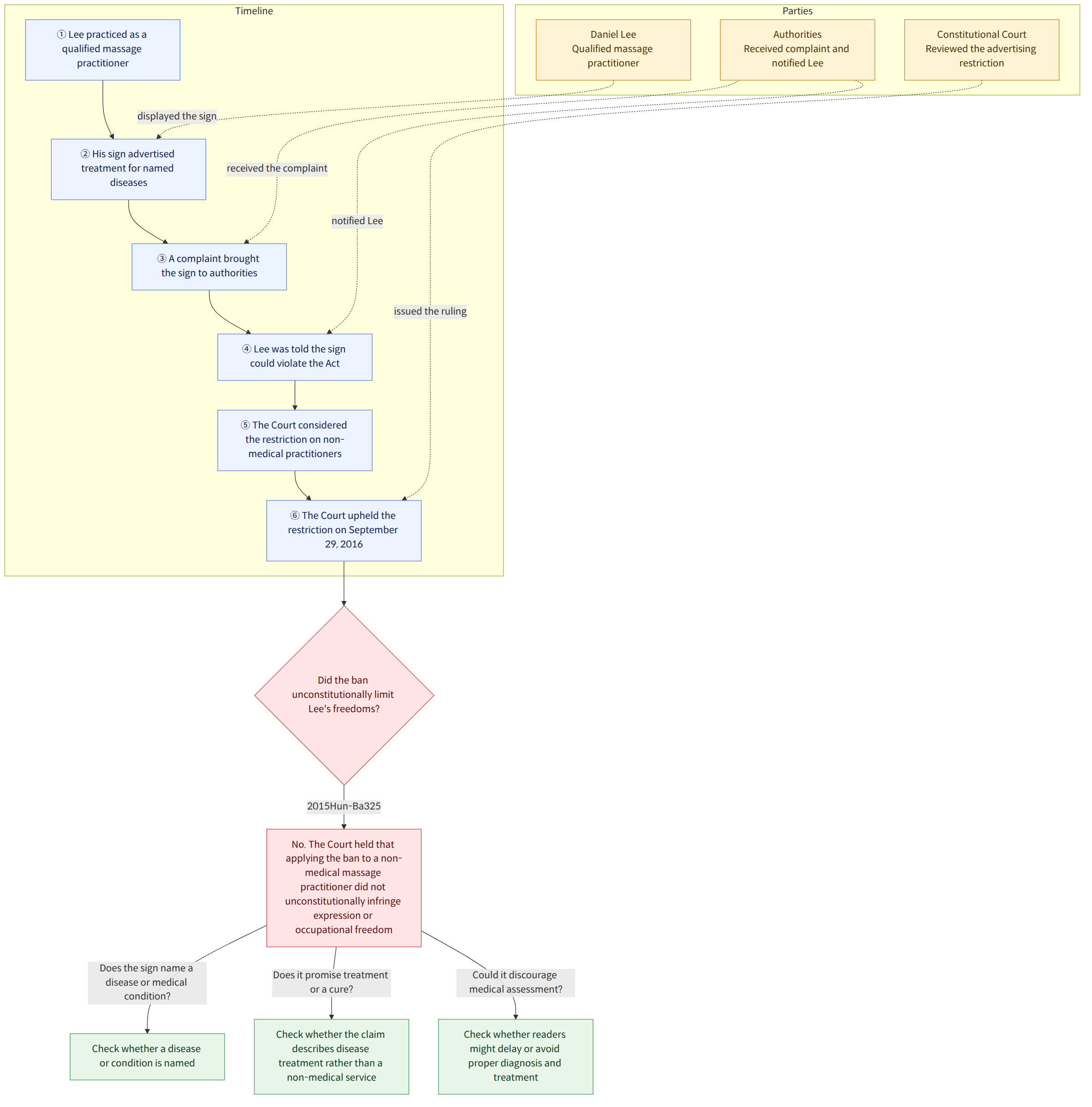
Daniel Lee had spent years building a modest massage practice in a neighborhood of Seoul. He was qualified to work as a massage practitioner, and his customers often came in complaining of stiff shoulders and aching backs. Hoping to reach people who might benefit from his services, Daniel put a bold claim on the sign outside his shop: “Body correction, neck and back disc disease, frozen shoulder, and various illnesses treated without surgery through massage-assisted stimulation.”
A complaint brought the sign to the attention of authorities. Daniel was told that advertising medical treatment as a person who was not a medical practitioner could violate the Medical Service Act. He felt the rule was unfair: the law recognized his occupation, he argued, yet prevented him from telling prospective customers what his services could do. The dispute raised a larger question about where lawful promotion ends and a claim to provide medical care begins.
2. The Legal Question
May a qualified massage practitioner advertise that massage will treat named diseases, or does Korea’s ban on medical advertising by non-medical practitioners violate the practitioner’s freedom to work and communicate?
3. What Korean Law Says
The Medical Service Act distinguishes between people qualified to provide massage services and people legally recognized as medical practitioners. Under Article 2(1), medical practitioners are doctors, dentists, Korean medicine doctors, midwives, and nurses licensed by the Minister of Health and Welfare. A massage practitioner is not included in that definition merely by virtue of being qualified to practice massage.
Article 56(1) of the Act restricts medical advertising by anyone other than a medical corporation, medical institution, or medical practitioner. The important point is what the advertisement claims: a statement that a service treats a disease can be medical advertising even if the person making the claim calls the service massage.
Medical Service Act, Article 56(1): Medical advertising may not be conducted by a person or entity outside the categories the Act permits, including medical corporations, medical institutions, and medical practitioners.
The restriction reflects concerns about public health, not simply the title a business uses. In practice, the central questions include:
- Does the advertisement name a disease or medical condition?
- Does it promise diagnosis, treatment, or a cure, rather than describe a non-medical service?
- Could a reader be led to rely on the advertised service instead of seeking medical assessment?
A claim about treating a herniated disc, sciatica, or frozen shoulder is particularly significant because those conditions may require accurate diagnosis and care from a medical professional. Saying that treatment is available “without surgery” can also suggest that the advertised service is an alternative to medical treatment.
4. How Korean Courts Approach This
Korea’s Constitutional Court has considered whether this advertising restriction violates freedom of expression and freedom to pursue an occupation. It upheld the restriction, reasoning that inaccurate medical claims by non-medical practitioners could mislead the public, interfere with informed choices about care, and encourage unlicensed medical practice.
The Court’s central concern is that people may delay or avoid proper diagnosis and treatment if they rely on disease-treatment claims made by someone who is not legally authorized to provide medical care. Protecting life and health can justify limiting such advertising.
The Court has also emphasized that massage practitioners should not be exempt from the restriction when they advertise treatment for conditions such as neck or back disc disorders, sciatica, and frozen shoulder. For these conditions, an accurate diagnosis and appropriate medical treatment may be essential; relying on massage without medical assessment can create risks to a person’s health.
In its decision of September 29, 2016, in case 2015Hun-Ba325, the Constitutional Court concluded that applying the ban to a non-medical massage practitioner did not unconstitutionally infringe freedom of expression or occupational freedom. It viewed the measure as a necessary limit to protect public health.
5. Applying the Law to the Case
Daniel’s situation would be assessed by looking at what his sign communicated to ordinary customers, not only at what he intended to offer.
- His professional qualification does not make him a medical practitioner. The law recognizes distinct professional categories. Being qualified to provide massage does not, by itself, confer a medical practitioner’s licence.
- The sign made disease-treatment claims. “Neck and back disc disease,” “frozen shoulder,” and “various illnesses” are not merely descriptions of relaxation or general massage. In context, the words “treated without surgery” tell potential customers that the service can treat medical conditions.
- Those claims could affect medical decisions. A person with a disc disorder or shoulder condition might read the sign as a reason to choose massage instead of obtaining a medical diagnosis. That is the kind of risk the restriction is designed to prevent.
- The constitutional challenge is unlikely to succeed. Daniel can argue that the rule limits his ability to promote his livelihood. But under the Constitutional Court’s reasoning, protecting people from misleading treatment claims and the dangers of delayed care provides a sufficient justification for this particular restriction.
The result does not mean that every advertisement for a massage practice is necessarily prohibited. The legal concern here is the claim to treat diseases. Whether other wording is permissible depends on its meaning and context, so a business should avoid language that implies medical diagnosis, treatment, or cure unless it is legally entitled to make that claim.
If you are dealing with a similar issue, attorney Ji-sun Ahn of Ijun Law Firm can review the applicable permit, business records or advertisements, and the legal grounds given by the authority with you. These details can help clarify which options apply to your situation.
6. Conclusion: What Happened, and What Should You Do?
Daniel’s constitutional argument would not overturn the ban. His sign crossed the legal line by presenting massage as a way to treat named diseases, including conditions for which medical diagnosis may be important. He should remove or revise the disease-treatment claims and describe only the services he is legally permitted to provide. Whether a particular violation leads to a specific enforcement outcome depends on the facts and the applicable procedure, but the constitutional rule itself is clear: a massage qualification does not authorize medical advertising.
For readers in a similar position:
- Describe the service, not a cure: Avoid naming diseases or promising to treat, prevent, or eliminate them.
- Do not suggest that medical care is unnecessary: Claims such as “without surgery” can imply that a non-medical service replaces professional diagnosis or treatment.
- Check proposed advertising before publishing it: If wording could be read as a medical claim, seek advice from a Korean legal professional or the relevant regulator before using it.

















