
1. A Human Story
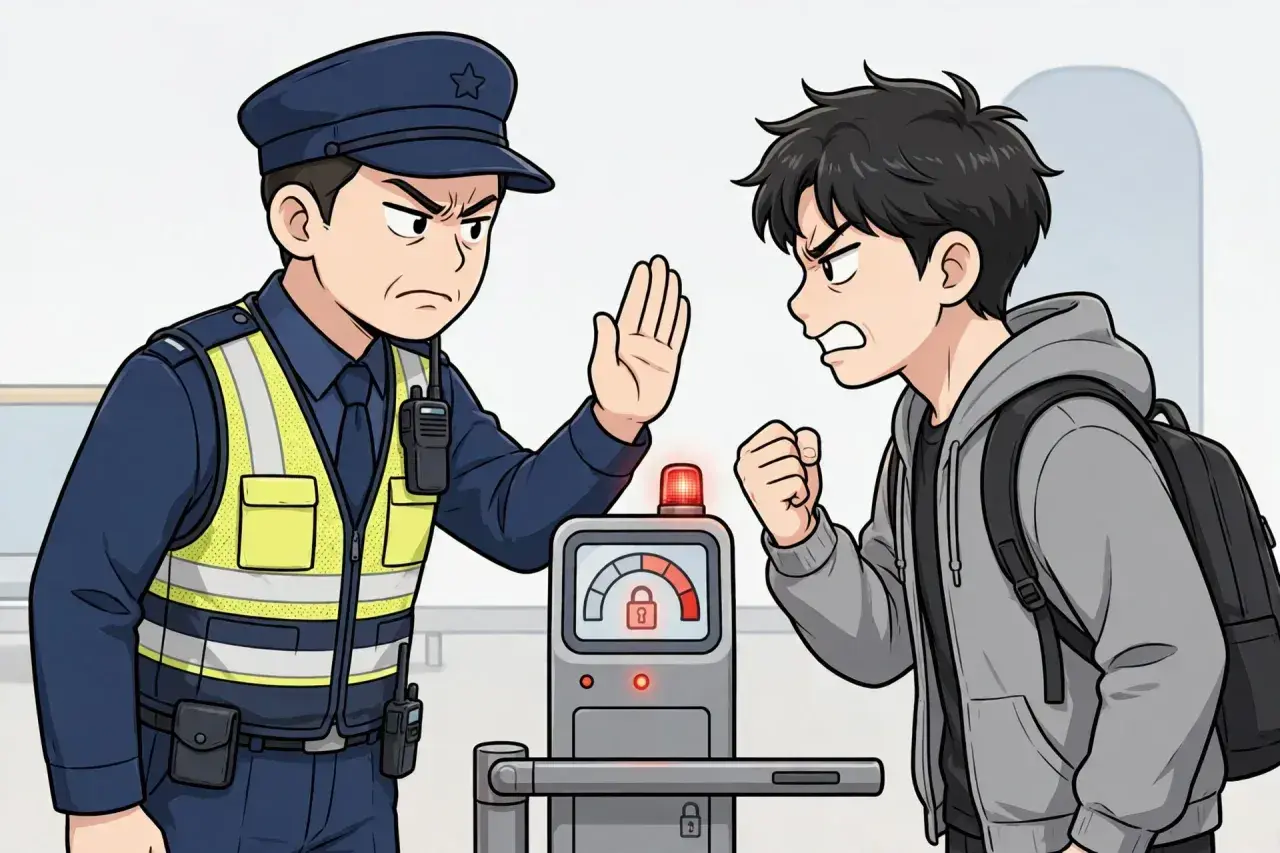
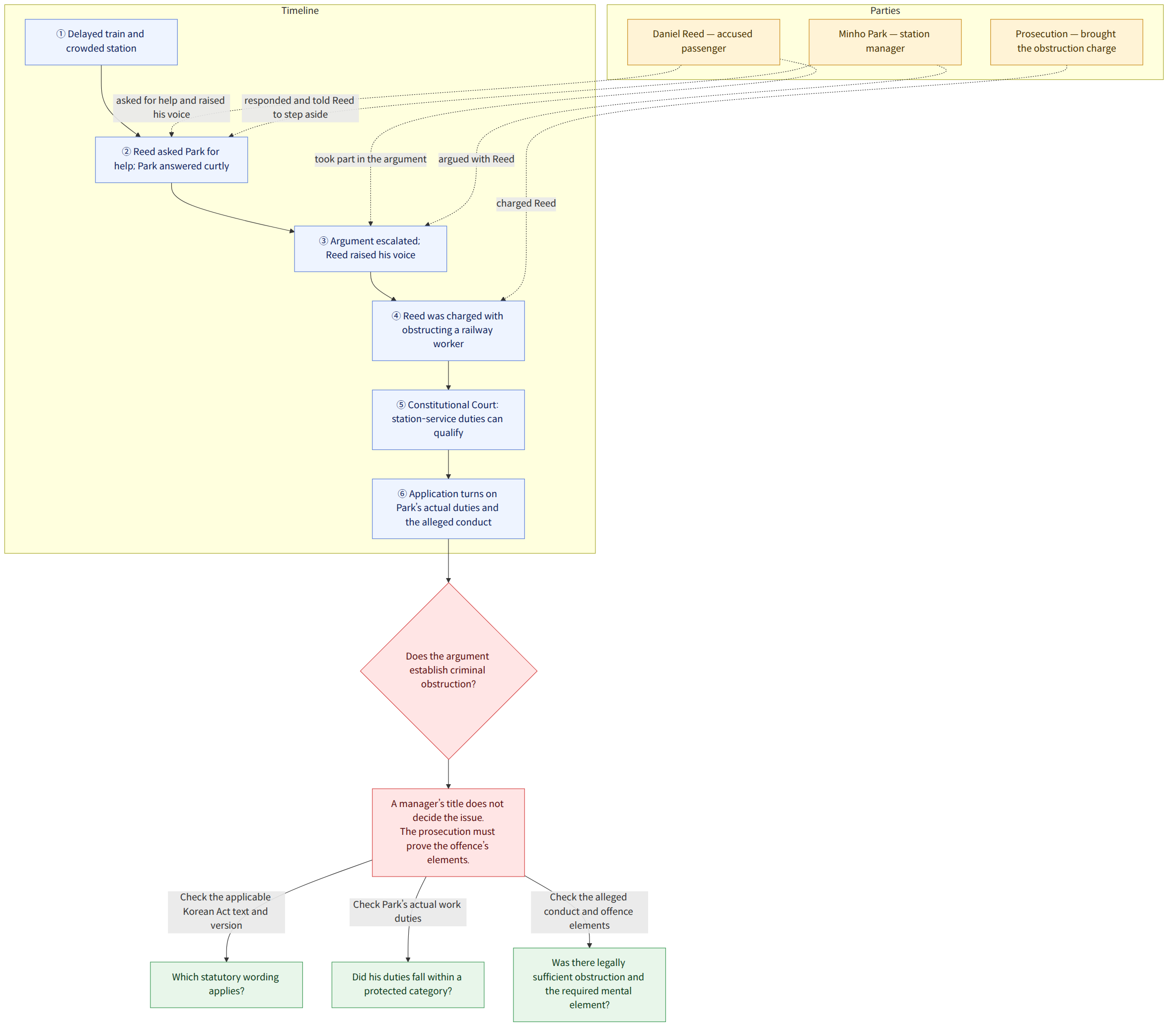
Daniel Reed had been waiting at a crowded station after a delayed train, already anxious about missing a connection. When he asked station manager Minho Park for help, he felt that Park answered curtly and dismissed his concerns. Daniel raised his voice; Park told him to step aside. The exchange grew into a heated argument, drawing the attention of other passengers and station staff.
Daniel later learned that he had been charged with obstructing a railway worker in the performance of his duties. He was stunned. Park was a manager, not a train driver or a railway police officer, Daniel thought. Surely a dispute with a station manager over poor service was not the kind of conduct railway-safety law was designed to punish.
2. The Legal Question
Can a station manager be a “railway worker” protected by Korea’s Rail Safety Act, even if the employee holds a management position? And if so, does that mean every angry exchange with that employee is a criminal obstruction?
The short answer is that the employee’s actual duties matter more than the job title. The law can include staff who provide station services to passengers. But the prosecution must still prove that the accused’s conduct meets the requirements of the specific offence charged.
3. What Korean Law Says
The Rail Safety Act is intended to promote public welfare by supporting railway safety and establishing a railway safety-management system. Its definition of “railway worker” is not limited to people operating trains or controlling railway traffic. It also includes people who provide onboard or station services to passengers, along with certain other workers whose duties relate to safe train operations or maintaining order.
The Act’s definition includes “persons who provide services to passengers, including onboard and station services.” >This is an English rendering of the relevant statutory language; the applicable Korean text and version of the Act should be checked in an actual case.
The Act also places duties on passengers and other railway users:
People using trains or railway facilities must follow railway workers’ work-related instructions given to protect safety, railway facilities, and order.
In the version of the Act considered by the Constitutional Court, the definition covered several categories, including:
- People who drive railway vehicles.
- People who centrally control, regulate, or monitor train operations.
- People who provide services to passengers, including station services.
- Other designated workers whose tasks concern safe railway operations or order, such as certain incident-response, track-work supervision, inspection, security, signalling, and railway-police personnel.
That definition answers only who may qualify as a railway worker. It does not, by itself, establish that a passenger has committed a crime. For a criminal conviction, prosecutors must prove the elements of the particular offence charged. Depending on the charge, relevant questions may include whether the conduct involved legally sufficient force or threats, whether it interfered with the worker’s performance of a work duty, and whether the required mental element is present.
4. How Korean Courts Approach This
The Constitutional Court has read the term “railway worker” in light of the Act’s safety purpose and the range of duties expressly listed in its definition. The protection is not confined to train drivers or employees who directly control railway movement. It can extend to passenger-facing station staff because their work may form part of the services and order needed for safe railway use.
A managerial title does not automatically exclude an employee from the statutory definition. The key question is whether the employee’s work falls within a category the Act protects.
That principle has an important limit. Courts do not treat every disagreement, complaint, or discourteous exchange as criminal obstruction merely because it occurs in a station or involves someone employed by a railway operator. The inquiry remains tied to the statute: what the employee was doing, whether that task was a work duty covered by the law, what the accused actually did, and whether the conduct obstructed that duty in the way the charged offence requires.
5. Applying the Law to the Case
First, Park’s title does not decide the issue. Calling himself a station manager neither automatically brings him within nor removes him from the Act. The court would look at his actual responsibilities. If he was providing station services to passengers, responding to a passenger’s request, or carrying out a relevant safety or order-maintenance task, his role could fall within the statutory definition—even though he also held a management position.
Second, the setting is relevant but not conclusive. The disagreement happened at a railway station, where safety and orderly operations matter. That context helps explain why the law protects certain railway employees. But the station setting alone cannot turn an ordinary argument into a crime.
Third, the conduct must be examined closely. A raised voice or a complaint about rude treatment is not automatically the same thing as criminally obstructing a worker. Investigators and the court would need to establish what Daniel said and did: for example, whether he threatened Park, used force, physically blocked him from carrying out a task, or disrupted station operations. The precise legal test depends on the offence named in the indictment.
Fourth, the alleged obstruction must relate to Park’s work. If Park was attempting to assist passengers, manage a station matter, or carry out another protected duty, and Daniel’s conduct actually interfered with that task, the charge may have a stronger foundation. If the encounter was only a verbal dispute about service quality, with no legally sufficient interference, the prosecution may have difficulty proving the offence even if Park qualifies as a railway worker.
Finally, the evidence matters. CCTV footage, audio recordings, witness accounts, station logs, and Park’s description of the task he was performing may help establish what happened. Daniel’s perception that Park was rude may explain the dispute, but it would not excuse conduct that independently satisfies the elements of a criminal offence.
If you are dealing with a similar issue, attorney Ji-sun Ahn of Ijun Law Firm can review the sequence of events, records showing what each person knew or did, and the grounds stated in any formal notice with you. These details can help clarify which options apply to your situation.
6. Conclusion: What Happened, and What Should You Do?
In Daniel’s case, Park could qualify as a railway worker if his actual duties included providing station services to passengers or performing another function covered by the Act. His managerial rank would not shield him from that definition. But that conclusion would not establish Daniel’s guilt. If the evidence showed only a heated verbal exchange, without the conduct and work-related interference required by the charged offence, the statutory definition alone would not be enough to convict him. If, instead, Daniel used threats or force or materially prevented Park from carrying out a protected duty, the charge could be sustained, subject to proof of every legal element.
For anyone facing a similar situation:
- Keep your response calm and non-physical. Make a complaint through the railway operator’s formal channels rather than blocking staff or disrupting station operations.
- Preserve evidence promptly. Record the time and location, identify witnesses, and ask the operator how to preserve relevant CCTV or station records.
- If charged, get legal advice early. The worker’s duties, the exact conduct alleged, and the wording of the specific offence all matter; do not assume that a job title—or the fact that an argument occurred—settles the case.

















