OpenCode, the open-source AI coding agent, said Saturday that attackers had broken into an older system, affecting 1.4% of users of its online platform, OpenCode Console. Console stores API keys—digital credentials used to authenticate access to AI services—for some users. Developers posted online about receiving spending alerts and API charges they had not authorized. OpenCode said it had emailed affected users and that refunds were underway.
Background and context
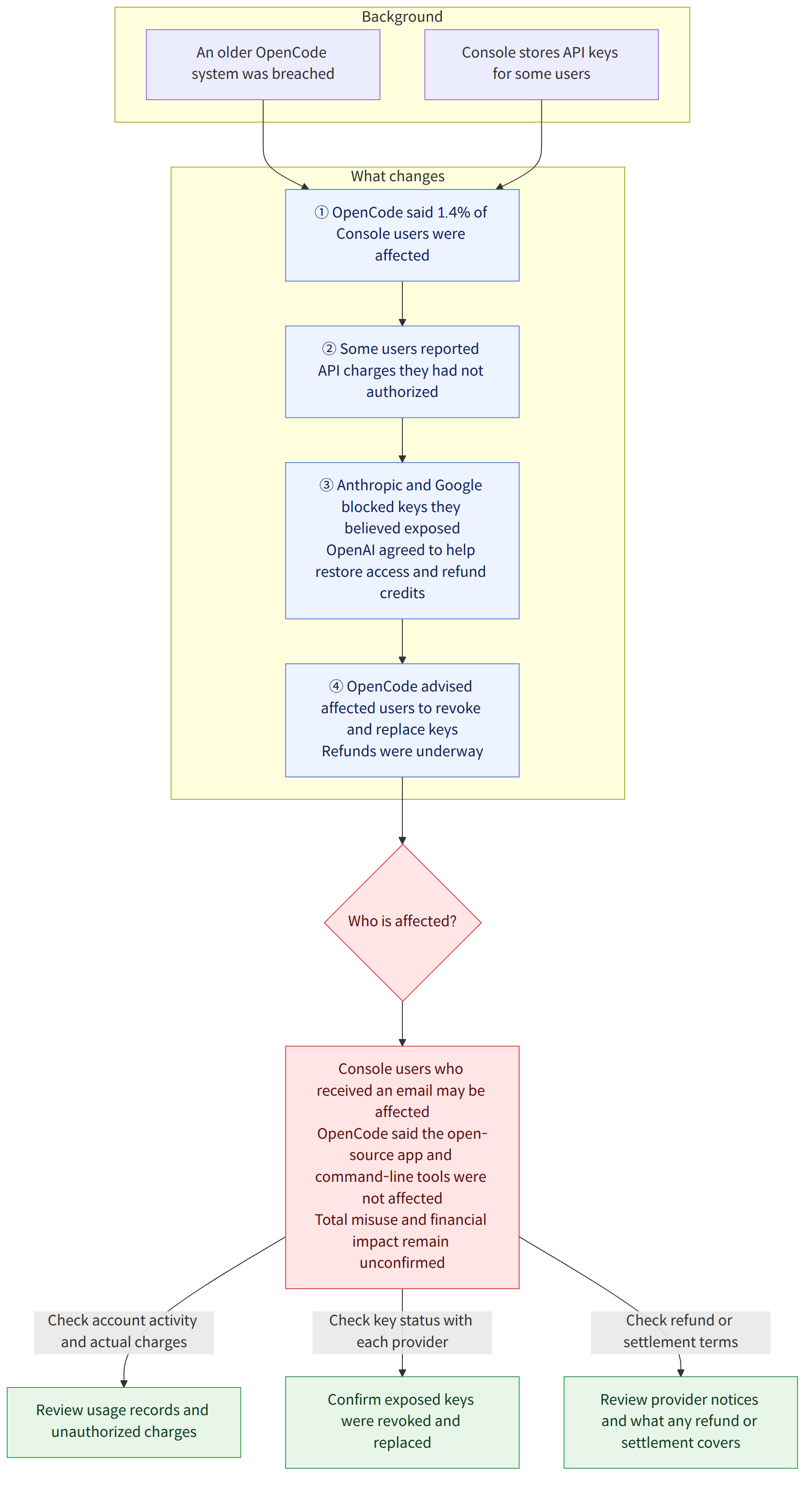
The confirmed scope of the incident is Console, not all OpenCode products. Co-founder Dax Raad said the exposed keys were limited to Console and that the open-source app and command-line tools were not affected. OpenCode also said users who did not receive an email were not affected.
The financial impact can appear directly on users’ accounts. Posts on Reddit and X described spending alerts from multiple AI services, and some users reported charges of hundreds of dollars, with a few reporting more than $1,000. These are amounts claimed by users; OpenCode has not confirmed and disclosed the total scale of the damage.
Descriptions of the incident in media reports use the phrase “large-scale distillation attack,” but how the attack was carried out has not been disclosed. Reports have also noted skepticism about the attack’s purpose or nature. The main points currently confirmed are therefore an intrusion into an older system, the possibility that API keys were exposed, and unauthorized charges reported on users’ accounts.
What this means
If an API key is exposed, someone who has it can use it to access an AI service, potentially leading to unexpected costs on the user’s account. The fact that some users reported charges they had not authorized in this incident shows how a security breach can affect users’ spending, not just a service provider’s systems. However, how much the keys were misused and the total financial impact have not yet been confirmed.
For example, if a key stored in Console was exposed and someone used it, charges could appear on the AI account linked to that key without the user’s knowledge. This describes a possible scenario; it does not mean that all Console users incurred charges. OpenCode advised affected users to revoke their keys directly with each provider and replace them with new ones.
The providers’ responses varied. Anthropic and Google blocked keys they believed had been exposed. OpenAI agreed to work with OpenCode to restore access and refund customers for credits used in the attack. OpenCode said refunds for unauthorized charges were underway. Along with replacing their keys, users should check their account usage records and the status of any refunds.
If the issues discussed under “What this means” apply to your situation, attorney Ji-sun Ahn of Ijun Law Firm can review notices about the incident, account activity logs, and records of when the affected parties learned about it with you to help clarify your options.
Related legal and support information
According to an internal legal guide, damages are calculated by considering factors such as the type and circumstances of the loss, the victim’s contributory fault, the terms of any settlement, and whether insurance benefits or other payments have been received. Reports of charges in this incident alone do not determine liability for damages or the amount owed. Specific records should be reviewed, including unauthorized usage, the actual charges, and providers’ notices about blocking access and issuing refunds.
The guide says that, as a general rule, a settlement can limit further claims later, while serious subsequent harm that could not reasonably have been anticipated at the time of settlement may be assessed separately. Anyone receiving information about a refund or settlement should therefore review what is covered and whether the document addresses further claims. This information summarizes general principles of damages and does not establish that any particular legal conclusion applies to users in this incident.
What is known and what remains unclear
Confirmed facts
- OpenCode said an intrusion into an older system affected 1.4% of Console users.
- The co-founder said the open-source app and command-line tools were not affected.
- Some users reported API charges they had not authorized, and OpenCode said refunds were underway.
- Anthropic and Google blocked keys they believed had been exposed, while OpenAI agreed to work with OpenCode to restore access and refund credits used in the attack.
- OpenCode advised affected users to revoke and replace their keys directly with each provider.
Still unknown
- How did the attackers gain access to the older system?
- How were the exposed API keys stored?
- How much were the keys actually misused, and what was the total scale of the damage?
What readers should check
- If you received an incident notification email from OpenCode, follow the instructions to revoke and replace the affected keys in your accounts with each API provider.
- Check usage records and spending alerts in each provider account. If you find charges you did not authorize, keep the billing records and the provider’s notices about refunds or blocking access.
- If you receive documents about a refund or settlement, check the scope of compensation and any language about further claims. The assessment of damages may depend on the specific circumstances and evidence.