1. A Human Story
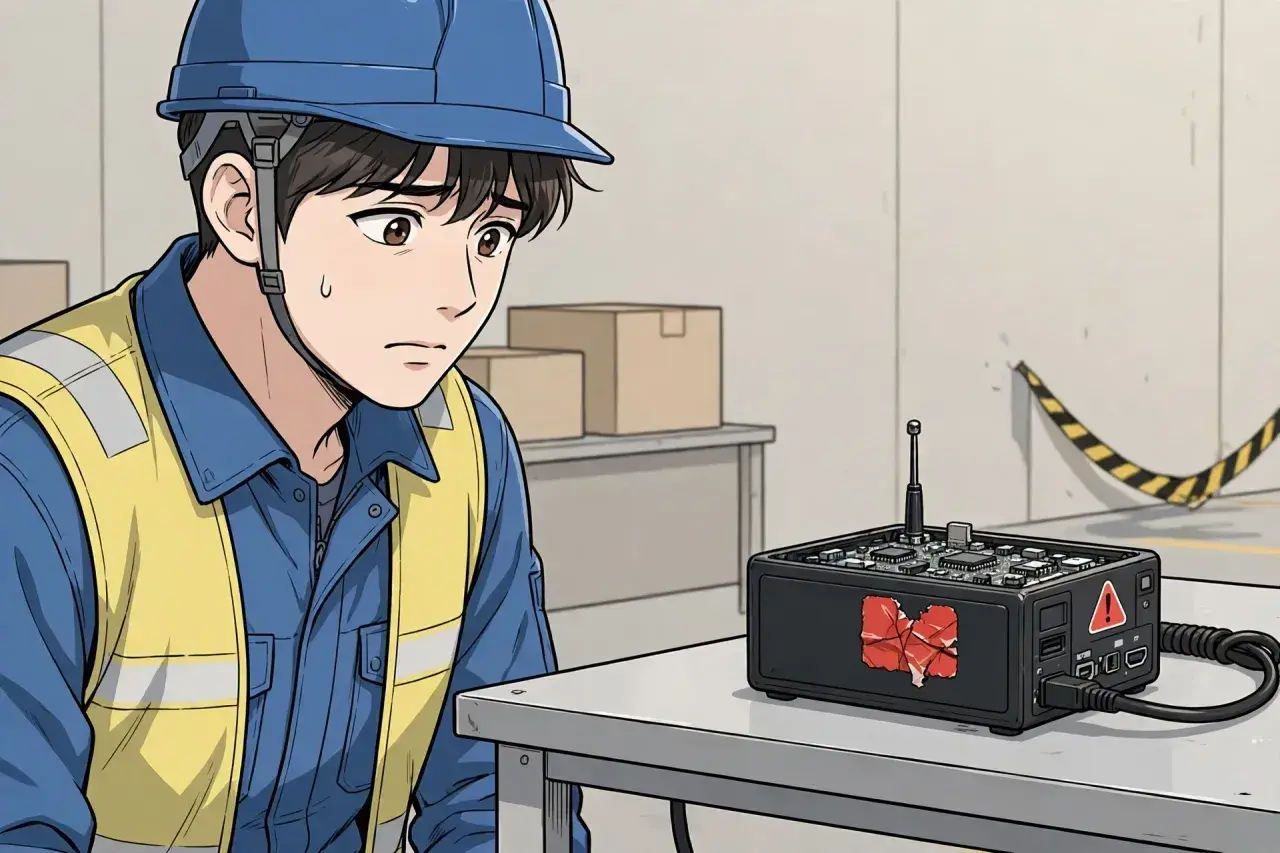
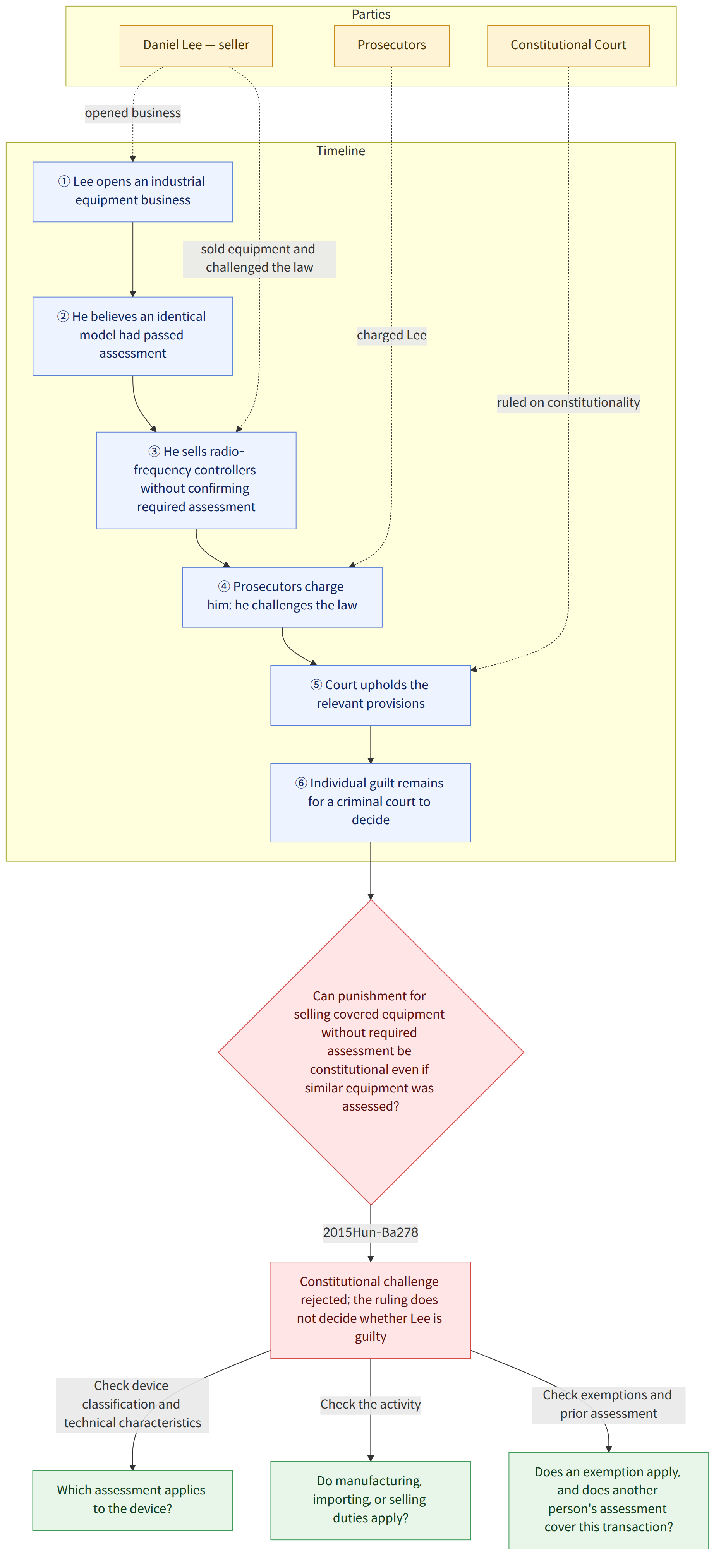
When Daniel Lee opened a small business supplying industrial equipment, he expected his work to be measured in delivery schedules and repair calls—not courtroom dates. One of his products was a radio-frequency controller used on factory machinery. Daniel believed it was technically sound, and he had heard that an identical model had previously passed a conformity assessment.
But Daniel had sold the units without confirming that the products he was distributing had the required assessment. Prosecutors charged him with violating the Radio Waves Act. He regarded the case as excessive: if the equipment was the same as a model already assessed, why should another seller face criminal liability simply for not completing the process again?
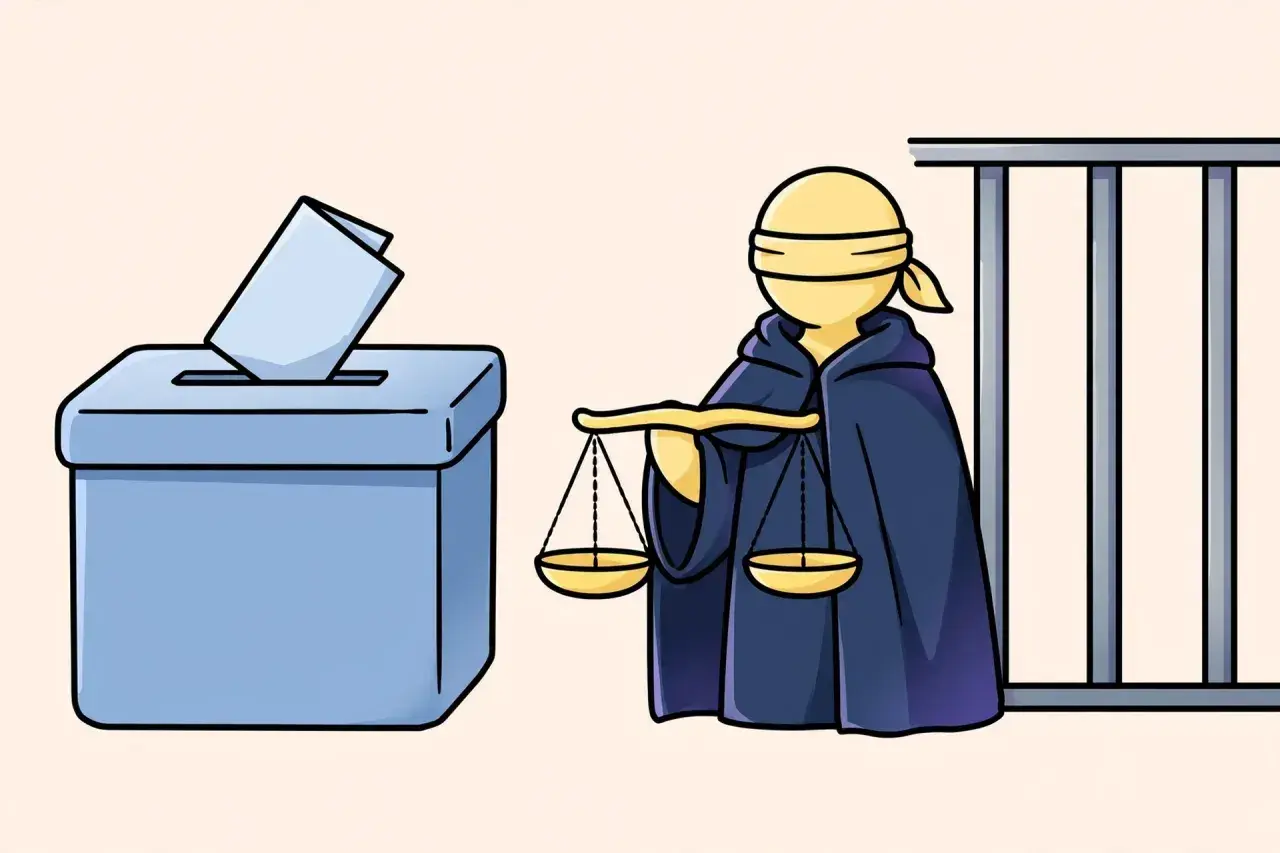
Daniel’s complaint raises a larger question about the boundary between business freedom and public safety. In Korea, conformity assessment is not treated only as a technical test of a device. It can also be a way of assigning responsibility to those who place equipment on the domestic market.
2. The Legal Question
Can Korea constitutionally punish a person for selling covered broadcasting or communications equipment without the required conformity assessment—even if similar equipment has already been assessed by someone else?
The Korean Constitutional Court answered yes in its 2015 decision, 2015Hun-Ba278. That ruling upheld the relevant provisions against a constitutional challenge. It did not, however, determine whether any particular seller is guilty: that remains a matter for the criminal court applying the law to the evidence.
3. What Korean Law Says
The Radio Waves Act regulates certain broadcasting and communications equipment, including devices that may cause radio interference or affect human health. Depending on the type and characteristics of the equipment, the law provides for different forms of conformity assessment, including conformity certification, conformity registration, and provisional certification.
The central purpose of conformity assessment is not merely to check a device in advance. It is also to help ensure, under the responsibility of those placing it on the domestic market, that the equipment remains compliant with applicable technical standards while it is distributed.
The legal framework can therefore reach beyond the manufacturer. Depending on the applicable provisions and circumstances, importers and sellers may also have duties. Selling covered equipment without the required assessment can expose a person to criminal punishment.
The main points are:
- First, identify the device. The required assessment depends on the equipment’s legal classification and technical characteristics. Not every industrial product is necessarily subject to the same requirements.
- Second, identify the relevant activity. Manufacturing, importing, and selling may each carry obligations under the Act and related rules.
- Third, check for an exemption. The law provides relief in certain circumstances where equipment is not intended for commercial distribution in the domestic market. The availability of an exemption depends on the facts and applicable requirements.
- Fourth, do not assume another assessment automatically covers your transaction. The Constitutional Court rejected the argument that a seller should be exempt simply because equipment of the same kind has already been assessed.
The Court reasoned that the legislature could require assessment of the same kind of equipment rather than create a blanket exemption based on an earlier assessment. It was entitled to consider the equipment’s nature, defect rates, and potential effects on people, as well as the need to secure safety and assign responsibility at later stages of distribution.
4. How Korean Courts Approach This
In 2015Hun-Ba278, the Constitutional Court considered whether the assessment and punishment rules placed an unconstitutional burden on business activity. The challengers argued that requiring another assessment for equipment of the same kind could waste time and money, particularly where similar equipment had already been assessed.
The Court did not accept that argument as enough to invalidate the law. It viewed the scheme as a means of ensuring that compliant equipment reaches the market and that responsibility for it does not end with an earlier test or another person’s assessment. The legislature could take account of risks that differ among equipment types and could choose not to create a general exemption for identical or similar products.
The Court also weighed the burden on freedom to conduct a business against the public interest in preventing radio interference and protecting safety. It concluded that the public interest was not outweighed by the seller’s interest in avoiding the assessment requirement. The challenged provisions therefore did not violate the principles of minimum infringement or balance of interests.
That constitutional ruling has an important limit: upholding a criminal statute does not establish that every person charged under it has committed an offense. A trial court must still examine whether the particular device was covered, what the defendant did, whether the required assessment was absent, and whether an exemption or other defense applies.
5. Applying the Law to Daniel’s Case
Step 1: Determine whether Daniel’s controller was covered. The fact that a product was used in a factory would not, by itself, answer the question. The court would need to consider the device’s technical function and the rules governing its category. If the controller fell within the equipment subject to conformity assessment, the statutory duty could apply.
Step 2: Establish what Daniel did. The prosecution would need to prove the conduct charged—for example, that Daniel sold covered equipment in Korea and that the legally required assessment had not been completed. The precise statutory elements and the evidence supporting them would matter.
Step 3: Consider the earlier assessment. Daniel’s belief that an identical model had passed assessment may explain why he thought his conduct was acceptable. But, under the Constitutional Court’s reasoning, that fact alone does not create a general right for a separate seller to distribute the equipment without meeting the applicable requirements. The law may place responsibility on those involved in bringing equipment into the domestic market and continuing its distribution.
Step 4: Check for an exemption. Daniel would need to examine whether the device and the way it was supplied fell within a statutory or regulatory exemption. The Court noted that the law can ease the burden where domestic commercial distribution is not contemplated. But a seller who supplies equipment commercially cannot assume that an exemption applies merely because the device is industrial or because another party previously assessed similar equipment.
Step 5: Separate the constitutional issue from guilt. If Daniel challenged the constitutionality of the relevant provisions and the Constitutional Court rejected that challenge under the approach in 2015Hun-Ba278, the criminal case could still proceed. The prosecution would still have to prove the offense, and the trial court would still have to assess the device, the transaction, and any defense.
If you are dealing with a similar issue, attorney Ji-sun Ahn of Ijun Law Firm can review the sequence of events, records showing what each person knew or did, and the grounds stated in any formal notice with you. These details can help clarify which options apply to your situation.
6. Conclusion: What Happened, and What Should You Do?
Daniel’s constitutional argument—that another person’s assessment of the same kind of equipment should automatically spare him from criminal liability—would not succeed under the Constitutional Court’s reasoning. The Court upheld the legal framework because it serves a broader purpose than checking a device once: it helps maintain compliance in the market and assigns responsibility to those who distribute covered equipment.
That does not mean Daniel is automatically guilty. His outcome would depend on whether his specific controller was subject to the assessment rules, whether the required process had in fact been completed, whether an exemption applied, and whether the prosecution could prove the charge. The constitutional ruling settles the validity of the rules, not every factual question in an individual prosecution.
For businesses handling radio or communications equipment:
- Classify the product before importing or selling it. Confirm the applicable assessment category and requirements with a qualified compliance professional or the relevant Korean authority.
- Keep written compliance records. Obtain documentation showing the assessment status of the exact product and confirm whether it covers your role and distribution arrangement; do not rely on an informal assurance that a similar model was approved.
- Check exemptions before relying on them. If you believe a product is outside the rules or qualifies for an exemption, verify the legal basis before commercial distribution and preserve the supporting records.