1. A Human Story
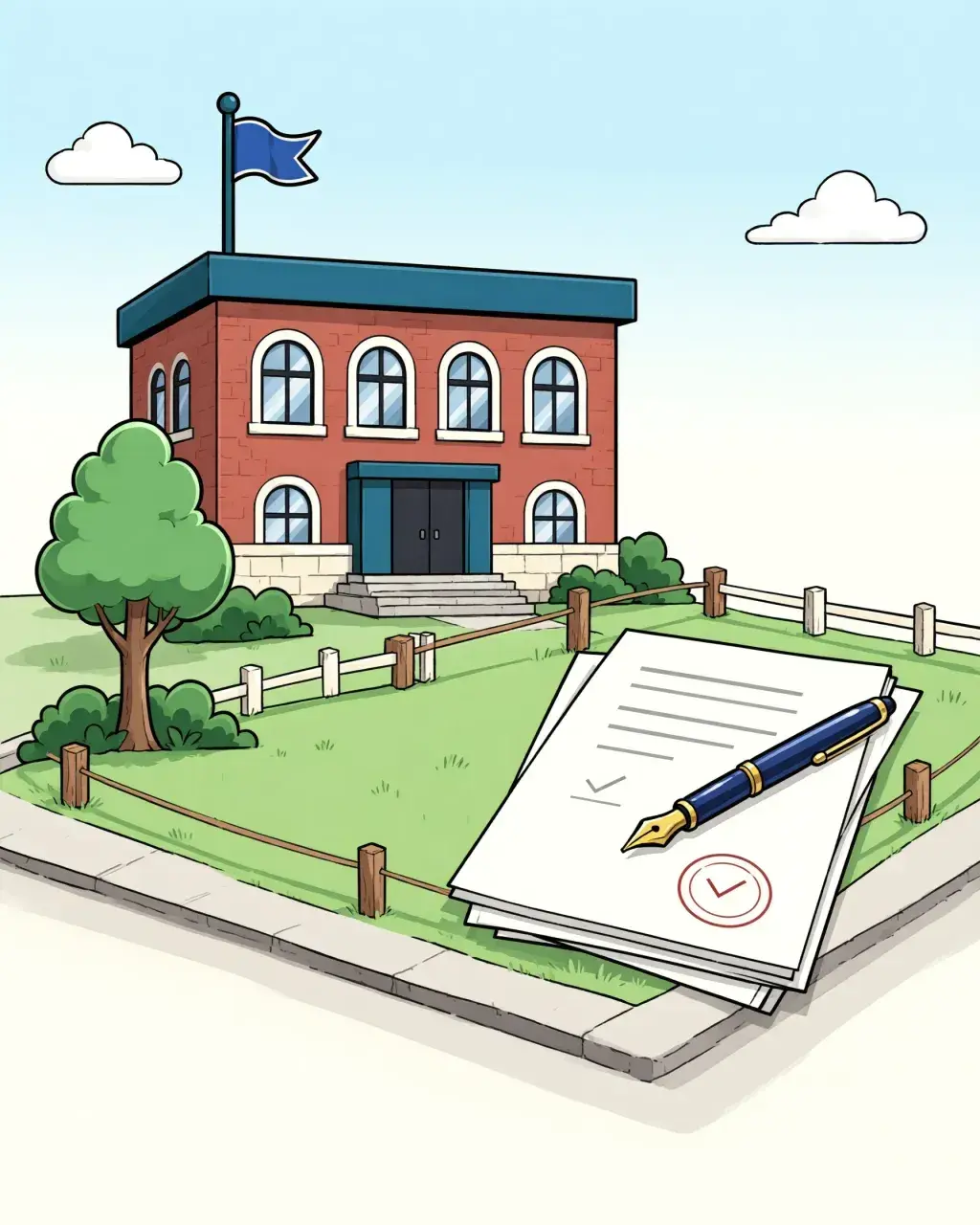
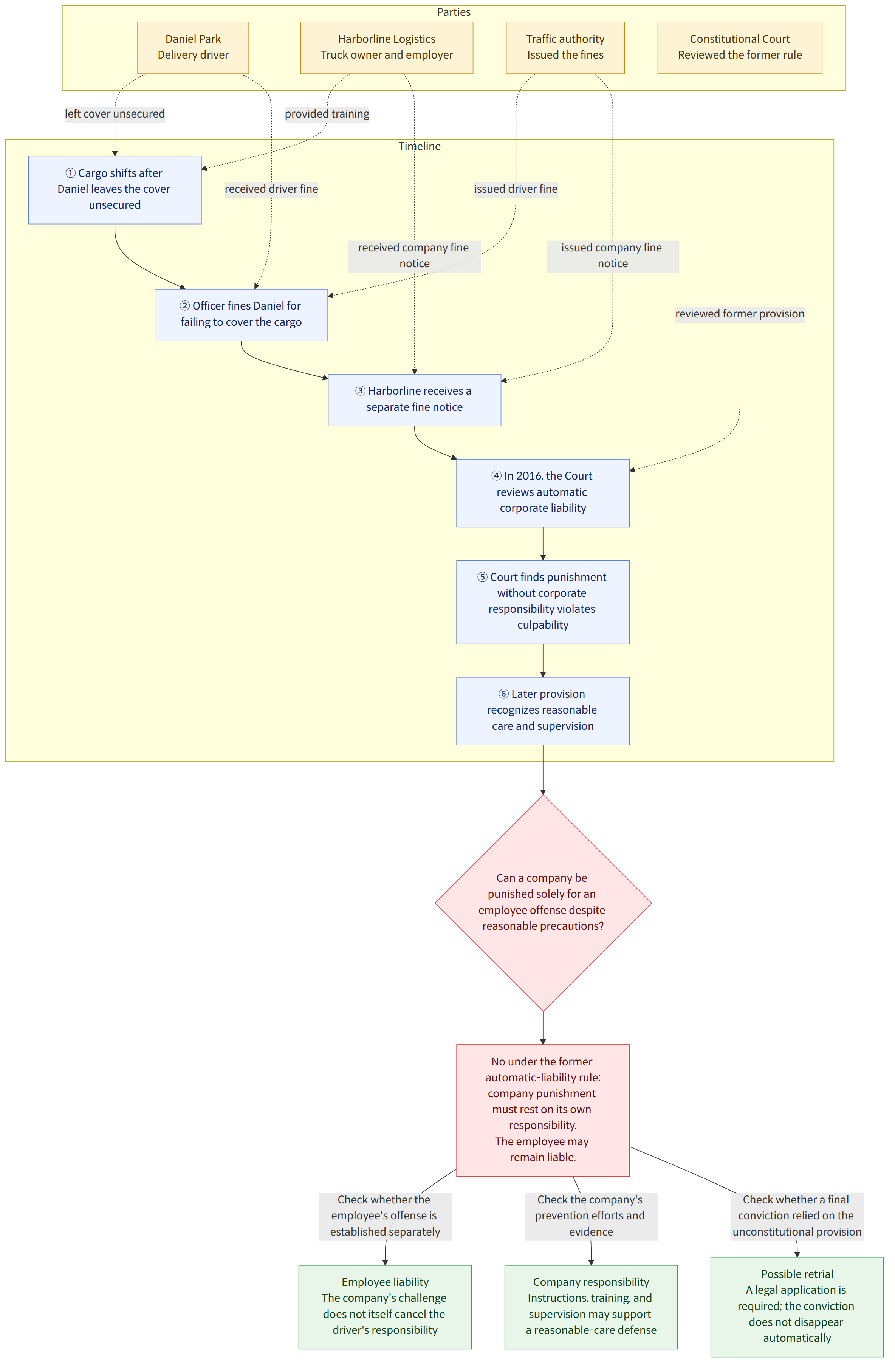
On a wet Tuesday morning, Daniel Park, a delivery driver for Harborline Logistics, set out with a load of boxed appliances. The company’s safety manager had recently held a training session on securing cargo, and Daniel had signed the attendance sheet. But in the rush to make his first delivery, he left the truck’s cover unsecured. A box slid off the truck and onto the road.
A traffic officer stopped Daniel and issued a fine for failing to cover the cargo so that it would not fall. Then came a second notice: Harborline, the truck’s owner and Daniel’s employer, was also to be fined. The company had provided instructions and training, but the old rule appeared to make the employer liable simply because its employee had broken the law while doing company work.
Harborline’s director, Maya Lee, asked a question that reaches beyond one truck: can the state punish a company for another person’s offense without asking whether the company itself did anything wrong?
2. The Legal Question
The central question is whether the Korean government may impose a criminal fine on a company merely because an employee committed a traffic offense in the course of work—even if the company took reasonable steps to prevent that violation.
3. What Korean Law Says
The relevant rule was a former provision of the Road Traffic Act. It made a corporation liable to the same type of fine or minor penalty when its representative, employee, or other worker committed certain traffic offenses in connection with the corporation’s business. The provision did not make the corporation’s liability depend on its own fault or on whether it had taken reasonable precautions.
In 2016, the Constitutional Court reviewed this kind of automatic corporate liability in connection with a cargo-covering offense. It held that punishing the company without considering any independent responsibility on its part violated the constitutional principle of culpability.
Criminal punishment must be based on the accused person’s own responsibility. A company cannot be punished for another person’s crime without a legal basis for attributing fault to the company itself.
The Court’s reasoning rests on a basic distinction: an employee’s wrongdoing and an employer’s wrongdoing are not automatically the same thing. A company may have responsibility of its own—for example, if it failed to provide necessary safety measures—but the law must make that responsibility relevant to punishment.
The Road Traffic Act’s later joint-penalty provision reflects this distinction. It provides that a business is not to be punished if it has not neglected reasonable care and supervision to prevent the violation in relation to the relevant work.
Under the later rule, a corporation or individual is not punished where it has exercised reasonable care and supervision to prevent the offense.
In practical terms, the key points are:
- The employee may still be liable for the employee’s own traffic offense.
- The company’s liability must have a proper legal basis; it cannot rest only on the fact that the employee worked for it.
- Under the later statutory approach, reasonable prevention efforts—including suitable instructions, training, and supervision—may provide a defense for the business.
- If a company was finally convicted under a criminal provision later declared unconstitutional, it may be able to seek a retrial. That requires a legal application; the conviction does not disappear automatically.
4. How Korean Courts Approach This
Korean courts and the Constitutional Court apply the principle that criminal punishment requires personal responsibility. The state cannot treat an employer as guilty merely because an employee committed an offense during work. A law that imposes punishment without asking whether the corporation had any culpable role risks making the company answer for someone else’s crime.
That does not mean businesses are immune whenever an employee breaks the law. A company may be punished where the statute makes its own failure to take reasonable precautions relevant, and the evidence supports that failure. The constitutional problem arises when the law imposes a fine regardless of whether the company exercised care or had any independent responsibility.
The Constitutional Court’s 2016 ruling concerned a former Road Traffic Act provision that lacked such a safeguard. The ruling did not erase the driver’s personal responsibility for the underlying traffic violation; it addressed the separate punishment imposed on the company.
5. Applying the Law to the Case
First, Daniel’s conduct is considered separately. He was driving the truck and failed to cover its cargo. If the traffic offense is established, the company’s constitutional challenge does not by itself cancel Daniel’s personal liability.
Second, Harborline’s fine must be examined under the legal rule that applied to it. If the company was fined under the former provision that imposed punishment simply because an employee committed the offense in the course of business, without considering the company’s own fault, that is the kind of automatic liability the Constitutional Court found unconstitutional.
Third, the company’s safety efforts matter under the later approach. Maya can point to the training session and Daniel’s signed attendance sheet. Those facts support Harborline’s position that it took steps to prevent the offense. Whether those steps would be sufficient under a statute containing a due-diligence defense would depend on the full circumstances: for example, whether the training was adequate, whether cargo-covering procedures were clear, and whether the company supervised compliance. But under the former rule, the deeper problem was that the company’s care was irrelevant—the fine followed from the employee’s violation alone.
Finally, the remedy depends on the status and legal basis of Harborline’s penalty. If it was convicted under the unconstitutional former provision, the company may be entitled to seek a retrial. The Constitutional Court Act provides for the retroactive loss of effect of a criminal statute or provision declared unconstitutional, subject to an exception where that provision had previously been upheld as constitutional. Harborline should therefore check the exact provision cited in its judgment, the date and finality of the conviction, and whether the statutory conditions for retrial are met.
6. Conclusion: What Happened, and What Should You Do?
Harborline’s fine cannot stand merely because Daniel was its employee and committed a traffic offense while working. If the company’s fine was imposed under the former rule that made liability automatic, the constitutional ruling gives Harborline a basis to seek a retrial. Daniel’s own fine is a separate matter and does not fall away simply because the corporate-liability rule was unconstitutional.
For readers facing a similar situation:
- Check the exact legal provision stated in the fine or judgment. The date and wording of the rule matter.
- Preserve evidence of prevention efforts, including training records, written safety procedures, inspection logs, and supervision records.
- If the company was convicted under the former automatic-liability rule, ask a Korean lawyer promptly about a retrial. A constitutional ruling may provide a route to relief, but the conviction is not canceled without further action.