A Dream Building Turned Sour
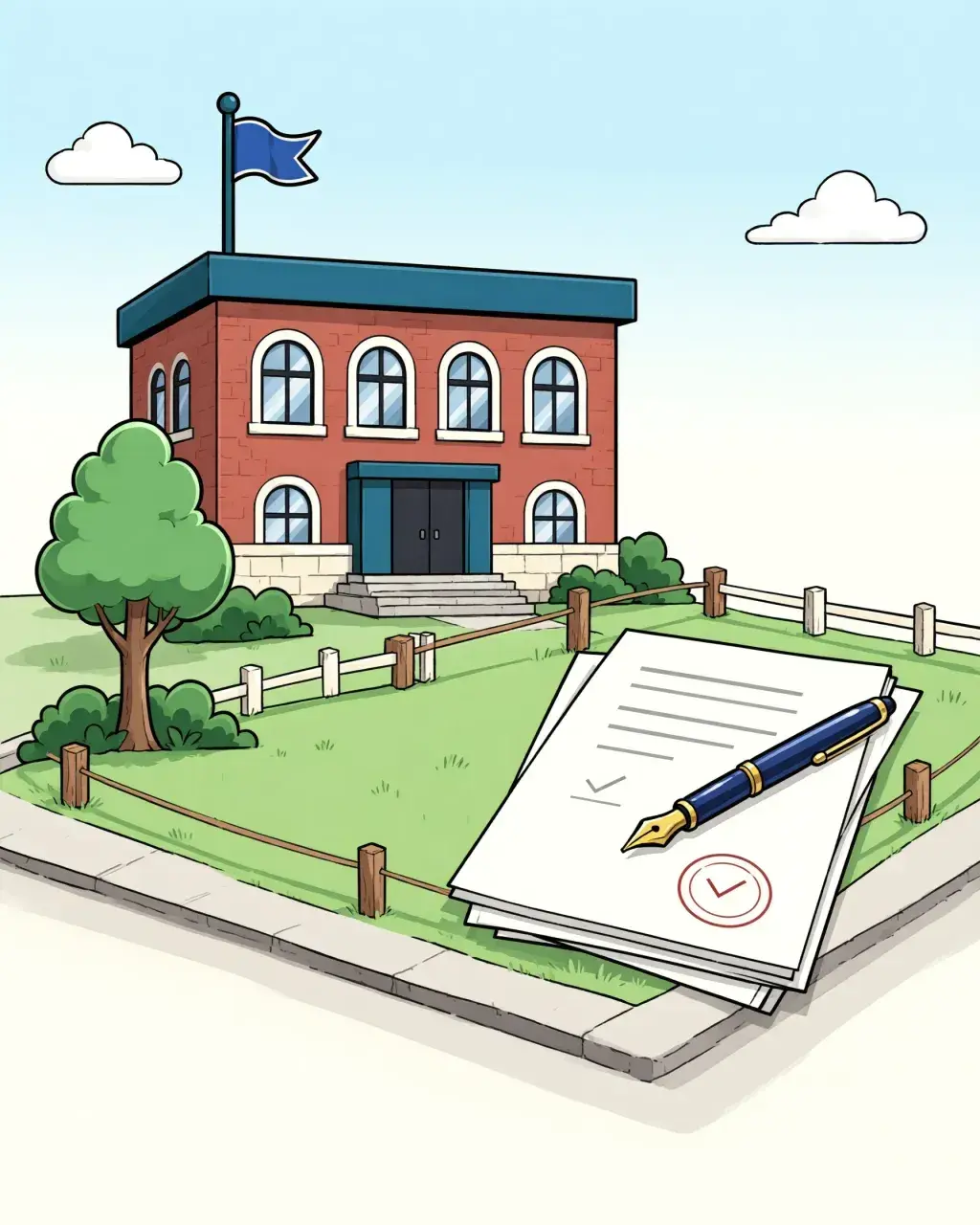
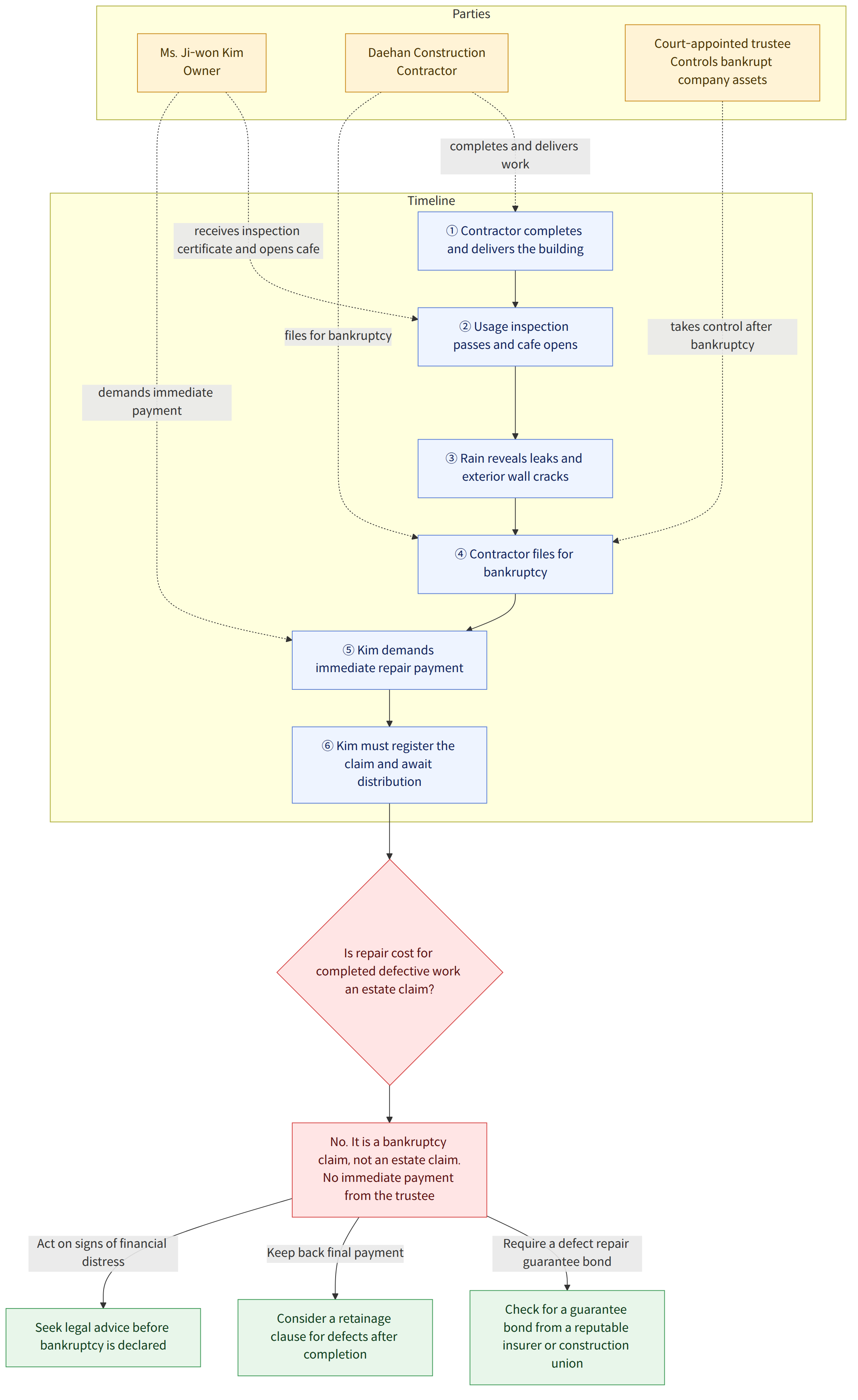
Ms. Ji-won Kim spent her life savings and a substantial bank loan to build a boutique cafe on the outskirts of Seoul. The contractor, Daehan Construction, finished the project on time. Ms. Kim received the final usage inspection certificate from the local authorities and opened her doors to the public with high hopes.
However, the honeymoon period was short-lived. During the first heavy summer rain, the ceiling began to leak, and deep cracks appeared in the exterior walls. When Ms. Kim tried to contact the contractor for repairs, she received devastating news: Daehan Construction had filed for bankruptcy and a court-appointed trustee was now in charge.
Ms. Kim rushed to the trustee's office, demanding immediate payment for the repairs. "The building is falling apart! You have to pay for this repair work immediately from the company's remaining assets," she argued, believing her claim should be a top priority.
The Legal Question: Is Defect Repair an 'Estate Claim'?
The central issue is whether Ms. Kim’s claim for damages (the cost of repairing the defects) qualifies as an 'estate claim' (재단채권) under Korean law. Estate claims are paid out by the trustee preferentially, outside of the standard bankruptcy distribution process. If her claim is merely a 'bankruptcy claim' (파산채권), she must join a long line of creditors and may only receive a tiny fraction of the repair costs years later.
What Korean Law Says About Bilateral Contracts
The Debtor Rehabilitation and Bankruptcy Act provides specific rules for bilateral contracts where both parties still have obligations at the time of bankruptcy:
Article 335 (Bilateral Contracts): If neither the debtor (contractor) nor the other party (owner) has fully performed their obligations at the time of the bankruptcy declaration, the trustee may either rescind the contract or fulfill the debtor's obligations and demand performance from the other party.
Article 473, Item 7: If the trustee chooses to fulfill the obligations under Article 335, the other party’s resulting claim becomes an 'estate claim.'
If the building were only 50% finished, the trustee could choose to finish it, and any subsequent issues would likely be priority estate claims. But what happens when the building is already 'done'?
How Korean Courts Approach This
The Korean Supreme Court takes a very strict view regarding completed construction. Once a building is finished and delivered, the court considers the contractor’s primary obligation to be 'fulfilled,' even if the work is shoddy or contains defects.
Judicial principles establish that:
- If the work is finished, the contract can no longer be rescinded under the 'unfulfilled bilateral contract' rule.
- Therefore, Article 335 does not apply because there is no 'choice' for the trustee to make regarding performance.
- Consequently, the claim for defect repairs cannot be elevated to an estate claim; it remains a standard bankruptcy claim.
Applying the Law to Ms. Kim's Case
In Ms. Kim's situation, Daehan Construction had already completed the building and passed the usage inspection before the bankruptcy declaration. Legally, this means the contractor performed its part of the bargain. The fact that the building has leaks does not change the status of the contract from 'completed' to 'unfulfilled.'
As a result, Ms. Kim's claim for repair costs is classified as a bankruptcy claim. She cannot demand direct or immediate payment from the trustee. Instead, she must register her claim with the bankruptcy court and wait for the final distribution of the company’s remaining assets, which is often pennies on the dollar.
Conclusion: What Happened, and What Should You Do?
Ultimately, Ms. Kim will likely have to pay for the repairs out of her own pocket for now and hope for a small dividend from the bankruptcy proceedings. Her path to full recovery is, unfortunately, blocked by the timing of the contractor's bankruptcy relative to the completion of the work.
To avoid such a scenario, readers should consider these proactive steps:
- Verify Performance and Warranty Bonds: Always require a Defect Repair Guarantee Bond (하자보수보증서) from a reputable insurance company or construction union. If the contractor goes bust, you can claim the repair money directly from the insurer.
- Retainage Clauses: Include a clause in your contract to hold back a small percentage of the final payment (retention money) for a set period after completion to cover potential initial defects.
- Monitor Financial Health: If a contractor shows signs of financial distress during construction (e.g., workers not being paid), consult a legal expert immediately to freeze payments or secure your position before a formal bankruptcy is declared.