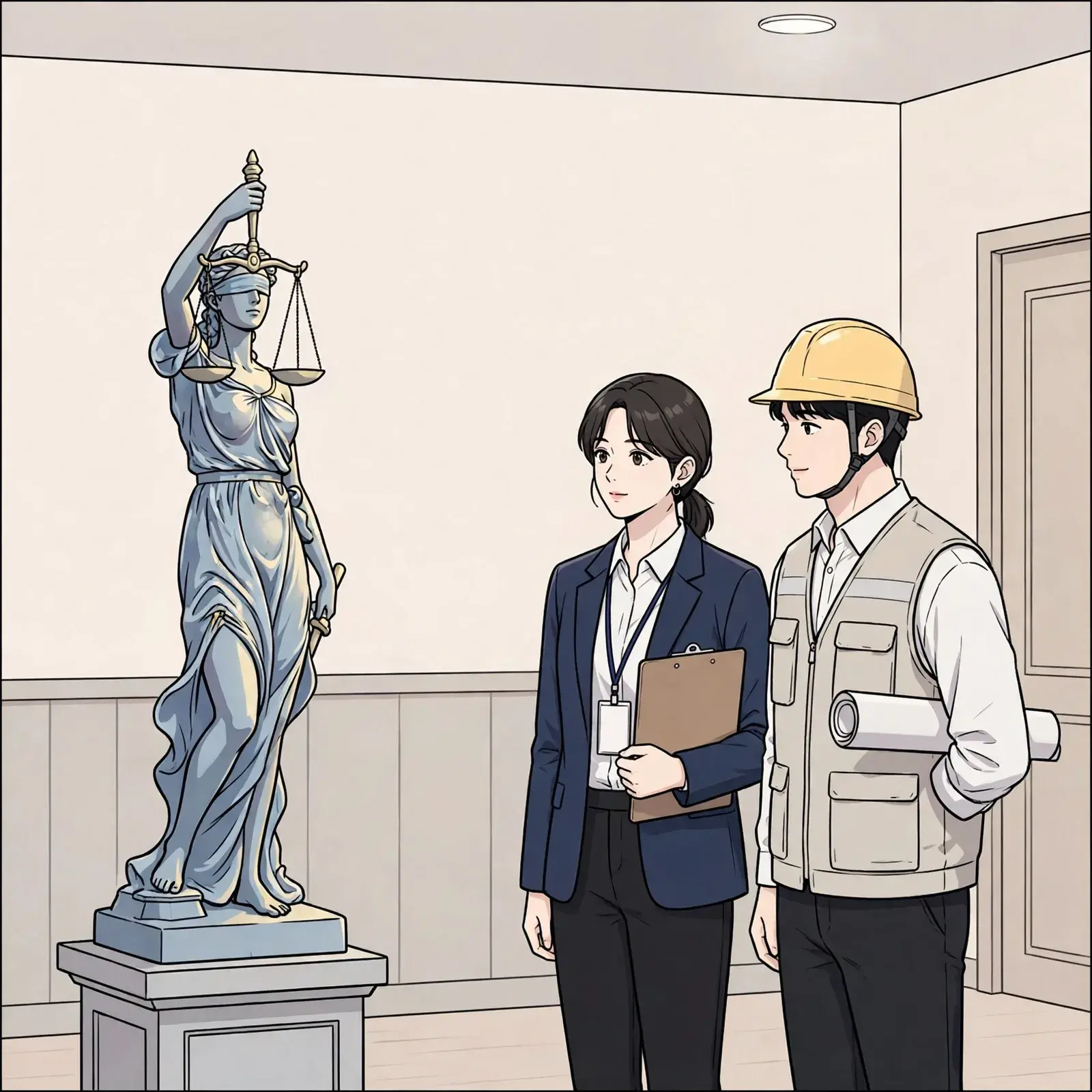
1. A Warm Meal and a Cold Reality
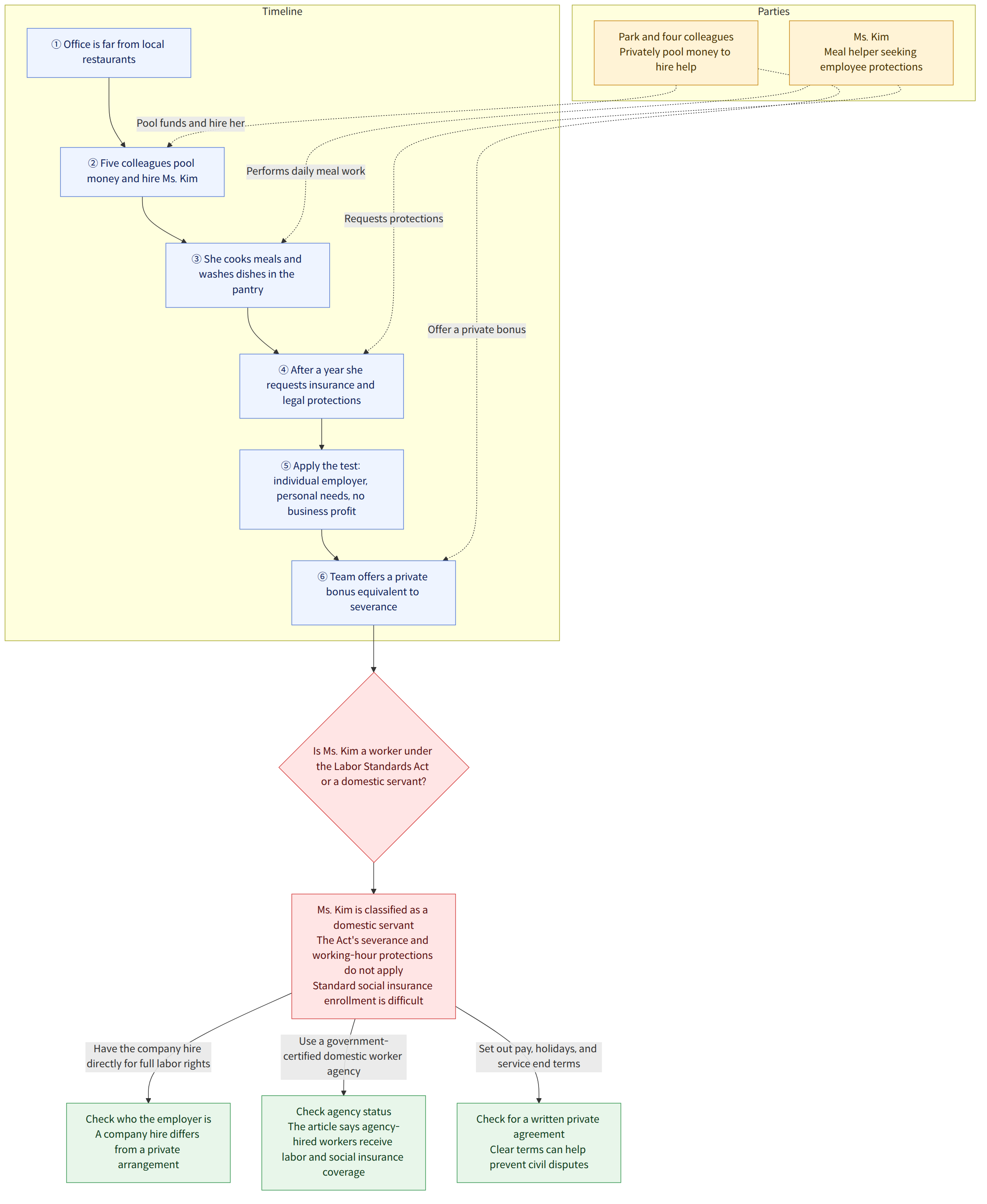
Ji-hoon Park, a team leader at a small IT startup in Seoul, used to enjoy the highlight of his day: a home-cooked lunch. Since the office was located far from the local restaurant district, he and four colleagues pooled their money to hire Ms. Kim, a local woman who came in daily to cook rice, prepare side dishes, and wash the dishes in the office pantry.
After a year of this arrangement, Ms. Kim approached Ji-hoon with a request. She wanted to be registered for the four major social insurances and receive the same legal protections as any other employee. While the team wanted to support her, they faced a complex legal hurdle. They weren't "the company"; they were just five individuals paying for a service out of their own pockets. Was Ms. Kim a legal "employee" under the Labor Standards Act, or was she something else entirely?
2. The Core Legal Question
The central issue lies in defining Ms. Kim’s legal status. If she is considered a "worker" under the Labor Standards Act, she is entitled to minimum wage, overtime pay, and severance. However, if she is classified as a "domestic servant" (gasa sayong-in), the majority of these labor protections do not apply.
3. What Korean Law Says: The "Domestic Servant" Exception
Article 11 of the Korean Labor Standards Act (LSA) defines the scope of its application. While it covers almost all businesses, it makes a crucial exception:
Labor Standards Act, Article 11 (Scope of Application)This Act shall apply to all businesses or workplaces in which five or more employees are ordinarily employed... Provided, That this Act shall not apply to any business or workplace which employs only relatives living together with the employer, nor to domestic servants.
In Korean law, a "domestic servant" refers to individuals engaged in household affairs—such as housekeepers, private drivers, or home caregivers. The reasoning is that the state should not monitor or supervise labor that is deeply intertwined with a person's private life and household management.
- Key Criteria:
- The employer must be an individual, not a business entity.
- The work must be related to personal/household needs.
- The compensation is for personal convenience rather than generating business profit.
4. How Korean Courts Approach This
Korean courts and the Ministry of Employment and Labor look beyond where the work happens and focus on who directs it and why. If a company CEO hires a cook to feed staff as part of corporate operations, that cook is a "worker" protected by the LSA.
However, when employees voluntarily pool their personal funds to hire a helper for their own convenience, the situation changes. Even if the cooking happens in an office pantry, the legal relationship is viewed as a private contract for domestic assistance. Since the "employer" is not the business entity but a group of individuals acting in their private capacity, the helper is usually categorized as a domestic servant.
5. Applying the Law to Ji-hoon’s Case
Analyzing Ji-hoon Park’s situation through this lens reveals several points:
- The Hiring Party: The entity paying Ms. Kim is a group of individuals, not the IT startup itself. This makes it a private arrangement.
- The Nature of Work: Cooking and cleaning for individuals’ personal consumption is a classic definition of domestic labor.
- Legal Classification: Therefore, Ms. Kim is likely a "domestic servant" under Article 11. This means she is not legally entitled to severance pay or the strict working hour limits defined by the Labor Standards Act.
- Social Insurance: Without a business registration number (which individuals don't have for household help), it is administratively difficult to enroll her in the standard four major social insurances as a corporate employee.
6. Conclusion: What Happened, and What Should You Do?
In Ji-hoon’s case, Ms. Kim was legally classified as a domestic servant. While the team couldn't provide the four major insurances through the office, they decided to show their appreciation by drafting a private agreement to provide a "bonus" equivalent to severance pay upon her retirement, honoring their personal relationship.
Practical Tips for Readers in Similar Situations:
- Clarify the Employer: If you want a helper to have full labor rights, the company should hire them directly as a corporate employee and handle the payroll officially.
- Use Certified Agencies: Under the recently enacted Act on the Employment Improvement, etc. of Domestic Workers, you can hire helpers through government-certified agencies. These workers are covered by labor laws and social insurance.
- Written Private Agreements: If hiring privately, always have a written agreement regarding pay, holidays, and what happens when the service ends. Even if the LSA doesn't apply, a clear contract prevents civil disputes.
This column is provided for informational purposes only and does not constitute legal advice for specific cases.