The Boomerang Effect: Ji-woo Park’s Workplace Nightmare
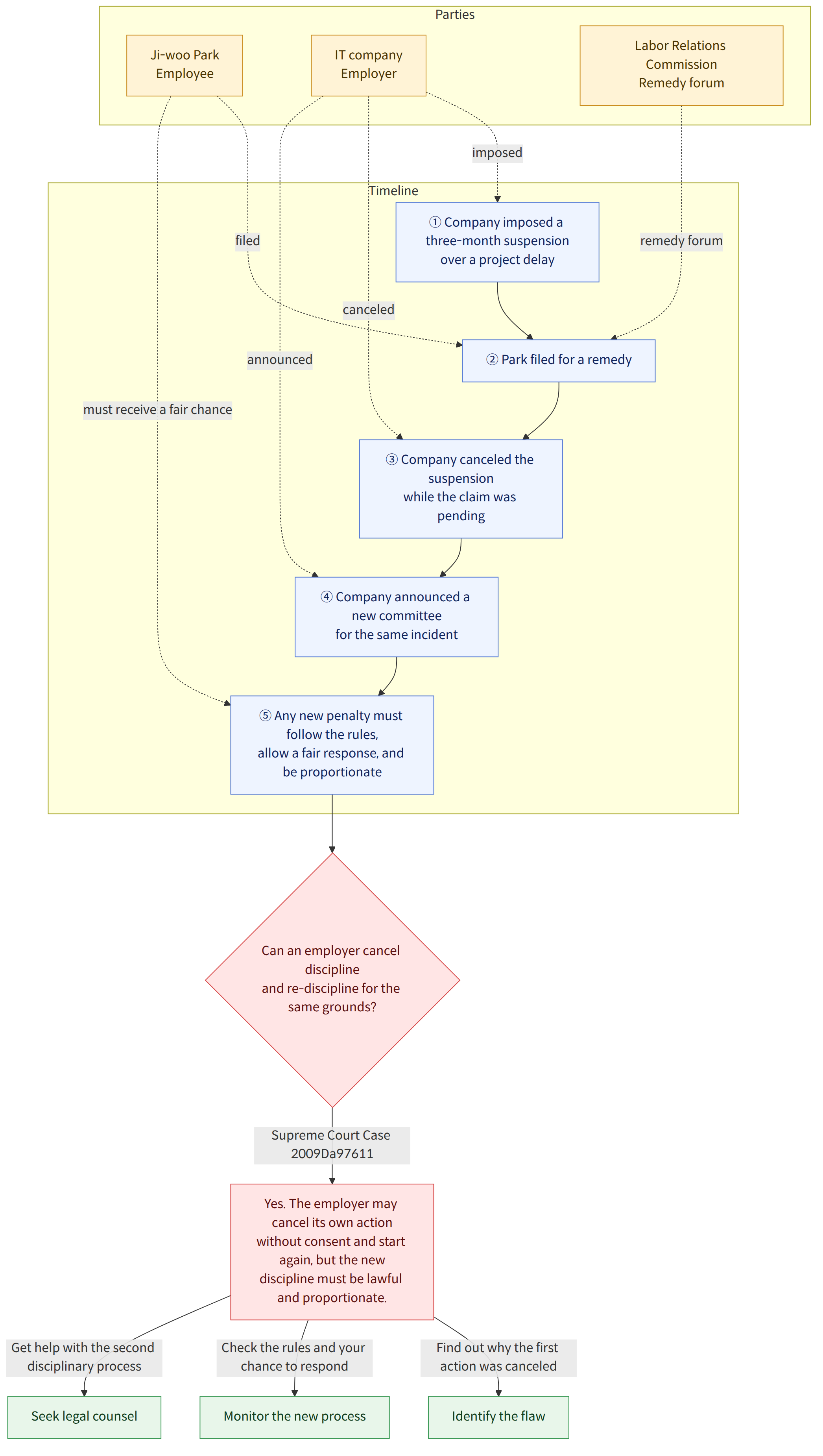
Ji-woo Park, a senior associate at a mid-sized IT firm, was devastated when she received a three-month suspension. The company blamed her for a project delay that resulted in financial loss. Believing the punishment was disproportionate and that the failure wasn't entirely her fault, Ji-woo filed for a remedy at the Labor Relations Commission.
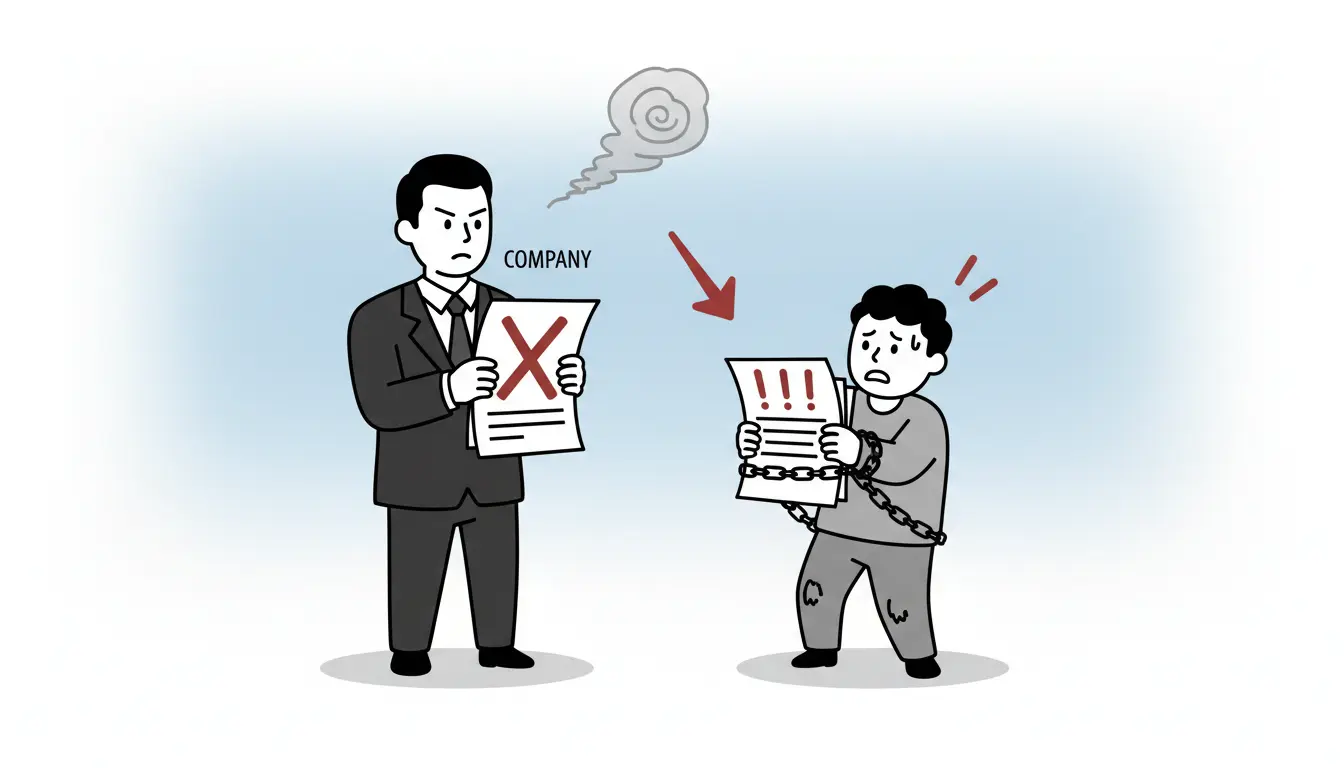
While waiting for the hearing, she received a sudden notice: the company was voluntarily canceling her suspension. Ji-woo was relieved, thinking justice had been served and her record was cleared. However, her relief was short-lived. The company immediately notified her that they were convening a new disciplinary committee to re-examine the exact same incident. Is it legal for an employer to take back a penalty only to aim for a 'better' or more legally sound punishment later?
The Legal Dilemma: Double Jeopardy or Self-Correction?
The core question here is: "Can an employer voluntarily cancel a finalized disciplinary action and then issue a new one for the same grounds?" For employees, this often feels like a violation of the principle of double jeopardy—being punished twice for the same crime.
What Korean Law Says About Employer Rights
Under Korean labor law and established Supreme Court precedents, employers possess the authority to discipline employees to maintain corporate order. However, the law also recognizes that employers can make mistakes in the disciplinary process. Regarding self-correction, the Supreme Court has ruled:
"If an employer admits to errors in the disciplinary procedure, the existence of grounds for discipline, or the severity of the penalty, they may voluntarily cancel the disciplinary action without waiting for a remedy order from the Labor Relations Commission or a court judgment. Furthermore, it is possible to issue a new, lawful disciplinary action thereafter." (Supreme Court Case 2009Da97611)
In essence, the law encourages employers to fix their own mistakes rather than dragging out a losing legal battle in court.
How Korean Courts Approach This Issue
Korean courts generally favor 'voluntary correction.' If a company realizes mid-litigation that they failed to give the employee a chance to defend themselves (a procedural flaw) or that the punishment was too harsh (an abuse of discretion), it is more efficient to allow them to cancel it and restart the process correctly.
This approach prevents unnecessary litigation and allows for a more legally sound employment relationship. However, the cancellation of the first penalty does not mean the underlying misconduct has disappeared; it simply resets the clock for a proper procedure.
Applying the Law to Ji-woo’s Case
In Ji-woo Park’s situation, the company likely realized that their initial 'three-month suspension' would be overturned by the Labor Relations Commission—perhaps because they skipped a mandatory hearing or the evidence was weak.
- Validity of Cancellation: The act of the company canceling its own disciplinary measure is legally valid and does not require the employee's consent.
- The New Disciplinary Process: The company is legally allowed to start over for the same project delay incident.
- Requirements for the New Penalty: The second attempt must be flawless. The company must follow every step of its internal rules, provide Ji-woo a fair chance to present her side, and ensure the new penalty is proportionate to the offense.
Conclusion: What Happened to Ji-woo, and What Should You Do?
Ultimately, Ji-woo Park should not view the cancellation as a complete victory but as a transition into a more rigorous legal battle. Since the company admitted the first process was flawed by canceling it, Ji-woo now has a stronger position to challenge any inconsistencies in the second process.
For those in similar situations, here is practical advice:
- Identify the Flaw: Try to find out why the company canceled the first penalty. Was it a procedural technicality? This will help you prepare for the next round.
- Monitor the New Process: Ensure the company follows the collective agreement or employment rules to the letter during the second attempt. Any deviation can be used as evidence of unfair labor practice.
- Seek Legal Counsel: Repeat disciplinary actions can be emotionally draining and legally complex. A professional can help ensure that the 'second bite of the apple' taken by the employer doesn't overstep legal boundaries.
The law allows companies to fix their mistakes, but it does not give them a license to harass employees with endless disciplinary cycles. Make sure your rights are protected during the 'redo.'
This column is provided for general informational purposes only and does not constitute legal advice for specific cases.