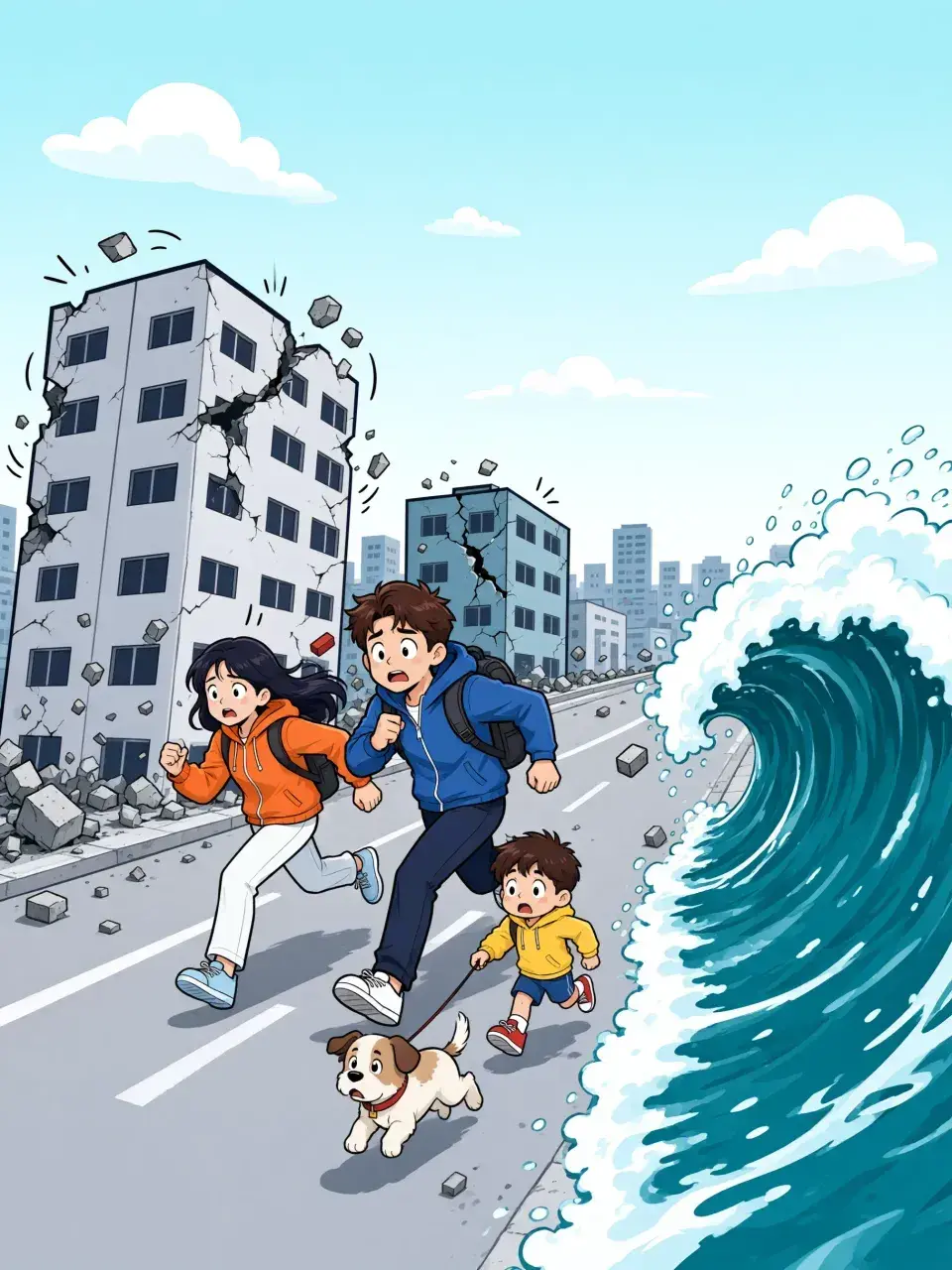
At Lycée Édouard-Herriot (에두아르에리오 고교) in Lyon, southeastern France, dozens of students blocked the main entrance with trash bins and desks from around 7 a.m. local time on the 8th. According to the French Interior Ministry (프랑스 내무부), 71,500 people, including high school students, took to the streets in more than 30 cities across the country that day. The issue raised by protests now in their third week is not simply the aging condition of school buildings. It is that the conditions in which students can learn and their opportunities to prepare for university may vary depending on where they live.
Background and context
The educational disparities highlighted by the protests reflect the interplay of schools’ physical conditions, teacher shortages and the university application process. Reports describe differences in educational conditions between schools in affluent urban neighborhoods and those in poor suburbs. Some schools have stable teacher staffing and offer preparation for university entrance, while in others classes are replaced with self-study because no teacher is available.
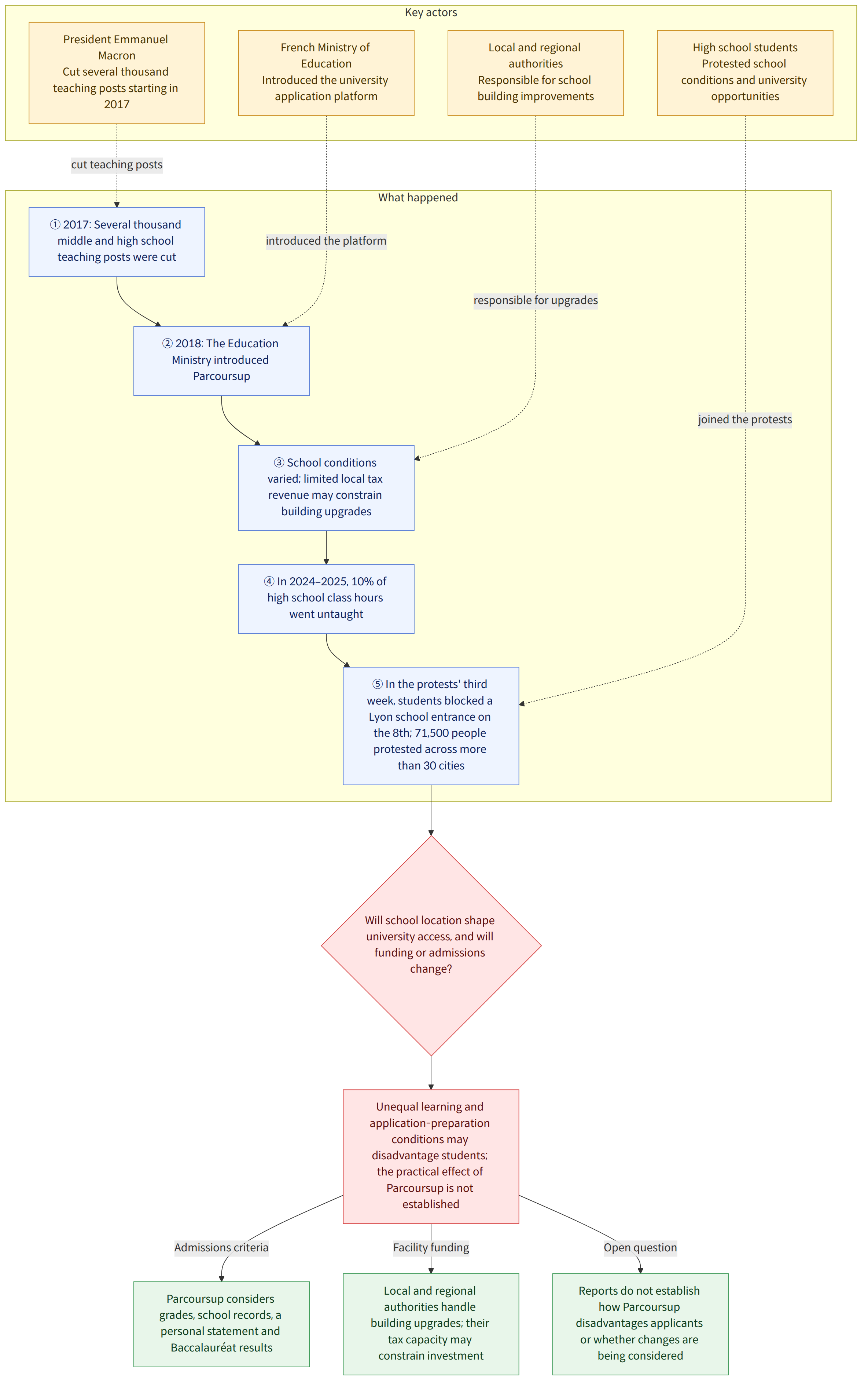
Responsibility for improving school buildings lies with local and regional authorities (시·도청), not the central government. The explanation is that local governments with insufficient tax revenues may find it harder to invest in facility upgrades. According to Le Monde, French high school buildings are an average of 61 years old, and only 15% of schools have been newly built or renovated since 2015.
Teacher shortages disrupt students’ opportunities to learn, apart from the issue of facilities. The French Ministry of Education (프랑스 교육부) calculated that 10% of all high school class hours in 2024–2025 were not taught, for reasons including a lack of teachers. This year, there are 5.58 million middle and high school students, 250,000 more than in 2008. The article reports that President Emmanuel Macron cut several thousand middle and high school teaching posts starting in the first year of his presidency in 2017.
It has been pointed out that schools with teacher shortages may find it even harder to recruit and retain staff when many of their students face social or academic disadvantages. Élise Huillery, a professor at Sciences Po (시앙스포), said teachers are less likely to apply to these schools. This shows how a student’s place of residence may be linked not only to school facilities but also to the teachers they learn from.
Dissatisfaction with the university application process is another part of the protests. In 2018, the Ministry of Education introduced Parcoursup (파르쿠르쉬프), an online platform for university applications and admissions decisions. When applying, students enter their school grades and records, a personal statement and their Baccalauréat (바칼로레아, 프랑스의 대학 진학 관련 시험) results. In a system that considers school grades and application documents together, whether classes are properly taught and whether students have the means to prepare extracurricular activities and other application materials can matter in the university admissions process.
What this news means
The core concern behind the protests is that access to university is not determined solely by students’ individual efforts. Students at schools where classes are missed and teacher recruitment is difficult may be at a disadvantage in their opportunities to learn and in the conditions they have for building their school records. If school facility upgrades also depend on the financial capacity of local governments, reducing educational disparities goes beyond the problems of individual schools and becomes an issue of regional funding and staffing.
The fact that Parcoursup is among the students’ grievances shows that the admissions process and school conditions are not separate. Even when students go through the same application process, schools may differ in whether classes are properly taught and whether students have the time and support needed to prepare application materials. However, the reports do not establish exactly how the platform disadvantages applicants in practice or whether changes to the system are being considered.
For example, if a student has not been able to attend enough classes because of a teacher vacancy and must also prepare application documents and a personal statement, both the learning opportunities provided at school and the conditions for preparing an application may become burdens. This is a hypothetical example to explain the issues discussed in the article; it does not predict any particular student’s outcome.
The cost of improvements is also at issue. Professor Huillery estimates that 12 billion euros would be needed to restore education services, including hiring teachers and improving educational infrastructure. According to the article, French national debt stood at 3.5955 trillion euros at the end of June, its highest level since 1946. As demands for increased investment in education meet the pressure to manage public debt, a gap may emerge between the scale of change sought by the protesters and the measures the government can actually introduce.
Differences in what the reports said
Reports differed in the scope of their accounts of the protests. One reported that 71,500 people took to the streets in more than 30 cities across the country on the 8th. Another reported that 141 schools nationwide had closed, according to the Ministry of Education, as the protests entered their third week. The reports appear to have different counting times and measures, but the information provided does not make clear whether their figures can be compared as measures of scale on the same basis.
Another report said student unions would continue the protests even after securing their first achievement, and that student and teacher unions had called a nationwide school strike for the following Tuesday. It also described students at prestigious universities in Paris joining the movement. By contrast, another report focused on the background to the protests, including educational disparities, school facilities, teacher shortages and students’ dissatisfaction with Parcoursup.
What is confirmed and what is not yet known
Confirmed facts
- According to the French Interior Ministry, 71,500 people, including high school students, took to the streets in more than 30 cities across the country on the 8th.
- The French Ministry of Education calculated that 10% of all high school class hours in 2024–2025 were not taught, for reasons including a lack of teachers.
- Reports say French high school buildings are an average of 61 years old and that 15% of schools have been newly built or renovated since 2015.
- Reports say responsibility for improving school facilities lies with local and regional authorities, not the central government.
- Parcoursup was introduced in 2018. Applicants enter their school records, personal statements and Baccalauréat results, among other information.
What is not yet known
- The articles do not say what specific education-improvement measures the French government will introduce in response to the protesters’ demands.
- It has not been confirmed when the protests will end or whether the Parcoursup system will change.
- It is not clear whether the school-closure and protest-size figures in the two reports can be compared using the same date and criteria.
What readers should look for
- In follow-up reports, it is worth checking separately what measures are proposed for facility upgrades, teacher recruitment and improvements to the university application process. Responsibility for facilities and measures related to teachers or admissions may fall under different policy areas.
- When comparing figures for protest size or school closures, it is helpful to check the date and population counted, as well as the institution that provided the figures.
- If there are further announcements about Parcoursup, readers should distinguish whether the materials required for applications and the admissions process are actually changing, or whether the response is limited to hearing students’ grievances.
References
- Other coverage consulted: koreatimes.co.kr