Court Rules Against Hospitals in 'Emergency Room Carousel' Case
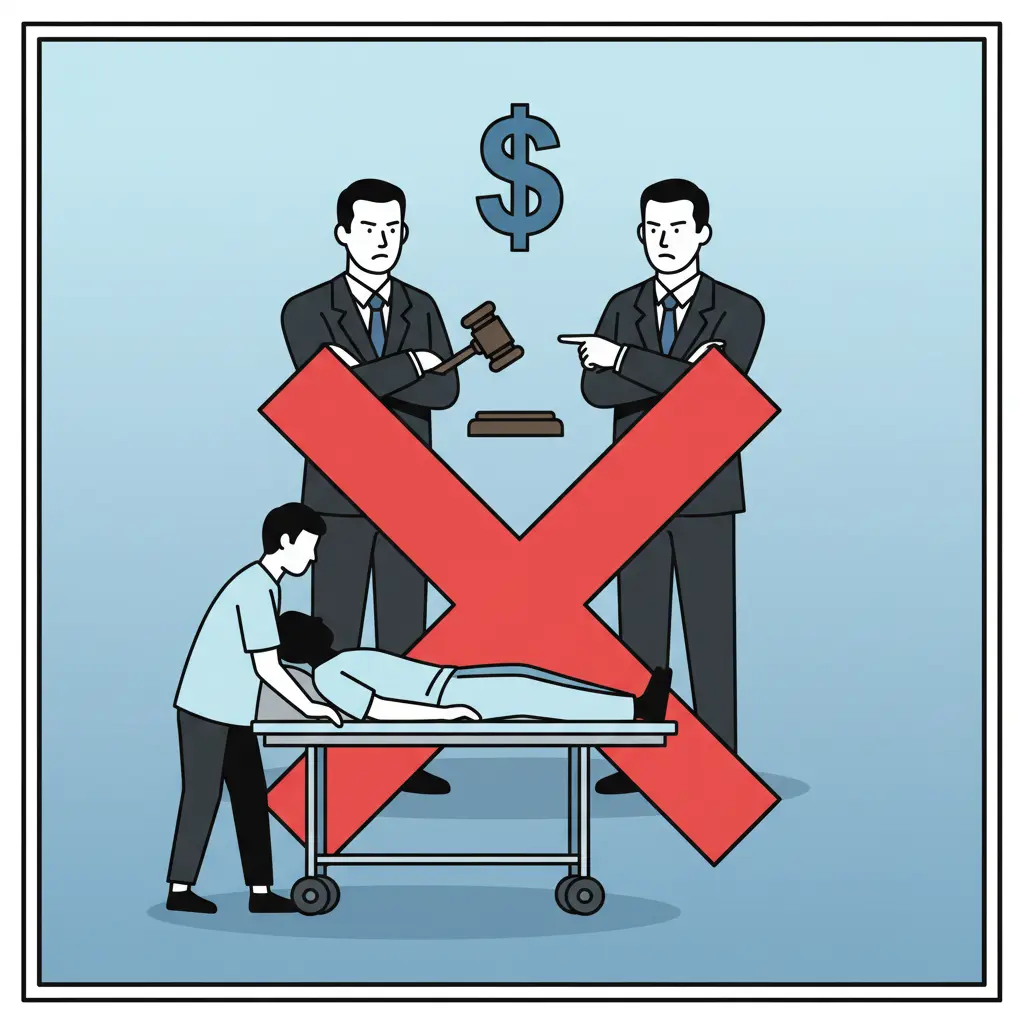
A South Korean court has delivered a significant ruling regarding the responsibility of medical institutions to accept emergency patients. The court found several hospitals liable for the death of a 4-year-old boy who was rejected by multiple medical facilities while being transported by ambulance.
Case Background: A Fatal Delay in Care
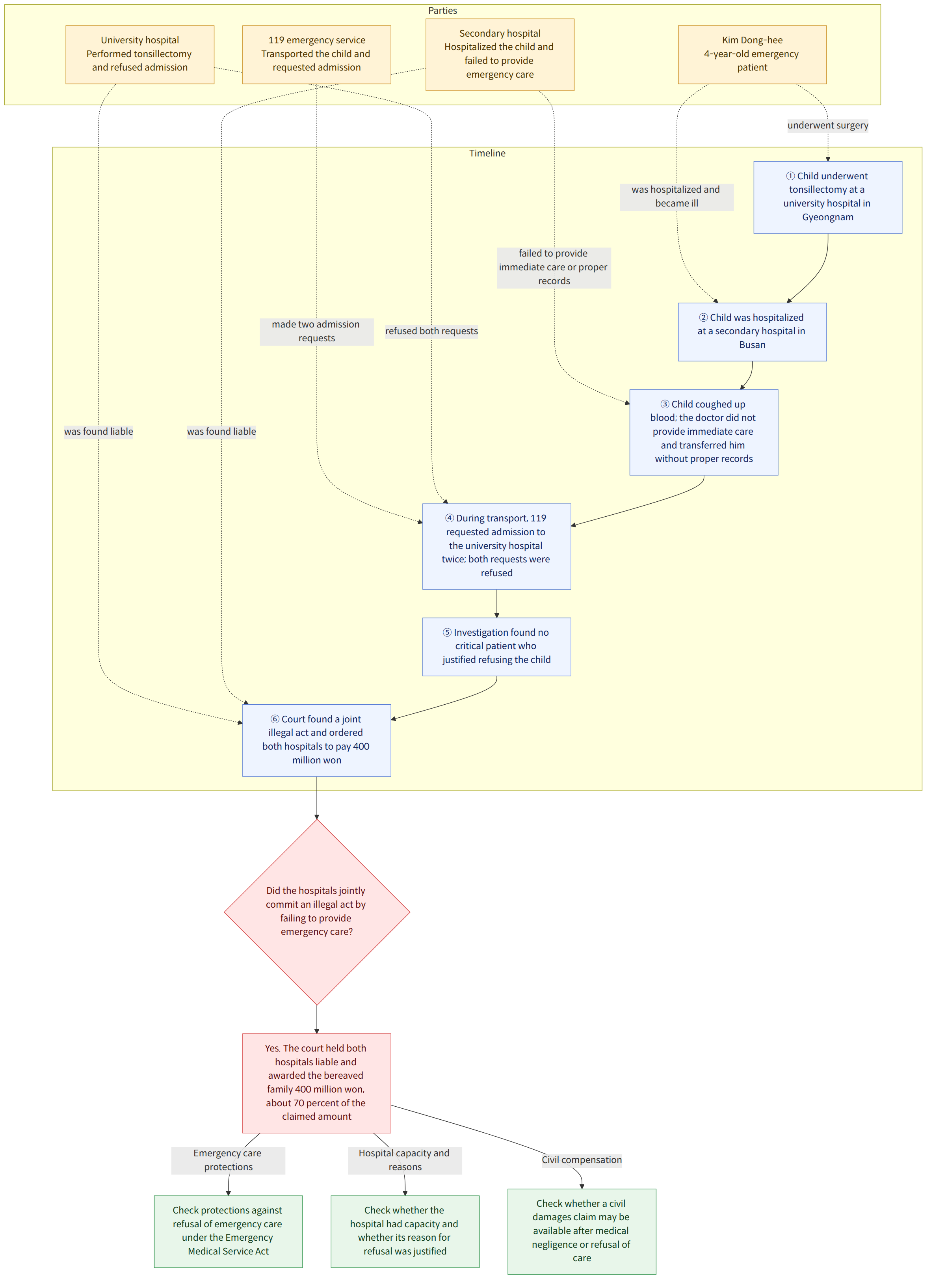
In October 2019, a 4-year-old boy, Kim Dong-hee, underwent a tonsillectomy at a university hospital in Gyeongnam and was later hospitalized at a secondary hospital in Busan. While hospitalized, the child began coughing up blood. However, the emergency room doctor at the secondary hospital failed to provide immediate treatment and handed the child over to 119 emergency services without providing proper medical records.
While being transported, the 119 ambulance requested admission to the original university hospital twice. Both requests were denied on the grounds that they were treating another critical patient. However, subsequent investigations revealed that there were no patients critical enough to justify refusing the child.
Legal Implications and Court Ruling
The Busan District Court (Western Branch) ordered the university hospital and the secondary hospital to pay 400 million won (approximately 70% of the claimed amount) to the bereaved family.
Key Legal Finding: The court recognized a "joint illegal act" between the university hospital, which refused a patient undergoing CPR without a justifiable reason, and the secondary hospital, which failed to provide emergency care while under an unauthorized on-call system.
Why This Matters for Foreigners in Korea
This case highlights the legal protections against medical negligence and the refusal of emergency care under the Emergency Medical Service Act.
- Right to Treatment: Every patient has the right to receive emergency care regardless of the hospital's preference.
- Hospital Responsibility: Hospitals cannot refuse emergency patients based on vague reasons if they have the capacity to treat them.
- Legal Recourse: Families of victims of medical negligence or refusal of care can seek compensation through civil lawsuits for damages.