A Dream on Wheels, A Crisis on the Road
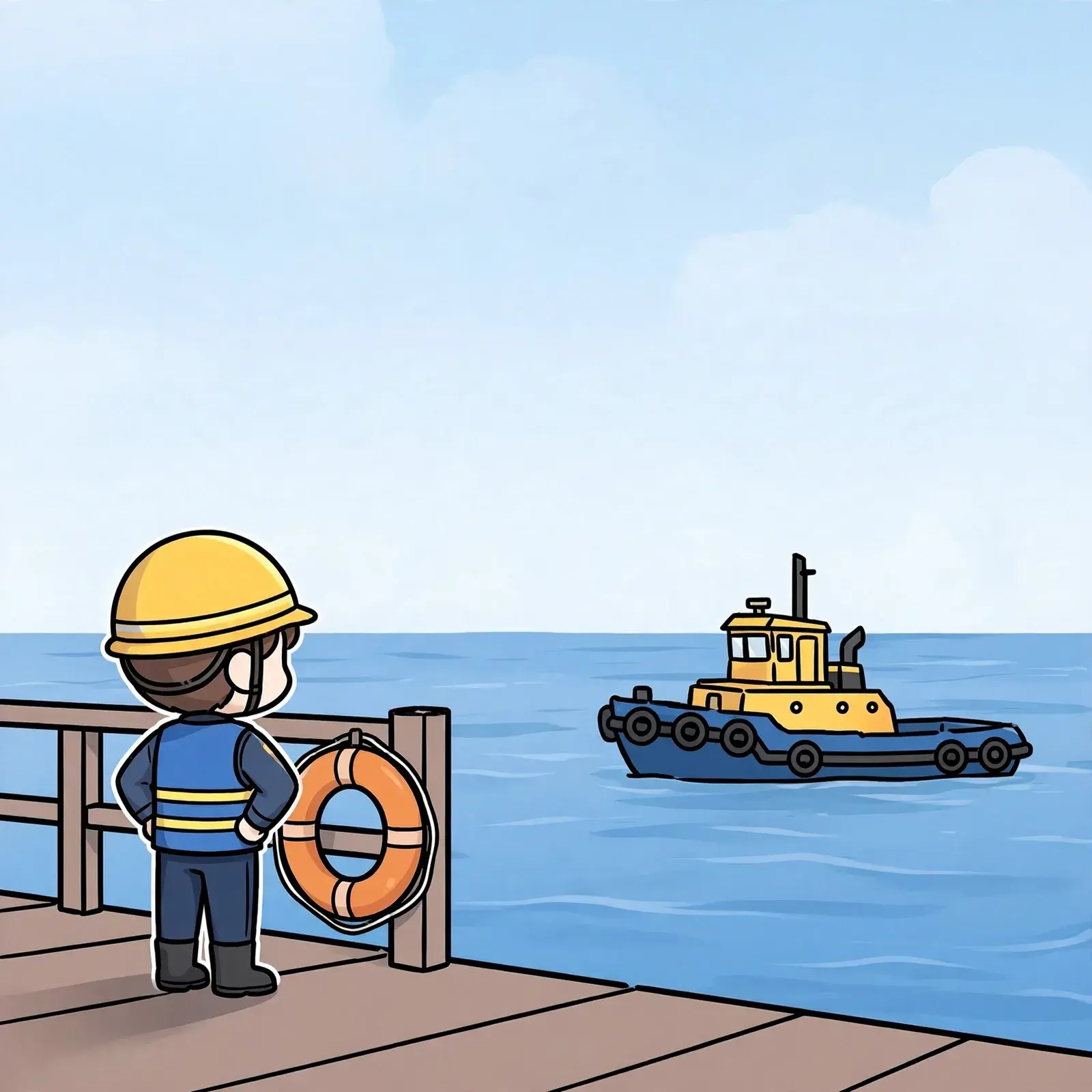
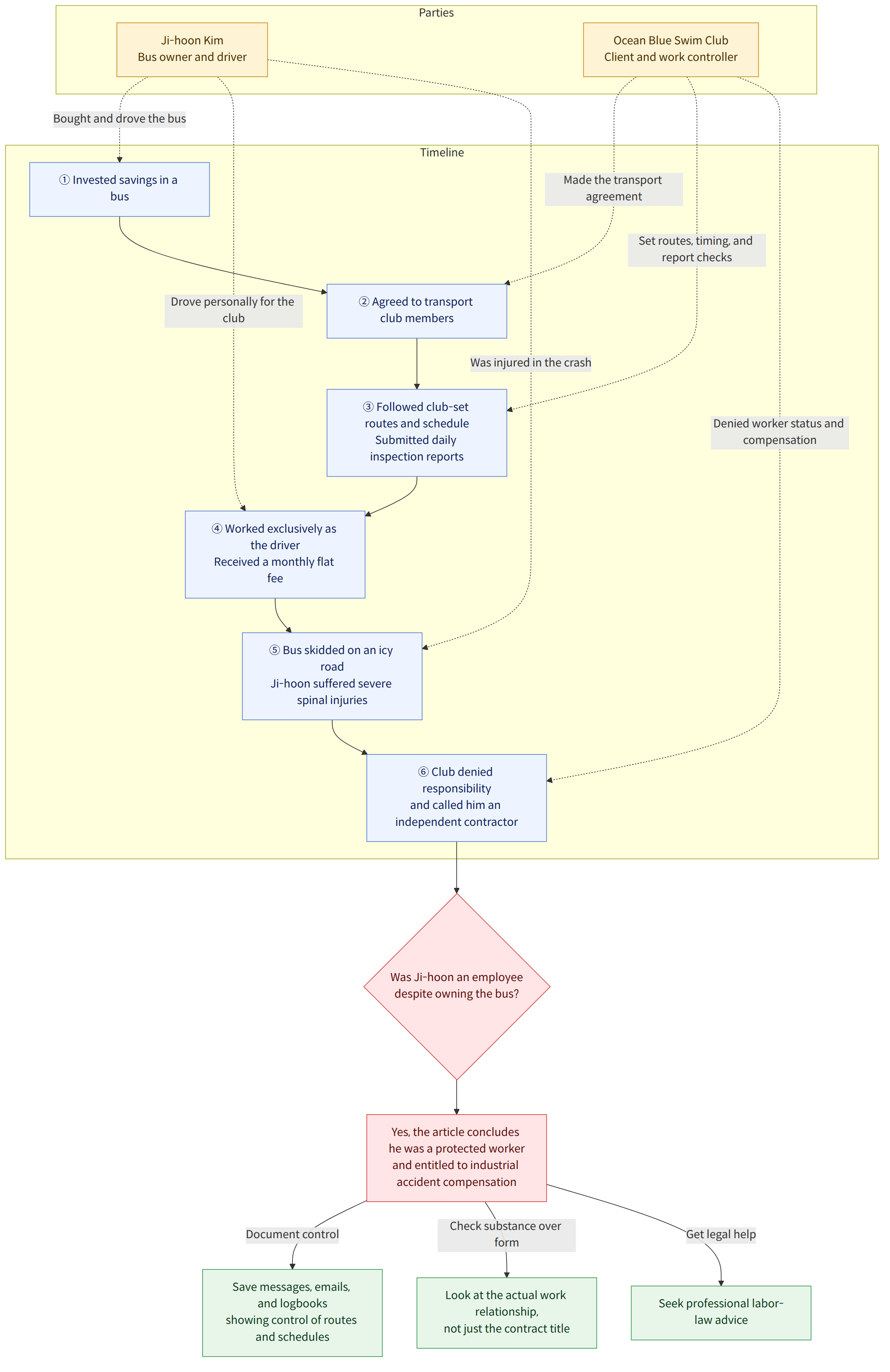
Ji-hoon Kim invested his life savings into a commercial bus. To secure steady work, he registered it under the name of the "Ocean Blue Swim Club" and signed an agreement to transport its members. Every morning and evening, he was a fixture on the neighborhood streets, following a meticulous route and schedule set by the club. Though he owned the bus, his day began and ended with a checklist—a daily vehicle inspection report that had to be signed off by the swim club’s manager.
Ji-hoon was exclusive; the club’s demands were so high he couldn't take on other clients. One icy morning, the bus skidded off a slick road. Ji-hoon suffered severe spinal injuries, leaving him unable to work and facing mounting medical bills. When he reached out to the swim club for industrial accident compensation (Worker’s Comp), their response was cold: "You aren't an employee. You're an independent contractor who owns your own bus. We aren't responsible for your accident."
The Core Legal Question
This case raises a critical question in Korean labor law: Is an individual who owns their own equipment (a bus) but works exclusively for one business under their direction considered an 'employee' under the Labor Standards Act? This distinction is the gatekeeper for Industrial Accident Compensation insurance benefits.
What Korean Law Says
Under the Korean Labor Standards Act, whether someone is an employee is not determined by the name of the contract (e.g., "Service Agreement" or "Independent Contractor Agreement") but by the substance of the working relationship.
"Whether a person constitutes an employee under the Labor Standards Act must be determined by whether the worker provided labor in a subordinate relationship to the employer for the purpose of wages, regardless of whether the contract is an employment contract or a service contract under civil law." (Supreme Court 97Da17575)
To determine this "subordinate relationship," courts look for several indicators:
- Does the employer determine the contents of the work and provide specific direction and supervision?
- Does the employer set the working hours and location?
- Can the worker hire a substitute to perform the work, or must they do it personally?
- Is the compensation fixed and paid regularly in exchange for the labor itself?
How Korean Courts Approach This
Korean courts have long held that owning the "means of production" (like a bus or heavy machinery) does not automatically make someone an independent entrepreneur. If the owner-operator is integrated into the company’s business structure and bears little of their own independent business risk, the court shifts toward protecting them as an employee.
In transportation cases, courts specifically look at who controls the routes and schedules. If the company dictates exactly where and when to drive and requires daily reporting, the driver is often seen as an employee who just happens to provide their own tools.
Applying the Law to Ji-hoon’s Case
When we apply these principles to Ji-hoon, the "independent contractor" label used by the swim club begins to crumble:
- Direction and Supervision: Ji-hoon had no freedom to choose his routes or timing. The daily approval of his inspection logs is a clear sign of the club's direct supervision over his daily tasks.
- Exclusivity and Substitution: Because he was required to be the driver personally and couldn't use his bus for other businesses while working for the club, his labor was entirely "subordinated" to the swim club.
- Fixed Compensation: The monthly flat fee he received, despite covering some vehicle maintenance costs, functioned essentially as a wage for his time and labor.
According to Korean Supreme Court precedents (such as 99Da48986), individuals in Ji-hoon's exact position—despite owning the vehicle and not having income tax withheld by the employer—are legally considered employees because they provide labor in a subordinate capacity.
Conclusion: What Happened, and What Should You Do?
Ji-hoon is not just a bus owner; he is a worker protected by the law. He is entitled to receive Industrial Accident Compensation for his injuries. The fact that he owned the bus does not strip him of his rights if his daily reality was that of a staff member taking orders from a manager.
If you find yourself in a similar "owner-operator" situation, keep these tips in mind:
- Document the Control: Save all text messages, emails, and logbooks that show the company dictating your schedule and routes. This proves their "direction and supervision."
- Look Beyond the Title: Don't be discouraged if your contract says "Independent Contractor." The law cares about what you do, not what the paper says.
- Seek Professional Help: Proving employee status can be legally technical. Consult a labor attorney or a certified public labor attorney (No-mu-sa) to help compile the evidence of your subordination to the employer.
The law looks past the registration of the vehicle to see the person behind the wheel.
--- This article is provided for informational purposes only and does not constitute legal advice. For specific legal issues, please consult with a qualified legal professional.