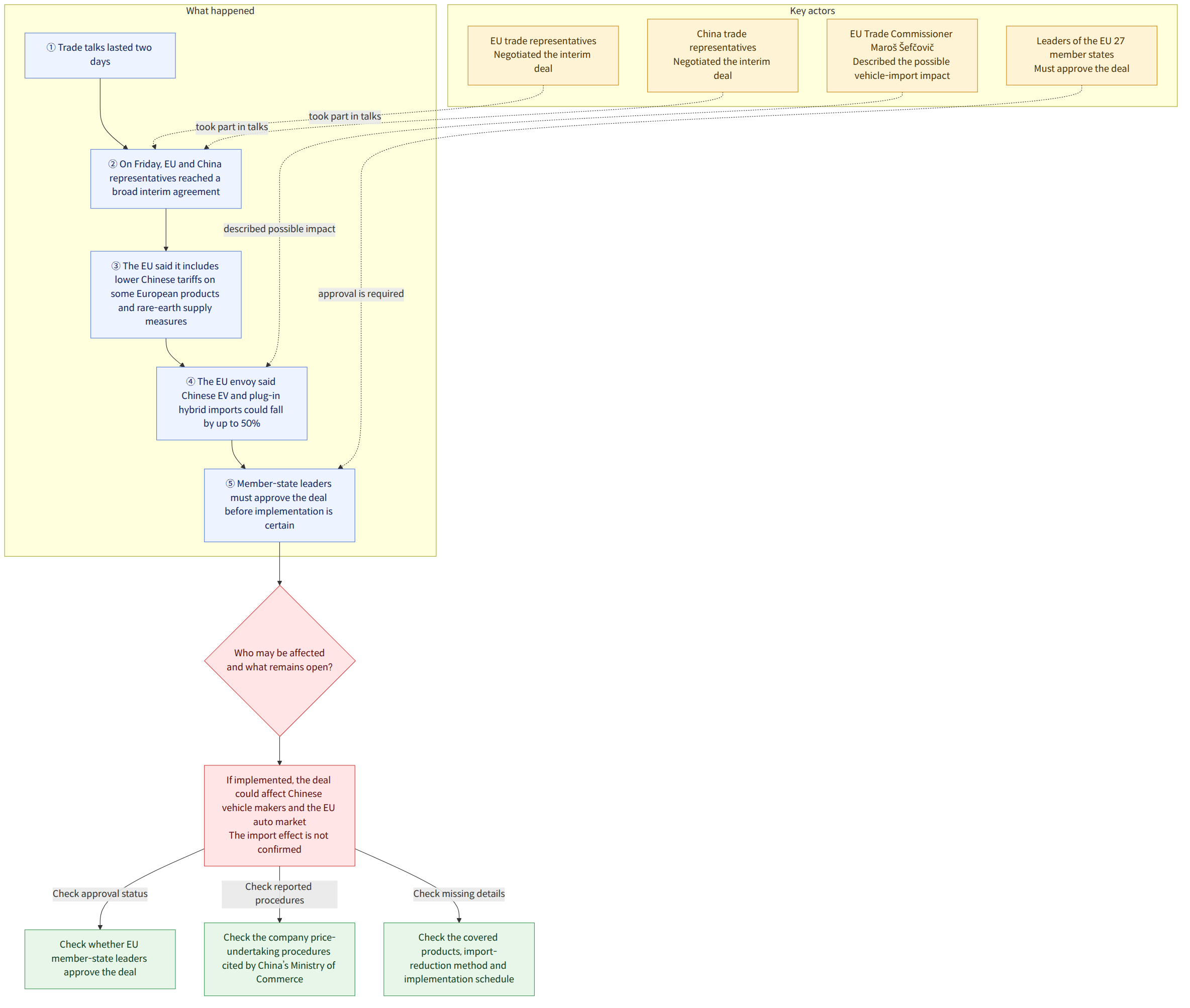
Trade representatives from China and the European Union (유럽연합; EU) reached a broad interim agreement on Friday after two days of talks aimed at easing tensions over trade imbalances, EU Trade Commissioner Maroš Šefčovič said. The EU said the deal includes lower Chinese tariffs on some European products and measures to stabilize rare-earth supply chains. However, the two sides have not clearly disclosed the specific details of the agreement.
The EU trade envoy said the deal could reduce EU imports of Chinese electric vehicles and plug-in hybrid vehicles by up to 50%. But it is not known how imports would be reduced or when the measures would take effect. The interim deal must be approved by the leaders of the EU’s 27 member states, so its implementation cannot be considered certain based on the announcement alone.
Background and context
The talks took place as China’s trade surplus continued to grow. The two sides sought to address major factors underpinning that surplus, which reached 360 billion euros ($410 billion) last year. Based on the information released, it is difficult to determine how much of the trade imbalance the agreement addresses.
Source 1 quoted Šefčovič as saying the deal was preventing millions of cars from being exported from China to the EU. That is the EU’s explanation of how the deal could significantly affect automotive trade if implemented. However, no criteria, scope or method for reducing imports were provided.
What this news means
For the EU, it is significant that the deal was described as including both possible tariff cuts on some European products exported to China and measures to stabilize rare-earth supply chains. The EU trade envoy said the tariff cuts could apply to products that would benefit almost all EU member states. But the products covered have not yet been disclosed, making it difficult to assess which industries or companies would benefit in practice.
The statement that EU imports of Chinese vehicles could fall by up to 50% could affect both Chinese automakers and the EU automotive market. But this is a possible effect of the deal, not a statement that import volumes have already fallen. The details of the rare-earth supply-chain measures have also not been confirmed, so it is not yet clear how supply stability might change.
For example, a company selling Chinese plug-in hybrid vehicles in the EU might pay attention to the possibility that import conditions could change if the deal is implemented. However, because the applicable procedures have not been disclosed, it cannot be assumed that the company will actually have to reduce imports or comply with specific pricing conditions.
Points reported differently by the sources
Source 1 described the agreement as a broad interim deal and mentioned lower Chinese tariffs on some European products and measures concerning rare-earth supply chains. It also reported that EU imports of Chinese electric vehicles and plug-in hybrid vehicles could fall by up to 50%.
Source 2 reported, citing a joint statement, that China’s Ministry of Commerce (중국 상무부) said the two sides had agreed to intensify dialogue, reached an “understanding” on trade in hybrid vehicles, and agreed to follow procedures related to company price undertakings (price-related commitments offered by companies). The ministry also said in an online post that Commerce Minister Wang Wentao had expressed concerns. The two reports differ in how they characterize the deal and the extent to which they discuss price-related procedures, but neither explains the specific measures and implementation methods in sufficient detail.
What is confirmed and what remains unknown
Confirmed facts
- The EU said trade representatives from the EU and China reached an interim agreement on Friday after two days of talks.
- The EU said the agreement includes lower Chinese tariffs on some European products and measures to stabilize rare-earth supply chains.
- The EU trade envoy said EU imports of Chinese electric vehicles and plug-in hybrid vehicles could fall by up to 50%.
- The agreement must be approved by the leaders of the EU’s 27 member states.
- Source 2 reported, citing a joint statement, that China’s Ministry of Commerce said there was an understanding on procedures related to company price undertakings.
What remains unknown
- The specific measures included in the interim agreement and the implementation schedule have not been disclosed.
- The method for reducing imports of Chinese electric vehicles and plug-in hybrid vehicles has not been confirmed.
- It is not yet known whether the leaders of the EU member states will approve the agreement.
- The products covered by the tariff cuts and the details of the rare-earth supply-chain measures have also not been disclosed.
What readers should watch for
- Readers should check whether the agreement is approved and what implementation schedule and covered products are announced afterward.
- People and companies involved in vehicle imports can watch for details on how imports might be reduced or on procedures for company price undertakings.
- Companies exporting European products to China or involved in rare-earth supply chains should check whether the scope of the tariff cuts and supply-chain measures is announced.
References
- Other coverage consulted: m.koreaherald.com