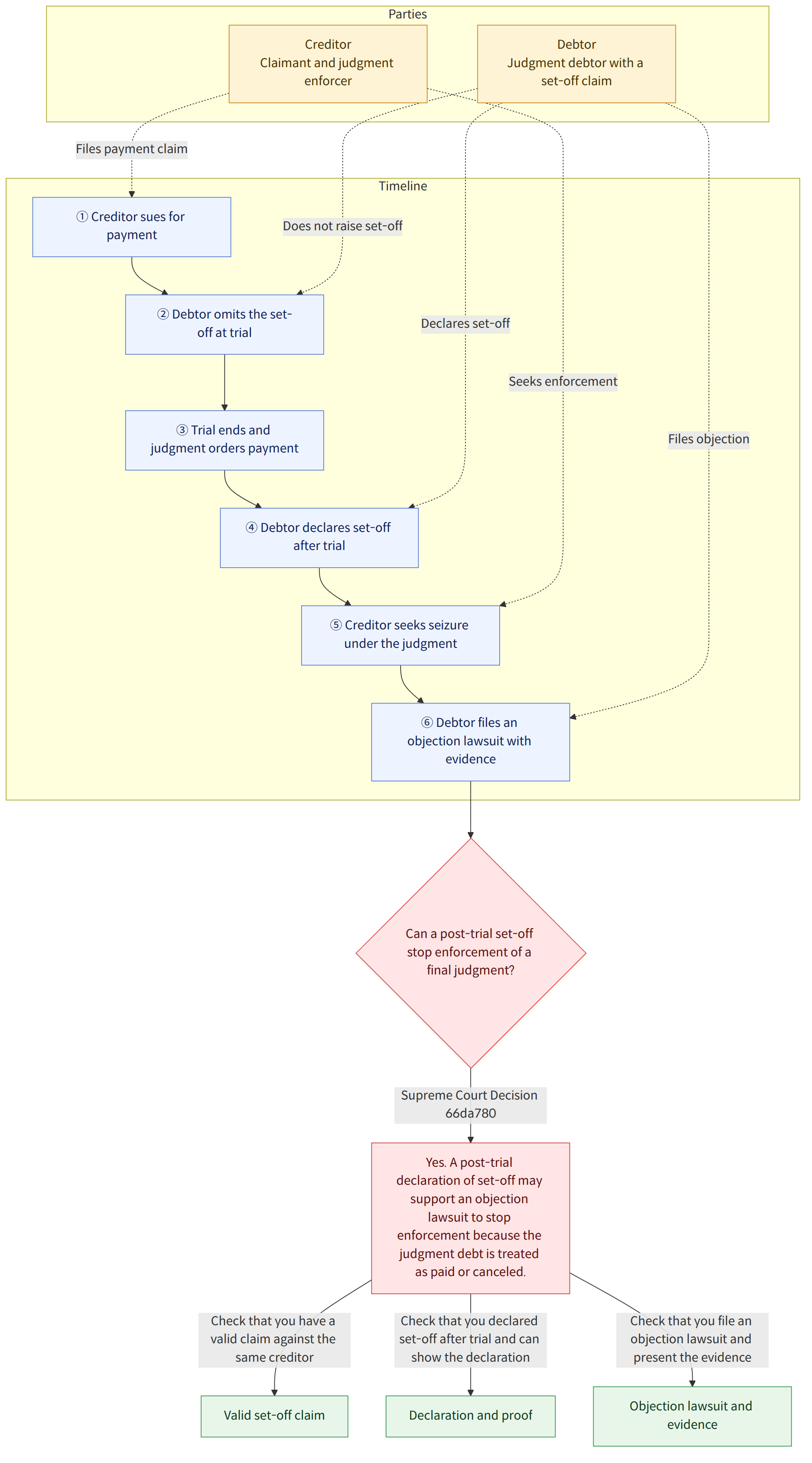
What Happens When You Forget to Claim a Set-off?
Imagine you owe someone money, but they also owe you money. In legal terms, you have the right of set-off. If they sue you and you forget to mention this during the trial, you might end up with a judgment ordering you to pay the full amount.
Can You Still Use Your Right After the Court's Decision?
Many people worry that once a judgment is 'final and conclusive,' it can never be changed. However, the Korean Supreme Court provides a specific path for these cases.
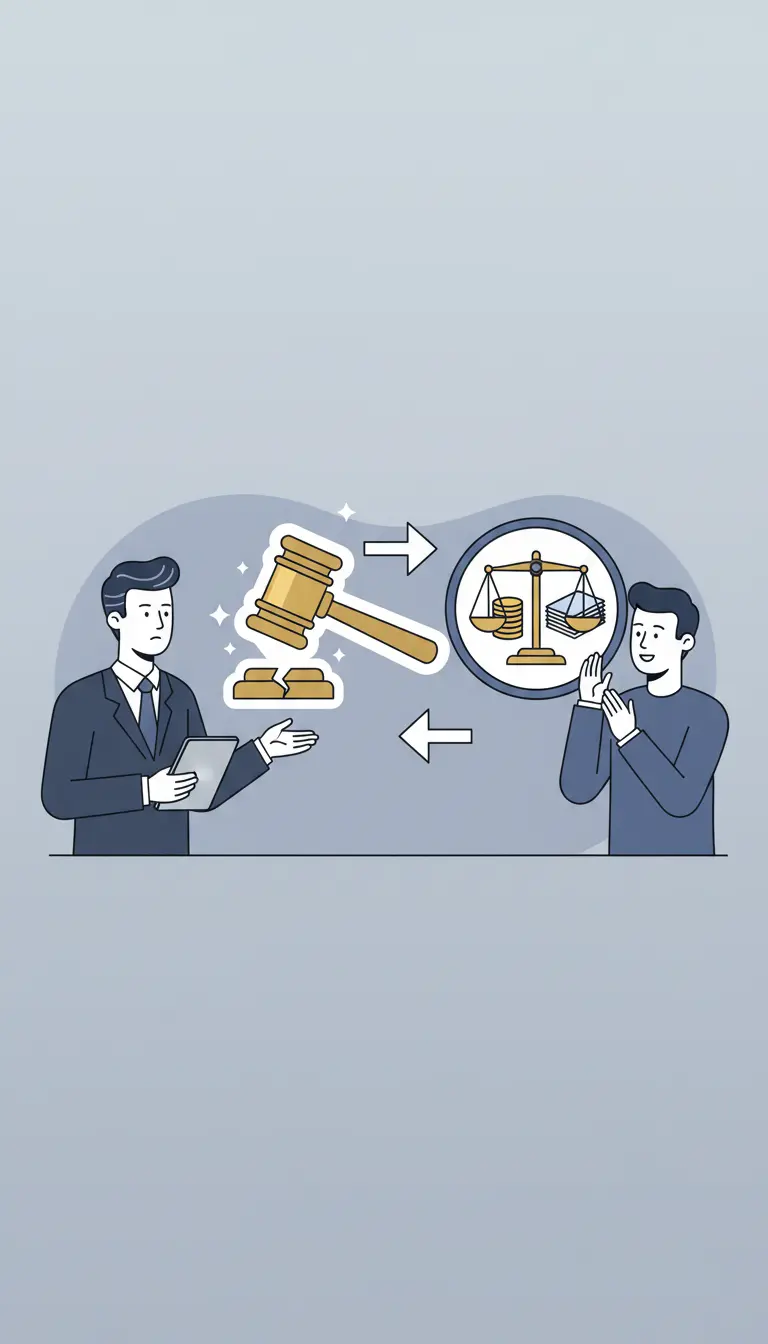
Supreme Court Precedent: Even if the conditions for a set-off existed before the trial's conclusion, if the actual 'declaration of intent' to set off happens after the trial ends, it can still be used to stop the enforcement (Supreme Court Decision 66da780).
Filing a Lawsuit of Objection to Claim
If your creditor tries to seize your assets based on the judgment, you can file a 'Lawsuit of Objection to Claim' (청구이의의 소).
- Why? Because by exercising your set-off right after the trial, the debt mentioned in the judgment has technically been paid or canceled.
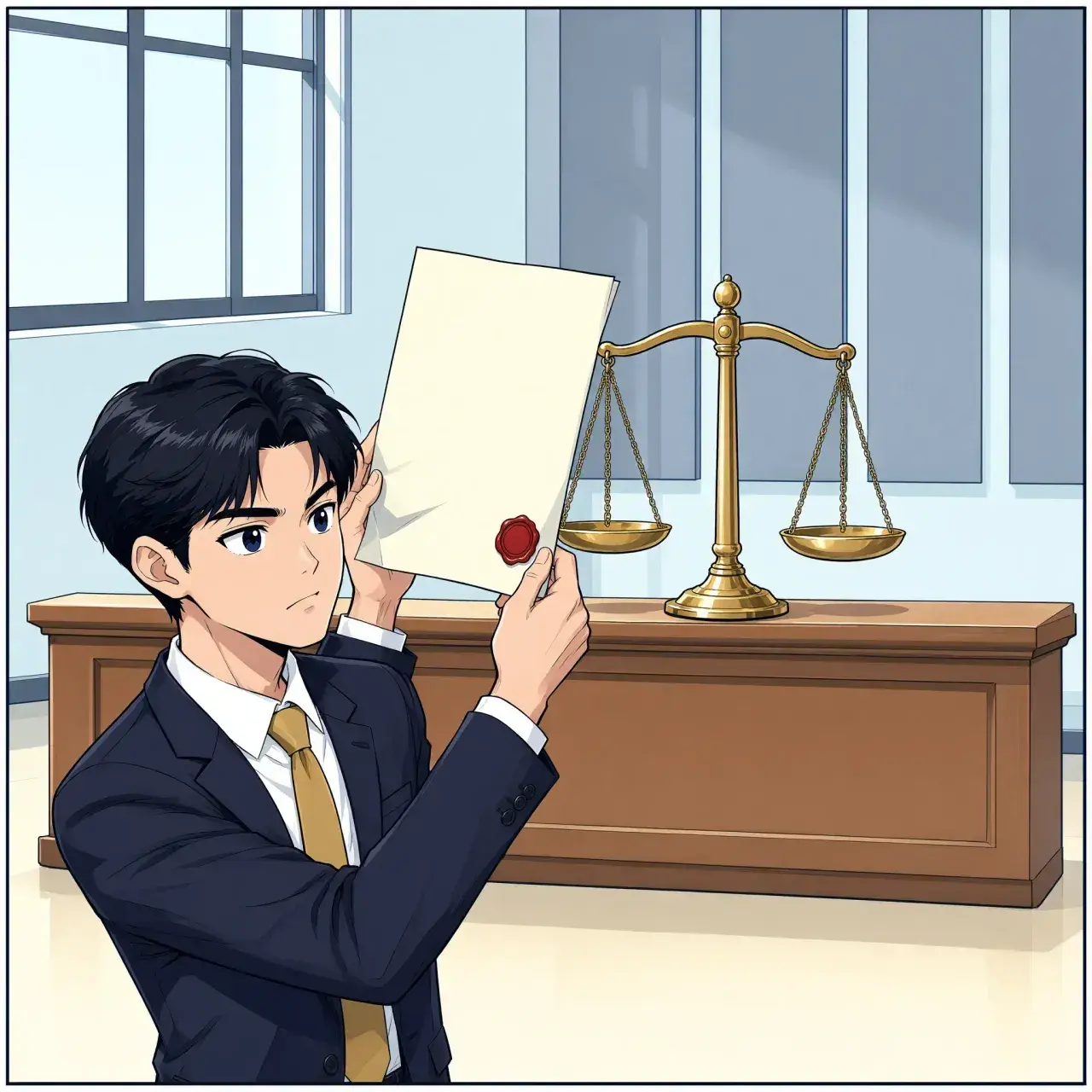
- How? You must officially declare your intent to set off (usually via certified mail) and then present this as evidence in your objection lawsuit.
Important Takeaway
If you find yourself in a situation where a finalized judgment exists against you, but you also have a valid claim against that same person, do not lose hope. Consult with a legal professional to exercise your set-off rights correctly and stop the execution.
--- This information is for general guidance and does not constitute legal advice. Please consult with a qualified lawyer for specific cases.