1. A Broken Leg and a Threatened Livelihood: Junho Park’s Story
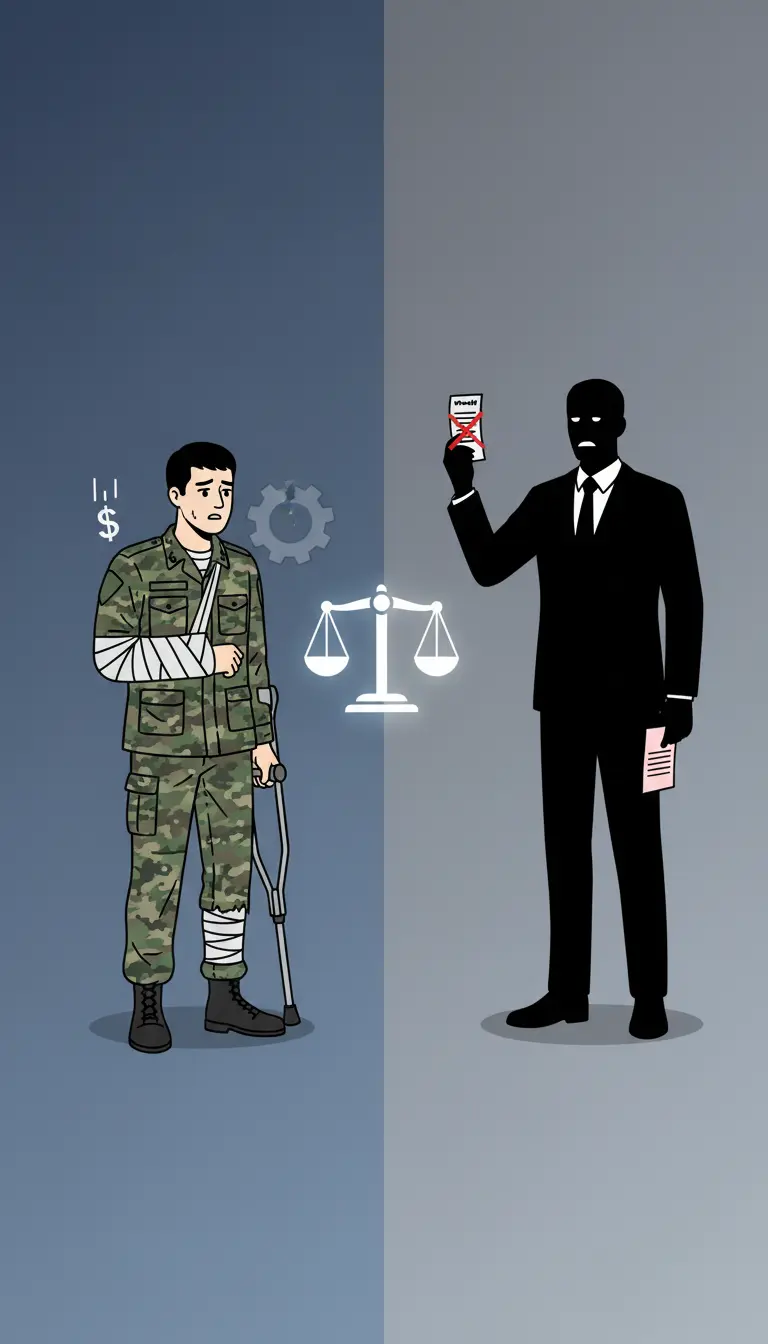
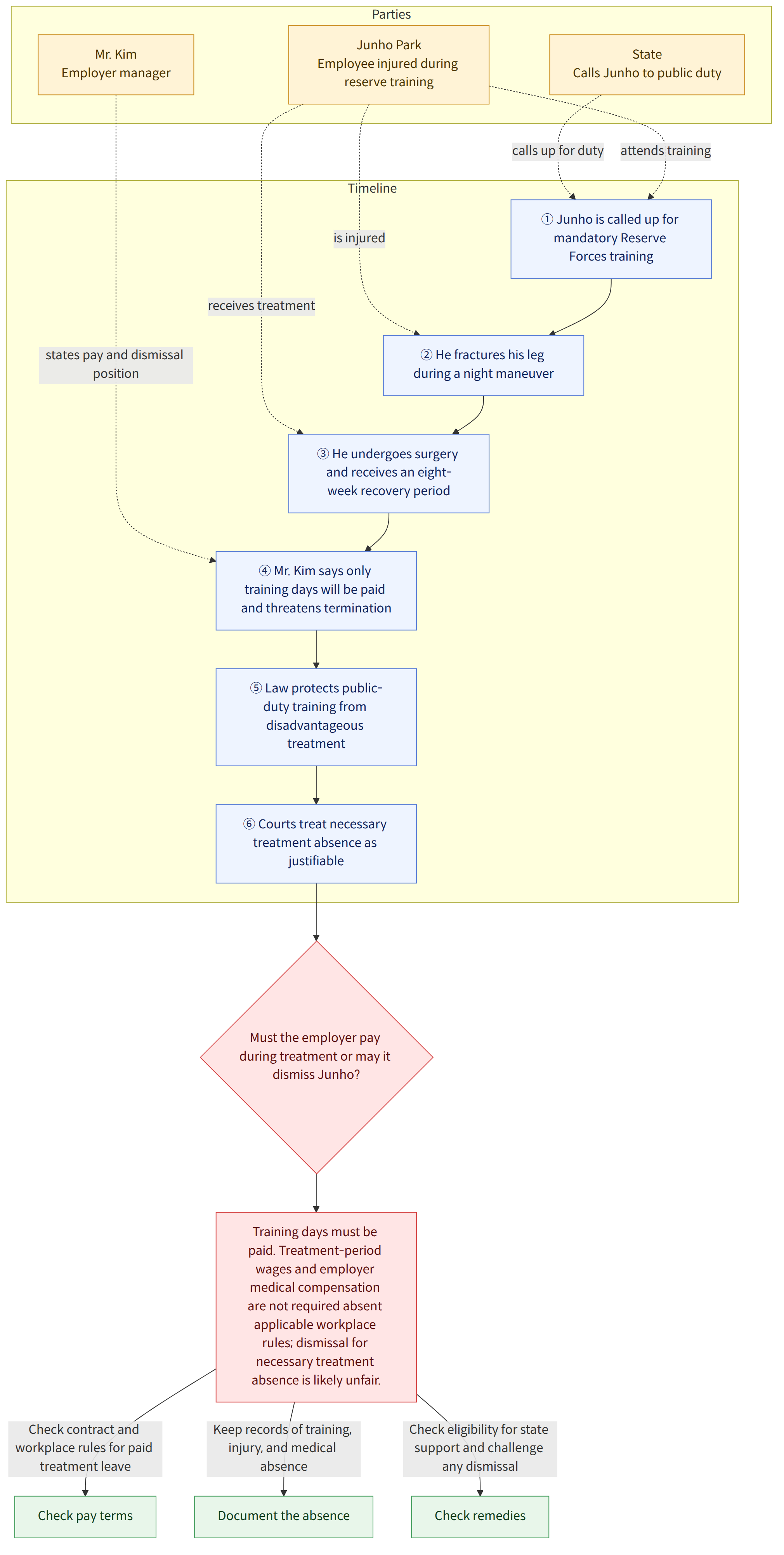
Junho Park, a diligent logistics coordinator at a medium-sized firm, was recently called up for his mandatory Reserve Forces training. However, on the second day of the simulation, disaster struck. During a night maneuver, Junho tripped on uneven terrain, resulting in a severe leg fracture. He was immediately transported to a national military hospital, where he underwent emergency surgery and was given an eight-week recovery period.
While recovering in the hospital, Junho received a cold phone call from his manager, Mr. Kim. "We'll pay you for the three days of training as required by law," Mr. Kim said, "but we can't pay you for the months you'll be in the hospital. You aren't working for us right now. Furthermore, if you can't show up for work soon, we'll have to consider it negligence and look into termination."
Junho was devastated. He had been injured while serving his country, yet now he faced the prospect of zero income and losing the job he had worked so hard to keep. Is it legal for a company to turn its back on an employee injured during national service?
2. The Legal Question: Wages During Treatment and Job Security
The case of Junho Park raises two critical legal questions. First, is an employer obligated to pay wages or medical compensation for the period an employee is hospitalized due to an injury sustained during military training? Second, can an employer legally fire an employee for missing work due to such an injury?
3. What Korean Law Says: Public Duty and Worker Protection
Korean law provides specific protections for workers who are called away for national duties to ensure they are not penalized for their service.
Article 10 of the Labor Standards Act (LSA)An employer shall not refuse a request from a worker to allow time necessary to exercise voting rights or other public rights, or to perform public duties during working hours.
Article 10 of the Reserve Forces ActNo person who employs others shall treat such employees disadvantageously, such as by counting the period during which they are mobilized or receive training as a leave of absence, or by using such training as a reason for unfavorable treatment.
Based on these provisions, the actual training period must be treated as paid work time. However, the legal landscape shifts once the training ends and the hospitalization begins:
- Wage Obligation: According to judicial precedents and Ministry of Employment and Labor interpretations, hospitalization is not strictly considered "training." Therefore, unless the company’s internal rules or collective bargaining agreements state otherwise, the employer is not legally required to pay wages for the treatment period because no labor is being provided.
- Accident Compensation: Under the LSA, an employer is only liable for 'disability compensation' if the injury is "work-related." Since Reserve training is a state duty and not company business, the employer is not responsible for medical bills or disability pay.
4. How Korean Courts Approach This
While Korean courts do not force employers to bear the financial burden of medical treatment for non-work-related accidents, they are very protective regarding job security. The courts generally rule that absence from work due to an injury sustained during a mandatory state duty constitutes a "justifiable reason." Therefore, missing work for necessary medical treatment is not considered "negligence" or "poor attendance."
5. Applying the Law to Junho’s Case
Applying these principles to Junho Park’s situation yields a bittersweet result.
First, regarding wages, his manager, Mr. Kim, is technically correct under the law. Since Junho is not providing labor to the company while in the hospital, and the injury didn't happen on the job, the company can legally stop paying his salary during the hospital stay (unless his contract provides for paid sick leave). For financial relief, Junho must look to the state. Under the Act on the Honorable Treatment of and Support for Persons, etc. of Distinguished Service to the State, he may be eligible for state-funded compensation and medical coverage.
Second, regarding dismissal, Mr. Kim is on thin legal ice. Threatening to fire Junho for his absence is a violation of labor protection principles. Because Junho's absence is caused by a legitimate injury sustained during a mandatory public duty, any attempt to terminate him would likely be ruled as unfair dismissal. Junho has the right to return to his position once he is medically fit to work.
6. Conclusion: What Happened, and What Should You Do?
In the end, while Junho may face a temporary loss of income, his job is legally protected. He should inform Mr. Kim that his absence is legally justified and that any termination would be challenged through the Labor Relations Commission.
For readers in similar situations, here are three practical tips:
- Document Everything: Secure official copies of your training summons, the accident report from the military unit, and detailed medical certificates. Present these to your HR department immediately to formally document the reason for your absence.
- Review Your Employment Contract: Check if your company offers "Paid Sick Leave" (Yugeup-Byeonga). While not mandatory by law for non-work injuries, many larger firms or unionized workplaces provide this benefit.
- Apply for State Compensation: If you are injured during training, the responsibility lies with the government. Contact the Ministry of Patriots and Veterans Affairs or your local military unit to start the process for "Public Duty Injury" (Gong-sang) recognition to receive medical and financial support.
Serving your country shouldn't cost you your career. While the law might not force your boss to pay your hospital stay, it firmly ensures that your desk will still be there when you recover.
This column provides general legal information and should not be substituted for professional legal advice tailored to your specific circumstances.