Ending the 'Outsourcing of Risk' in Public Services
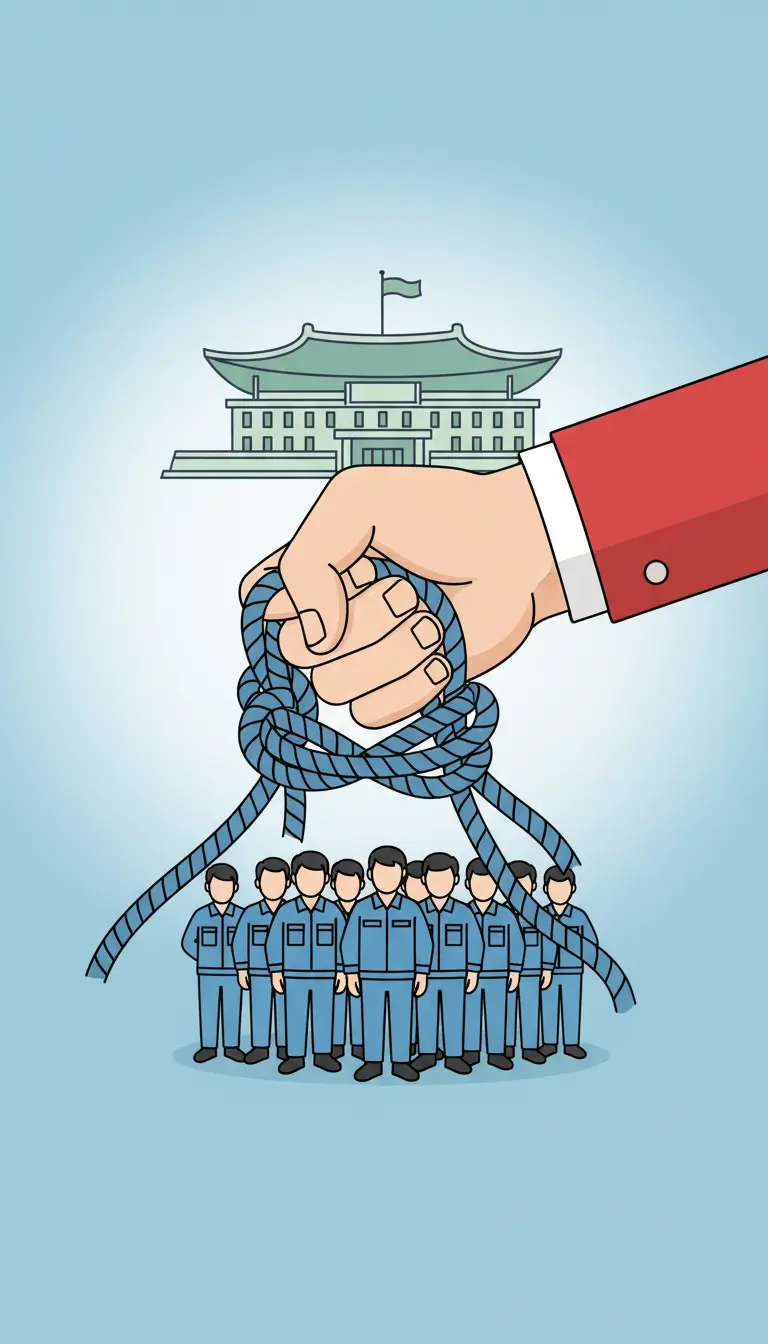
The South Korean government has announced a comprehensive plan to reform subcontracting practices within the public sector. Starting in the second half of this year, the government will strictly limit second-tier subcontracting, a practice where a primary contractor hires another company, which then hires yet another company to do the work.
Key Changes to Subcontracting Rules
To ensure safety and fair pay, the government is introducing several critical measures:
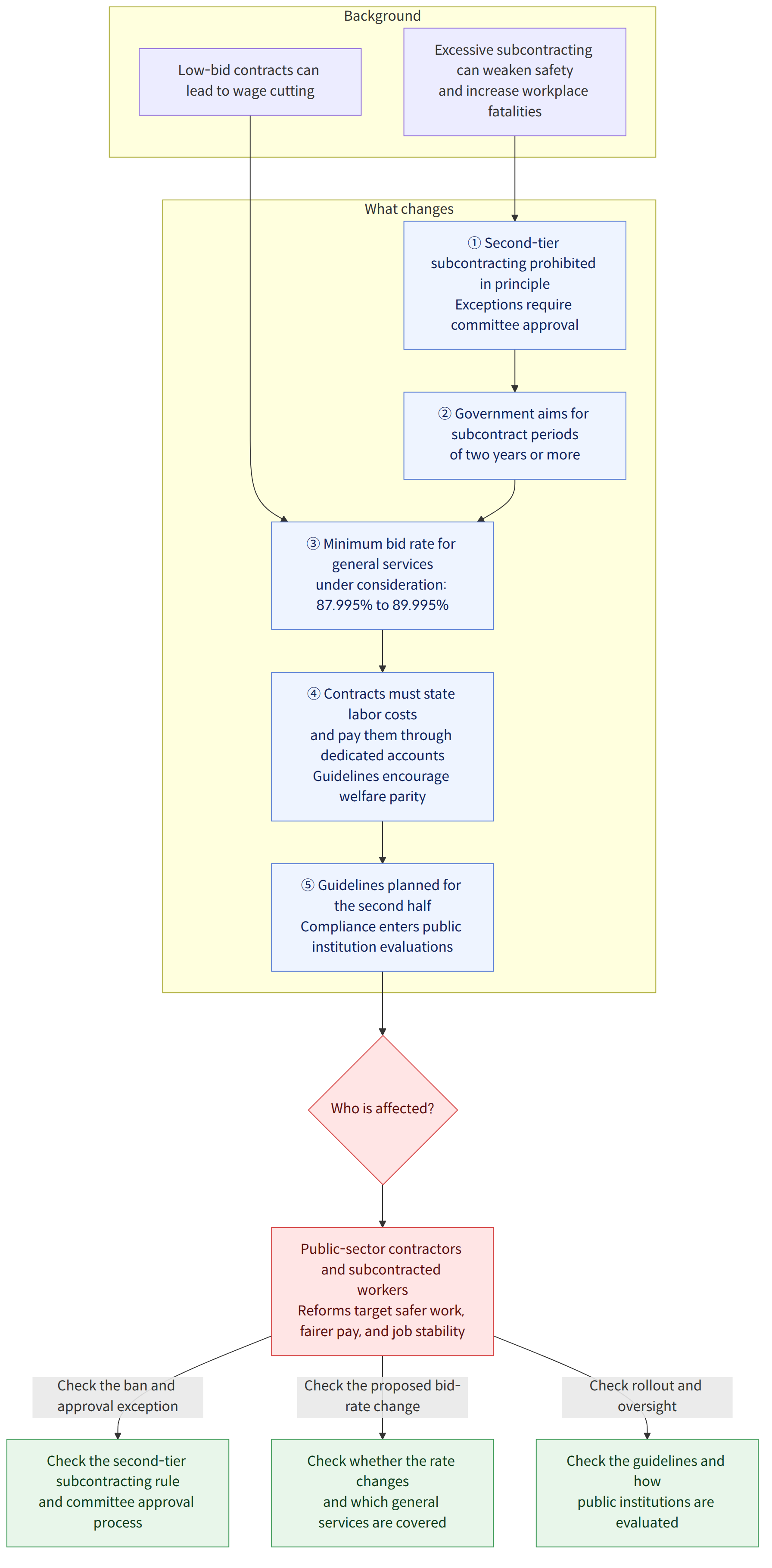
- Ban on Second-Tier Subcontracting: In principle, second-tier subcontracting will be prohibited. If a primary contractor deems subcontracting absolutely necessary (e.g., for specialized technology), they must obtain approval from a Subcontracting Pre-screening Committee.
- Ensuring Job Stability: The government aims to guarantee subcontracting contract periods of two years or more to provide workers with more stable employment.
Why this matters: Excessive subcontracting often leads to a decrease in construction and operational costs, which frequently results in the neglect of safety facilities and increased workplace fatalities.
Improving Wages and Preventing 'Wage Cutting'
To stop the practice of lowering wages through low-bid contracts, the government is taking the following steps:
- Raising Minimum Bid Rates: The government is considering raising the minimum bid rate for general services from 87.995% to 89.995%. This is specifically aimed at simple labor services like cleaning, security, and facility management.
- Dedicated Labor Cost Accounts: Labor costs must be explicitly stated in service contracts and paid only through dedicated labor cost accounts. This prevents intermediaries from skimming wages before they reach the worker.
- Reducing Welfare Gaps: The new guidelines will encourage the removal of discrimination regarding welfare benefits, such as meal allowances, welfare points, and holiday bonuses, between regular and subcontracted workers.
Enforcement and Monitoring
These measures will be detailed in guidelines to be released in the second half of the year. To ensure these rules are not ignored, the government will integrate compliance with these guidelines into the performance evaluations of public institutions.