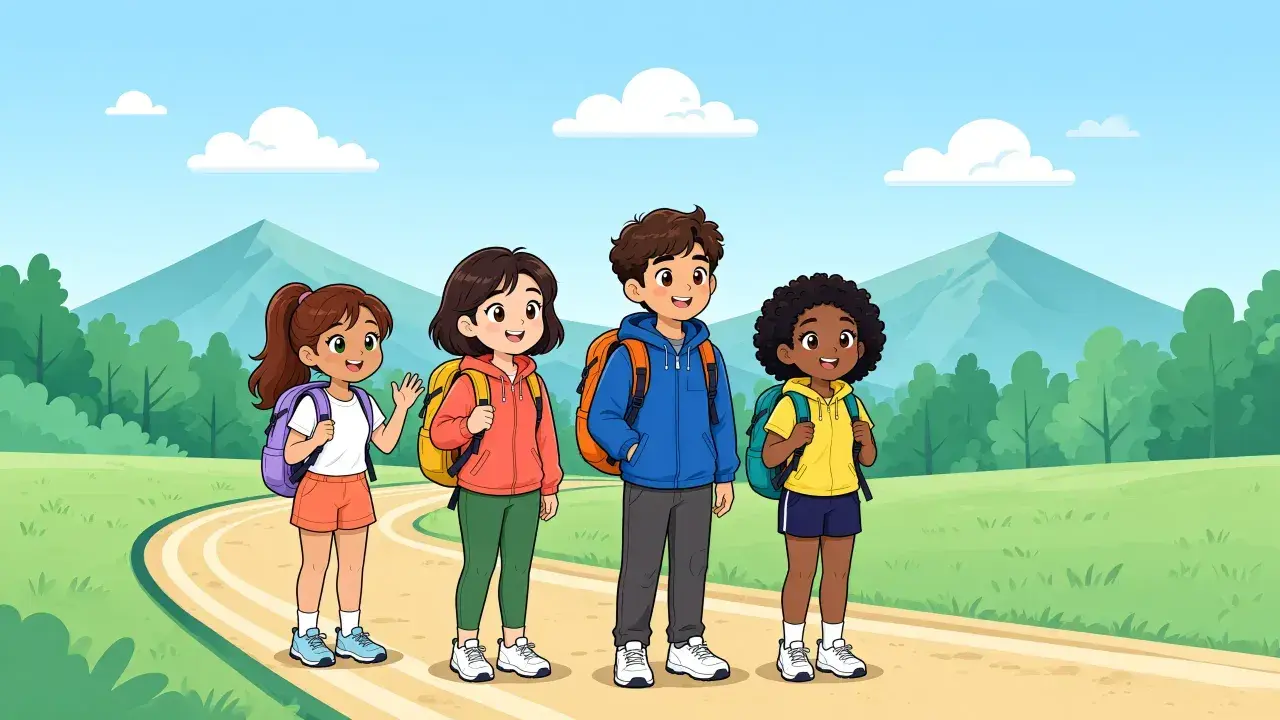
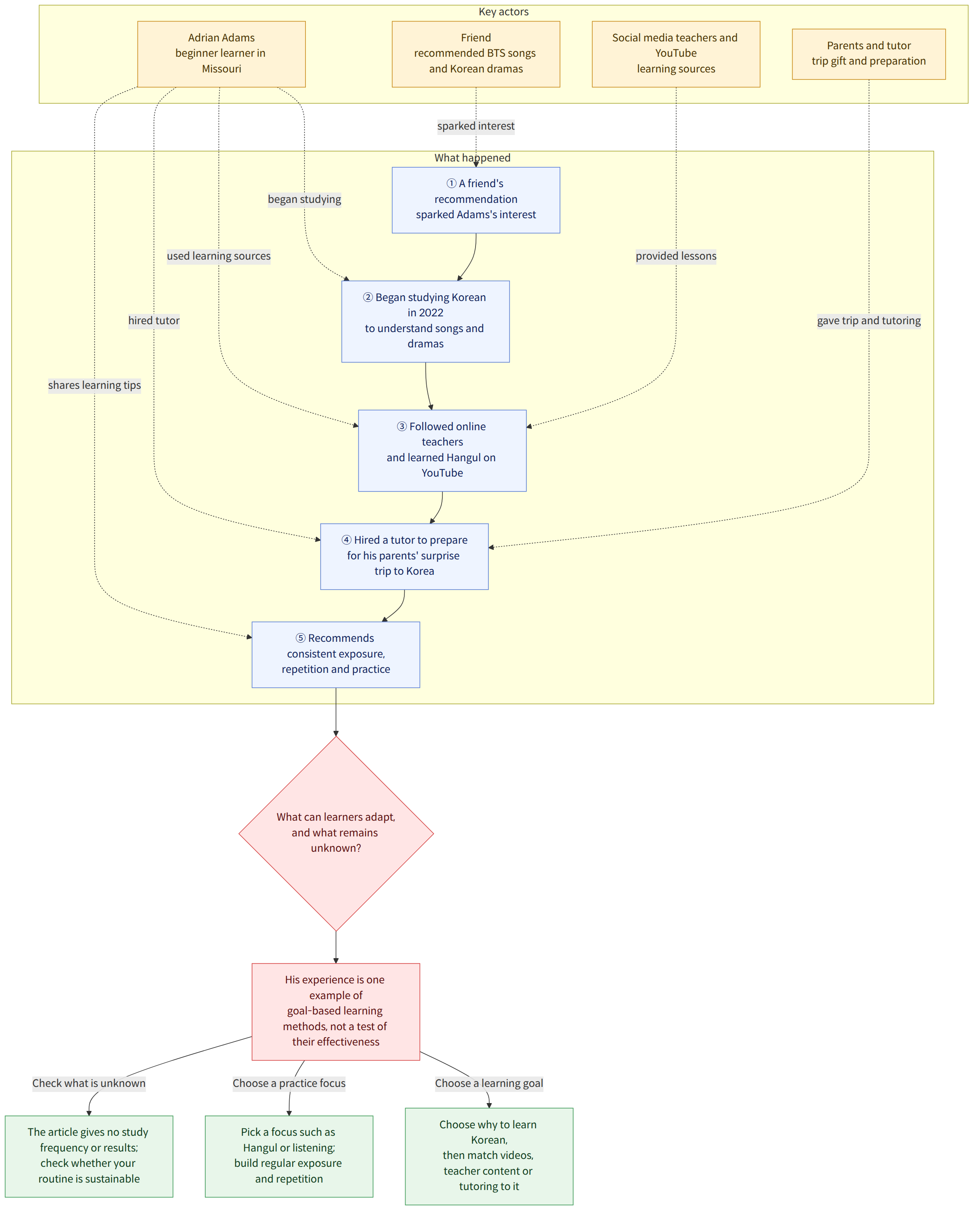
Adrian Adams, who works as a church administrative secretary in Springfield, Missouri, began studying Korean after discovering BTS songs and Korean dramas. The 22-year-old became interested in Korean at a friend's recommendation while spending long stretches of time in COVID-19 lockdown. He started studying in 2022 because he wanted to know what the singers and actors were actually saying. The approach he recommends is consistent exposure, repetition and practice.
Adams followed Korean teachers on social media and learned Hangul through YouTube videos. He also hired a tutor to prepare for a trip to Korea that his parents had given him as a surprise gift. His experience shows that the methods people use can vary depending on why they are learning Korean and what stage they are at.
Background and context
The three learners introduced in the article range in level and circumstances, from a beginner in the United States to an advanced learner pursuing a graduate degree in Seoul. However, the only learner's experience described in detail in the available article is Adams's. The article does not establish which area he currently finds most difficult, or the names and study habits of the other two learners.
The article looks at Korean learners' motivations and habits as the 100th anniversary of Hangul Day (한글날) approaches. The 100th anniversary of Hangul Day and the 580th anniversary of the promulgation of Hunminjeongeum (훈민정음) are separate commemorations. Other reports say that King Sejong created Hunminjeongeum in 1443 and officially promulgated it in 1446. Gagyanal (가갸날), which traces back to the origins of Hangul Day, was proclaimed in 1926, and the observance was moved to its current date, October 9, in 1940.
This distinction helps explain that the history of Hangul's creation and promulgation and the history of the modern-day Hangul Day observance do not refer to the same date. It is also why articles about the 100th anniversary of Hangul Day and the 580th anniversary of Hunminjeongeum's promulgation appear at the same time.
What this news means
For readers considering whether to start studying Korean, one practical takeaway from Adams's experience is that he did not rely on just one learning method. He encountered teachers on social media, learned the writing system through videos and took tutoring to prepare for a trip. The article does not compare the effectiveness of these methods, but his experience can serve as an example of using different ways to engage with the language according to one's learning goals.
Readers who are already studying can turn “consistent exposure, repetition and practice” into a concrete routine. For example, if the goal is to understand Korean dramas, they could make a practice plan to listen to a short scene repeatedly and check which expressions they can hear. This is an example of a possible way to study; it does not mean that Adams actually used this method or that it would have the same effect for everyone.
Adams's reasons for being drawn to Korean culture and the Korean language also show how personal interests can provide a starting point for learning. He said he found Korean culture beautiful and complex, and was surprised by the respect and beauty conveyed in the language. However, the information provided is not enough to determine whether that motivation makes learning less difficult or which areas it might make easier to learn.
Confirmed facts and what remains unknown
Confirmed facts
- Adams is 22 and is a beginner learner who works as a church administrative secretary in Springfield, Missouri.
- A friend's recommendation of BTS songs and Korean dramas sparked his interest, and he began studying Korean in 2022.
- He used Korean teachers on social media and YouTube videos to learn Hangul.
- He hired a tutor to prepare for a trip to Korea, which his parents had given him as a surprise gift.
- His learning tips are consistent exposure, repetition and practice.
What remains unknown
- The article does not say which area of Korean learning Adams currently finds most difficult.
- The names, study methods and difficulties of the other two learners are not included in the available article.
- The frequency with which Adams used each learning method and the results he achieved are not established.
What readers can check
- First decide why you want to learn Korean, then, as in Adams's case, consider choosing among videos, teacher-created content and tutoring according to your goals.
- Choose what to practice, such as Hangul or listening, then build regular exposure and repetition into your study plan and see whether you can sustain it.
- If you have a specific goal, such as a trip, you can look into the learning support you may need ahead of time. Adams's experience shows that he found a tutor to prepare for his trip, but this material does not provide information about any separate support programs or application procedures.
References
- Other coverage consulted: koreatimes.co.kr
- Other coverage consulted: hani.co.kr