1. The Hum of Sewing Machines and Mirae Kim’s Dedication
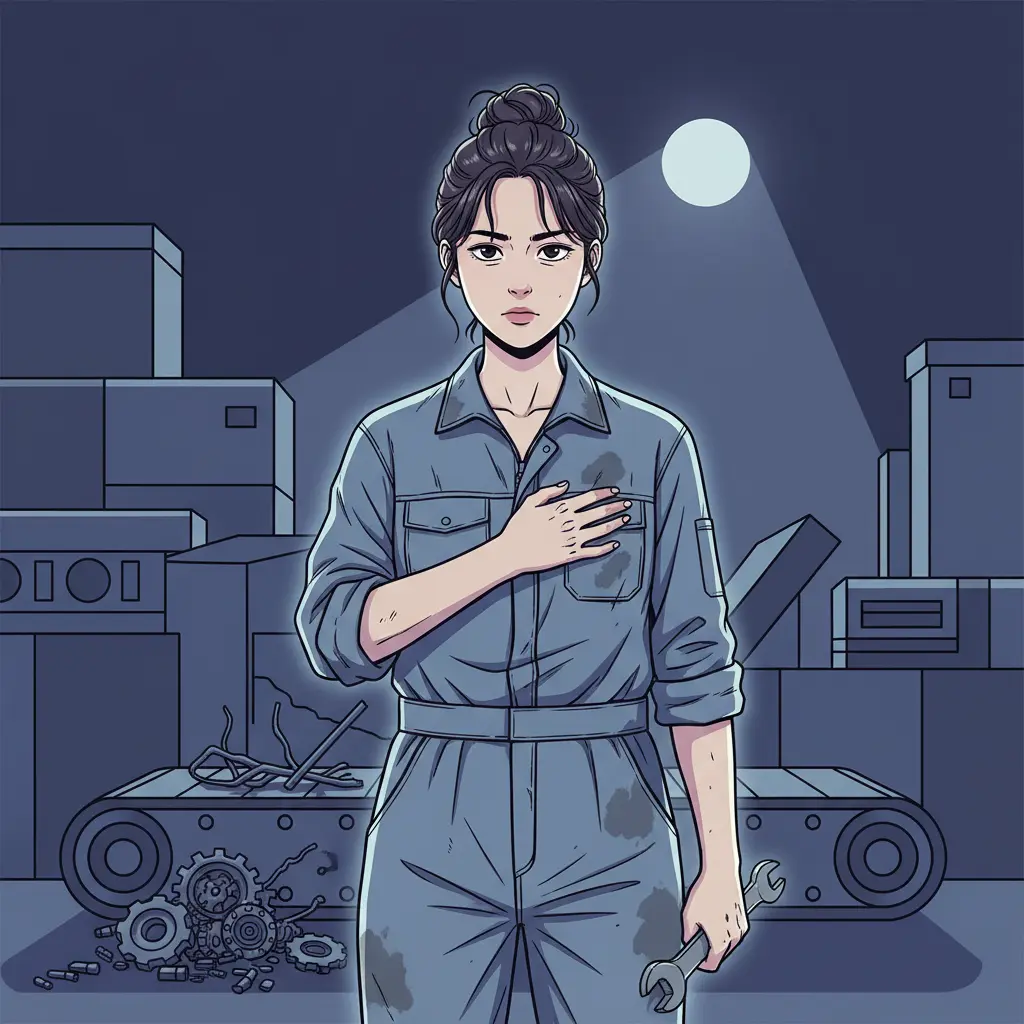
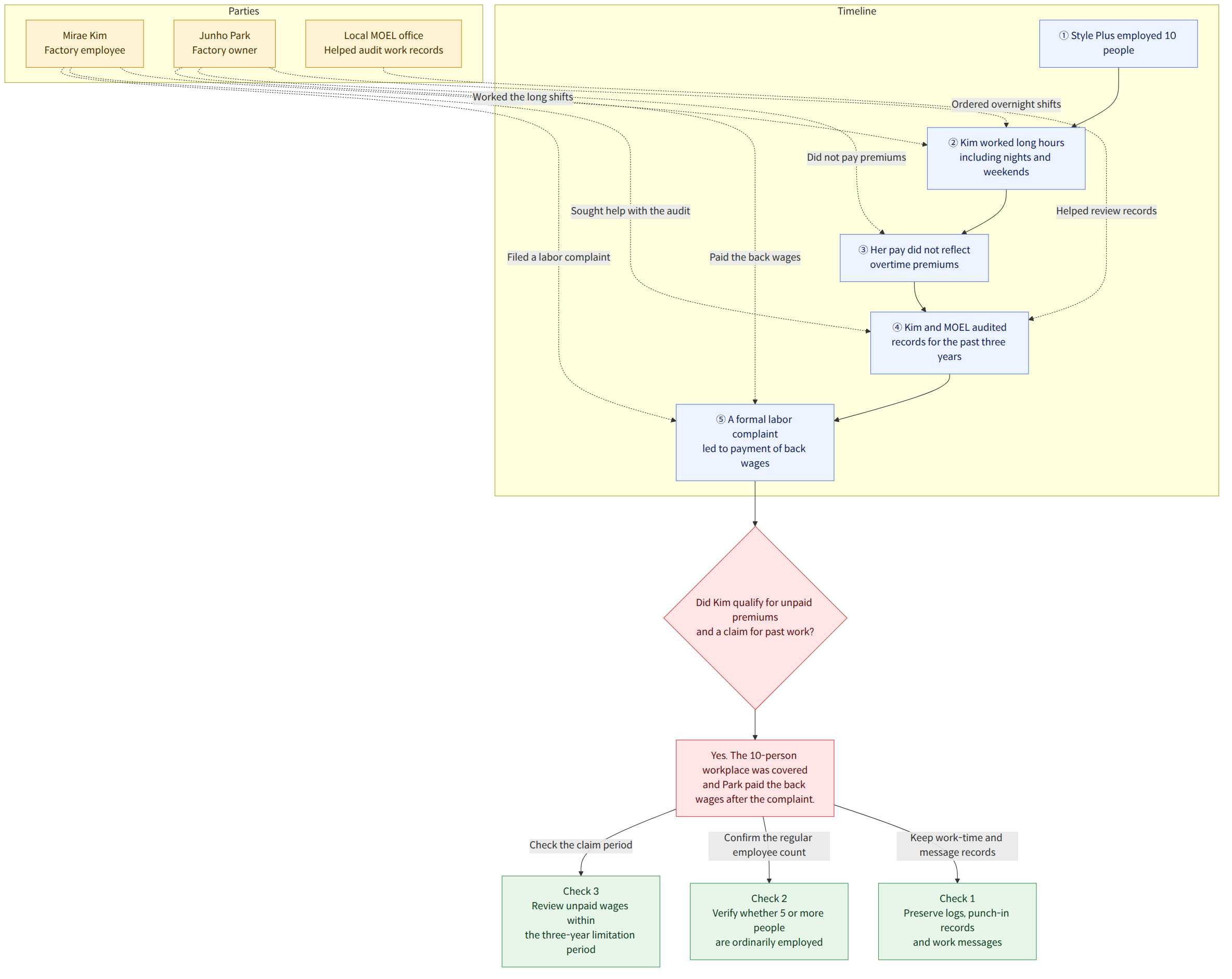
At 'Style Plus,' a small garment factory on the outskirts of Seoul, Mirae Kim’s days were significantly longer than most. The factory owner, Junho Park, frequently ordered overnight shifts to meet tight deadlines. Mirae and her nine colleagues often worked over 10 hours a day, including weekends, sometimes leaving the factory as late as 2 AM.
Despite her exhaustion, the amount in her bank account on payday remained stagnant. Owner Junho Park would say, "How can a small factory like ours afford overtime pay? We all need to sacrifice to grow the company." Mirae, believing this was the norm for small businesses, endured the grueling schedule in silence. It wasn't until a former colleague mentioned labor rights that she realized her dedication deserved legal compensation.
2. The Legal Question: Must Small Factories Pay Overtime?
The core of this case lies in whether a workplace with 10 constant employees is legally required to pay premium wages for overtime, night shifts (after 10 PM), and holidays. Furthermore, the question arises: Can an employee claim these unpaid wages retroactively for past work?
3. What Korean Law Says
The Korean Labor Standards Act (LSA) provides different levels of protection based on the size of the workplace to ensure basic living standards for workers.
Article 11 of the Labor Standards Act (Scope of Application)(1) This Act shall apply to all businesses or workplaces in which five or more persons are ordinarily employed.
Since 'Style Plus' employs 10 people, the core provisions of the LSA apply in full. Regarding compensation, the following articles are crucial:
- Statutory Working Hours (Art. 50): Working hours shall not exceed 8 hours per day and 40 hours per week, excluding breaks.
- Extension of Working Hours (Art. 53): By agreement between parties, hours may be extended by up to 12 hours per week.
- Premium Wages (Art. 56): An employer must pay at least 50% of the ordinary wage as a premium for extended work, night work (22:00 to 06:00), and holiday work. If a worker performs overtime on a holiday, these premiums can overlap and stack.
4. How Korean Courts Approach This
Korean courts and the Ministry of Employment and Labor (MOEL) determine the right to overtime pay based on the actual hours worked. Unless a valid 'blanket wage system' (where a fixed amount of overtime is pre-included in the salary) is clearly established and justified by the nature of the work, the employer is strictly obligated to pay for every hour of extra labor.
Additionally, the statute of limitations for wage claims is 3 years (Art. 49). This means that any unpaid overtime from within the last three years is a legally enforceable debt that the employee can rightfully demand.
5. Applying the Law to Mirae’s Case
Analyzing Mirae Kim's situation reveals that she is in a strong position to receive compensation.
First, because 'Style Plus' has 10 employees, it is bound by the LSA's premium wage requirements. Mr. Park’s claim that "small factories don't pay overtime" has no legal standing.
Second, any evidence Mirae has kept—such as work logs, punch-in records, or late-night messages from her boss—serves as powerful proof. If she worked 10 hours a day, the 2 hours exceeding the 8-hour limit qualify as 'extended work,' and any work past 10 PM triggers 'night work' premiums.
Third, under the 3-year statute of limitations, Mirae can calculate and claim the total sum of all unpaid premiums accrued over the last 36 months.
6. Conclusion: What Happened, and What Should You Do?
With the help of the local MOEL office, Mirae Kim audited her work records for the past three years. She discovered that her unpaid overtime reached tens of thousands of dollars. Faced with a formal labor complaint, Mr. Park was forced to pay her the full amount of back wages. The law does not protect those who sleep on their rights.
If you find yourself in a similar situation, keep these three tips in mind:
- Documentation is your lifeline: Keep records of your daily start and end times, work orders via messaging apps, and testimonies from colleagues.
- Verify the number of employees: If there are 5 or more regular employees (excluding the owner), you are entitled to the full protection of the Labor Standards Act.
- Act within the 3-year window: You can claim back pay even after resigning, provided the 3-year statute of limitations hasn't expired. Do not hesitate to seek a consultation with the Ministry of Employment and Labor or a legal professional.
This article is for informational purposes only and does not constitute legal advice. For specific legal issues, please consult with a qualified professional.