1. Min-ho Park’s Dilemma: A Waiting Game or a Legal Right?
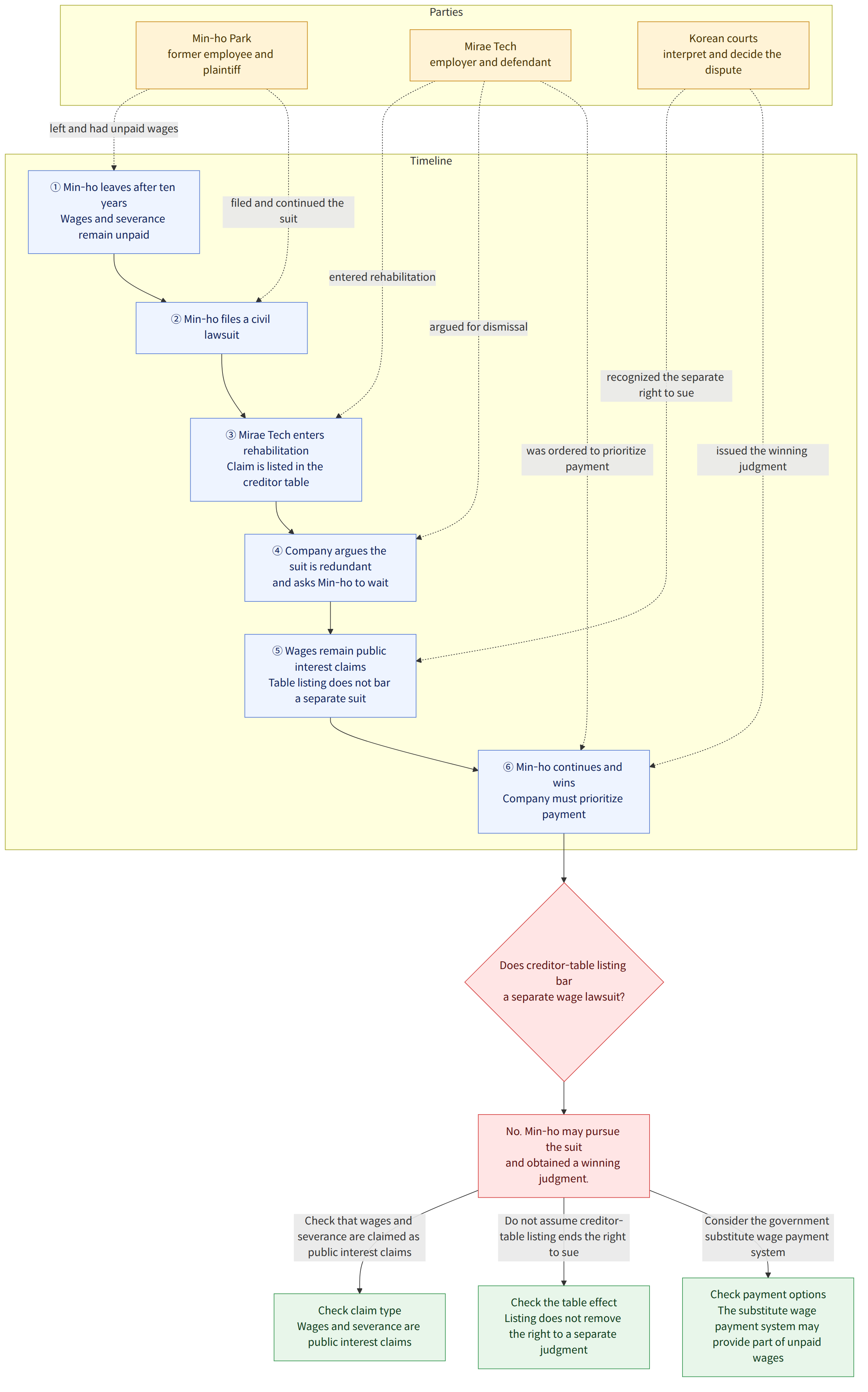
Min-ho Park left his position at 'Mirae Tech,' a mid-sized IT parts supplier, six months ago after a decade of service. Due to a financial crisis at the company, he was left with unpaid wages and severance pay totaling 45 million KRW. To secure his livelihood, Min-ho filed a civil lawsuit against Mirae Tech while searching for a new job.
However, during the litigation, he received a startling response from Mirae Tech’s legal counsel. The company had filed for court-led rehabilitation, and Min-ho's name was already listed in the 'Rehabilitation Creditor List' as part of a court-confirmed plan. The company argued, "Since your claim is already included in the court-approved plan, this separate lawsuit is redundant and illegal. You must withdraw it and wait for payments according to the rehabilitation schedule."
Is Min-ho really bound to wait years for his hard-earned money just because the company entered rehabilitation?
2. The Core Legal Question
The central issue here is whether a worker can pursue a separate civil lawsuit for unpaid wages even if the company is undergoing rehabilitation and the claim is already recorded in the court's creditor list. Does the listing in the rehabilitation record act as a final judgment that bars further legal action?
3. What Korean Law Says: The Power of 'Public Interest Claims'
The Korean 'Debtor Rehabilitation and Bankruptcy Act' strictly distinguishes between types of claims based on their nature. This distinction is vital for protecting workers' rights.
Article 179 (Public Interest Claims)The following claims shall be public interest claims:10. Claims for wages, severance pay, and accident compensation for the debtor's employees.
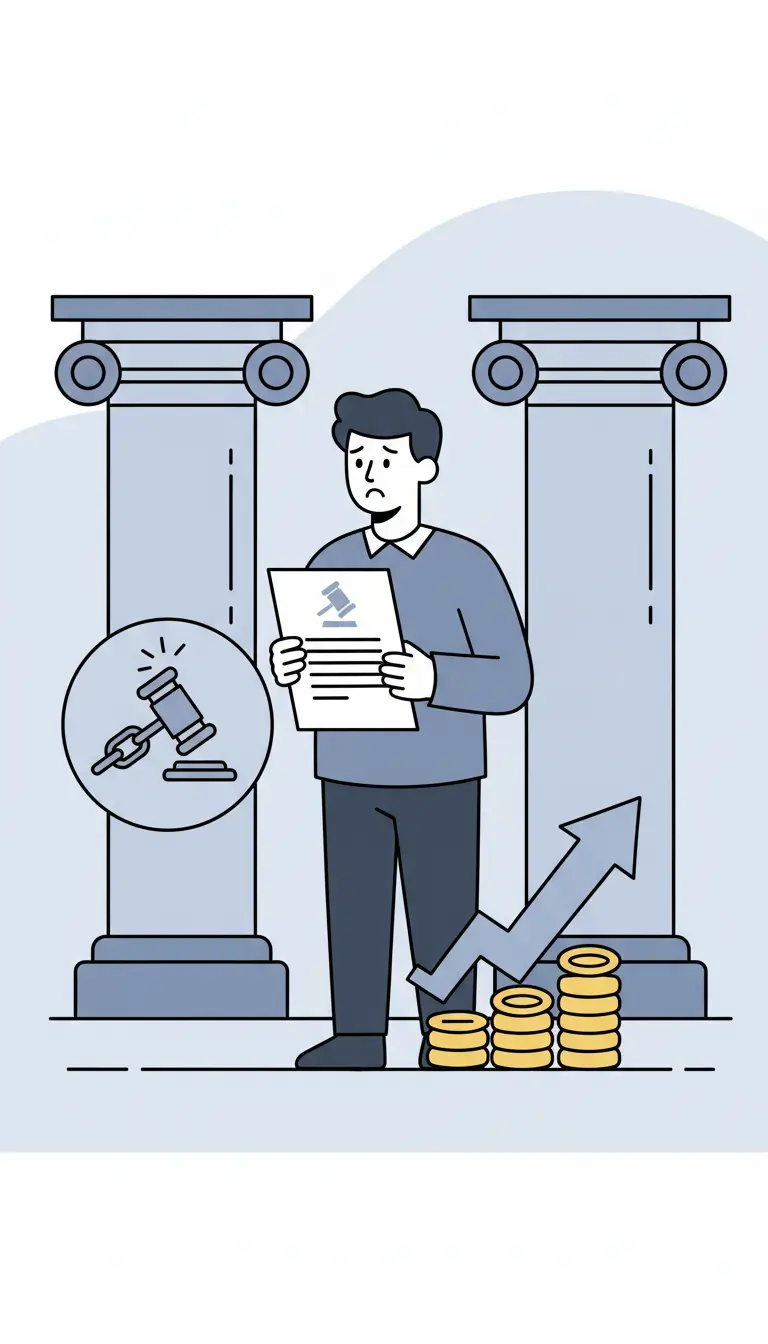
Under the law, wage claims are not treated as ordinary 'rehabilitation claims' but as 'Public Interest Claims' (Gong-ik-chae-gwon). This status grants them significant privileges:
- Priority in Payment: Public interest claims are paid in full and on a rolling basis, rather than being subject to the installments or debt reductions specified in a rehabilitation plan.
- Procedural Independence: Creditors of public interest claims can file lawsuits or initiate compulsory execution against the company's assets at any time, independent of the rehabilitation proceedings.
4. How Korean Courts Approach This
The Supreme Court of Korea has consistently ruled that the rights of public interest creditors are robust. The court maintains that even if a public interest claim (like wages) is mistakenly or for convenience's sake listed in the 'Rehabilitation Creditor Table,' it does not lose its character as a public interest claim.
While the law states that a record in the rehabilitation creditor table has the 'same effect as a final and conclusive judgment,' the judiciary clarifies that this effect is only for the purpose of the rehabilitation process itself. It does not carry the power of res judicata (a legal principle preventing the same case from being litigated again) in a way that would strip the employee of their right to seek a separate judgment in a civil court.
5. Applying the Law to Min-ho’s Case
Analyzing Min-ho’s situation through this legal lens, the conclusion is clear. Mirae Tech’s defense is legally flawed.
- Because Min-ho's wages and severance are Public Interest Claims, he has the right to proceed with his civil lawsuit regardless of the court-confirmed rehabilitation plan.
- The fact that his name is on the creditor list does not mean he explicitly consented to treat his wages as ordinary debt or waived his status as a public interest creditor.
- Therefore, the court will likely reject Mirae Tech's motion to dismiss and rule in favor of Min-ho, ordering the company to pay the overdue wages.
6. Conclusion: What Happened, and What Should You Do?
Ultimately, Min-ho Park successfully continued his lawsuit and obtained a winning judgment. Mirae Tech was required to prioritize his payment over other general debts, even while undergoing its restructuring process.
If you find yourself in a similar situation where your employer enters rehabilitation, keep these three tips in mind:
- Wages are Super-Priority Debts: Do not panic if the company files for rehabilitation or bankruptcy. Your wages and severance are legally protected as top-priority claims.
- Do Not Be Intimidated by the 'Plan': Company representatives may claim that the court-approved plan is the only way to get paid. This is often a misunderstanding of the law. You still have the right to sue for a formal judgment.
- Utilize the Wage Guarantee System: Apart from litigation, you can apply for the 'Substitute Wage Payment System' (formerly Che-dang-geum) provided by the government to receive a portion of your unpaid wages quickly.
This column is provided for general informational purposes only. For specific legal advice regarding your case, please consult with a qualified legal professional.