A Sudden Notice of 'Waiting'
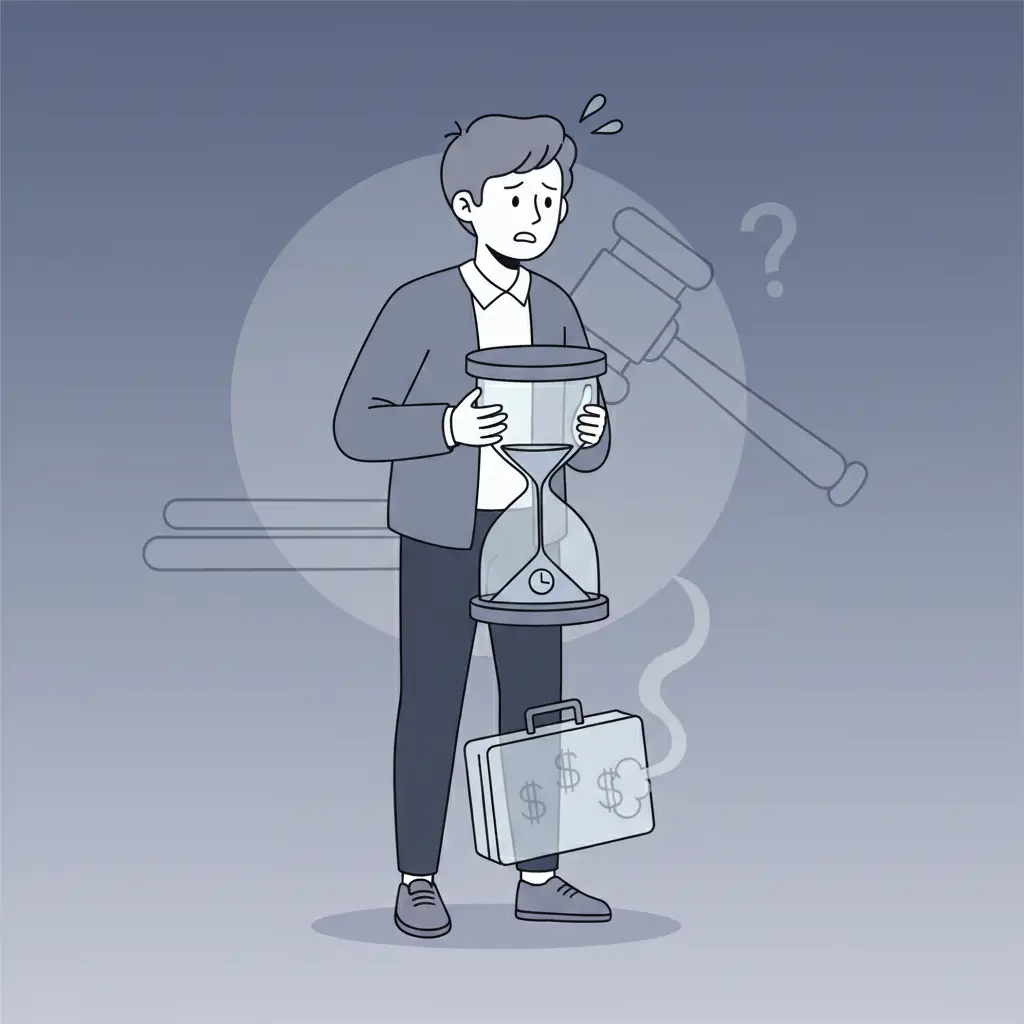
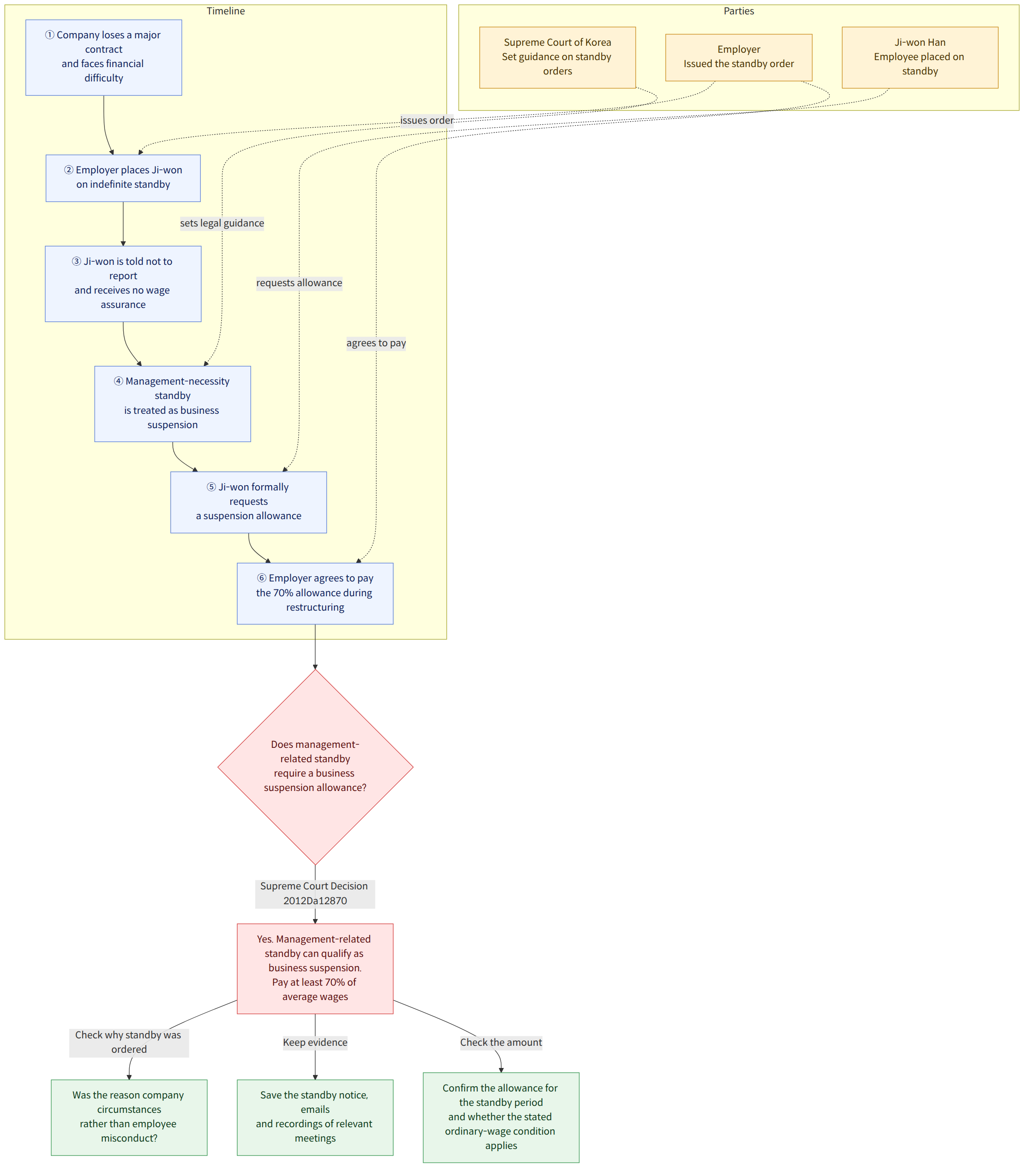
Ji-won Han, a marketing team leader with seven years of experience, received a shocking email one Monday morning. Due to the company's recent loss of a major contract and subsequent financial difficulties, she and several other senior staff members were placed on "indefinite standby." The company told her, "There is no need to report to the office. Stay at home until the management situation improves." However, they remained silent about whether she would be paid during this period.
Ji-won was paralyzed by anxiety. She hadn't resigned, nor was she being disciplined for any misconduct. It felt profoundly unfair that her income could be cut off simply because the company was struggling. Could Ji-won legally demand compensation for this period of enforced idleness?
The Legal Intersection of Standby Orders and Wages
The core legal question in Ji-won's story is this: When an employer issues a standby order (standby for appointment) due to management necessity (the employer's fault), must they pay a 'Business Suspension Allowance'?
What Korean Law Says
The Korean Labor Standards Act (LSA) includes a "Business Suspension Allowance" system to protect employees who are willing to work but are prevented from doing so due to reasons attributable to the employer.
Labor Standards Act, Article 46 (Allowance for Business Suspension)(1) If a business is suspended for reasons attributable to an employer, the employer shall pay the employees concerned allowances of not less than 70/100 of their average wages during the period of suspension.
In this context, "suspension of business" is interpreted broadly. It includes cases where an individual employee's labor is rejected or becomes impossible against their will, even though they are ready to fulfill their contract. This broad definition encompasses "leaves of absence" and "standby orders" where the employer prohibits the employee from working for a certain period while maintaining their status as an employee.
How Korean Courts Approach This
The Supreme Court of Korea has established clear guidelines regarding the nature of standby orders (Supreme Court Decision 2012Da12870). The court recognizes that a standby order is a temporary measure to prevent operational disruptions that might occur if an employee continues their current duties.
However, the court rules that if such a standby order is issued for "management necessity"—which falls under the employer's responsibility—it effectively constitutes a suspension of business as defined in Article 46 of the LSA. Therefore, the employer is legally bound to pay the suspension allowance to the affected employees.
Applying the Law to Ji-won's Case
Let’s walk through the legal reasoning for Ji-won Han:
- Employer's Responsibility: The reason for Ji-won's standby order was not her lack of competence or a disciplinary issue; it was the company's loss of a contract and management hardship. Legally, these are "reasons attributable to the employer."
- Establishment of Suspension: Since Ji-won is willing to work but is being barred from doing so by the company's order, this qualifies as a suspension of business in the broad legal sense.
- Obligation to Pay: Consequently, her firm is obligated to pay her a suspension allowance of at least 70% of her average wages for the duration of the standby period. (If 70% of the average wage exceeds the ordinary wage, the company may pay the ordinary wage instead, subject to certain conditions).
Conclusion: What Happened, and What Should You Do?
Armed with this legal knowledge, Ji-won Han was able to formally request her suspension allowance. Facing clear legal precedents, the company had to acknowledge her rights and agreed to pay the 70% allowance while they restructured their business.
If you find yourself in a similar "limbo," keep these two practical tips in mind:
- Identify the Reason for Standby: If the order is due to company circumstances (e.g., downsizing, department closure, or financial loss) rather than your own misconduct, you are likely entitled to the allowance.
- Document Everything: Keep copies of the standby notice, emails, and any recordings of meetings where the order was given. This evidence is crucial if you need to file a claim for unpaid wages with the Ministry of Employment and Labor.
A company cannot unilaterally shift its business risks onto its employees without compensation. The law ensures that if you are ready to work, your livelihood is protected.
--- This column is provided for general informational purposes only and does not constitute specific legal advice. For precise legal guidance, please consult with a qualified legal professional.