Two lawsuits over a fatal shooting
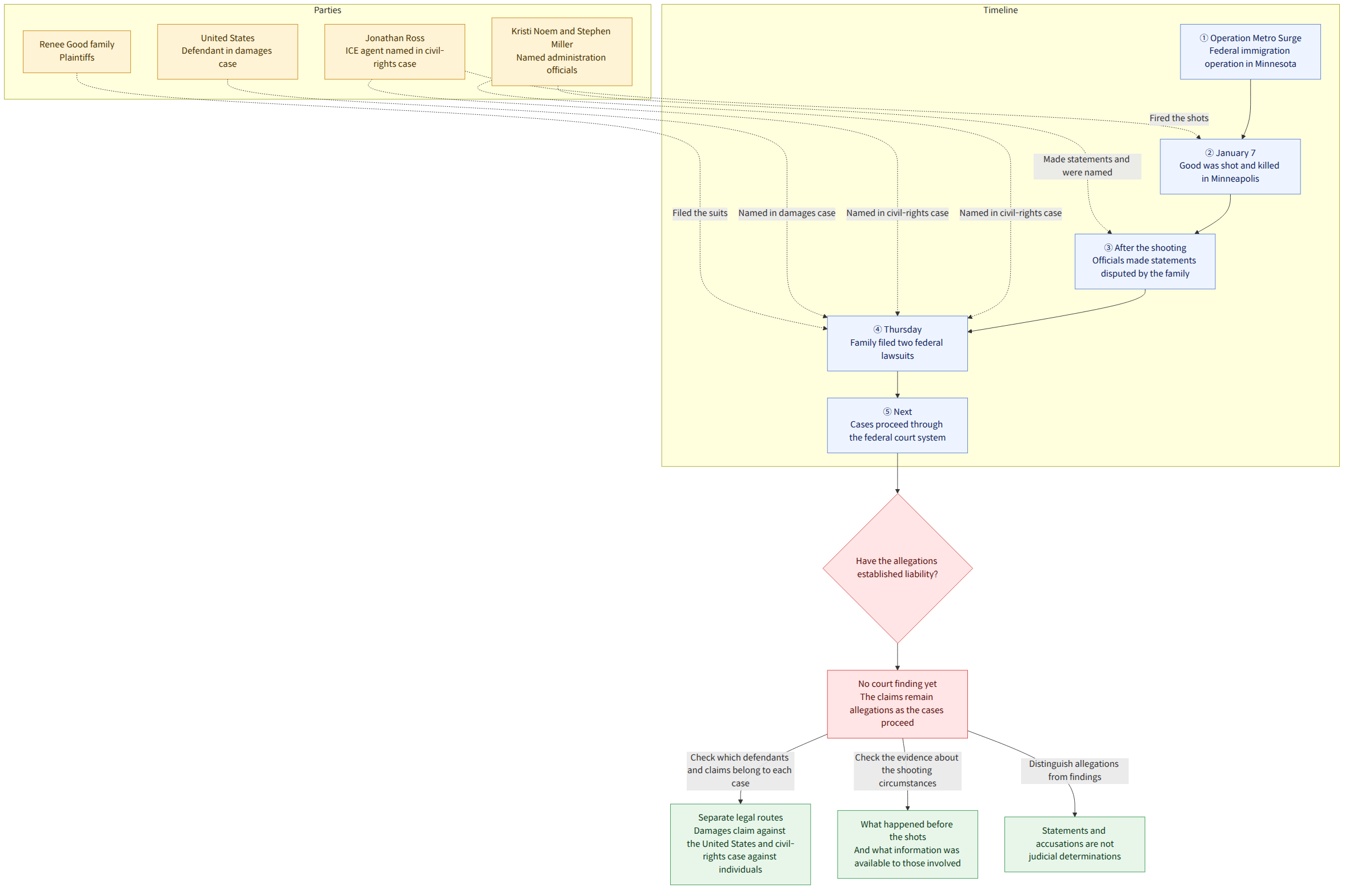
The family of Renee Good, a 37-year-old U.S. citizen, sued President Donald Trump’s administration on Thursday, alleging that her death involved wrongful conduct and violations of her civil rights. Good was shot and killed in Minneapolis on January 7, during a large federal immigration enforcement operation in Minnesota.
According to the family’s lawsuits, an Immigration and Customs Enforcement (ICE) agent fired three shots into Good’s car. The family has brought two separate cases in federal court, seeking to hold the federal government and individual officials accountable. The claims are allegations, not findings by a court.
Good was unarmed when she was killed, according to the account in the lawsuits.
What the family is seeking
A claim against the United States
The first lawsuit names the United States and seeks financial damages under the Federal Tort Claims Act. This law can allow people to seek compensation from the federal government for certain harms caused by federal employees acting in the course of their work.
The family alleges wrongful death, negligence, and other misconduct. In practical terms, a wrongful-death claim argues that someone’s actions unlawfully caused a person’s death, while a negligence claim generally argues that a person or institution failed to act with reasonable care.
A separate civil-rights case
The second lawsuit names Jonathan Ross, the ICE agent who fired the shots, as well as senior officials from the Trump administration. Those named include then-Homeland Security Secretary Kristi Noem and White House deputy chief of staff Stephen Miller.
The case alleges a conspiracy to violate Good’s civil rights. A conspiracy claim generally asserts that multiple people agreed to take actions that unlawfully deprived someone of legal protections. The allegations will have to be evaluated through the court process; filing a lawsuit does not establish that any named person is liable.
The operation in Minneapolis
Good was killed during Operation Metro Surge, a federal government deployment in Minnesota described as a mass immigration enforcement operation. The lawsuits place the shooting within that broader campaign, which involved a significant federal presence in the state.
Large enforcement operations can bring federal agents into communities for arrests and other immigration-related actions. They can also raise questions about how agents interact with residents, what force they may use, and how their conduct is reviewed when someone is seriously injured or killed.
Why the setting matters
The location and circumstances of a shooting can become central to a legal case. Investigators and courts may examine what happened immediately before the shots were fired, what information was available to the people involved, and whether the actions taken complied with the law.
The family’s lawsuits challenge both the conduct that led to Good’s death and the public response that followed. The claims against the government and the claims against individual officials are separate legal routes, with different defendants and questions for the court to consider.
Public statements disputed by the family
After the shooting, Noem and Miller accused Good of terrorism, according to the account in the lawsuits. Noem also claimed at a press conference that Good had “attempted to run a law enforcement officer over.” The family’s civil-rights lawsuit disputes the actions and statements of senior officials as part of its allegations.
The lawsuits accuse officials of serious misconduct, but those accusations have not yet been proven in court.
Public statements by government officials can shape how the public understands a high-profile incident before all the evidence is examined. In a case like this, the difference between an official allegation and a verified finding is important: a claim made at a press conference is not, by itself, a judicial determination.
What happens next
The cases will proceed through the federal court system. The court process may involve written responses from the defendants, requests for records, witness accounts, and arguments over which claims can move forward. The lawsuits’ filing alone does not determine whether the government or any individual defendant violated the law.
The Federal Tort Claims Act case may require the court to consider whether the government can be held responsible for the alleged actions of a federal employee. The civil-rights case raises separate questions about the conduct of the named agent and officials, including whether the allegations meet the legal requirements for the claims brought.
Why the case could have wider significance
The outcome could matter beyond Good’s family because it may shape public debate over federal immigration enforcement, the use of force, and accountability when agents operate in local communities. Similar cases often draw attention to how agencies document encounters, preserve evidence, and explain decisions after a death.
For now, the central facts and legal responsibility remain matters for the court process. The family is seeking accountability through two lawsuits, while the defendants will have an opportunity to respond to the claims.