Understanding Your Rights When Repaying a Loan in Korea
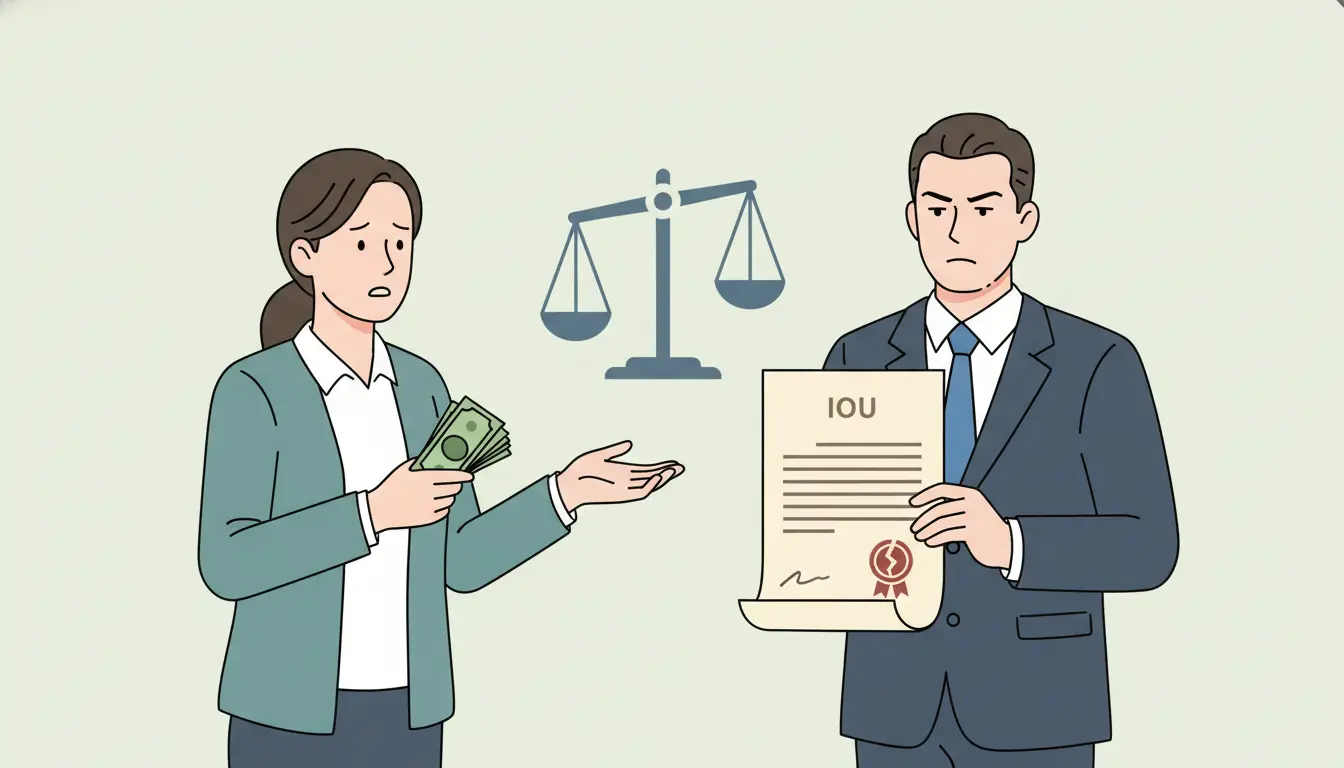
When you borrow money and the time comes to pay it back, you naturally want to ensure there is no future dispute. Many people believe they should only hand over the money if the lender returns the original IOU (promissory note) at the same time. However, Korean law distinguishes between a receipt and the original debt instrument.
1. The Right to a Receipt (Simultaneous Performance)
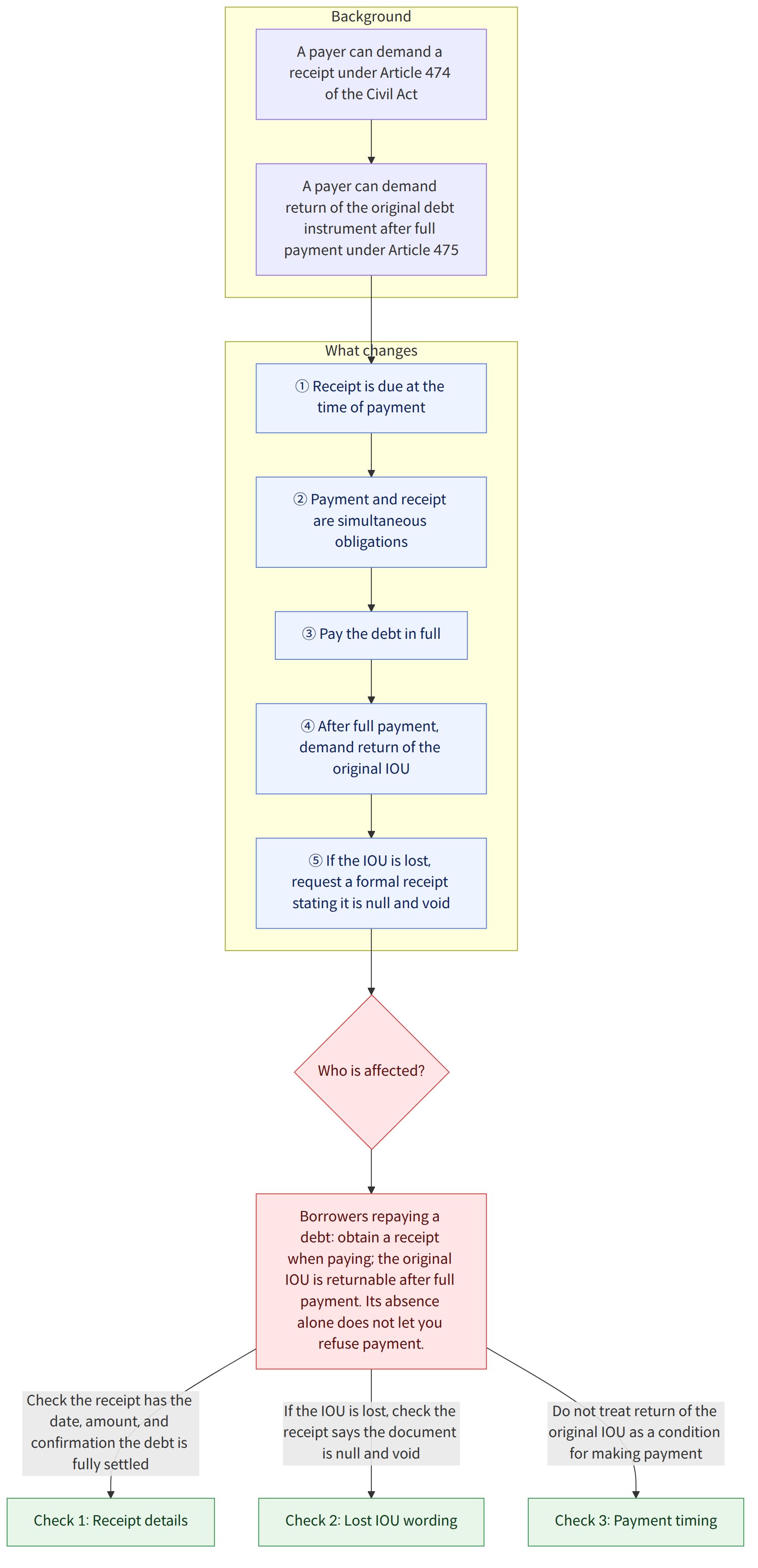
Under Article 474 of the Civil Act, a person who pays a debt has the right to demand a receipt from the lender.
Note: The obligation to pay the money and the obligation to issue a receipt are in a 'Simultaneous Performance' relationship. This means you can legally refuse to pay the money until the lender provides a receipt.
2. Returning the Original IOU (Post-Repayment)
Article 475 of the Civil Act states that if you have paid the debt in full, you can demand the return of the original debt instrument (such as an IOU or a written pledge).
However, the Supreme Court has ruled that returning the original IOU is not a simultaneous performance obligation. This means:
- You must complete the payment first.
- The lender is then obligated to return the document after the debt is settled.
Summary Table: Receipt vs. Original IOU
| Document Type | Timing of Delivery | Legal Obligation |
| :--- | :--- | :--- |
| Receipt | At the time of payment | Simultaneous Performance |
| Original IOU | After full payment | Post-repayment Obligation |
What if the Lender Lost the IOU?
If the lender, like in the case of 'Person B', has lost the original document, they cannot return it immediately. In this situation, you should:
- Pay the amount due.
- Strongly demand a formal receipt that includes the date, amount, and a statement that the debt is fully settled.
- Include a note on the receipt stating that the original IOU is null and void since it has been lost.
Conclusion
You cannot refuse to pay just because the lender doesn't have the original IOU on hand. However, you MUST receive a receipt at the moment you pay. This receipt will serve as your primary protection against any future claims.
This information is for general guidance. For specific legal disputes, consulting with a qualified professional is recommended.