Shadows on the Green: Min-su's Dilemma
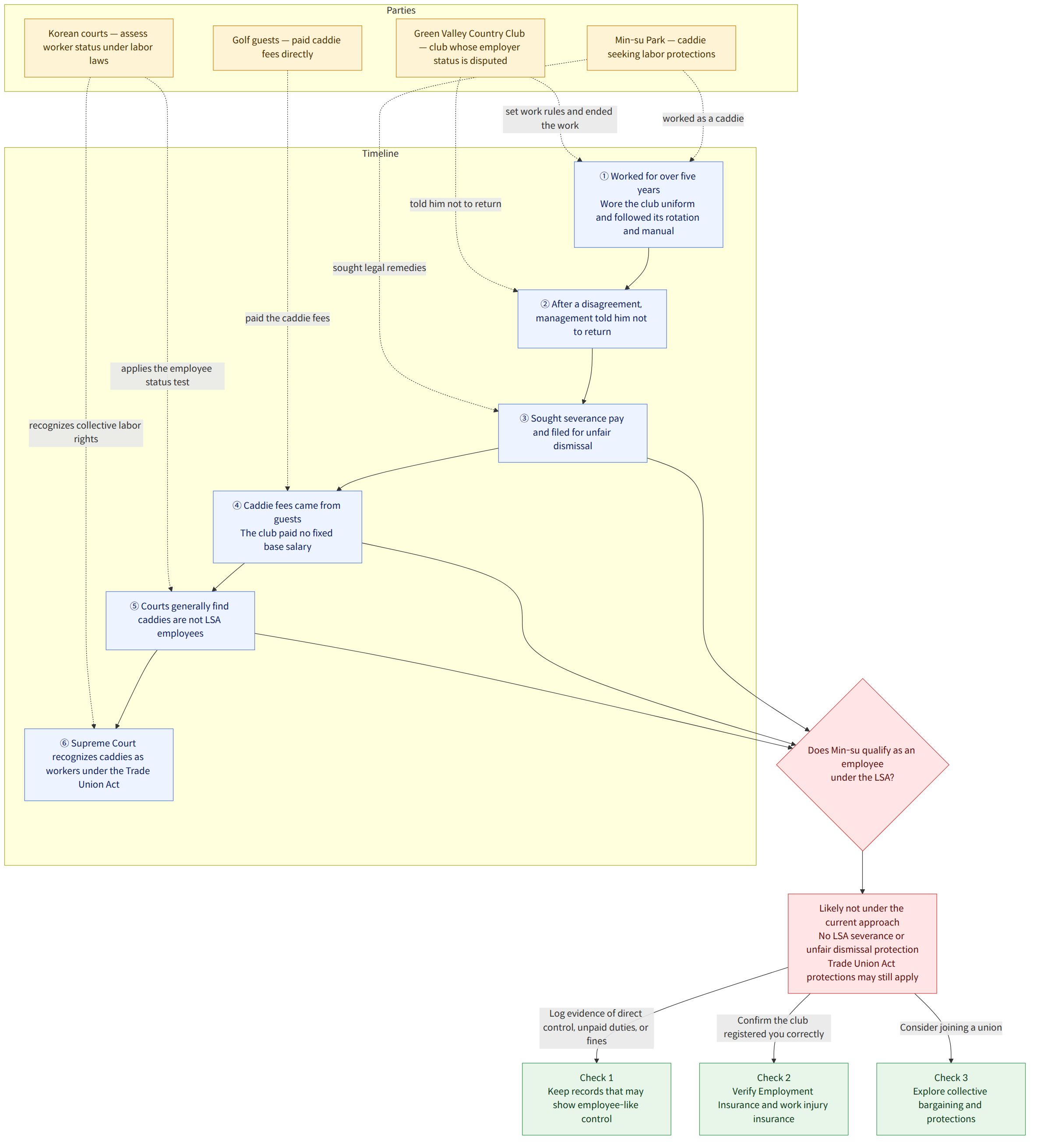
Min-su Park has been a veteran caddie at the prestigious 'Green Valley Country Club' for over five years. Every morning, he donned the uniform provided by the club, followed a strict rotation schedule, and navigated golf carts for guests. He lived by the club's 'Customer Service Manual'—failing to smile enough could result in being pushed to the back of the shift line. To Min-su, he was a loyal employee of the club.
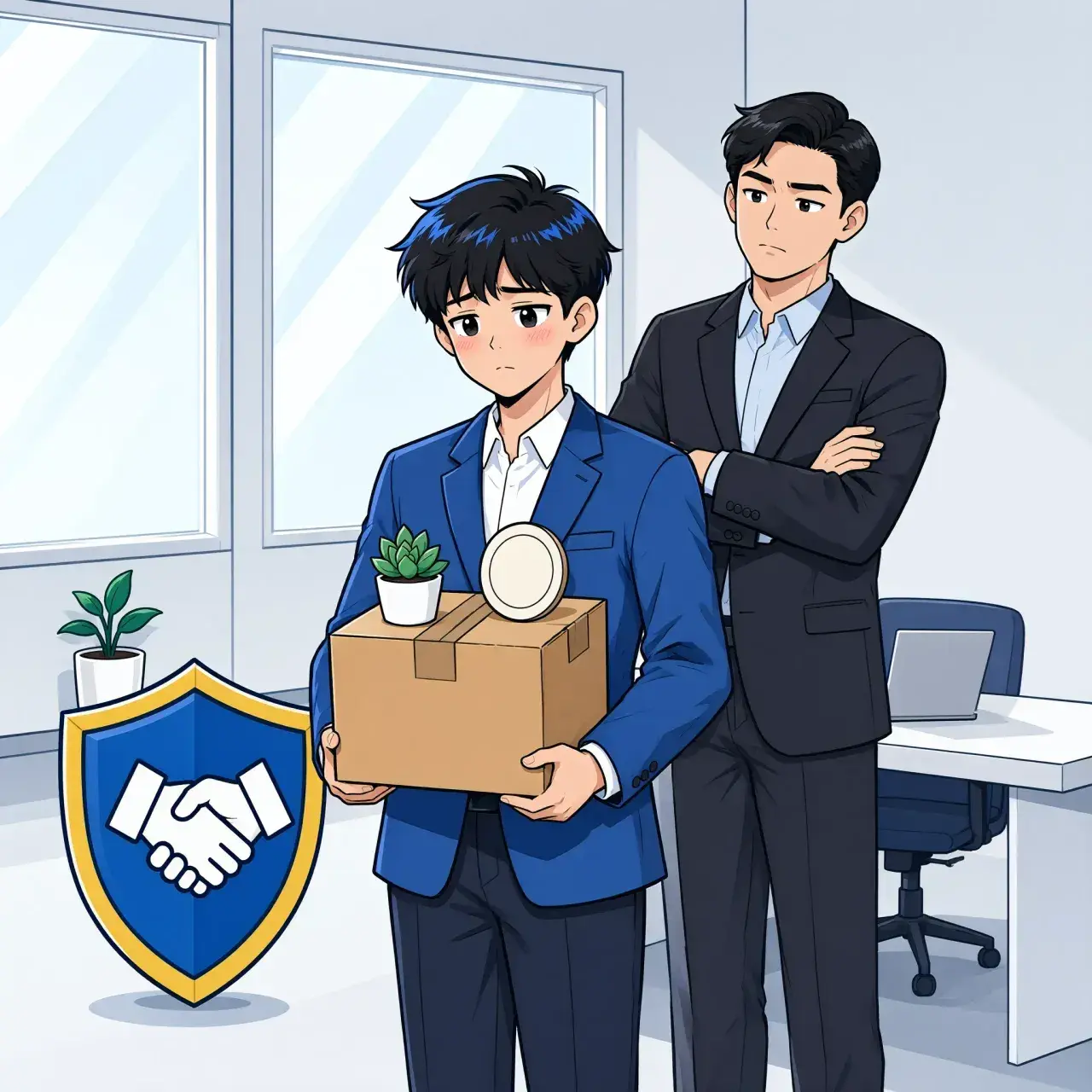
However, everything changed after a minor disagreement with the management. He was told, "Don't bother coming in tomorrow." Losing a job he had dedicated five years to, Min-su sought severance pay and filed for unfair dismissal. To his shock, he was told that under the law, he might not be an "employee" at all.
The Legal Question: Substance Over Form
The core of Min-su's case lies in a single question: Is a golf caddie an 'employee' under the Korean Labor Standards Act (LSA)? If the answer is yes, he is entitled to severance pay and protection from arbitrary firing. If no, he is merely an independent contractor whose services can be terminated at any time without the protections afforded to regular workers.
What Korean Law Says: The Test of Subordination
Under Korean law, determining employee status isn't about the name of the contract. Even if you are called a "freelancer" or "contractor," the court looks at the actual subordinate relationship with the employer.
Key Criteria Established by the Supreme Court:1. Does the employer determine the content of the work and apply work rules or personnel regulations?2. Is there significant direction and supervision by the employer during the work process?3. Does the employer specify the time and place of work, and is the worker bound by them?4. Is the compensation paid as a reward for the labor itself, and is there a fixed basic salary?5. Does the worker own their equipment or have the freedom to hire third parties to perform the task?
Only when these factors point toward a relationship of dependence does the law grant the status of an "employee."
How Korean Courts Approach Caddies
Historically and generally, Korean courts have ruled that golf caddies are not employees under the Labor Standards Act. The reasoning is based on several practical factors:
- The Source of Income: Caddies usually receive their payment (the 'caddie fee') directly from the guests, not the golf club. The club doesn't pay them a monthly salary.
- Independence of Work: Once a round is finished, caddies are typically free to leave the premises. They aren't required to stay for a full 8-hour shift like office workers.
- Lack of Direct Supervision: While they follow a rotation, the actual "service" is rendered to the guest, and the club rarely interferes with the specific minute-by-minute actions of the caddie during a round.
- No Risk Sharing: If there are no guests due to rain, the club does not pay the caddie any "shutdown allowance" or guaranteed minimum wage.
Applying the Law to Min-su’s Case
Walking through Min-su's situation, we see the difficulty. Although he wore a uniform and followed the club's rotation, the fact that his income came from direct tips/fees from players and that he lacked a fixed base salary from Green Valley strongly suggests he is not an LSA employee.
Legal precedent suggests that Min-su is a "special type of service provider." While he works within the club's ecosystem, the lack of financial subordination (being paid by the club) makes it nearly impossible for him to claim severance pay or sue for unfair dismissal under the LSA.
However, there is a silver lining: the Supreme Court does recognize caddies as "workers" under the Trade Union and Labor Relations Adjustment Act. This means while Min-su can't get severance pay, he could have joined a union to negotiate for better conditions or collective protections.
Conclusion: What Should You Do?
Min-su’s story is a cautionary tale for the thousands of workers in the gray area of the "gig economy" or specialized services. Based on the current legal landscape, Min-su will likely not receive the same protections as a regular office worker.
If you find yourself in a similar position, here are two practical tips:
- Document Direct Control: If your golf club starts exercising extreme control—such as forcing you to perform non-caddie tasks (cleaning, maintenance) without pay, or imposing strict disciplinary fines—keep a log. These details could help prove a closer "employee-like" relationship in court.
- Verify Social Insurance: Korean law is evolving. Caddies are now eligible for Employment Insurance and Industrial Accident Compensation Insurance. Ensure your club has registered you correctly so you are at least covered for injuries or total loss of work.
This column provides general legal information and does not constitute formal legal advice. For specific cases, please consult with a qualified legal professional.