A family seized in the name of national security
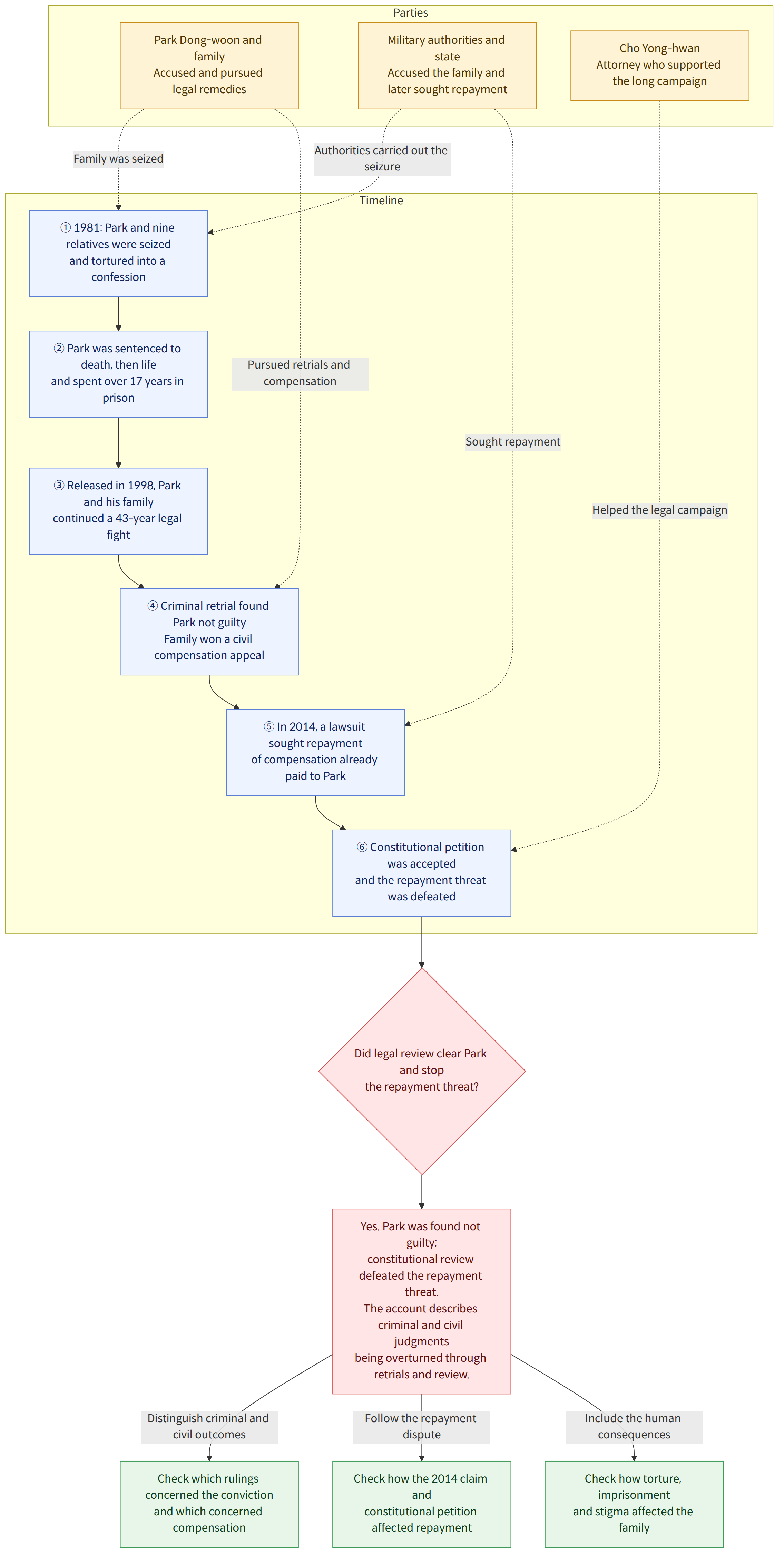
In 1981, Park Dong-woon was a 36-year-old employee of a farming cooperative in Jindo, South Jeolla Province. Known as a capable and strict worker, he was taken to a basement interrogation facility in Seoul along with nine relatives, including his mother, younger brother, uncle and aunt.
Authorities focused on Park’s father, Park Young-joon, who had gone missing during the Korean War. Investigators claimed that the father had recruited his son as a spy and that Park Dong-woon had secretly worked for North Korea for 24 years—an allegation that meant he supposedly began spying at the age of 12.
The family was not simply accused of a crime: the authorities portrayed them as a coordinated “family spy network,” making kinship itself part of the case against them.
Torture and a coerced confession
The interrogations involved severe torture, which brought Park close to death. Hearing his mother scream as she was tortured was itself a source of anguish for him. In the end, Park confessed to the claims investigators wanted him to accept.
A confession made under torture is not reliable evidence: it is a statement produced through pain and fear, rather than a free account of what happened. But under the military government of Chun Doo-hwan, Park and his relatives were convicted as members of a supposed spy family.
From a death sentence to life in prison
Park received a death sentence at his first trial. On appeal, the sentence was changed to life imprisonment, but he remained behind bars for more than 17 years. He was released in 1998, after 17 years, five months and eight days in prison.
Release did not undo the lost years, the family’s suffering or the stigma that followed an accusation of spying. In communities where neighbors may fear association with someone labeled a national-security threat, suspicion can isolate not just the accused person but an entire household.
A legal struggle lasting decades
Park and his family spent 43 years fighting the state and went through 19 court proceedings. Their efforts sought to do more than secure his release: they aimed to clear the family’s name and challenge the official account that had shaped their lives.
A criminal retrial (a new trial held when there is reason to reconsider an earlier conviction) eventually found Park not guilty. The family also won an appeal in a civil case seeking compensation from the state. Those victories, however, did not end the litigation.
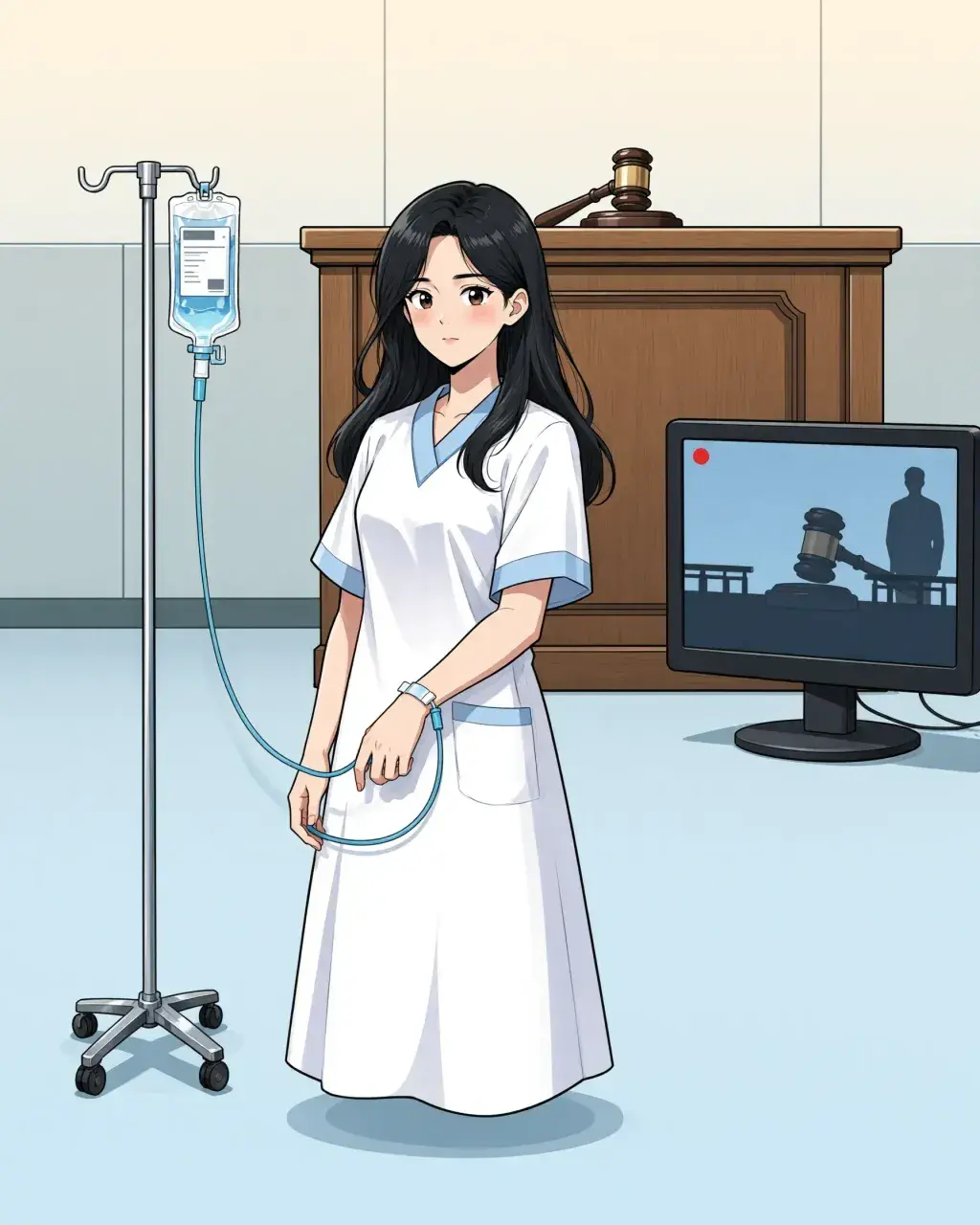
In 2014, during a period often called the “judicial scandal,” Park faced a lawsuit demanding that he return money previously paid to him as compensation. A restitution claim (a demand to repay money said to have been received improperly) threatened to reverse the relief he had finally obtained.
Park’s case moved through criminal trials, civil lawsuits and constitutional review—showing how a wrongful conviction can continue to shape a person’s life long after prison doors open.
The role of constitutional review
Park was able to escape the repayment threat after his constitutional petition was accepted. A constitutional petition (a request for a court to decide whether government action violates constitutional rights) can provide another route to challenge an outcome when ordinary legal procedures have not resolved the issue.
The same case ultimately saw both its criminal and civil judgments overturned through retrials, as well as review by the Constitutional Court. The account describes this combination of proceedings as unique in South Korea’s legal history. Attorney Cho Yong-hwan, who built a close relationship of trust with Park, played a vital role in the long campaign.
A book restores the details of a damaged life
In Spring from Afar, author Song So-yeon reconstructs Park’s life and the family’s decades-long effort to establish what happened. The book examines the implausible evidence used to frame them, the way their neighbors’ community turned away from the family, and the exhausting succession of legal battles.
Rather than treating the case as a sequence of court decisions alone, the book follows the human consequences of being pushed out of the place of “citizen”—a person recognized as belonging to society and entitled to its protection. The accusation affected family relationships, social standing and the possibility of returning to an ordinary life.
The book was published by Truth and Power and listed at 18,000 won. Its account connects Park’s experience to a wider history shaped by Korea’s division, the Korean War and military dictatorship, while keeping the focus on one family’s daily costs of state violence.
From compensation to support for other survivors
Park used part of the criminal compensation and damages he received to help establish the human-rights foundation Truth and Power. The organization supports survivors of state violence, turning money meant to acknowledge past harm into resources for people facing similar struggles.
- Legal recognition: A not-guilty verdict challenged the official criminal case against Park.
- Public accountability: The compensation proceedings raised questions about how the state should answer for wrongful imprisonment.
- Solidarity: Support for other survivors extended Park’s efforts beyond his own family’s case.
Compensation cannot return years spent in prison or erase the effects of torture. But it can help survivors pursue care, recognition and legal support—and make clear that the consequences of wrongful state action do not end with an acquittal.
Dignity in the aftermath
Song, who observed Park closely over many years, writes that human dignity does not depend on being untouched or unbroken. Instead, she says, it can be found in the decision not to turn away from the place where a person was made to suffer, and in continuing to stand before the truth.
“Human dignity does not lie in an unbroken perfection. It lies in refusing to look away even from the place where one has been broken, and in ultimately standing before the truth. Park Dong-woon proved this through his life.”
Park’s story does not suggest that persistence alone can repair every injustice. It shows how one person’s determination, the work of a trusted lawyer and decades of legal challenges can force institutions to revisit a story they once treated as settled.
Why the case still matters
The family’s experience is a reminder that national-security accusations can carry extraordinary power, especially when courts and investigators fail to test evidence independently. When a confession is extracted through torture and a community accepts an official label without question, the harm spreads far beyond the person named in the case.
The book also asks what justice means after a wrongful conviction is overturned. A verdict can clear a name, and compensation can recognize some of the damage, but neither can restore a stolen youth or erase years of fear. Supporting survivors and preserving the record are ways to ensure that the costs of state violence are not hidden or forgotten.
For Park, the long struggle moved beyond his own release and legal vindication. His work to support other survivors turned a private fight for truth into a contribution to a shared democratic responsibility: protecting people from being abandoned when the state abuses its power.