1. A Scream in the Morning Mist
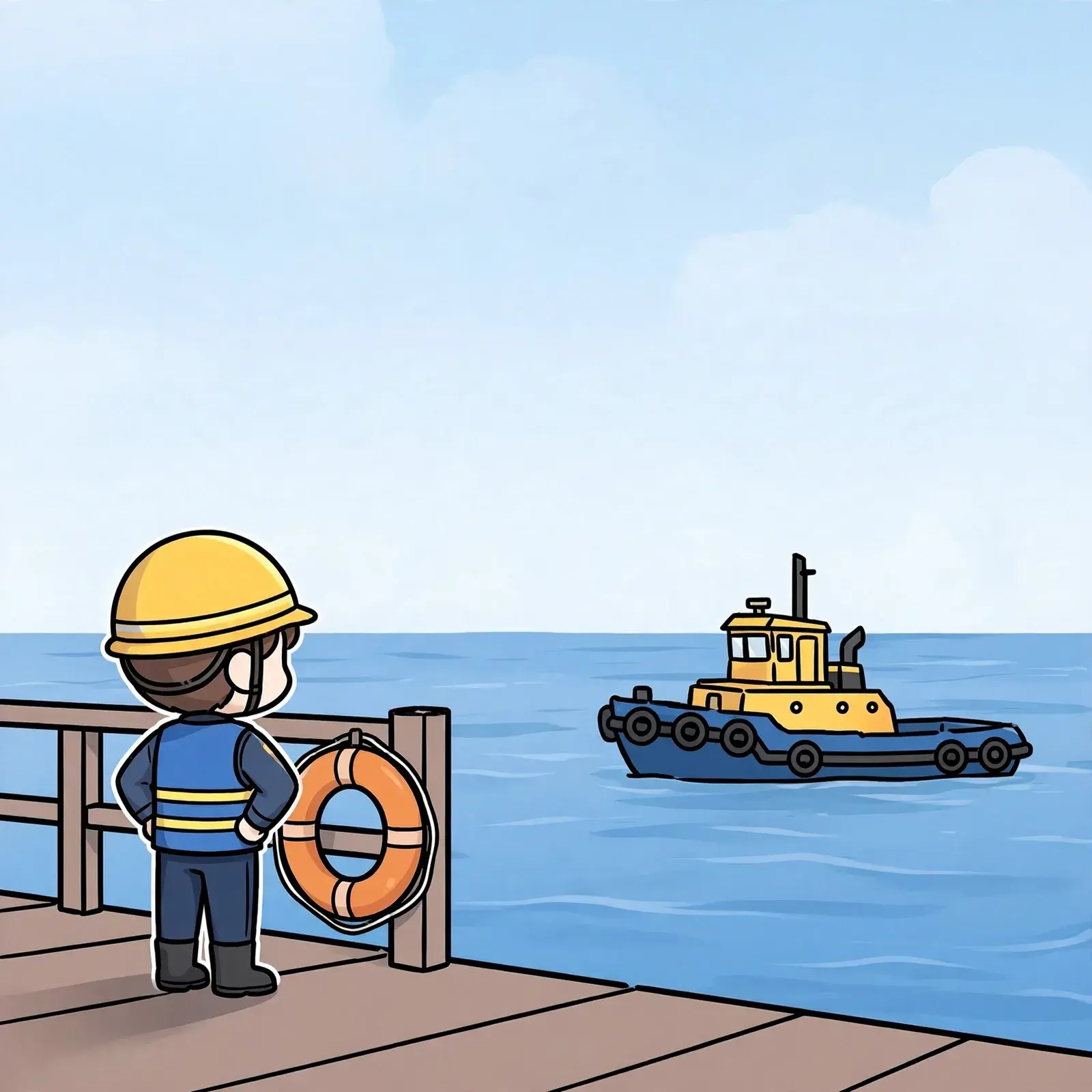
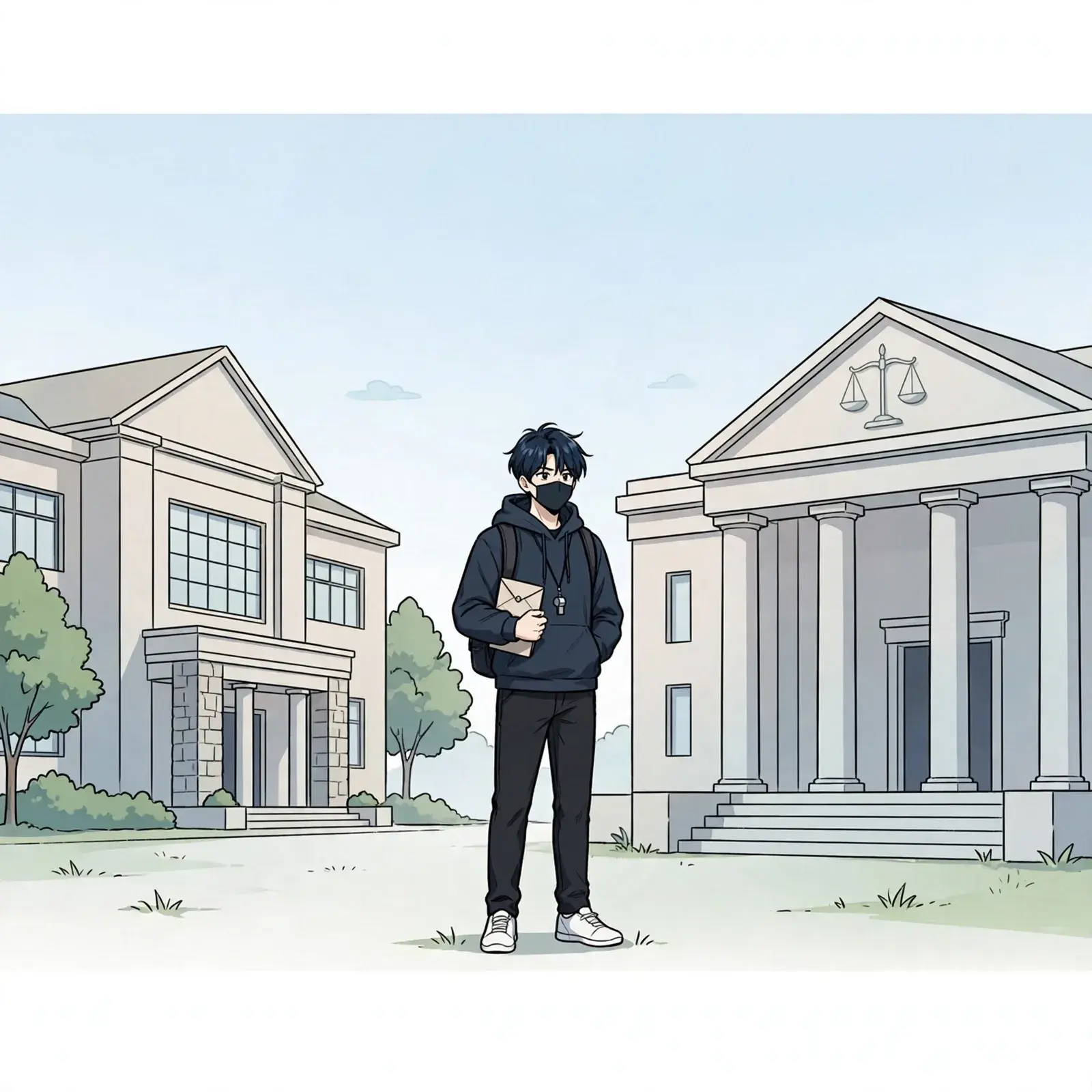
At a major apartment reconstruction site on the outskirts of Seoul, Min-ho Choi, a dump truck owner-operator, was busy hauling debris. Min-ho is an independent contractor who signed an "Equipment Lease Agreement" with the construction company. Although he wasn't officially on the company's payroll, he felt like part of the team, sharing morning exercises and coffee with the site workers every day.
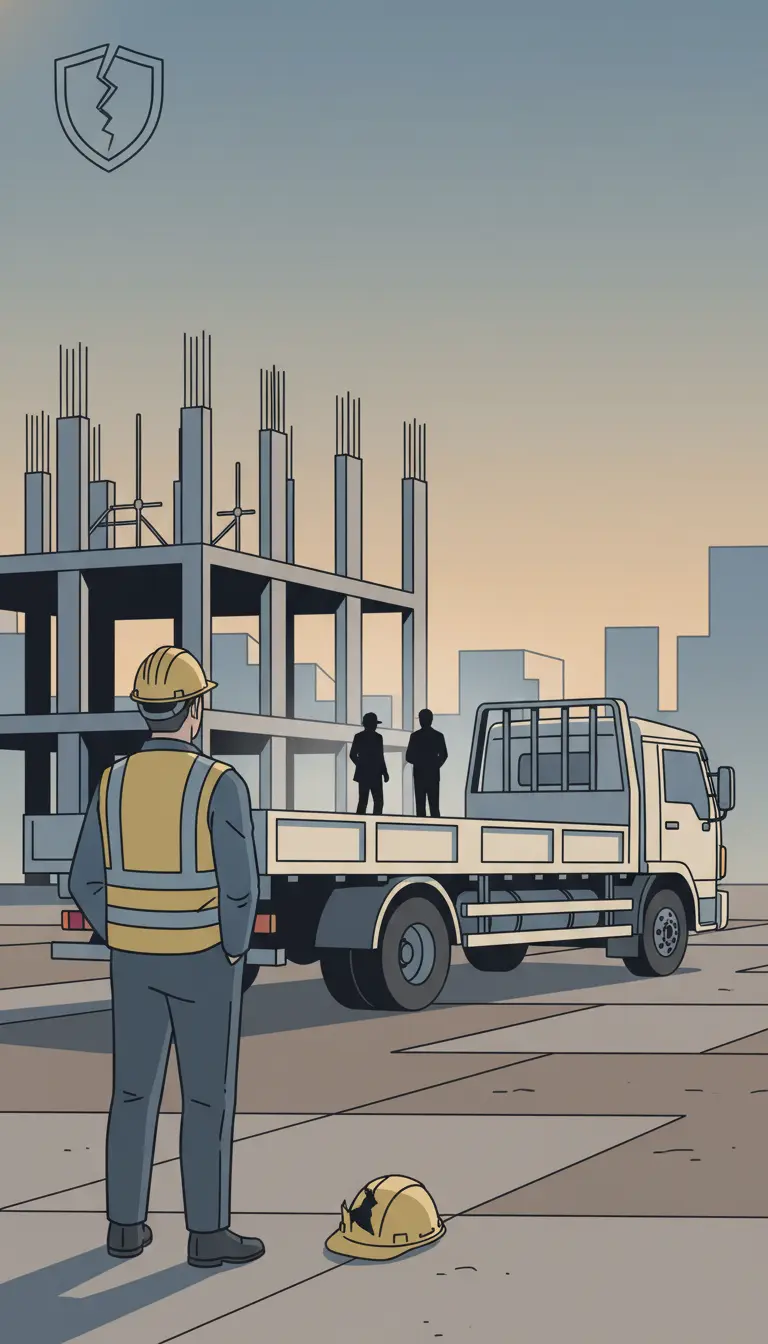
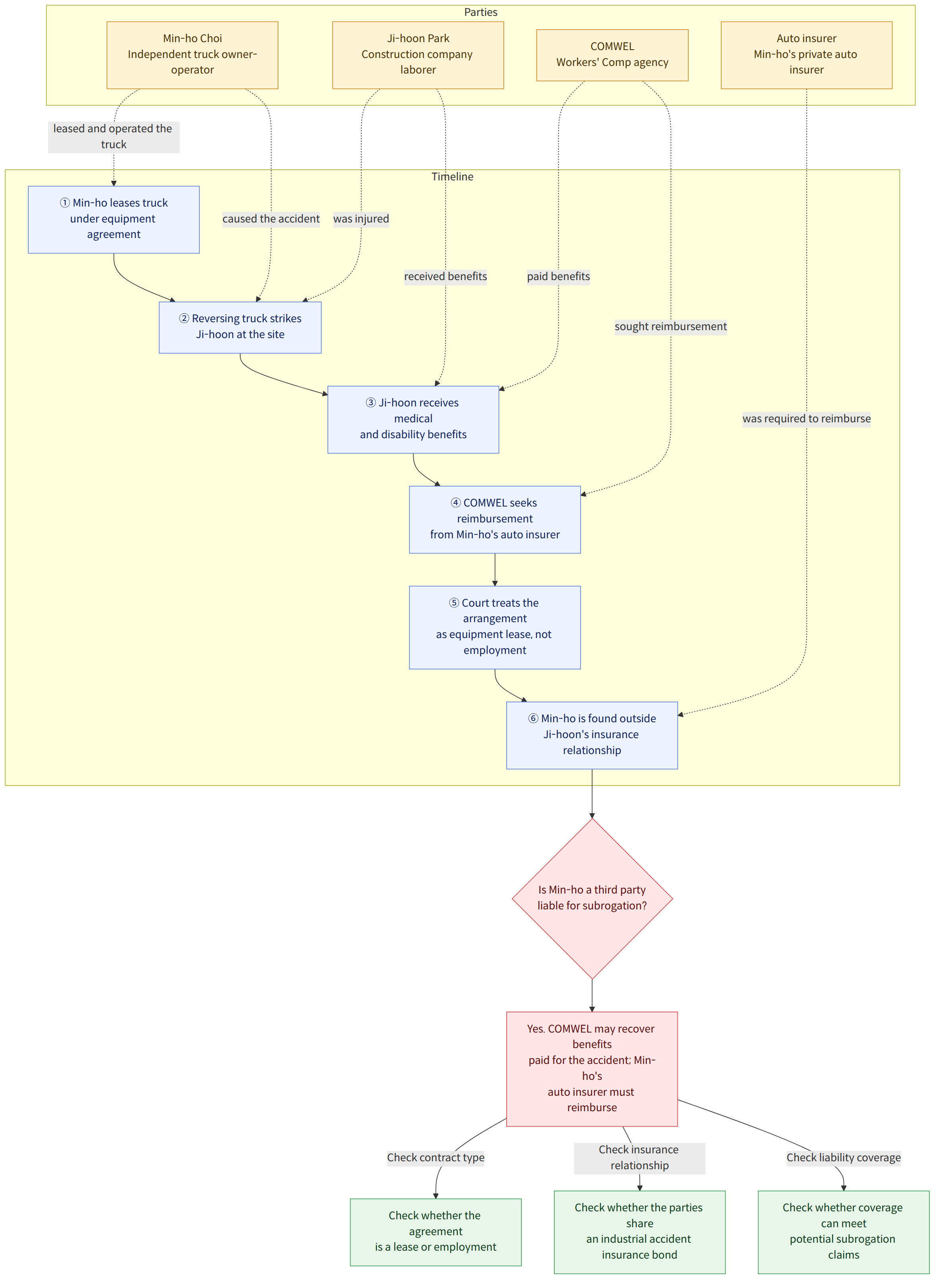
Tragedy struck in a blind spot. While reversing to offload material, Min-ho failed to see Ji-hoon Park, a laborer employed by the construction company, standing behind the vehicle. The heavy wheels of the truck crushed Ji-hoon's leg. He was rushed to the hospital, and while he survived, he faced months of grueling surgeries and rehabilitation.
2. 'I Thought We Were a Team'
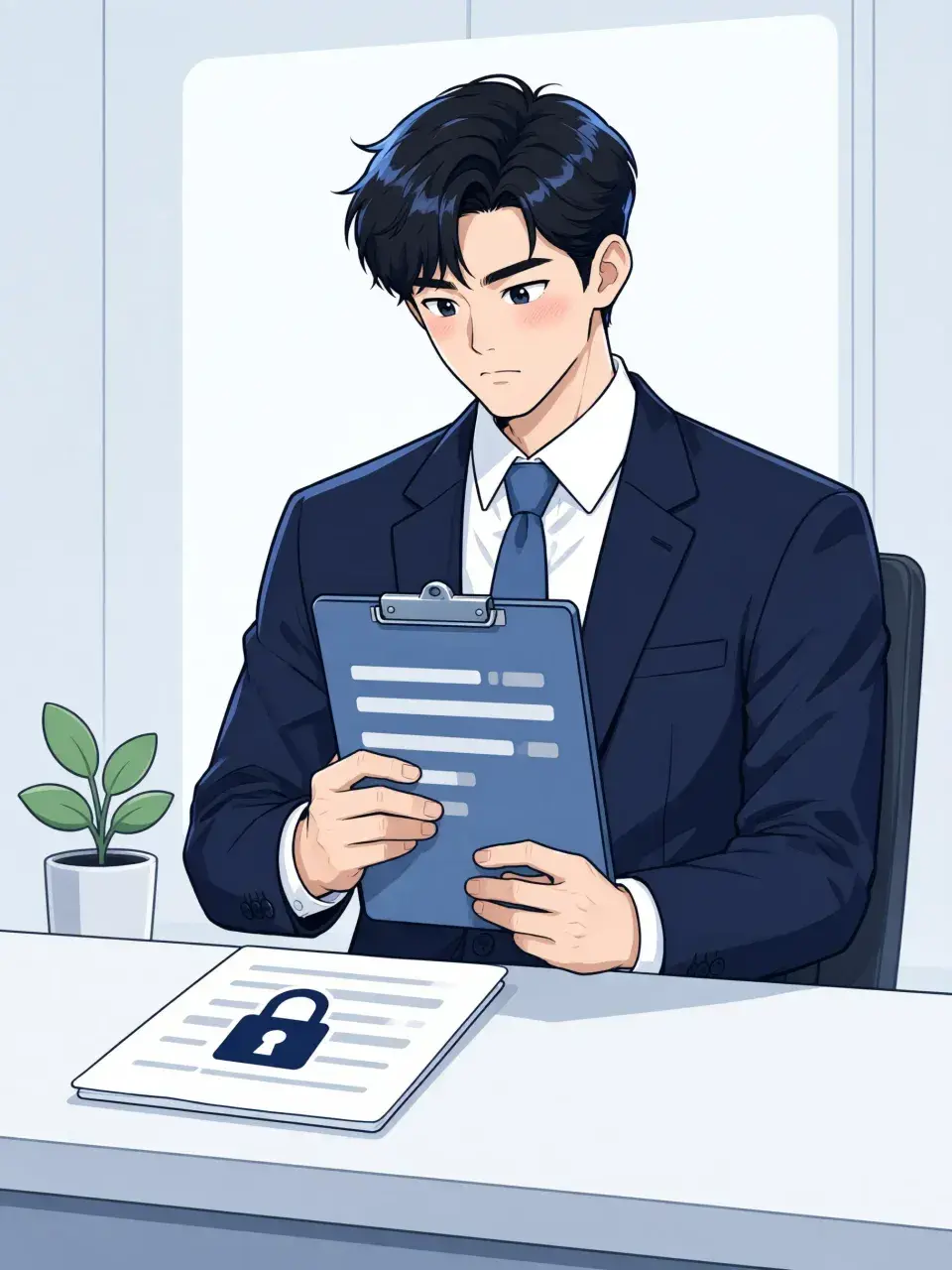
Ji-hoon Park received medical expenses and disability benefits through the government's Industrial Accident Compensation Insurance (Workers' Comp). It seemed the situation was being handled. However, months later, Min-ho Choi received a startling legal notice. The insurance agency was demanding that Min-ho's private auto insurance provider reimburse them for every cent paid to Ji-hoon.
Min-ho was baffled. "I followed the site manager's orders and worked alongside them every day. Why am I being treated like an outsider and forced to pay this back?" The core legal question here is: Is an independent equipment lessor considered a protected 'colleague' within the Workers' Comp system, or a 'third party' liable for damages?
3. Defining the 'Third Party' under Korean Law
According to Article 54, Paragraph 1 of the Industrial Accident Compensation Insurance Act, if an accident is caused by the actions of a "third party," the agency (COMWEL) can exercise the right of subrogation. This means once the agency pays the victim, it steps into the victim's shoes to claim those damages back from the person at fault.
Industrial Accident Compensation Insurance Act, Article 54 (Right of Subrogation)① When the Agency has paid insurance benefits for a disaster caused by the act of a third party, the Agency shall succeed to the right of the person who received the benefits to claim damages against the third party.
Whether Min-ho is a "third party" depends on several criteria:
- Direct Supervision: Is there a subordinate employment relationship between the perpetrator and the victim's employer?
- Insurance Relationship: Do the perpetrator and the victim share a common industrial accident insurance bond?
- Nature of Compensation: Is the perpetrator providing labor for "wages," or providing equipment for a "lease fee"?
4. The Strict Approach of the Supreme Court
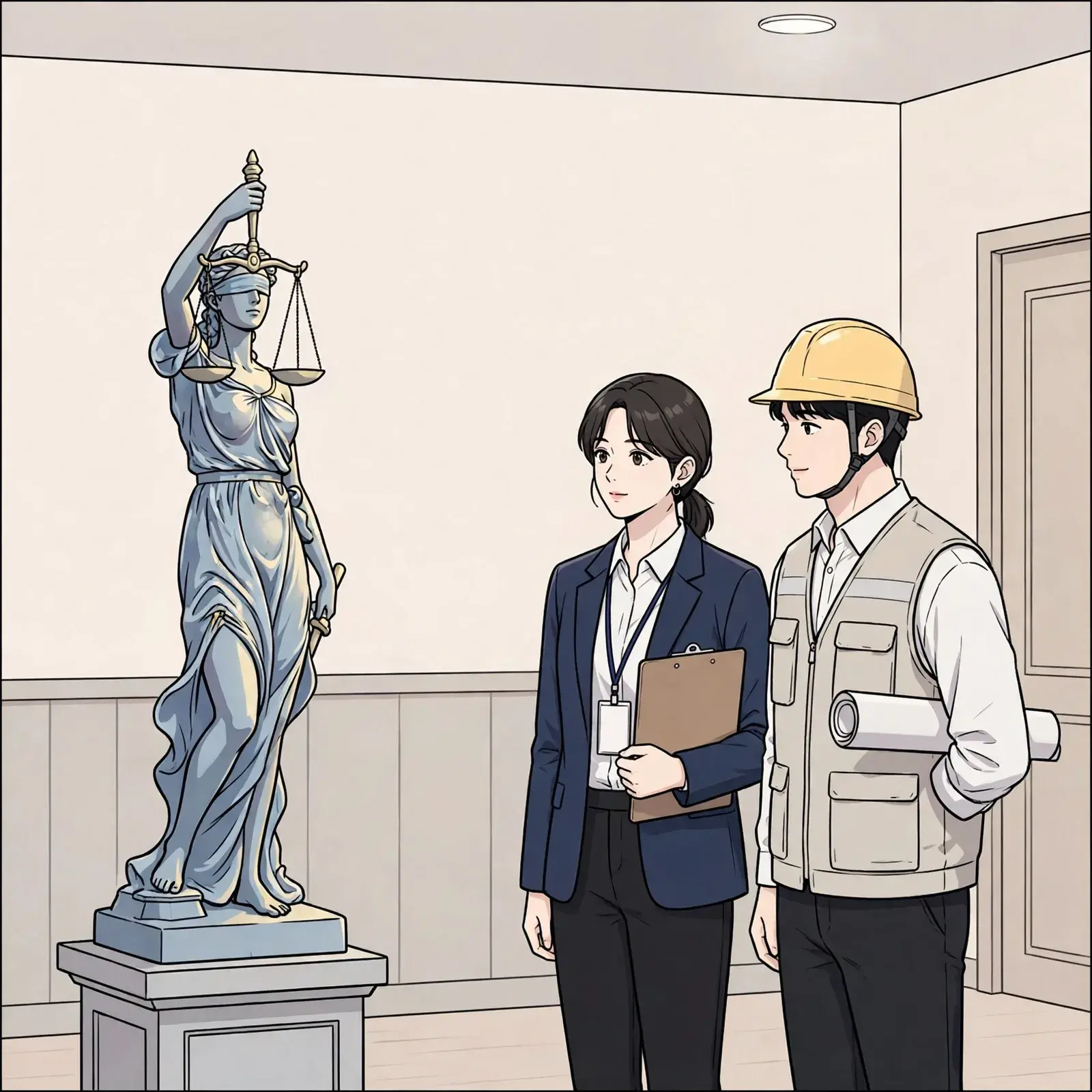
The Supreme Court of Korea maintains a strict distinction. It rules that if an individual provides their own equipment and operates it under a lease agreement rather than a standard employment contract, they are not a "worker" in the legal sense.
Since the lessor is not part of the same "employment family" as the victim, the court views them as a legal stranger to the insurance relationship. Therefore, even if they work at the same site and follow the same supervisor, they remain a third party. This allows the Workers' Comp agency to seek full reimbursement for any benefits paid out due to the lessor's negligence.
5. The Outcome: The High Cost of Independence
In Min-ho Choi's case, the court applied this reasoning step-by-step. First, his contract was for "equipment lease," not "labor." Second, his payment was a rental fee for his truck, not a salary for his personal time. Consequently, Min-ho did not have a direct or indirect Workers' Comp relationship with the victim, Ji-hoon.
As a result, Min-ho's auto insurance company was legally obligated to pay back the full amount of the benefits disbursed by the government. Had Min-ho lacked comprehensive insurance, he would have been personally liable for a sum that could have easily led to financial ruin.
6. Conclusion: Protecting Your Living Beyond the Site
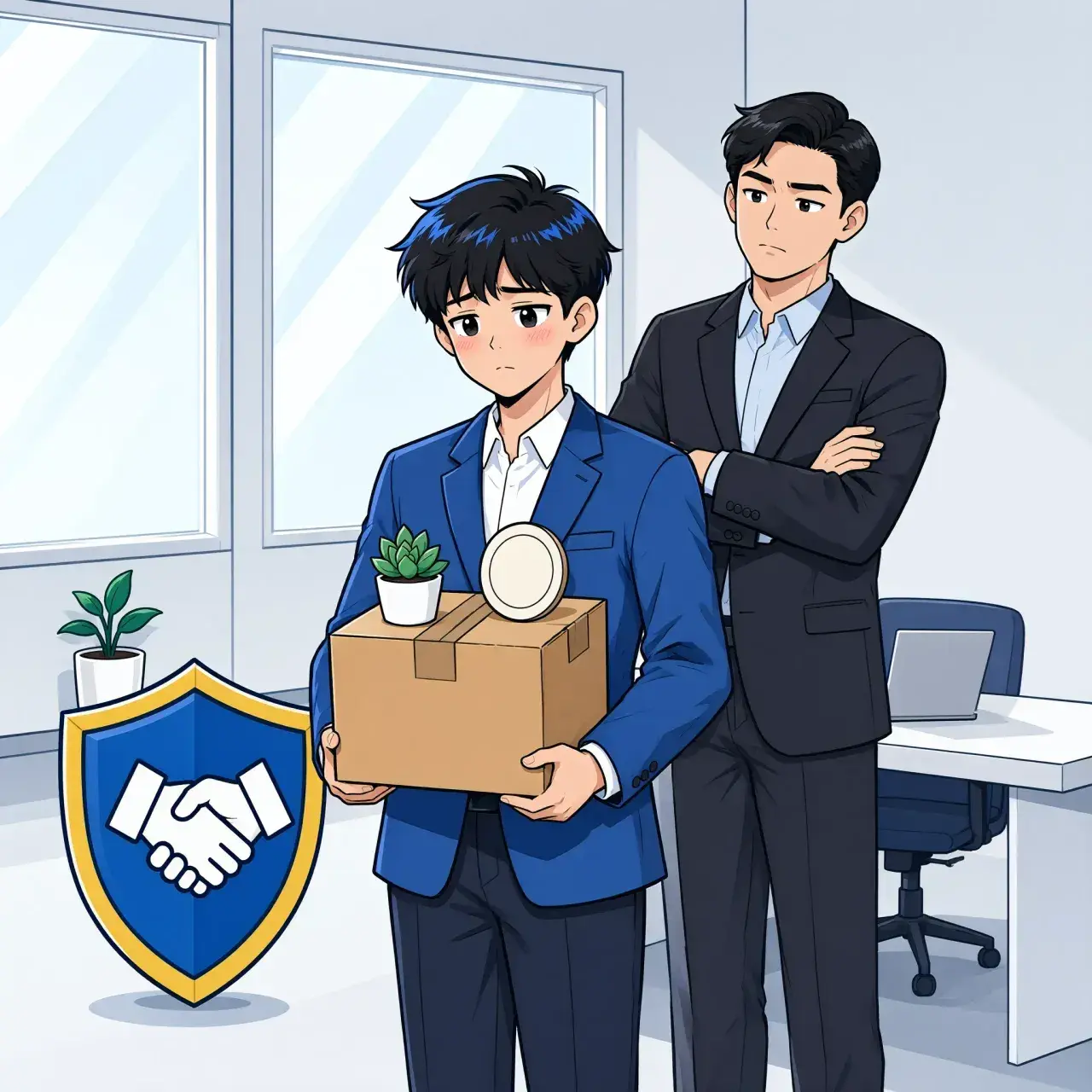
Min-ho's story serves as a cautionary tale for the thousands of owner-operators and independent contractors in Korea. On the construction site, you might be "family," but in the courtroom, you are a business entity responsible for your own risks.
For those in similar situations, consider these two practical tips:
- Understand Your Legal Status: If you bring your own heavy machinery or vehicle to a job site under a lease, you are likely a "third party." You do not have the legal immunity that co-workers enjoy against subrogation claims.
- Verify Your Liability Coverage: Standard insurance might not be enough. Ensure you have high-limit liability coverage and consider specialized business liability insurance to cover potential subrogation claims from the Workers' Comp agency.
Safety on the site protects your body; legal awareness protects your future.
This column is for general informational purposes only and does not constitute legal advice. Legal outcomes may vary based on specific case facts.