1. A Lifelong Dedication Meets a Sudden Crisis
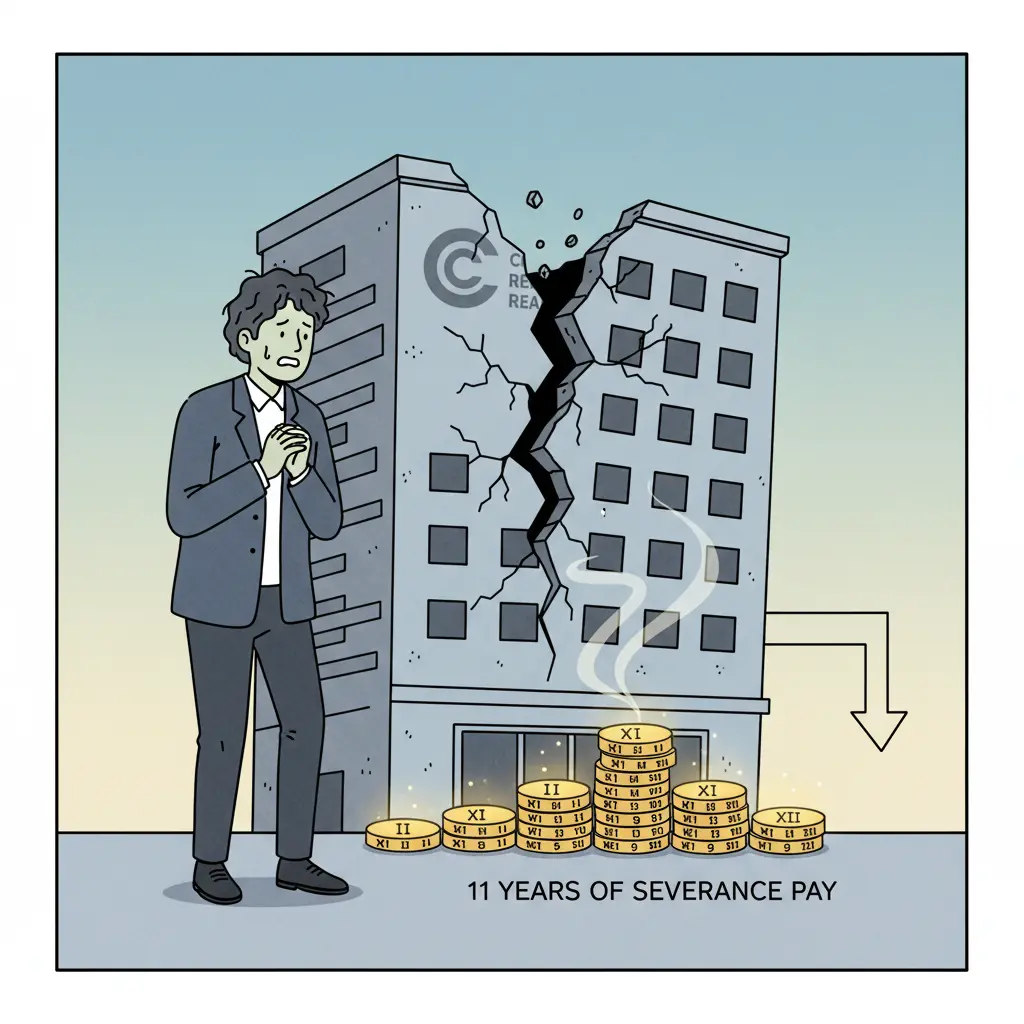
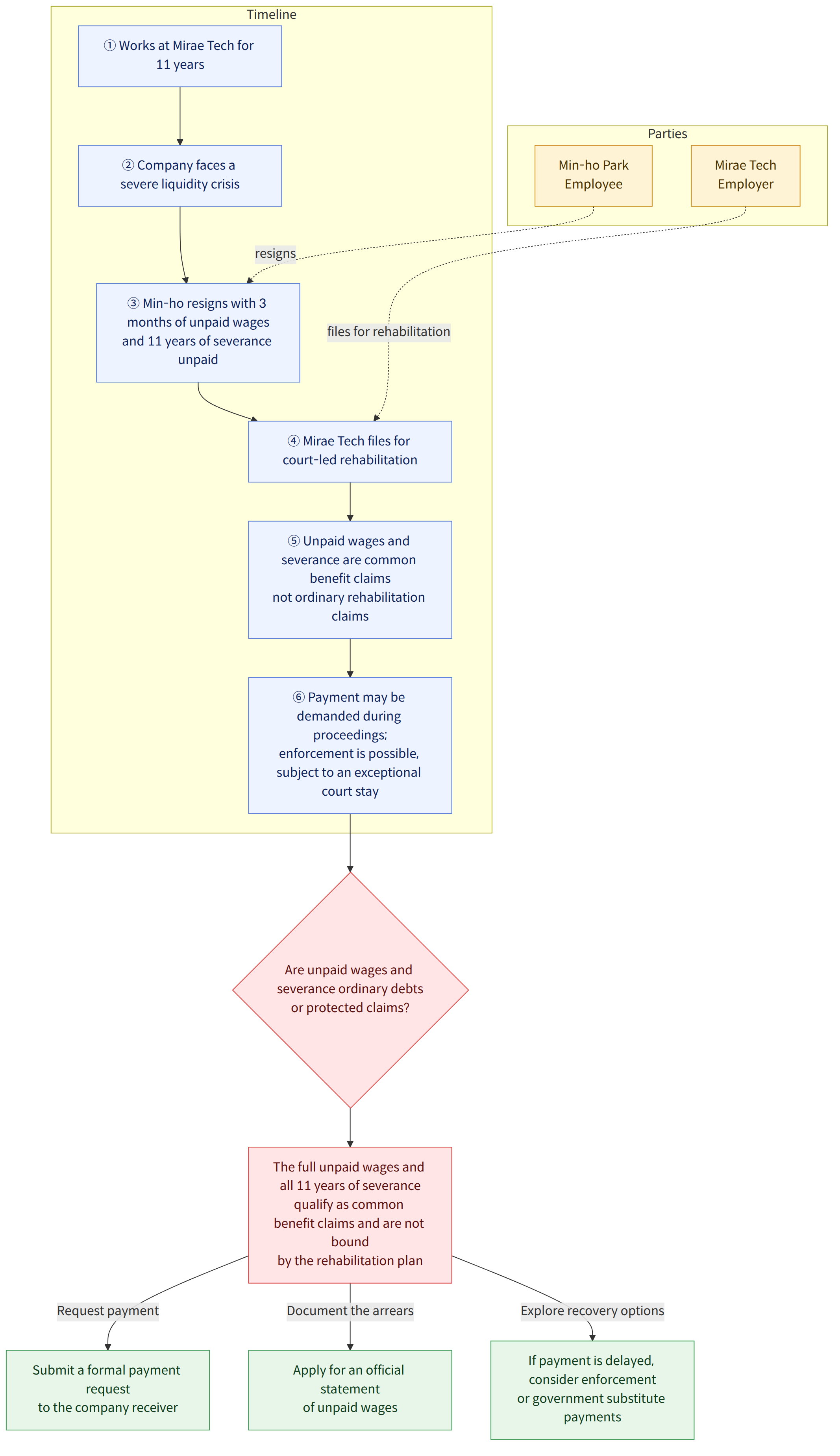
Min-ho Park is a veteran engineer who has dedicated 11 years to 'Mirae Tech,' a precision parts manufacturer. He treated his 80 colleagues like family and played a pivotal role in the company's growth. However, unable to withstand the recent global economic downturn, the company fell into a severe liquidity crisis. Min-ho eventually decided to resign, leaving behind three months of unpaid wages and 11 years' worth of severance pay.
Shortly after his resignation, Min-ho received devastating news: Mirae Tech had filed for rehabilitation proceedings (similar to Chapter 11 bankruptcy) in court. Rumors began to swirl that "once a company goes into court receivership, you can't get your money back" or that "it will take years just to get a fraction of it." Min-ho spent sleepless nights worrying about his severance pay, which he had earmarked for his children's university tuition and his own retirement.
2. The Legal Question: Can You Claim Unpaid Wages During Rehabilitation?
The core issue in this scenario is whether an employee's wage and severance pay claims are treated as ordinary debts subject to the company's restructuring plan, or if they hold a special, protected status under Korean law.
3. How Korean Law Protects Employee Livelihoods
To protect the basic livelihood of workers, the South Korean legal system grants a powerful priority to wage claims.
Labor Standards Act Article 38 & Employee Retirement Benefit Security Act Article 11Claims arising from labor relations, such as wages and severance pay, shall be paid in preference to taxes, public charges, and other claims from the employer’s total property, except for claims secured by pledges or mortgages. Specifically, the final three months of wages and the final three years of severance pay enjoy 'super priority.'
Furthermore, the Debtor Rehabilitation and Bankruptcy Act (DRBA) categorizes all unpaid wages and severance pay as "Common Benefit Claims" (공익채권) rather than ordinary "rehabilitation claims" (Article 179).
- Privileges of Common Benefit Claims:
- They are not bound by the rehabilitation plan. While other creditors might have to accept a 50% or 90% debt cut, employees are entitled to 100% of their pay.
- They can be paid at any time outside the court-mandated repayment schedule as soon as they are due.
- They are paid in preference to other rehabilitation claims and secured rehabilitation claims.
4. The Approach of Korean Courts
Korean courts maintain the stance that while rehabilitation aims to save a struggling company, it should not be done at the expense of the workers' survival. Consequently, courts generally authorize the payment of wages and severance pay as common benefit claims even during the proceedings and hold management strictly accountable if they fail to prioritize these payments.
5. Applying the Law to Min-ho’s Case
Applying these principles to Min-ho Park’s situation yields the following analysis:
First, Min-ho's unpaid three months of wages and his entire 11 years of severance pay qualify as common benefit claims. Unlike the limited "super priority" in a general civil execution (which covers only 3 months/3 years), the DRBA treats the entire amount of unpaid labor claims as common benefit claims once rehabilitation starts.
Second, Min-ho can demand payment directly from Mirae Tech even while the rehabilitation process is ongoing. He does not need to wait for the court to approve a final restructuring plan. If the company refuses to pay despite having funds, Min-ho has the right to apply for compulsory enforcement (seizure) against the company’s assets.
Third, there is a caveat. Under Article 180, Paragraph 3 of the DRBA, if Min-ho's enforcement action significantly hinders the company's rehabilitation or if the company's assets are clearly insufficient to pay all common benefit claims, the court may order a stay or cancellation of the enforcement. However, this is considered an exceptional measure.
6. Conclusion: What Happened to Min-ho, and What Should You Do?
In conclusion, Min-ho Park has a legally protected right to his full severance pay and wages regardless of the rehabilitation process. Min-ho should immediately submit a formal request for the payment of common benefit claims to the company's receiver (usually the existing CEO). If payment is delayed, he should seek a 'Wage Arrears Confirmation' and consider enforcement or government-backed substitute payments.
Practical Tips for Readers:
- Obtain Official Documentation: Immediately apply for a "Statement of Unpaid Wages" from the Ministry of Employment and Labor. This is a crucial piece of evidence for any legal action.
- Utilize Government Substitute Payments: If the company lacks immediate cash, you may be eligible for the "Daegijeupgeum" (Substitute Payment) system, where the government pays a portion of the arrears first and later recovers it from the company.
- Monitor Court Postings: If your employer is in rehabilitation, check the court's public notices using the case number to ensure your claims are correctly listed in the creditor ledger.
The law does not protect those who sleep on their rights. If your company faces rehabilitation, act quickly to assert your status as a common benefit creditor.
** *This column is provided for general informational purposes only and does not constitute legal advice. For specific legal issues, please consult with a qualified legal professional.