A Tale of Two Offices
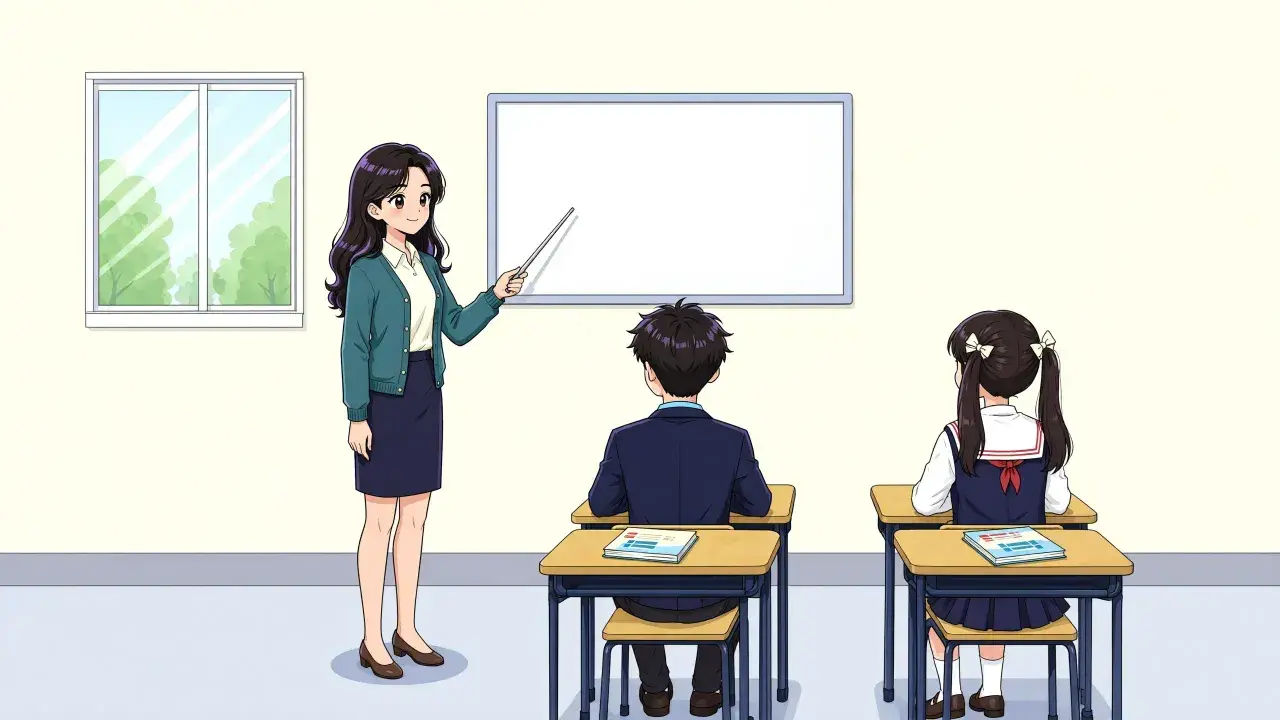
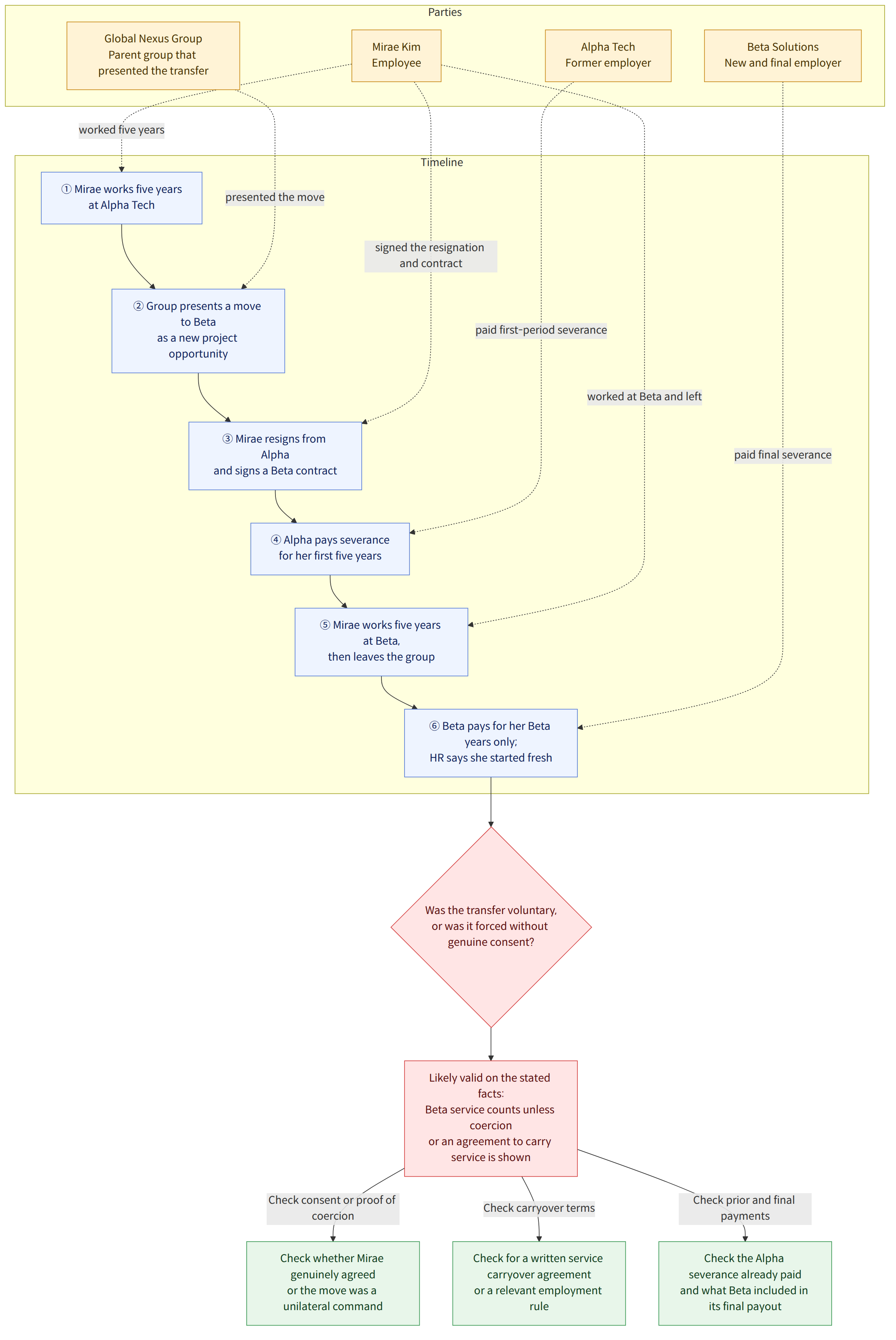
Mirae Kim had spent five dedicated years working for Alpha Tech, a subsidiary of the massive Global Nexus Group. She was a rising star in the marketing department, believing her loyalty to the group was her greatest asset. One Tuesday afternoon, her manager called her into the office with an exciting opportunity: she was being moved to Beta Solutions, another affiliate within the same group, to lead a new project.
As part of this transition, the HR department guided her through a standard process. She was asked to formally resign from Alpha Tech, at which point she received a severance payout for her five years of service. Simultaneously, she signed a new employment contract with Beta Solutions. To Mirae, this felt like a mere administrative formality—after all, she was still working for the same conglomerate, under the same umbrella of leadership.
Five years later, Mirae decided to leave the group to start her own business. When she received her final severance check from Beta Solutions, she was shocked to find that it only accounted for the five years she spent at Beta. The five years she had spent at Alpha Tech were completely ignored. When she questioned HR, they simply replied, "You were paid out when you left Alpha; you started fresh at Beta."
The Legal Question
Can an employee who has been transferred between affiliate companies within the same group claim that their total tenure (across both companies) should be used to calculate their final severance pay, especially if they already received a partial payout during the transfer?
What Korean Law Says
In Korean labor law, the act of moving an employee from one legal entity to another within a corporate group is known as a "Transfer" (Jeon-jeok). Unlike a simple rotation within one company, a transfer involves moving to a completely separate legal person.
The Principle of Transfer: A transfer is valid only if the employee consents to it. However, consent may be implied if there is a clear, established company custom of such transfers that employees accept as a norm of their employment contract.
When a valid transfer occurs, the legal relationship with the previous employer is generally considered severed. This means:
- The employment contract with the first company is terminated by mutual agreement.
- A brand new contract is established with the second company.
- Unless there is a special agreement to carry over the years of service or a specific clause in the company's rules of employment, the "clock" for seniority resets to zero.
How Korean Courts Approach This
Korean courts generally view the transfer between separate legal entities as a "break" in continuous service. The courts reason that because the employer has changed, the legal obligation to provide severance based on total tenure vanishes unless the new company explicitly agrees to assume the liabilities of the previous one.
However, the courts provide a critical safety valve: if the transfer was forced upon the employee without their genuine consent or was a unilateral management decision, the court may rule that the employment relationship was never actually severed. In such cases, the entire period is treated as one continuous stretch of employment.
Applying the Law to Mirae's Case
To determine if Mirae Kim can claim additional severance, we must look at two possibilities:
Scenario A: The Valid Transfer. If Mirae signed the resignation and the new contract willingly, or if such transfers were a standard, accepted practice at Global Nexus Group, her transfer was legally valid. Since she already received her severance from Alpha Tech and there was no written agreement to "carry over" her seniority to Beta Solutions, her tenure at Beta is the only period that counts toward her final payout. In this scenario, she cannot claim more money.
Scenario B: The Forced Transfer. If Mirae can prove that the move was a unilateral command from the group—essentially forced upon her—the law views the "resignation" from Alpha Tech as a formality rather than a choice. In this case, the law treats her employment as one continuous 10-year period.
If Scenario B applies, the calculation would be:
- (Total 10-year severance based on final salary) minus (Severance already paid by Alpha Tech) minus (Severance paid by Beta Solutions) = Remaining Balance Owed to Mirae.
Conclusion: What Happened, and What Should You Do?
In Mirae's case, because she had signed the documents and the transfer was presented as a promotional opportunity she accepted, the court likely views this as a valid transfer. Unless she can prove she was coerced, Mirae will not be able to combine her years of service and will have to accept the payout based only on her time at Beta Solutions.
For those facing similar corporate shuffles, here are three pieces of professional advice:
- Secure a Continuity Agreement: When transferring between affiliates, request a written agreement or a clause in your new contract stating that your "continuous service period" from the previous affiliate will be recognized for severance and seniority purposes.
- Document Your Consent: If you feel a transfer is being forced upon you, keep a record of the communications. If you are told you "must" sign a resignation to move, this may be vital evidence later to prove the employment relationship was not truly severed.
- Mind the Clock: If you believe you are owed back-pay or adjusted severance, remember that under the Employee Retirement Benefit Security Act, you have exactly three years from your date of resignation to file a claim. Don't wait too long.