1. A Choice with Unintended Consequences: Min-jun Kim's Dilemma
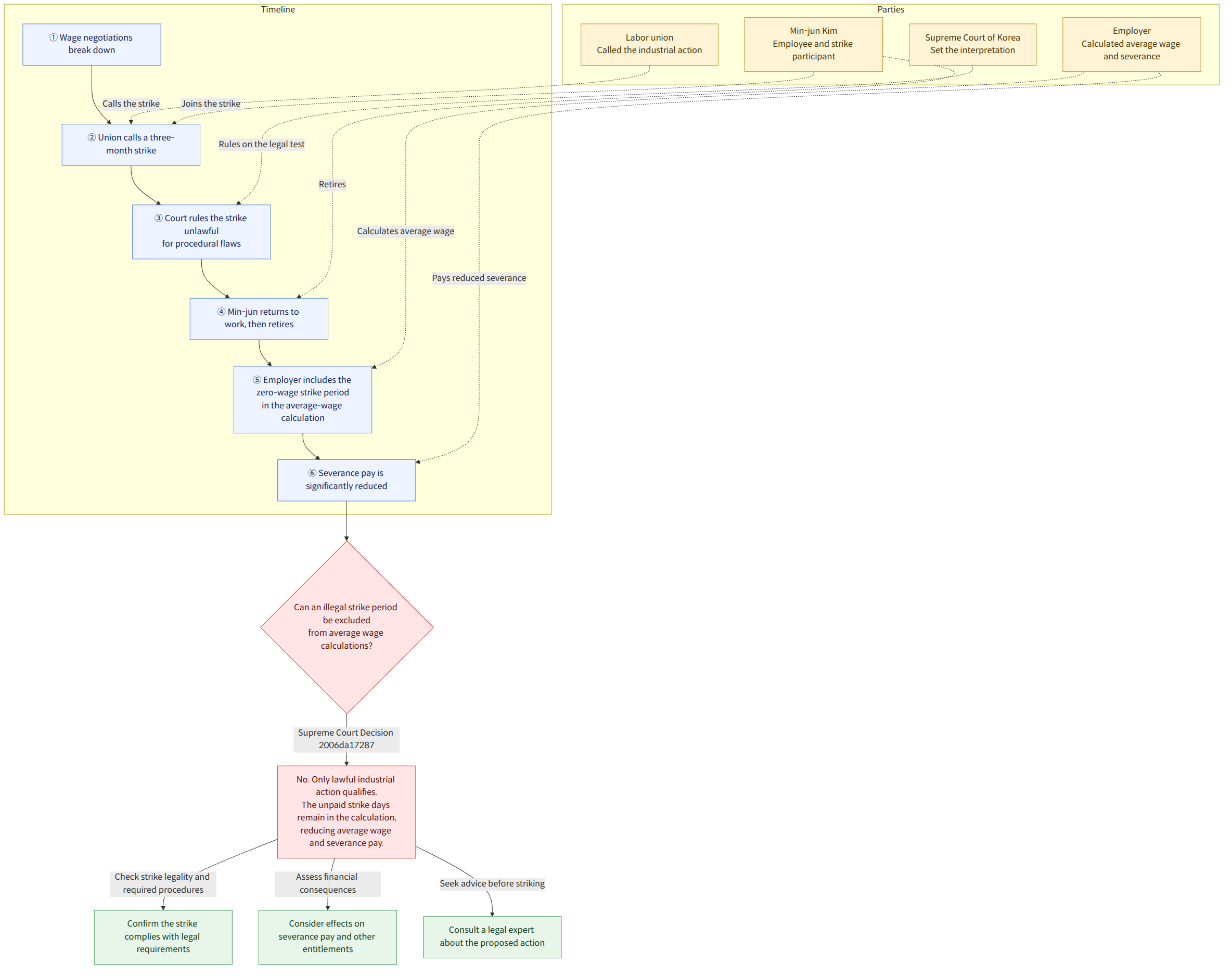
Min-jun Kim, a dedicated employee with 15 years of service at an auto parts factory, remembers the heat of last summer vividly. His labor union had entered a full-scale strike following a breakdown in wage negotiations. Min-jun joined his colleagues, halting the production line for three long months in a show of solidarity.
However, the strike was later ruled an "unlawful industrial action" by the court due to critical procedural flaws. After returning to work, Min-jun decided to retire for personal reasons. Expecting a substantial severance package based on his long tenure, he was horrified when he received his statement. The final amount was significantly lower than his calculations.
The company explained that since he received no wages during the three-month strike, and because that period was counted in his "average wage" calculation, his base pay for severance had plummeted. Min-jun argued, "Aren't strike periods supposed to be excluded from the average wage math?" The company countered that because the strike was illegal, the exclusion did not apply.
2. The Core Legal Question
The central issue here is whether the "period of industrial action" defined in the Enforcement Decree of the Labor Standards Act includes illegal strikes. Does the law allow a worker to exclude a period of unlawful protest from the calculation of their average wage, which determines their retirement benefits?
3. What Korean Law Says
Under Article 2, Paragraph 1 of the Enforcement Decree of the Labor Standards Act, certain periods are excluded from the three-month window used to calculate "average wage" to prevent a worker's benefits from being unfairly diminished.
Enforcement Decree of the Labor Standards Act, Article 2(1) If any of the following periods fall within the period for calculating average wages... such periods and the wages paid during such periods shall be excluded from the basis for calculating average wages:...6. A period of industrial action under Article 2, subparagraph 6 of the Trade Union and Labor Relations Adjustment Act.
The purpose of this provision is to ensure that workers are not penalized for exercising their legitimate rights or for absences that are not their fault.
4. How Korean Courts Approach This
The Supreme Court of Korea maintains a strict interpretation of this rule. The Court has ruled (Supreme Court Decision 2006da17287) that the "period of industrial action" referred to in the decree means only lawful industrial action that meets all requirements regarding the subject, purpose, procedure, and means guaranteed by the Constitution and relevant labor laws.
In essence, the judicial principle is that the law protects those who follow the legal framework. If a strike is deemed illegal, the period spent on strike is treated as a period where the worker simply failed to provide labor without a justifiable legal excuse for the purpose of wage calculation.
5. Applying the Law to Min-jun's Case
When we apply these principles to Min-jun Kim, the outcome is harsh:
- Inclusion in the Calculation Window: Had the strike been legal, those three months would have been skipped, and the calculation would have used the three months of normal pay prior to the strike. Since it was illegal, the three months of the strike (with zero wages) stay in the denominator (the total number of days).
- Impact on the Numerator: Because he earned no wages during the strike, the total wages earned in the three months prior to his retirement is nearly zero.
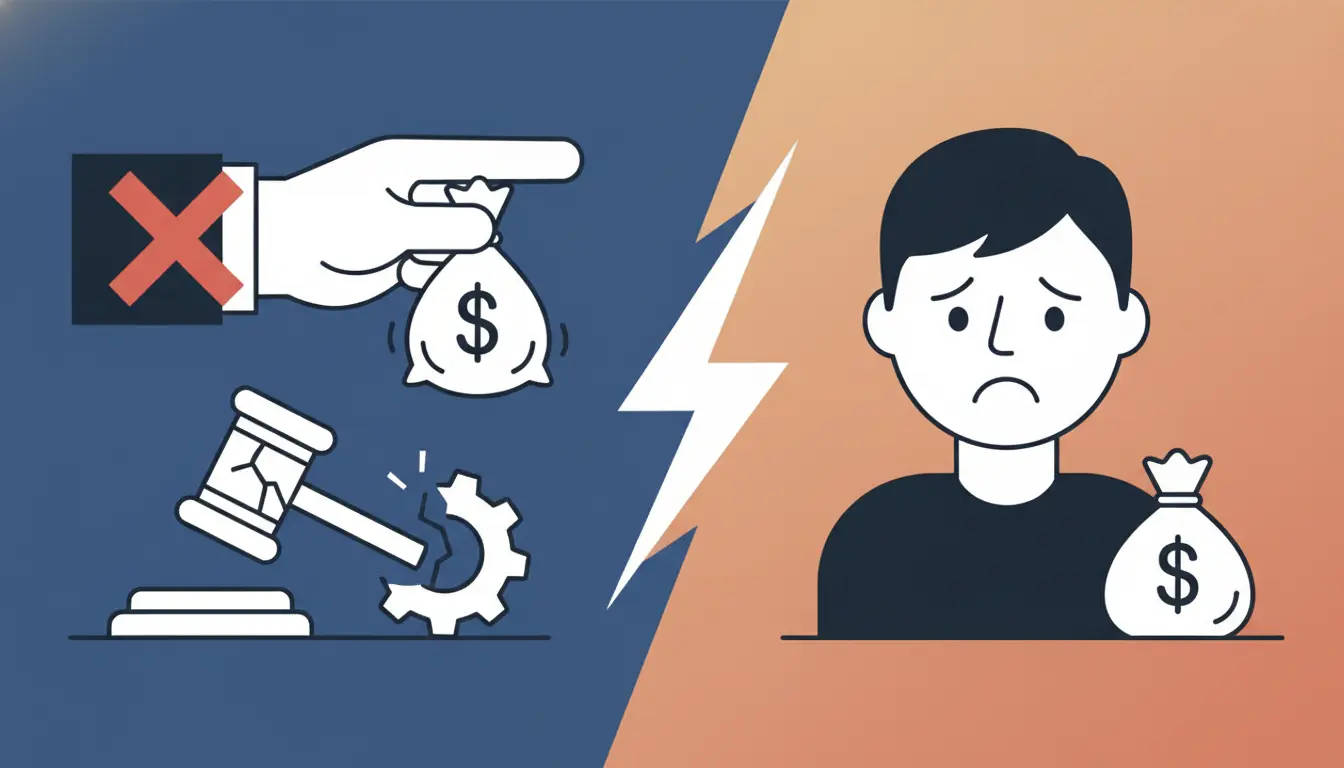
- The Result: Average wage is calculated by dividing total wages by the number of days in the period. With a numerator near zero and a denominator of roughly 90 days, Min-jun's average wage—and consequently his severance pay—is slashed by more than half.
6. Conclusion: What Happened, and What Should You Do?
Ultimately, Min-jun Kim has no legal recourse. The law is clear: illegal strikes do not qualify for the special protections afforded to legitimate labor activities. He must accept a retirement payout that is far less than what he expected for his 15 years of service.
To avoid such devastating financial consequences, workers and unions should consider the following:
- Verify Legality Before Striking: Always consult with legal experts to ensure that the strike's purpose and procedures (such as a proper member vote) strictly adhere to the Trade Union Act.
- Understand the Economic Risks: Participation in an unlawful strike carries risks beyond disciplinary action or lawsuits; it can permanently damage your future financial entitlements, such as severance pay and various allowances.
The law protects the "rightful" exercise of power, but it rarely cushions the fall for those who step outside its boundaries.
This column is for informational purposes only and does not constitute legal advice. For specific cases, please consult with a qualified legal professional.