1. The Tale of the 'Director' Who Wasn't Free
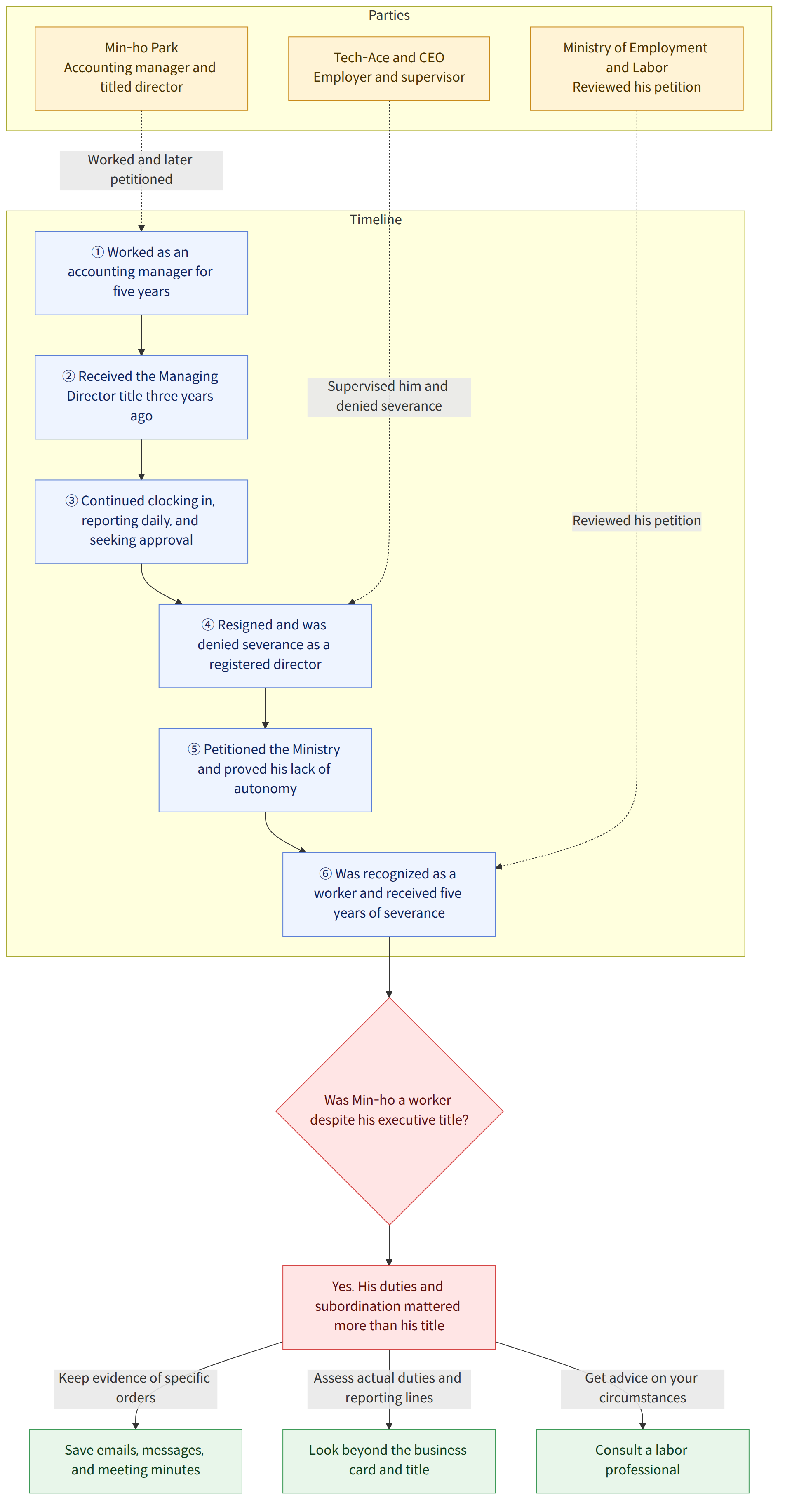
Min-ho Park spent five dedicated years as the Accounting Manager at a mid-sized firm called 'Tech-Ace.' Three years ago, as a token of appreciation, the CEO promoted him to 'Managing Director.' His new business cards looked prestigious, and Min-ho felt a sense of pride, believing he was now a true partner in the business.
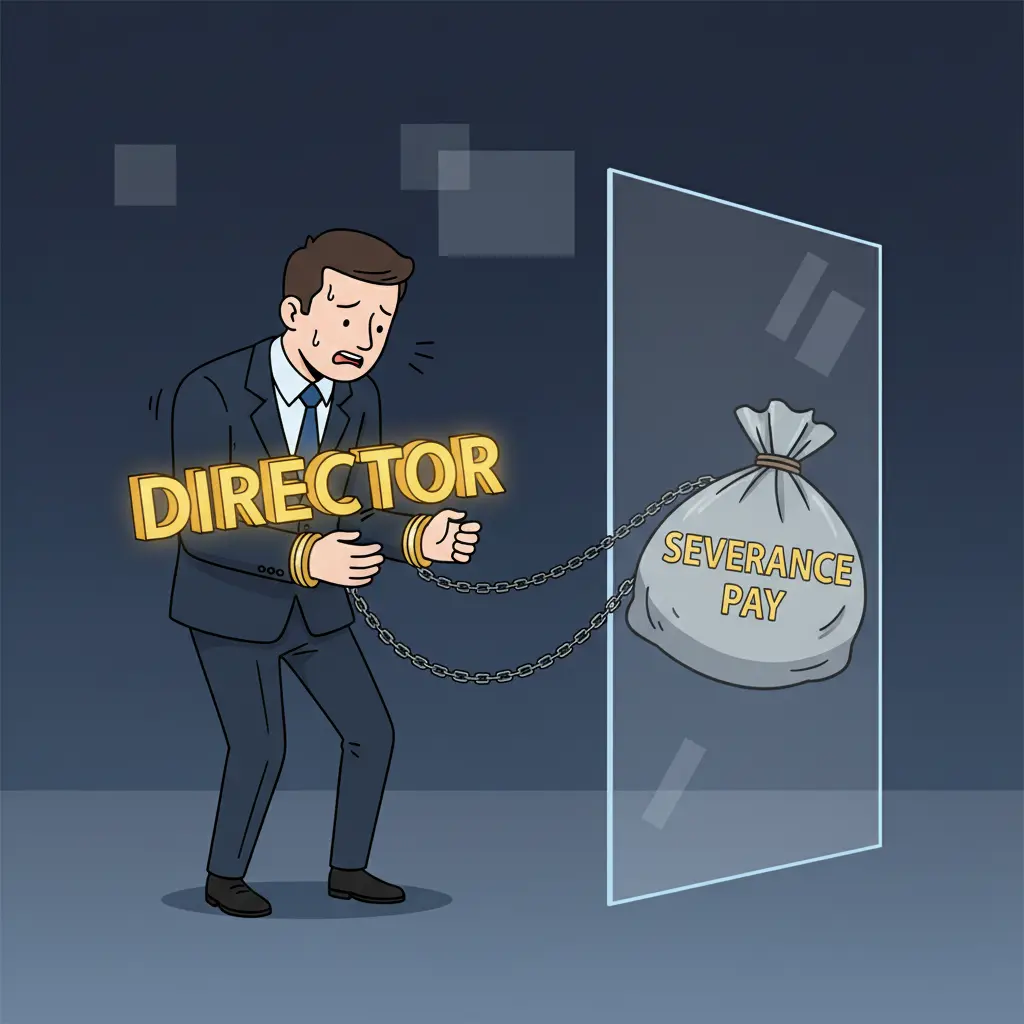
However, his daily reality remained unchanged. Min-ho still clocked in by 9:00 AM sharp, submitted daily reports to the CEO, and couldn't spend even a small amount of the company budget without the CEO’s explicit approval. In truth, the 'Director' title was merely for outward appearances; he was still the same employee handling the ledgers. When the company faced financial difficulties and Min-ho resigned, he was met with a cold response: "Since you were a registered director, you aren't a 'worker' under the law. We have no bylaws for director severance, so you get nothing."
2. The Legal Question: Title or Reality?
The core issue in Min-ho's case is a common one in Korea: Can someone who holds a formal executive title but performs the duties of a subordinate employee be classified as a "worker" entitled to severance pay under the Labor Standards Act?
3. What Korean Law Says About 'Workers'
The Korean Labor Standards Act (LSA) and the Employee Retirement Benefit Security Act provide robust protection for those classified as workers.
Labor Standards Act, Article 2, Paragraph 1, Subparagraph 1The term "worker" means a person who offers labor to a business or workplace for the purpose of earning wages, regardless of the kind of occupation.
Employers are mandated to provide severance benefits to retiring workers. Traditionally, directors or auditors are viewed as "mandated agents" who handle corporate affairs rather than "workers" who receive orders. Thus, true executives are generally excluded from LSA protections unless specifically addressed in the company's Articles of Incorporation.
4. How Korean Courts Approach This: Substance Over Form
The Supreme Court of Korea consistently applies the principle of 'Substance Over Form' when determining worker status for executives. The court's criteria can be summarized as follows:
- The True Executive: If a person has the power to execute business, was appointed by a shareholders' meeting, and handles mandated affairs autonomously, they are NOT a worker. They can only claim severance if there's a shareholder resolution or a specific provision in the bylaws.
- The Worker in Disguise: If a person is a director in name only but works under the specific command and supervision of an employer in exchange for wages, they ARE a worker under the LSA.
The deciding factor is whether the individual has genuine autonomy or is in a position of subordination.
5. Applying the Law to Min-ho’s Case
Analyzing Min-ho's situation through these legal lenses, he has a strong case for being recognized as a worker:
- Command and Supervision: Min-ho reported daily and sought approval for minor tasks. This indicates a subordinate relationship rather than an autonomous executive role.
- Nature of Work: He performed practical accounting tasks (Managerial work) rather than participating in high-level board decisions.
- Lack of Authority: He possessed no real discretionary power over personnel or major expenditures, which are typical hallmarks of a genuine director.
Therefore, despite the "Managing Director" label, Min-ho was a worker providing labor for wages. The court would likely view the company's refusal to pay severance as a violation of the law.
6. Conclusion: What Happened, and What Should You Do?
In the end, Min-ho Park filed a petition with the Ministry of Employment and Labor. By proving his lack of autonomy, he was legally recognized as a worker and received his full five years of severance pay. The company’s "executive" shield could not withstand the reality of his employment.
If you find yourself in a similar "Executive Trap," consider these practical tips:
- Document Everything: Save emails, messenger logs, and meeting minutes that show you were taking specific orders and had no independent decision-making power.
- Look Beyond the Business Card: Don't assume your title dictates your rights. Your actual daily routine and reporting structure are what matter in court.
- Seek Professional Advice: Proving worker status for a title-holding executive is legally complex. Consult a certified labor attorney or lawyer to evaluate your status before or immediately after resigning.
This column is provided for general informational purposes only and does not constitute formal legal advice. For specific cases, please consult with a legal professional.