The Shadow Behind the Desk
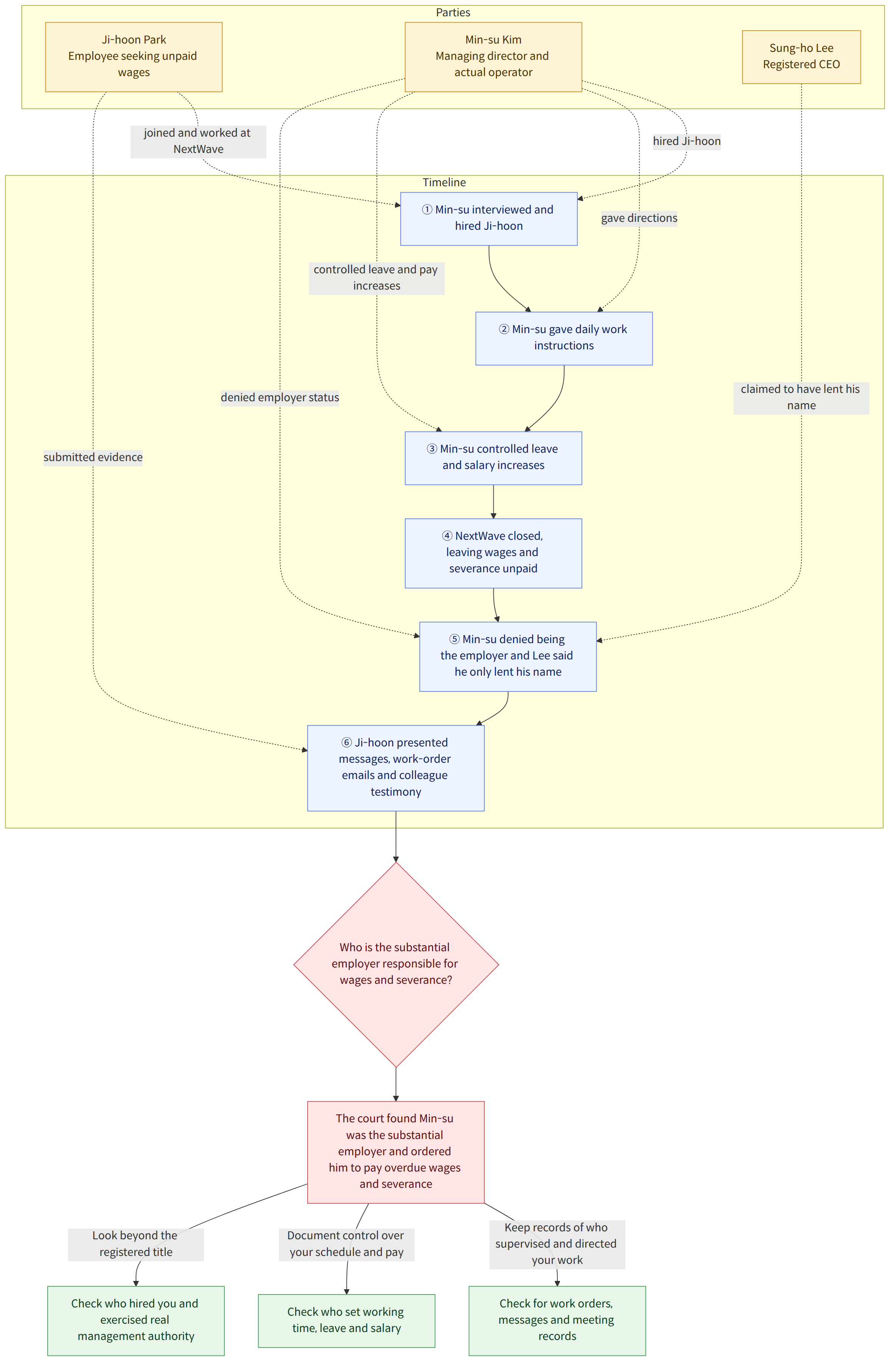
Ji-hoon Park, a promising software developer, joined the startup 'NextWave' with high hopes. From the initial interview to salary negotiations and daily task assignments, everything went through Min-su Kim, the Managing Director. Ji-hoon naturally assumed Min-su was the owner of the company and worked passionately for two years.
However, when the company suddenly closed its doors due to financial difficulties, Ji-hoon discovered a shocking truth. On the official corporate registry, the CEO was a man named Sung-ho Lee, whom Ji-hoon had never even met. Min-su Kim, on paper, was merely an external consultant. When Ji-hoon demanded his unpaid wages and severance pay, Min-su shrugged it off, saying, "I'm not the employer. Contact Mr. Lee, the official CEO." Meanwhile, Mr. Lee claimed, "I only lent my name; Min-su ran everything."
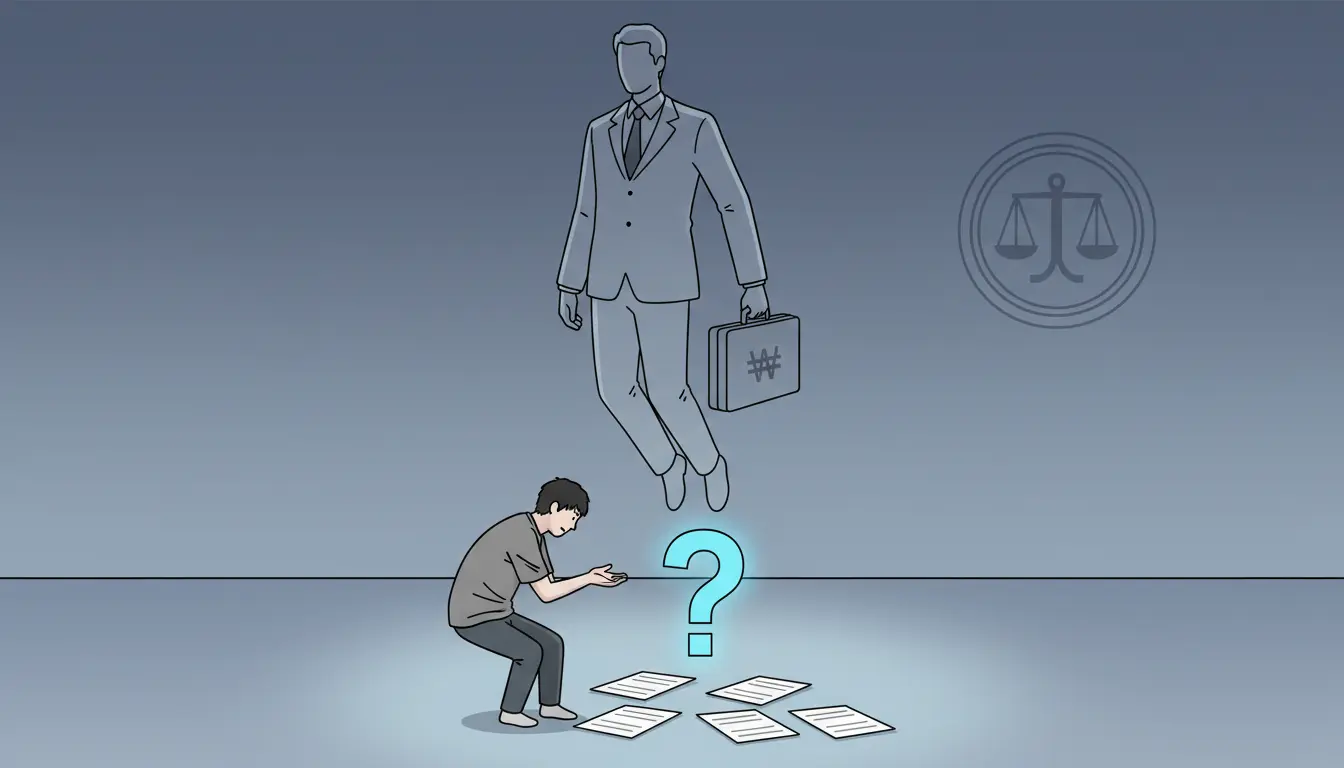
Caught between a 'paper CEO' and a 'shadow boss,' who should Ji-hoon hold accountable for his hard-earned money?
The Core Legal Question
What are the criteria for determining an 'employer' who bears the obligation to pay wages and severance pay under the Labor Standards Act? Specifically, when the registered representative and the actual operator are different, whom does the law recognize as the responsible party?
What Korean Law Says About 'Employers'
In Korea, the Labor Standards Act does not define an employer simply by a title like 'CEO.' Instead, it defines an employer based on their role in the business and their relationship with the employees.
Labor Standards Act, Article 2 (Definitions)"The term 'employer' means a business owner, a person responsible for management of a business, or any other person who acts on behalf of a business owner with respect to matters concerning employees."
The crucial factor here is the 'substantial employment relationship.' Even if someone is treated as an employer under other statutes (such as tax laws or social security laws), they are not necessarily liable for wages under the Labor Standards Act unless they exercise actual control. The core elements include:
- Who determines the content of the work and exercises specific direction and supervision?
- Who designates and controls the working hours and location?
- Who substantially decides the amount and method of payment?
- Who holds the ultimate authority over hiring and firing?
How Korean Courts Approach This
The Supreme Court of Korea maintains a consistent and firm stance on this issue. The Court has ruled that "if a person is not in a substantial employment relationship, even if they are treated as an employer under the Labor Standards Act or other laws, they cannot be held liable for the obligation to pay wages and severance pay" (Supreme Court Ruling 2004da8333, March 30, 2007).
In plain terms, this means Korean courts prioritize 'substance over form.' Even if an actual operator hides behind a 'paper CEO' (often referred to as a 'nominee'), the law will hold the person who actually exercised managerial authority responsible for wage arrears.
Applying the Law to Ji-hoon's Case
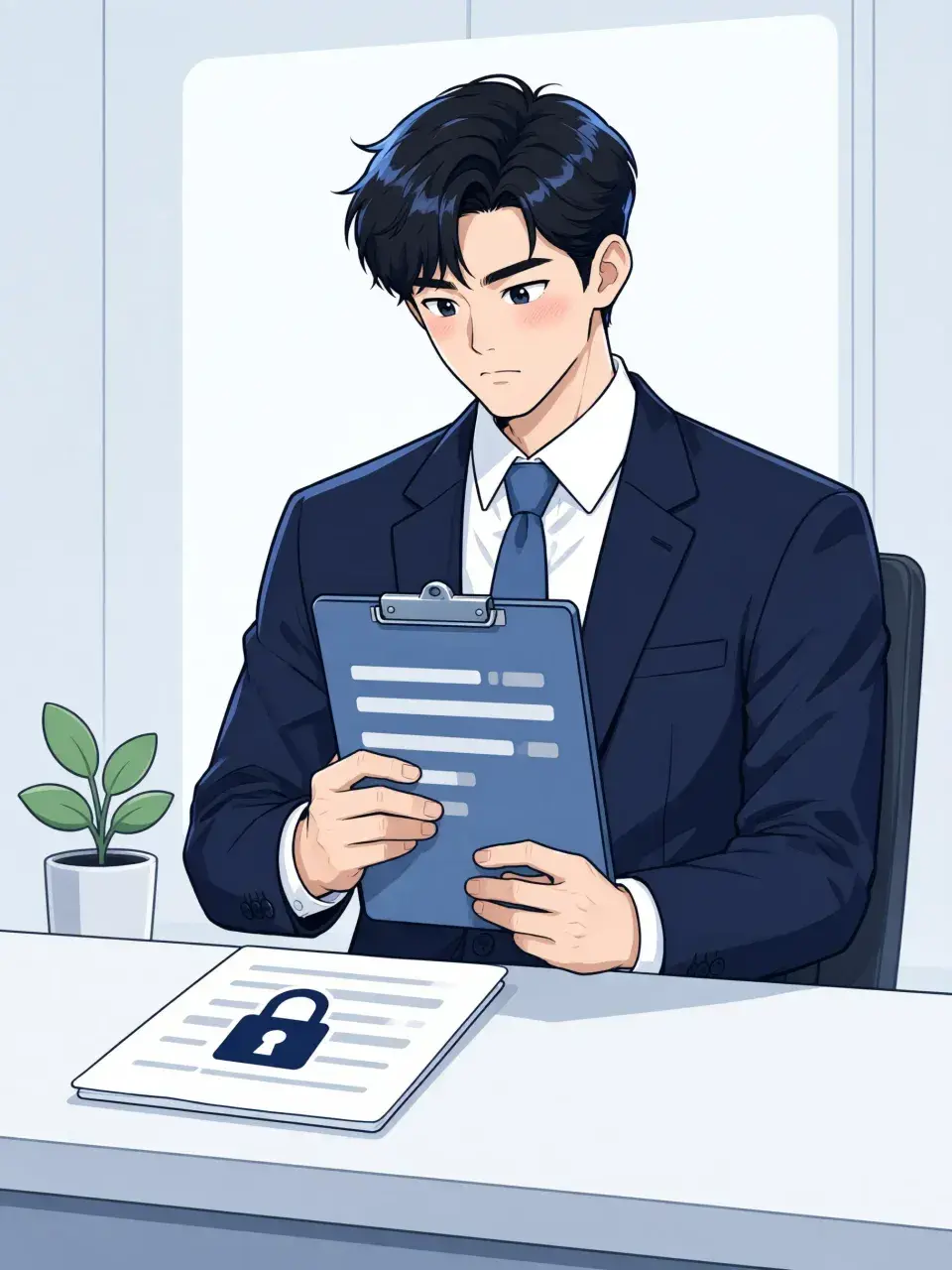
Let’s analyze Ji-hoon Park's situation. Sung-ho Lee, the registered CEO, never participated in management and had no intention of forming a contract with Ji-hoon. On the other hand, Min-su Kim:
- Personally interviewed and hired Ji-hoon.
- Gave daily instructions through morning meetings.
- Solely approved Ji-hoon's leave and decided on his salary increases.
Based on these facts, a court would likely identify Min-su Kim as the 'substantial employer' under the Labor Standards Act. Ji-hoon can file a wage claim or a petition with the Ministry of Employment and Labor against Min-su. Min-su’s defense that he is "not the registered representative" will not hold up in court.
Conclusion: Who is Your True Employer?
Ultimately, Ji-hoon Park successfully proved that Min-su Kim was his substantial employer by providing messenger logs, emails containing work orders, and testimonies from his colleagues. The court ordered Min-su to pay the overdue wages and severance pay.
If you find yourself in a similar situation, here are two practical tips:
First, gather evidence of substantial supervision. Don't just look at the name on your contract. Keep records of who gave you orders, who evaluated your performance, and who controlled your schedule. Emails, Slack messages, and meeting minutes are vital.
Second, do not be discouraged by a 'nominee' CEO. Korean law looks for the person who pulled the strings. Even if the paper CEO is broke, if the actual operator has assets, you have a legal path to recover your wages by holding the real boss accountable.
This column provides general legal information and should not be substituted for professional legal advice regarding specific cases.