1. A Human Story: "More Money Now, Less Stress Later?"
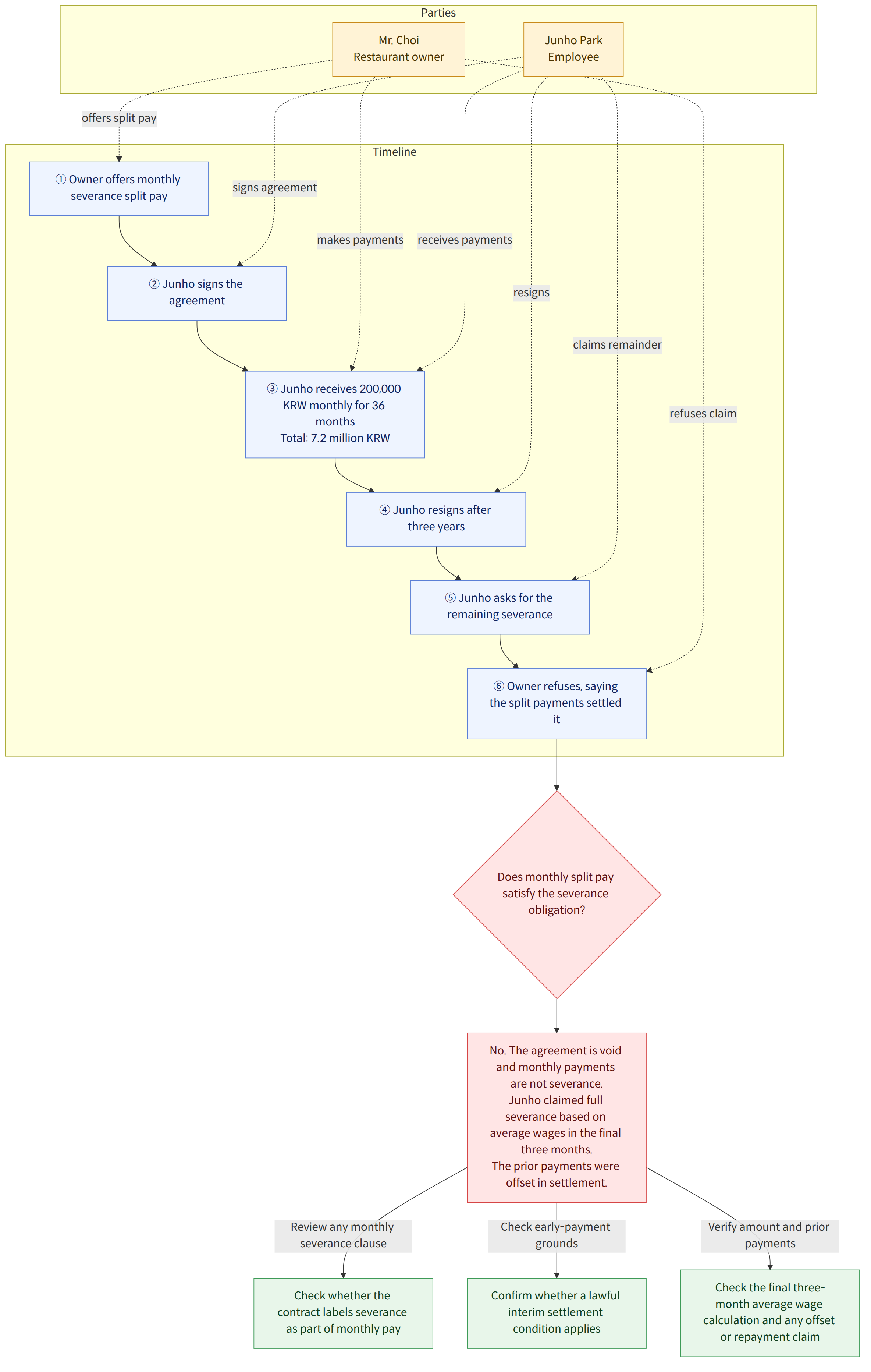
Junho Park was a diligent assistant chef at a busy Chinese restaurant for three years. When he first started, the owner, Mr. Choi, made an alluring offer. "Junho, instead of giving you a big lump sum when you quit, I'll add 200,000 KRW to your monthly salary as a 'severance split payment.' It gives you more cash to spend right now, which is better for a young guy like you, right?"
Junho, feeling that more immediate cash was a win-win, happily signed the 'Severance Split Agreement.' Over the next 36 months, he saw that extra 200,000 KRW in every paycheck and felt secure.
However, after three years, when Junho decided to resign to start his own business, he realized that his actual severance pay—calculated based on his final salary—should be much higher than what he had received. When he asked for the remainder, Mr. Choi was furious. "What are you talking about? Look at your contract! I already paid you 7.2 million KRW over three years. There's nothing left to give!"
2. The Legal Question
Is a 'severance split agreement'—where the employer and employee agree to pay severance in monthly or daily installments along with the salary—legally valid? And do these payments satisfy the employer's legal obligation to pay severance?
3. What Korean Law Says
The Labor Standards Act and the Employee Retirement Benefit Security Act in Korea are very strict about when and how severance (Toejikgeum) is paid.
The right to claim severance pay is a legal right that arises only when the employment relationship is terminated.
Unless the situation falls under a valid 'Interim Settlement' (e.g., purchasing a home or medical emergencies as defined by law), pre-emptive agreements to pay severance are generally void because:
- Violation of Mandatory Laws: Severance pay is a social safety net for post-retirement life. Waiving this right in advance, even by mutual agreement, is against public policy.
- Timing of Payment: By law, severance must be paid within 14 days of retirement. Paying it monthly during employment violates this statutory timing.
4. How Korean Courts Approach This
The Supreme Court of Korea holds a firm stance on this issue. They view 'severance split agreements' as a disguised way for employees to waive their future right to severance pay before they have even earned it.
Consequently, even if both parties signed a written contract with a smile, the court deems such an agreement null and void. Therefore, even if an employer paid a specific amount labeled as 'severance' every month, the law does not recognize it as an actual payment of severance.
5. Applying the Law to the Case
Let's break down Junho Park's situation through the lens of Korean judicial principles:
First, the agreement between Junho and Mr. Choi is void. Since the right to severance pay had not yet been established when they signed the contract, they could not legally agree to split it.
Second, the 7.2 million KRW Junho received over three years is not officially 'severance.' Junho is entitled to claim his full severance pay, calculated based on his average wage during the three months immediately preceding his resignation.
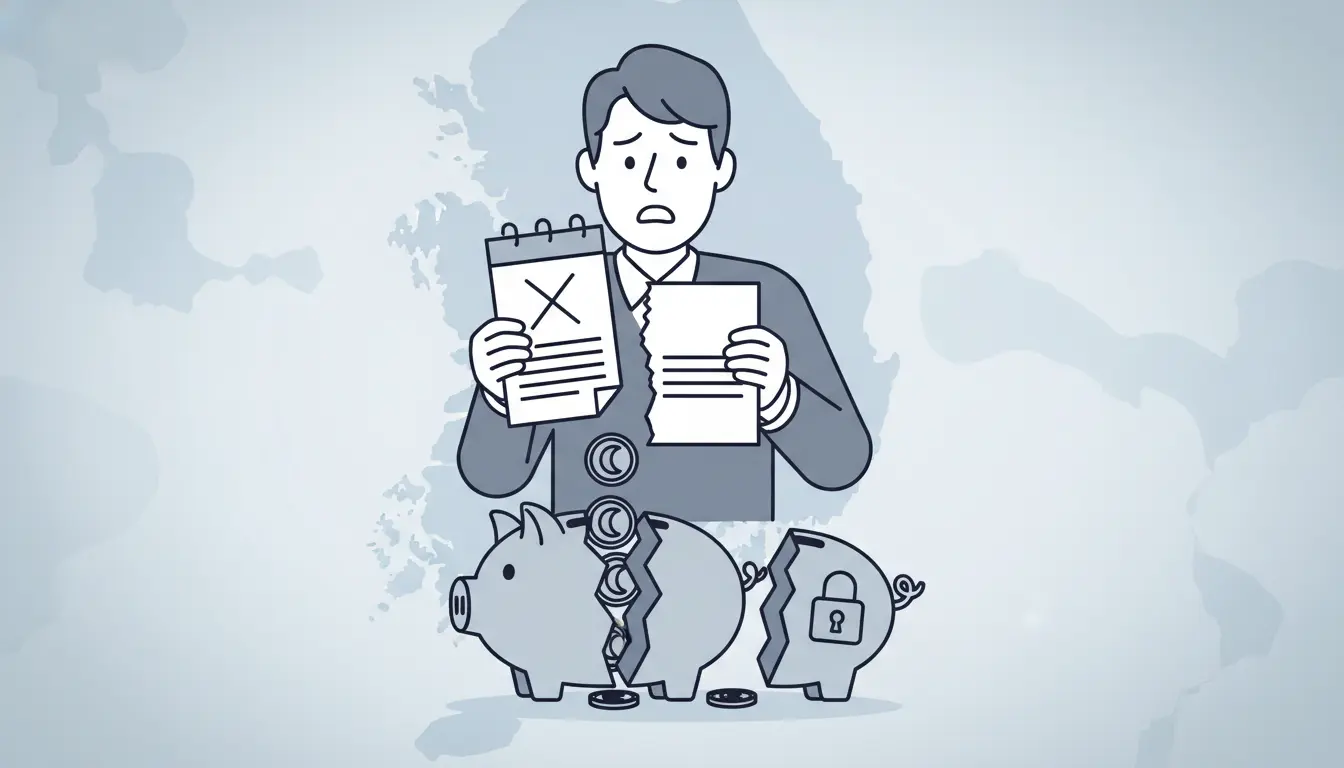
Third, there is a catch. The court often views the monthly payments made by Mr. Choi as 'unjust enrichment' (money given by mistake). This means while Mr. Choi must pay the full official severance, he can technically demand that Junho return the 7.2 million KRW that was paid under the invalid agreement.
6. Conclusion: What Happened, and What Should You Do?
In the end, Junho successfully claimed his full legal severance. However, to settle the dispute, the 'split payments' he had already received were offset against the final amount he was owed. He received the remaining balance, which was still significantly more than what Mr. Choi originally claimed was 'finished.'
If you find yourself in a similar situation, keep these tips in mind:
- Beware of Split Pay Clauses: If your contract says severance is included in your monthly salary, be aware that this clause is likely unenforceable.
- Verify Interim Settlement Rules: You can only receive severance early under very specific legal conditions. If your reason doesn't fit the law (e.g., just wanting more monthly cash), it's not a valid interim settlement.
- Consult a Professional: If you've already been receiving 'split severance,' consult a labor attorney or a public labor consultant. You may still be entitled to more money, but you must be prepared for the employer's claim to return the previously paid 'severance' 명목 (titles).
This column is provided for general informational purposes only and does not constitute legal advice. Individual cases may vary based on specific facts and circumstances.