The Boss Behind the Paperwork: Ji-su's Story
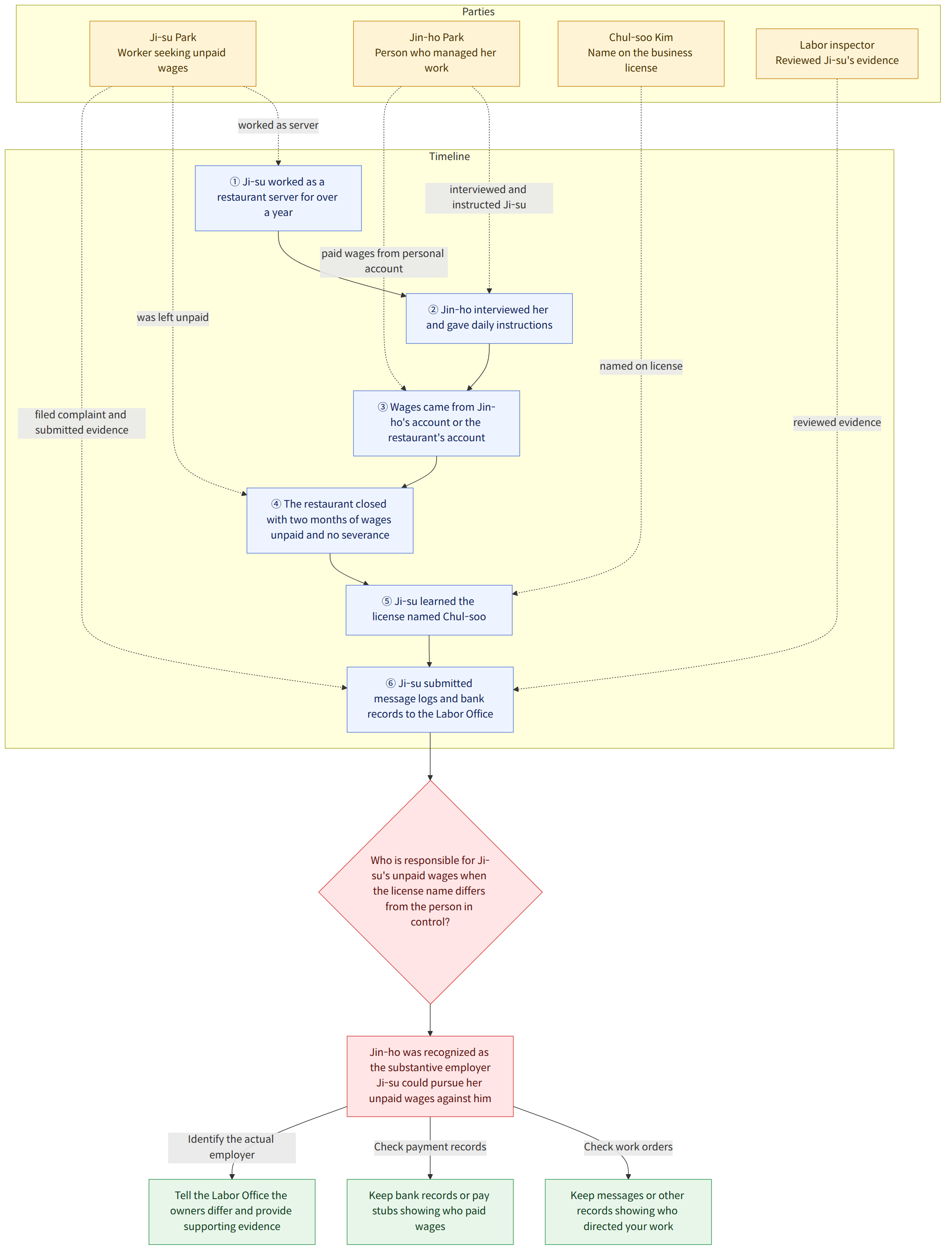
Ji-su Park worked as a server at a trendy fusion restaurant in Hongdae, Seoul, for over a year. The man who interviewed her, gave her daily instructions, and organized staff dinners was Jin-ho Park. To Ji-su, Jin-ho was the boss. Her salary was consistently deposited from either his personal account or the restaurant's account.
However, when the restaurant suddenly closed due to financial difficulties, Ji-su was left with two months of unpaid wages and no severance pay. When she visited the Labor Office to file a complaint, she was shocked to discover that the official business license was registered under a different name: Chul-soo Kim, a relative of Jin-ho.
Ji-su was confused. "I've never even seen Chul-soo Kim's face. I only worked for Mr. Jin-ho Park. Who should I be demanding my money from?"
The Legal Dilemma: Nominal Owner vs. Actual Owner
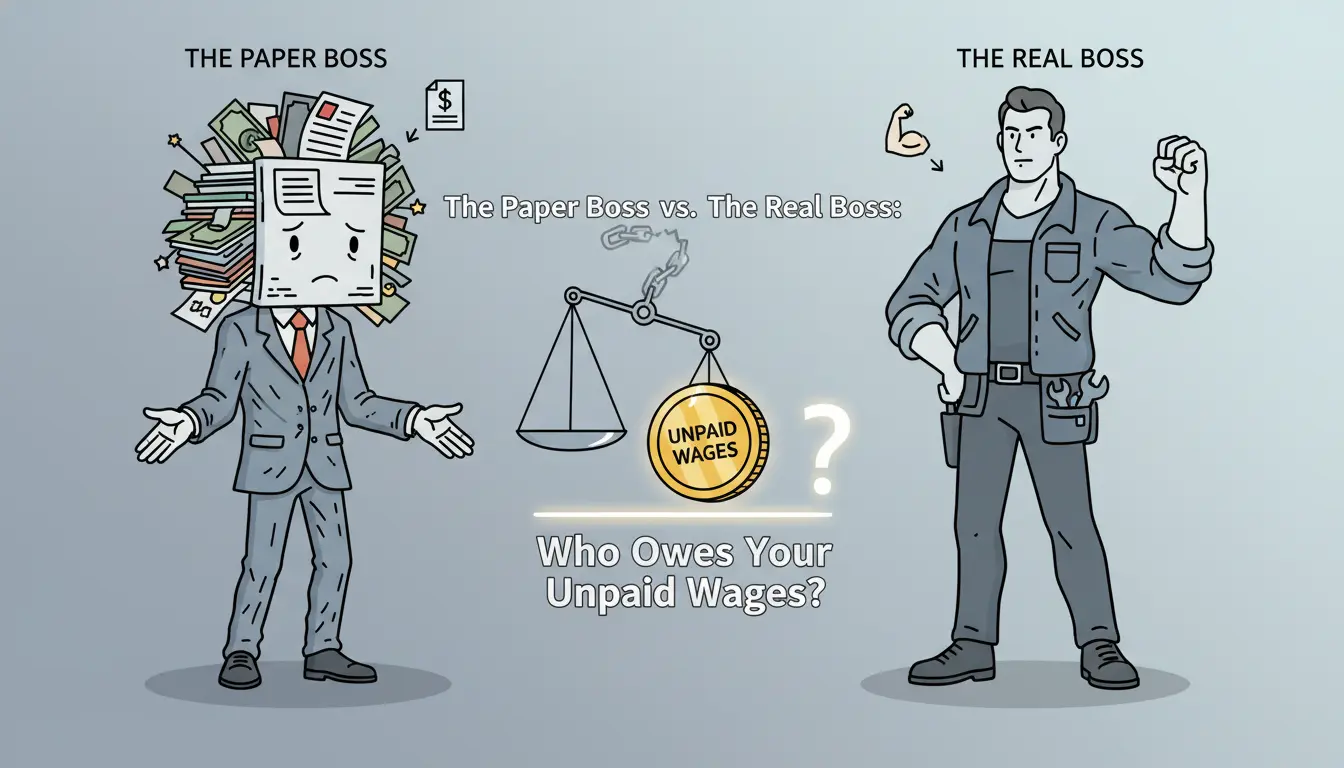
This case raises a critical legal question: When the name on the business registration (nominal owner) differs from the person who actually directs and supervises the worker (actual owner), who is the 'employer' responsible for unpaid wages under the Labor Standards Act?
The Principle of 'Substance Over Form' in Korean Law
Korean labor law prioritizes reality over formal documentation. Article 2 of the Labor Standards Act defines an employer as "a business owner, a person responsible for management of a business, or any other person who acts on behalf of a business owner with respect to matters concerning workers."
Criteria for Determining the EmployerRegardless of the name on a contract or license, a person is deemed the employer if they substantively exercise the following powers:1. The authority to hire, discipline, or terminate employees.2. The power to determine working conditions such as wages and hours. . 3. Substantial direction and supervision over the performance of work.
In short, simply having your name on a business license does not automatically make you the employer. The person who actually runs the business, takes the profits, and commands the workers bears the legal responsibility.
How Korean Courts Approach the "Real Boss"
The Korean courts and the Ministry of Employment and Labor consistently emphasize 'substantive control.' While a person who lends their name for a business license might face administrative or tax penalties, the primary responsibility for wage claims lies with the actual employer.
Judges look at a variety of factors to unmask the 'real boss,' including who signed the labor contract, who paid the wages, the nature of work instructions, and who ultimately received the profits of the business.
Applying the Law: What Happened to Ji-su?
In Ji-su's case, the nominal owner, Chul-soo Kim, was merely a figurehead. The person who dictated Ji-su's schedule, gave her orders, and managed her employment was Jin-ho Park. Therefore, Ji-su must file her claim against the actual owner, Jin-ho Park.
If Jin-ho attempts to evade responsibility by claiming he isn't the "owner" on paper, Ji-su can counter this by presenting evidence of his substantive role:
- Instruction Logs: KakaoTalk or text messages showing Jin-ho giving specific work orders.
- Payment History: Records showing wages coming from Jin-ho or him providing the pay stubs.
- Witness Statements: Testimony from former coworkers confirming that Jin-ho acted as the sole proprietor in daily operations.
Conclusion: Practical Tips for Protecting Your Rights
Ultimately, during the labor inspection, Ji-su submitted her message logs and bank transfer records. The labor inspector recognized Jin-ho Park as the substantive employer, allowing Ji-su to pursue her unpaid wages against him directly.
If you find yourself in a similar situation, keep these two tips in mind:
- First, document the reality of your supervision. If the person giving you orders isn't the one on the license, save all communications (texts, recordings) that prove they are the one in charge.
- Second, clearly identify the actual owner at the Labor Office. When filing a 'Statement of Unpaid Wages and Confirmation of Employer,' explicitly state that the nominal and actual owners are different and provide evidence to prove the actual employment relationship.
The law is designed to look past the paperwork to find the person truly responsible. Don't let a name on a piece of paper stop you from getting what you've earned.
--- This column provides general legal information and does not constitute formal legal advice. Legal outcomes may vary depending on the specific facts of each case. Please consult with a legal professional for detailed guidance.