A Bitter Farewell for Jun-ho
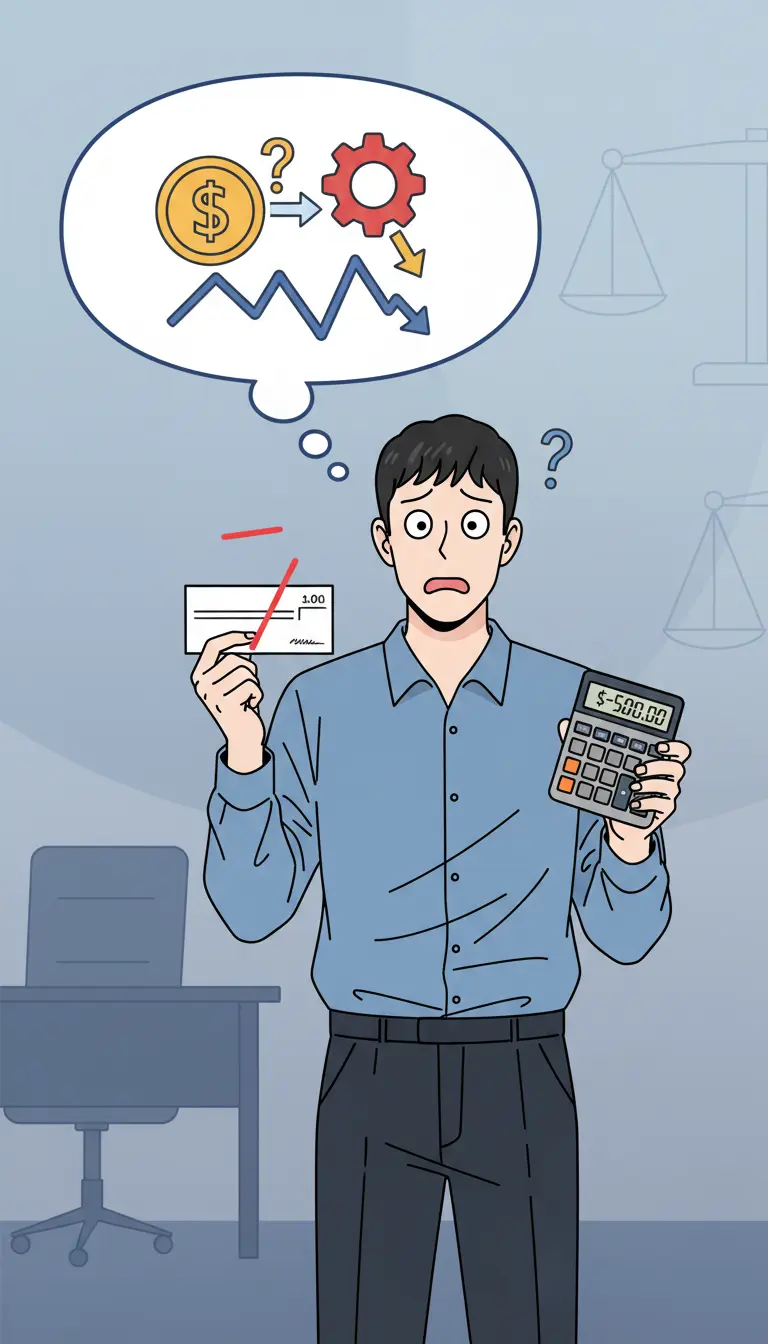
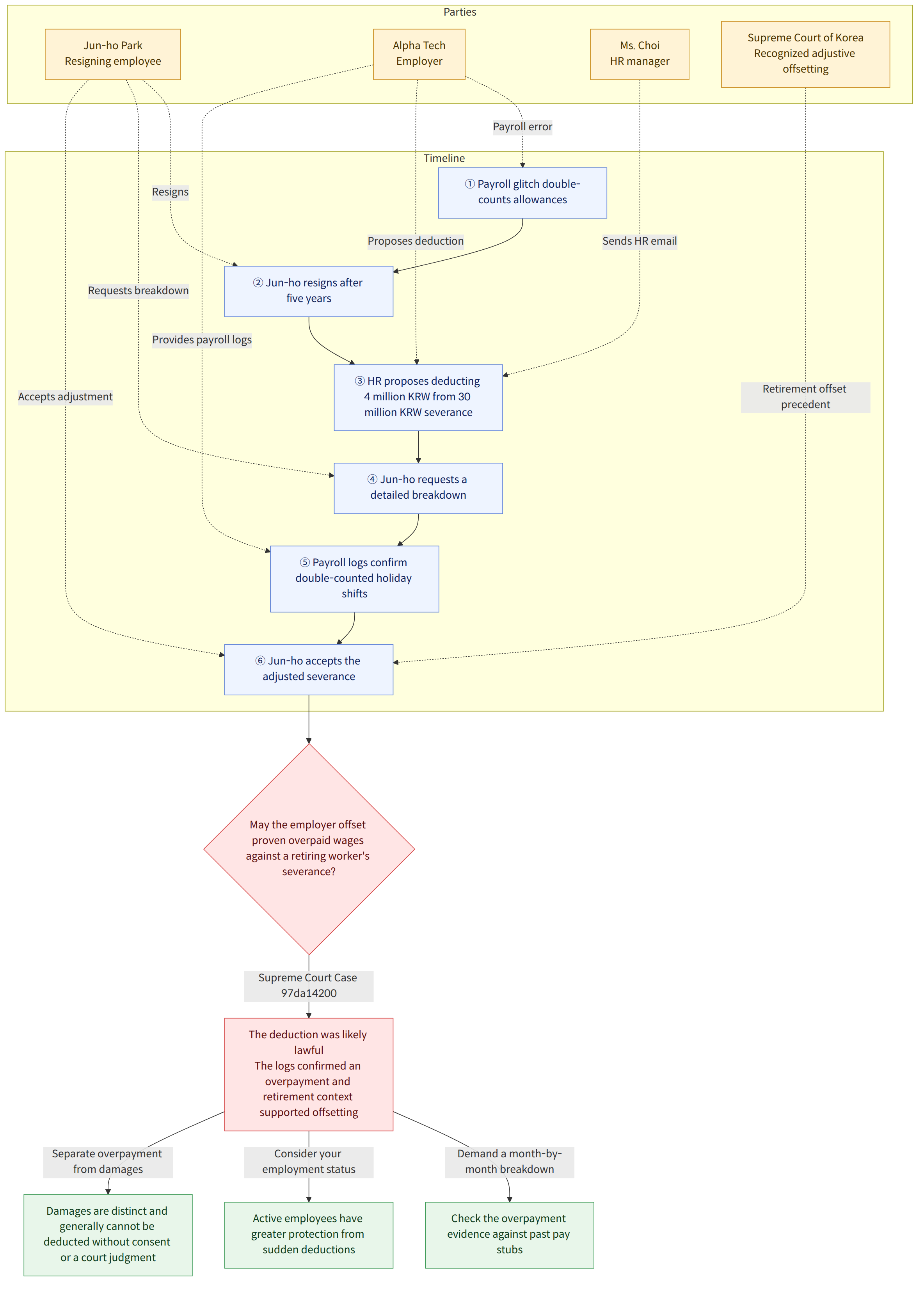
Jun-ho Park was ready for a fresh start. After five years of dedicated service at 'Alpha Tech,' a mid-sized IT firm, he had landed a dream role at a promising startup. He submitted his resignation with a smile, expecting a smooth exit and a substantial severance package of 30 million KRW to fund his transition. However, an email from the HR department turned his excitement into anxiety.
HR Manager Ms. Choi informed him that 4 million KRW would be deducted from his final severance pay. The reason? A software glitch in the payroll system two years ago had resulted in Jun-ho being overpaid for overtime and holiday allowances. Jun-ho was stunned. "Can they really take back money they gave me years ago because of their own mistake? Isn't there a rule about paying wages in full?" he wondered, feeling as though his hard-earned savings were being snatched away.
The Core Legal Question: Is the 'Offset' Justified?
The central issue is whether an employer can unilaterally 'offset' (deduct) a debt—specifically, a claim for the return of overpaid wages—against an employee's wage or severance claim. This is a sensitive area because labor laws are designed to protect the worker's income from arbitrary deductions.
What Korean Law Says: The Full Payment Principle
Article 43, Paragraph 1 of the Labor Standards Act of South Korea stipulates:
"Wages shall be paid in full to the worker in currency. However, if otherwise provided for by statutes or by a collective agreement, a portion of wages may be deducted or paid by means other than currency."
This is known as the 'Full Payment Principle.' Generally, an employer cannot unilaterally deduct debts (such as loans or damages) from a worker's wages. This ensures that workers receive their full pay to maintain their livelihood without unexpected financial gaps.
How Korean Courts Approach This: The Exception of 'Adjustive Offsetting'
Despite the strict principle, the Supreme Court of Korea recognizes an exception for 'adjustive offsetting' when wages are overpaid due to calculation errors. According to judicial precedents, such as Supreme Court Case 97da14200, an employer may deduct overpaid amounts if:
- Temporal Proximity: The deduction occurs reasonably close to the time of the overpayment (for active employees).
- Prior Notice: The amount and method are communicated to the employee in advance.
- Financial Stability: The deduction does not threaten the worker's economic stability.
- Retirement Context: When a worker retires, the courts are much more lenient. Since it is the final settlement between the parties, the employer is generally allowed to deduct overpaid wages from the final unpaid wages or severance pay to balance the accounts.
Applying the Law to Jun-ho's Case
In Jun-ho's situation, the fact that he is retiring is a decisive factor. The Supreme Court has ruled that if a worker claims unpaid wages or severance after retirement, the employer is allowed to offset that claim with a counter-claim for the return of overpaid wages.
Even though the error occurred two years ago, because Jun-ho is leaving the company, this is the last opportunity for Alpha Tech to settle the accounts. As long as the company can prove that the 4 million KRW was indeed a technical overpayment and not a discretionary bonus, the court would likely side with the employer.
Conclusion: What Happened to Jun-ho, and What Should You Do?
Jun-ho requested a detailed breakdown of the payroll error. After reviewing the logs, he realized the system had indeed double-counted certain holiday shifts. Realizing the legal precedent favored the company in a retirement context, he accepted the adjusted severance pay. While it was a financial blow, it was legally sound.
For readers in similar situations, keep these practical tips in mind:
- Demand Clear Evidence: If an employer claims an 'overpayment,' do not take their word for it. Demand a month-by-month breakdown and compare it with your past pay stubs.
- Active Employees Have More Protection: If you are still working, the company cannot suddenly deduct a massive amount from your monthly check without your consent or very strict 'adjustive' conditions.
- Verify the Math: Sometimes, companies try to deduct 'losses' or 'damages' under the guise of 'overpaid wages.' These are legally distinct. An employer can almost never deduct damages from your pay without your explicit consent or a court judgment.
This column provides general legal information and should not be taken as formal legal advice. For specific cases, always consult with a qualified legal professional.