1. The Day the Machines Stopped for Min-su Kim
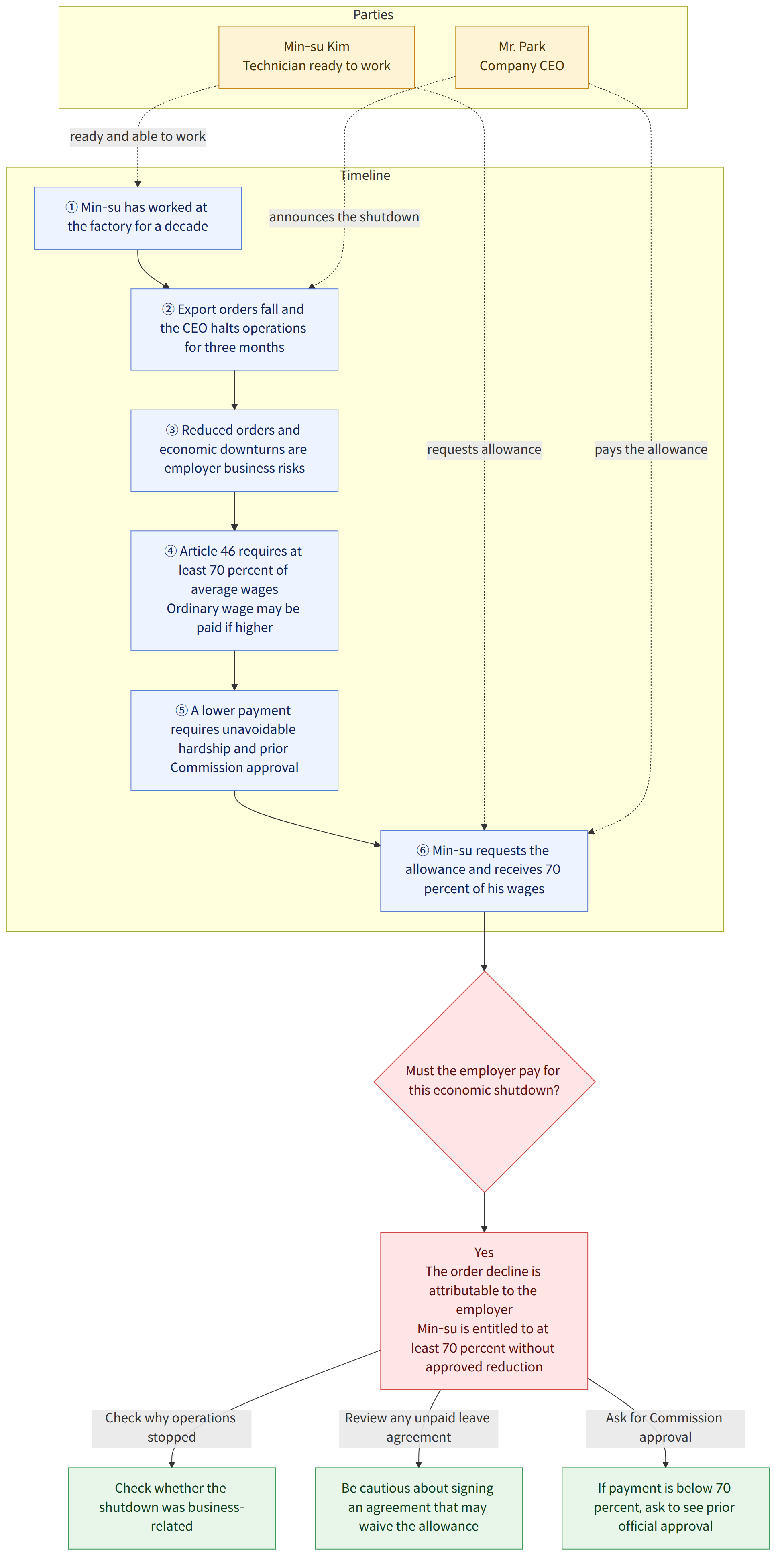
Min-su Kim, a skilled technician who has dedicated a decade to a mid-sized auto parts manufacturer, arrived at work one morning to find the assembly lines cold. The CEO, Mr. Park, gathered the staff with a grim expression. "Due to the global economic downturn and a sharp drop in export orders," he announced, "we are suspending all operations for the next three months. We simply cannot afford to keep the lights on."
Min-su felt a cold dread settle in his chest. As the primary breadwinner for his family, the thought of three months without a paycheck was terrifying. He was willing and able to work, but the choice to close the doors was entirely out of his hands. Was he simply expected to survive on zero income because the company's business was struggling?
2. The Core Legal Question
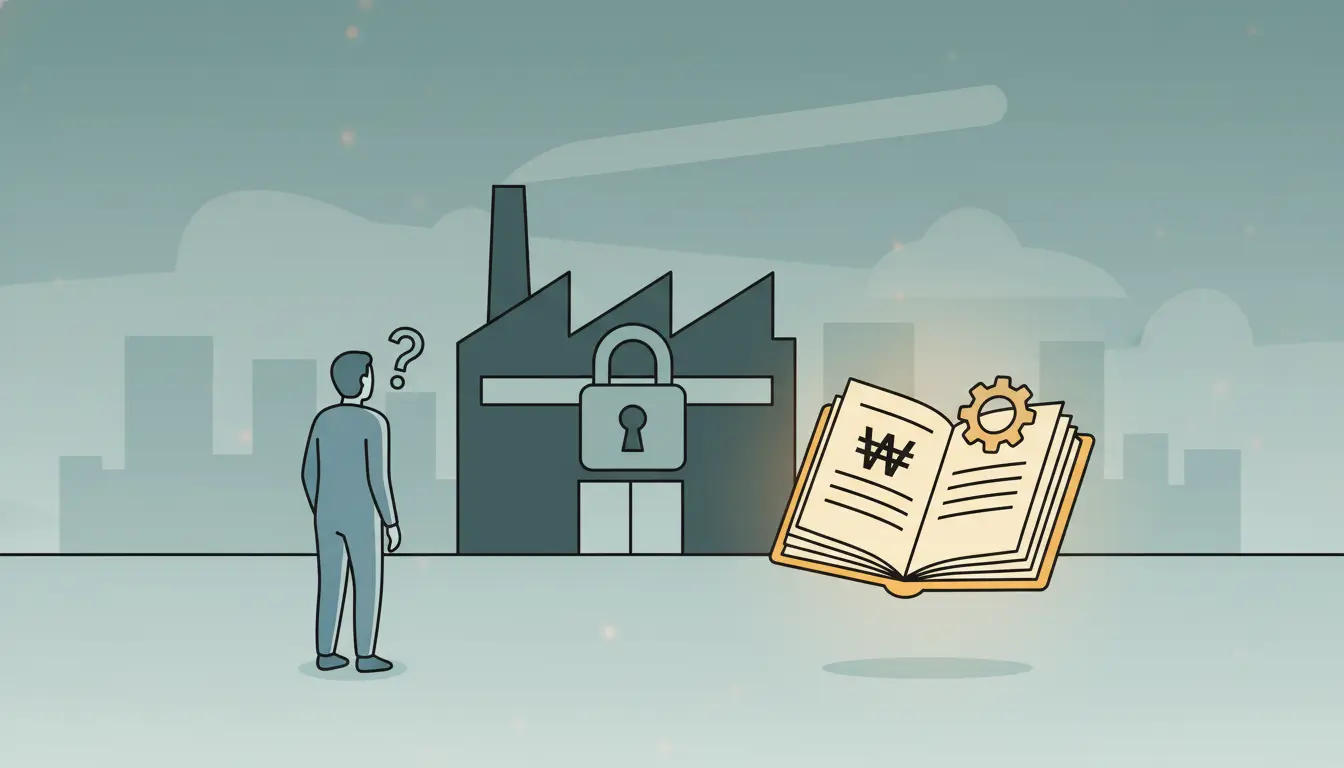
Min-su's situation raises a fundamental question in Korean labor law: "Does an employer have a legal obligation to pay employees when a business shuts down temporarily due to economic hardship?"
3. What Korean Law Says: The Shutdown Allowance
The Labor Standards Act of Korea provides a safety net for workers in these exact circumstances. This is known as the 'Shutdown Allowance' (휴업수당).
Labor Standards Act Article 46 (Shutdown Allowance): If a business is shut down due to a cause attributable to the employer, the employer shall pay the workers concerned an allowance equal to or more than 70 percent of their average wages during the period of shutdown.
Key provisions include:
- Standard Payment: The employer must pay at least 70% of the average wage.
- Ordinary Wage Cap: If 70% of the average wage exceeds the ordinary wage, the employer may pay the ordinary wage instead.
- Exception for Extreme Hardship: If continuing the business is impossible due to unavoidable reasons, an employer can pay less than the 70% threshold, but only if they obtain prior approval from the competent Regional Labor Relations Commission.
4. How Korean Courts Approach This: 'Employer's Fault'
What exactly constitutes an "employer's fault"? Korean courts interpret this broadly. It is not limited to intentional sabotage or negligence. Generally, management risks—such as a lack of raw materials, a decrease in orders, or a general economic recession—fall within the employer's sphere of responsibility. Because the workers remain under the employer's direction and are ready to work, the financial burden of a business halt should not be shifted entirely onto them.
5. Applying the Law to Min-su's Case
In Min-su Kim's scenario, the factory stopped because export orders dried up. Under Korean law, this is considered a "cause attributable to the employer." It is a business risk that Mr. Park, as the CEO, must manage.
Therefore, Mr. Park is legally required to pay Min-su at least 70% of his average wage for the three months the factory is closed. If Mr. Park truly cannot afford even this 70%, he cannot simply stop paying by fiat. He would have to file a formal application for "Approval of Payment of Shutdown Allowance Below Standards" with the Labor Relations Commission and prove that the company's survival is at stake. Without this official approval, any non-payment is a violation of the law.
6. Conclusion: What Happened to Min-su, and What Should You Do?
After consulting with a labor expert, Min-su formally requested his shutdown allowance. While Mr. Park initially claimed he had no money, he reconsidered after learning that failing to pay the allowance could result in up to 3 years in prison or a fine of up to 20 million KRW. Ultimately, Min-su received 70% of his wages, providing him with a vital lifeline until the factory reopened.
If you find yourself in a similar situation, keep these practical tips in mind:
- Identify the Reason for Shutdown: If it's business-related (and not a natural disaster like a flood that destroyed the factory), you are likely entitled to the allowance.
- Be Wary of 'Unpaid Leave' Agreements: Some employers pressure workers to sign agreements for unpaid leave. Signing such a document may be interpreted as waiving your right to the shutdown allowance.
- Verify Labor Commission Approval: If your company claims they are paying less than 70% due to hardship, ask to see the official approval letter from the Regional Labor Relations Commission.
This column is for general informational purposes only and does not constitute formal legal advice. Please consult with a legal professional for specific cases.